


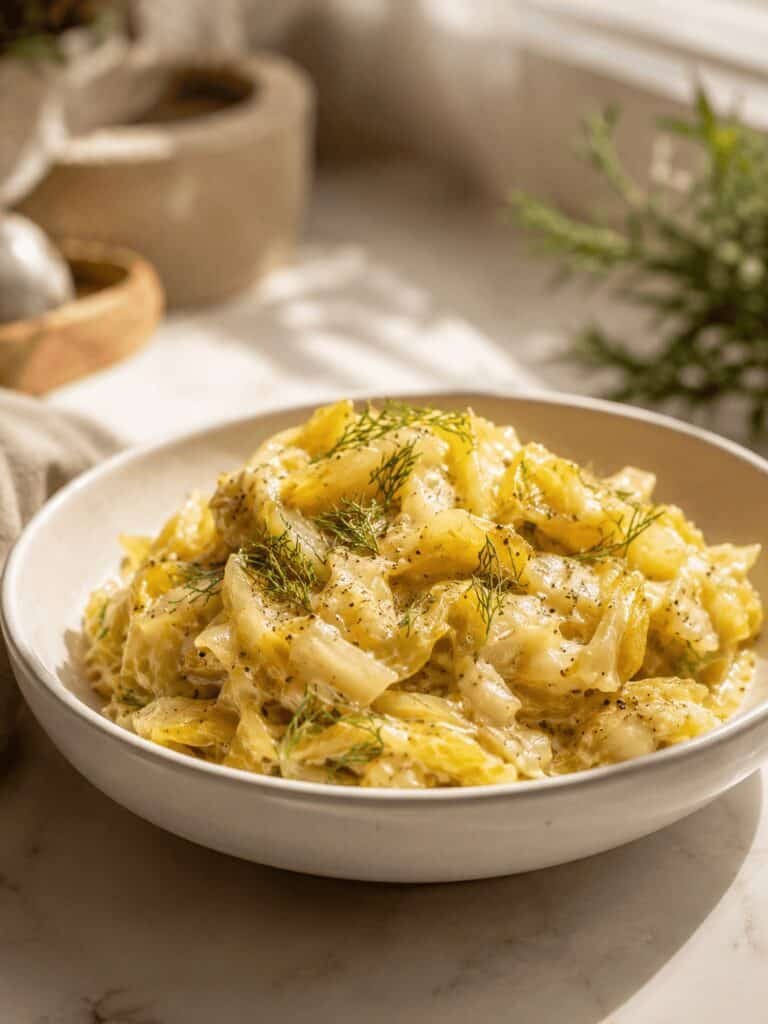

Kapusta zasmazana translates roughly as roux-fried cabbage, and the roux is the part that makes it Polish rather than just cooked cabbage.
A pot of shredded cabbage braised slowly in butter and broth, then thickened at the end with a separate golden roux and balanced with sugar and vinegar. What comes out is glossy, silky and sweet-sour, and it goes next to pork chops or kielbasa the way mashed potatoes go next to a roast.
One note before you start: this recipe contains no bacon, despite what you may have seen it called. Bacon is a common addition and it makes a good dish, but it is a variation rather than the classic version.
Slice the cabbage properly
Quarter the head, cut out the hard core from each quarter, then slice into fine even strips.

Even is the word to focus on. Thick pieces and thin pieces in the same pot cook at different rates, and after forty five minutes the thin shreds will have gone to mush while the thick ones are still crunchy. Aim for consistency more than for any particular thickness.
Cutting the core out matters too. It never softens the way the leaves do and you will find hard chunks in the finished dish if it stays in.
The onion is the only sweetness at the start
Six to eight minutes over medium heat in butter, stirring occasionally, until soft, translucent and just lightly golden.
Nothing else in this dish brings sweetness until the tablespoon of sugar goes in at the very end. Onion cooked slowly develops its own sugars and forms the base flavour everything sits on. Onion cooked fast browns instead, which is a different and more assertive flavour that would fight the delicate cabbage.
So take the full time. It is the least interesting eight minutes of the recipe and skipping it is noticeable.
Add the cabbage in handfuls
Two pounds of shredded cabbage will look like far too much for the pot when you start.
Add a few handfuls, stir until they wilt and drop in volume, then add more. Repeat until it is all in. Trying to force the whole lot in at once means the bottom layer sits against the pot burning while the top sits raw, and you cannot stir it because the pot is overfull.
Within about five minutes of adding the last handful it will have collapsed to maybe a third of its original volume.
Braise, do not boil
One cup of broth, and the amount is deliberately modest.
The liquid should lightly coat the bottom of the pot rather than covering the cabbage. Fully submerged cabbage boils, which leaches out flavour and gives you a watery result. A small amount of liquid under a lid creates steam, and the cabbage braises in that.
Lid on, heat low, thirty five to forty five minutes, stirring every ten. If it dries out completely, add a splash more broth. You are aiming for very soft and fragrant while still holding a little structure.
Make the roux separately
Two tablespoons of butter melted in a small saucepan over medium-low, then two tablespoons of flour whisked in and cooked two to three minutes.
You want it lightly golden and smelling nutty. That short cook is what removes the raw flour taste. Go too far and it darkens toward the colour used in gumbo, which brings a strong toasted flavour that would bulldoze the cabbage.
Stir it into the cooked cabbage slowly and mix thoroughly. Lumps form easily here and they do not break up once they have set. After a couple of minutes the liquid should turn glossy and cling to the cabbage rather than pooling underneath.
Sugar and vinegar last
One tablespoon each, added at the very end and tasted before you consider adding more.
Traditional kapusta sits in a gentle balance between sweet and tangy. It should not read as sour. If you want more of either, add in small increments and taste between each, because it is easy to overshoot and difficult to walk back.
Rest before serving
Pull the bay leaves out and let it sit uncovered five minutes.
The sauce thickens a little more as it cools slightly and the flavours settle into each other. Five minutes is enough.
Serve warm with pork chops, kielbasa, roast meats or mashed potatoes. Rye bread on the side is the traditional touch. It also tastes better the next day, which makes it worth making ahead.
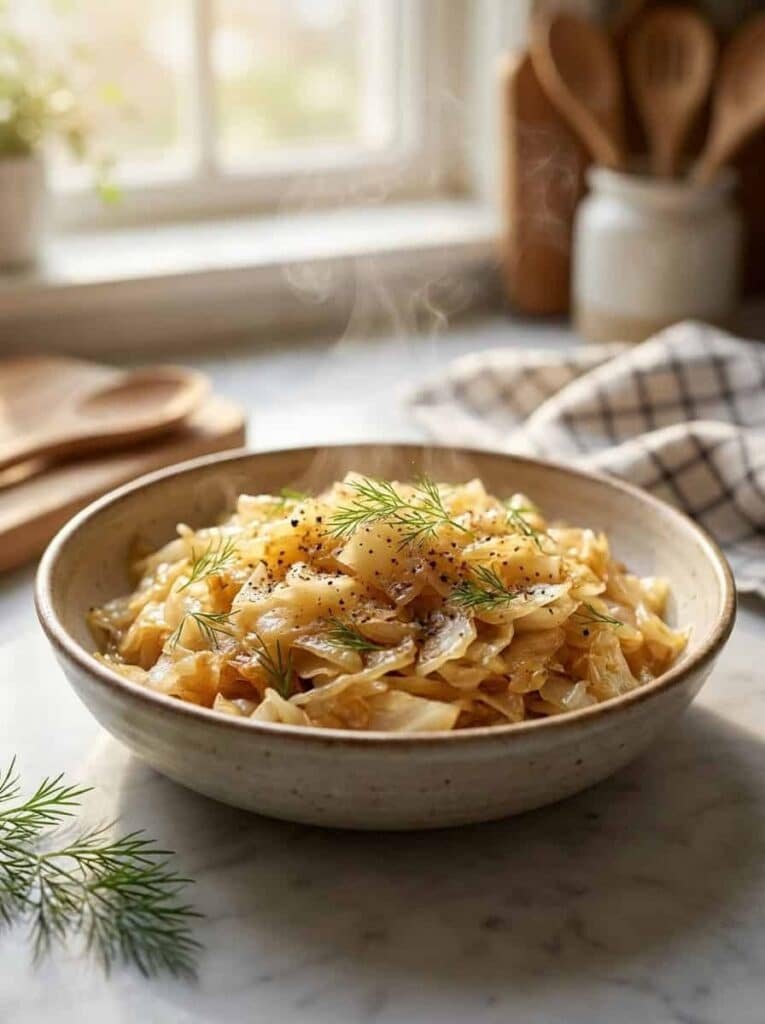
The sauerkraut version
Replacing part of the fresh cabbage with sauerkraut gives you a sharper, more assertively tangy dish that some families consider the more authentic version. Start with about a quarter of the total by weight and adjust from there. Cut back the vinegar accordingly, since sauerkraut brings plenty of its own.
Adding bacon
If you want it, render diced bacon in the pot first, remove it, cook the onion in the fat, and stir the bacon back through at the end. It makes a richer dish. It is also no longer classic roux-thickened kapusta, which is worth knowing rather than worrying about.
Polish Braised Cabbage (Kapusta Zasmazana)
Description
Traditional Polish kapusta zasmazana, a roux-thickened braised cabbage side dish with a gentle sweet and sour finish.
Ingredients:
Instructions
-
Remove the tough outer leaves from the cabbage and cut it into quarters. Cut out the hard core from each section then slice the cabbage thinly into fine even strips.
-
Place a large Dutch oven or deep skillet over medium heat and melt the butter. Add the diced onion and stir to coat. Cook 6 to 8 minutes, stirring occasionally, until soft translucent and lightly golden.
-
Add the sliced cabbage a few handfuls at a time, stirring each batch before adding more, until it has all wilted into the pot.
-
Pour in the broth and add the bay leaves salt and black pepper. Stir thoroughly. The broth should lightly coat the bottom of the pot without submerging the cabbage.
-
Cover and reduce the heat to low. Cook 35 to 45 minutes, stirring every 10 minutes, until the cabbage is very soft and fragrant. Add a splash more broth if the pot becomes too dry.
-
While the cabbage finishes, melt the remaining butter in a small saucepan over medium-low heat. Whisk in the flour and cook 2 to 3 minutes until lightly golden and nutty smelling. Do not let it darken too far.
-
Stir the roux slowly into the cabbage and mix thoroughly to avoid lumps. After a few minutes the cabbage should turn glossy and the liquid should cling rather than pool.
-
Add the sugar and apple cider vinegar. Stir well and taste before adding more, adjusting gradually.
-
Remove the bay leaves and let the cabbage sit uncovered 5 minutes before serving warm..
Nutrition Facts
Servings 6
- Amount Per Serving
- Calories 165kcal
- % Daily Value *
- Total Fat 10g16%
- Sodium 420mg18%
- Protein 3g6%
* Percent Daily Values are based on a 2,000 calorie diet. Your daily value may be higher or lower depending on your calorie needs.
Note
This is the classic roux-thickened version and contains no bacon. To add bacon, render it first, cook the onion in the fat and stir the bacon back through at the end. The broth should lightly coat the bottom of the pot rather than submerging the cabbage, so it braises rather than boils. Tastes better the next day. For a tangier traditional version, replace part of the fresh cabbage with sauerkraut and reduce the vinegar.