


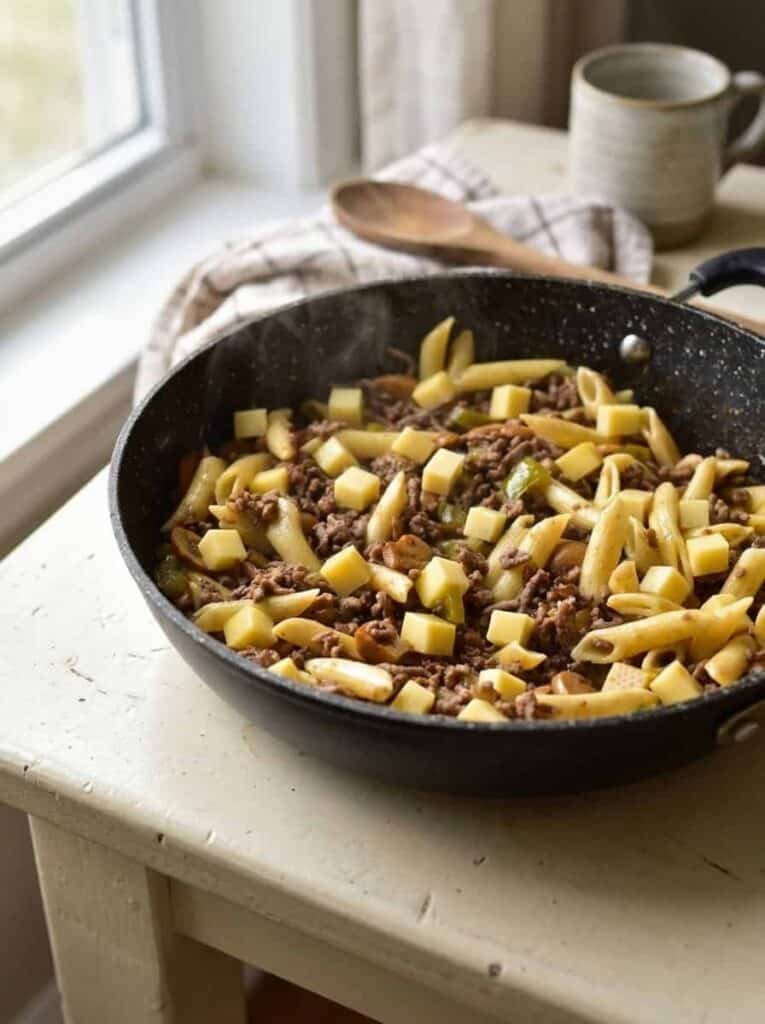

A cheesesteak is thinly sliced steak, melted cheese and onions on a hoagie roll. This takes those flavours and puts them over penne instead, using ground beef because it is faster and cheaper and behaves better in a pasta dish.
Six servings, about fifty minutes, and the sauce is built from a can of French onion soup rather than from scratch.
Cubed provolone, not shredded
A third of a pound cubed and stirred into the hot skillet at the very end, then covered with a lid until it melts.
Cubes matter here. Shredded provolone melts almost instantly and disperses into the sauce, which gives you a uniformly cheesy sauce and nothing else. Cubes melt more slowly and unevenly, leaving pockets and strands of stretchy cheese through the dish. That is what makes it read as a cheesesteak rather than as cheesy pasta.
Provolone specifically, and not a substitution worth making. It is the traditional cheesesteak cheese alongside processed cheese sauce, and it has a mild sharpness that cheddar does not.
Brown the beef first and get it out
A pound and a half of ground beef in the skillet until completely browned, then removed and set aside while you discard the excess grease.

Draining is worth taking seriously. A pound and a half of beef releases a lot of fat, and leaving it in means the finished sauce sits greasy on top of the pasta. Pour it off and wipe the worst of it, but leave the browned bits stuck to the pan.
Ground beef should reach an internal temperature of 160F. The source goes by colour alone, which is usually reliable for crumbled beef browned thoroughly, but the number is there if you want to check.
Vegetables in the same pan
Butter, then the canned mushrooms, chopped onion and chopped green bell pepper, cooked until softened.
Same skillet, no washing between. Everything the beef left behind gets picked up by the butter and the moisture coming out of the vegetables.
Green bell pepper is the correct choice and not just a default. A Philly cheesesteak uses green peppers, which are sharper and more vegetal than red or yellow, and that slight bitterness cuts through the beef and cheese.
The soup is the sauce base
Worcestershire sauce and a can of French onion soup stirred in over medium-low heat.
Canned French onion soup is doing a lot of work in a small amount of effort. It brings caramelised onion flavour, beef stock and seasoning all at once, which would otherwise mean caramelising onions for forty minutes and building a stock reduction.
Worcestershire adds the savoury depth and a little acidity. Two tablespoons sounds generous and it is right against a pound and a half of beef.
Cornstarch slurry, not dry cornstarch
Stir the tablespoon of cornstarch with a bit of water first, then add that to the skillet.
Dry cornstarch dropped into hot liquid seizes into lumps immediately and no amount of stirring breaks them up. Mixed with cold water first, it disperses evenly and thickens smoothly.
Simmer until the sauce thickens. It happens fast, usually within a minute or two, and cornstarch reaches full thickening power at a simmer.
Cook the pasta separately
Eight ounces of penne, cooked to your liking and drained well.
Drained well matters more than usual. Wet pasta going into a thickened sauce dilutes it straight back out, and you will have undone the cornstarch step. Give it a good shake in the colander.
Bringing it together
Beef and pasta back into the skillet, stirred through the sauce. Then the cubed provolone on top, lid on, and left alone until the cheese melts.
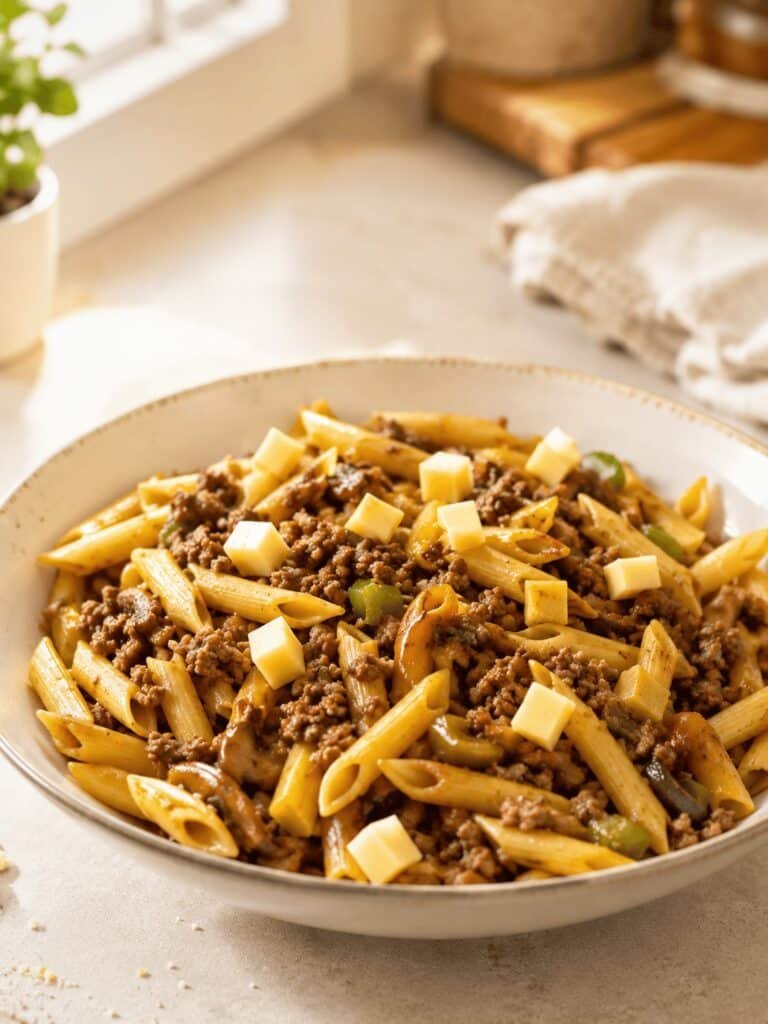
The lid is doing the work here. Trapped steam melts the cheese from above without you having to stir it in, which is what keeps those pockets intact. Stirring at this point would disperse it and defeat the purpose.
Serve straight from the skillet while the cheese is still stretchy.
Using steak instead
Thinly sliced sirloin or ribeye takes this closer to the original sandwich. Slice it very thin against the grain, sear it hot and fast in batches, and set it aside the same way you would the ground beef. It costs more and takes longer, and the result is noticeably more like a cheesesteak.
Leftovers
They keep three days refrigerated. Reheat gently with a splash of milk or broth stirred in, since the sauce tightens considerably in the fridge and needs loosening.
Philly Cheesesteak Pasta
Description
An easy skillet pasta with the flavours of a Philly cheesesteak, built on ground beef and canned French onion soup.
Ingredients:
Instructions
-
Place the ground beef in a skillet and saute until completely browned and it reaches an internal temperature of 160F.
-
Cook the pasta to your liking and drain well.
-
Remove the ground beef, set aside and discard the excess grease, leaving the browned bits in the pan.
-
To the same skillet add the butter mushrooms onions and peppers. Saute until the vegetables have softened.
-
Reduce the heat to medium-low and stir in the Worcestershire sauce and French onion soup.
-
Stir the cornstarch with a bit of cold water to make a slurry then add it to the skillet. Simmer until the sauce thickens.
-
Mix in the ground beef and pasta and stir to combine.
-
Scatter the cubed provolone over the top, cover with a lid and leave until the cheese melts before serving..
Note
Ground beef should reach an internal temperature of 160F / 71C; the source goes by colour alone. Cube the provolone rather than shredding it, so it melts into pockets rather than dispersing through the sauce. Mix the cornstarch with cold water before adding it, or it will lump. Drain the pasta thoroughly, since wet pasta thins the thickened sauce. Keeps 3 days refrigerated; loosen with a splash of milk or broth when reheating.