


A spiced sheet cake using grated zucchini and crushed pineapple, finished with cream cheese frosting. Twenty four servings.
Do not squeeze the zucchini
Which runs against the instinct of anyone who has made zucchini bread, and the notes are explicit about it.
Two cups of grated zucchini carries a substantial amount of water, and here that water is the liquid in the recipe. There are only three tablespoons of oil and two eggs otherwise.
Squeezed dry, the batter is stiff and the cake comes out dense and dry. Left alone, the zucchini releases its moisture into the crumb as it bakes.
Grate it on the coarse side and add it as it is.

Drain the pineapple, but keep the juice
The opposite treatment from the zucchini, and both are correct.
Canned crushed pineapple sits in a great deal of syrup, and that syrup is loose liquid rather than moisture held in fruit tissue. Undrained, the batter is too wet and the cake sinks.
The reserved juice has a use: it thins the frosting later, adding pineapple flavour where milk would just dilute it.
Only three tablespoons of oil
Which is very little for a cake this size.
That is possible because the zucchini and pineapple between them supply most of the moisture. A conventional sheet cake of this volume would use half a cup or more.
It also means the cake is lighter than it tastes, at around 220 calories a slice across twenty four.
Two teaspoons of baking soda, no baking powder
Which is a lot of soda and there is a reason.
Pineapple is acidic, and soda needs acid to react. Two teaspoons against a full 20 ounce can is a deliberate pairing rather than an oversight.
Baking powder would not work the same way here, since it brings its own acid and would not neutralise the pineapple’s.
Mix and bake promptly. That reaction starts as soon as wet meets dry.
Stir by hand
Which the method specifies.
A mixer would overwork this batter and break down the grated zucchini into pulp. By hand you can stop the moment everything is combined, which is what the instruction to avoid overmixing means.
A sturdy spoon or spatula. It is a thick batter and it takes a bit of effort.
The pan size affects the bake
A 16×11 inch pan is specified, with the notes allowing a 9×13 for a thicker cake and a slightly longer bake.
Those are quite different pans. The 16×11 gives a thin sheet that bakes in thirty to thirty five minutes; a 9×13 is considerably deeper and will need closer to forty five.
Test with a toothpick rather than the clock if you change pans.
Cool completely before frosting
Which the notes call out and which matters more with cream cheese than with buttercream.
Cream cheese frosting has a low melting point and it slides straight off a warm cake. It also thins irreversibly once it warms.
Completely cool means room temperature throughout, which for a sheet cake takes at least an hour.
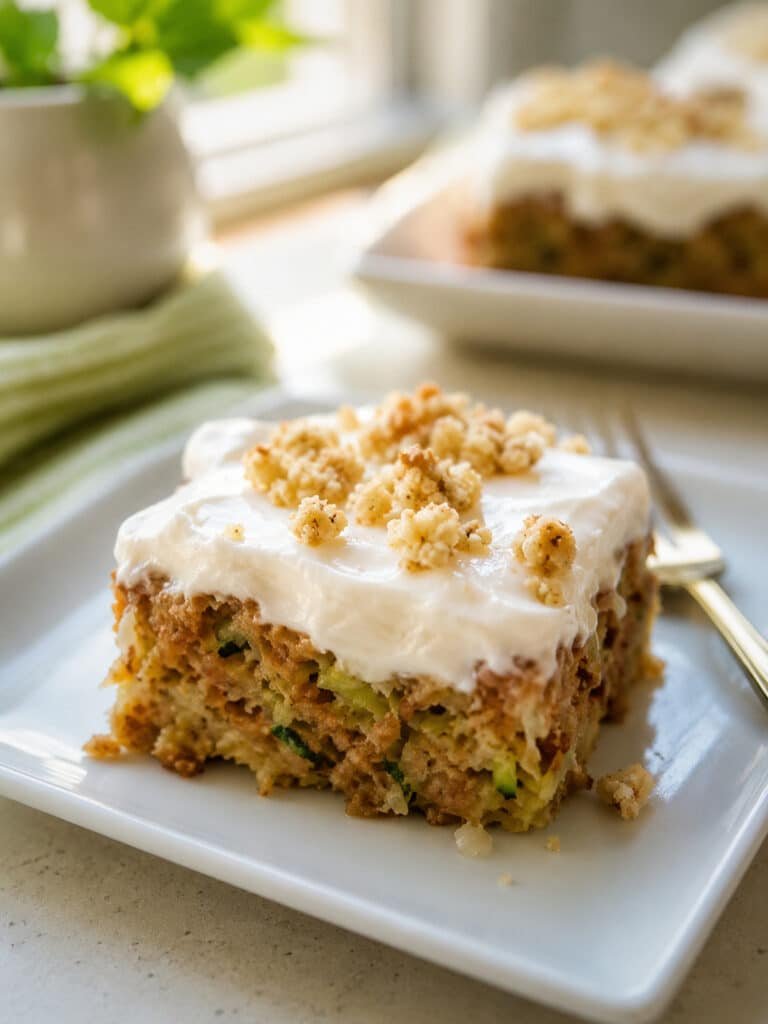
Low-fat cream cheese, and what it changes
Eight ounces, which the source specifies.
Low-fat cream cheese carries more water than full-fat, so the frosting is softer and slightly less stable. It works, and it is why the recipe only adds a splash of milk if needed rather than as standard.
Full-fat gives a firmer frosting and you may need that splash of pineapple juice to loosen it.
Storing
Covered in the fridge up to five days, since it carries a cream cheese frosting.
Individual slices wrap and freeze for three months.
The nuts
Chopped walnuts or pecans scattered over the frosting are optional. They add the only crunch in a cake that is soft throughout, and toasting them first deepens the flavour considerably.
Using garden zucchini
Large late-season zucchini are watery and seedy. Scrape the seeds out before grating if yours is oversized, since seeds do not break down and stay noticeable in the crumb.
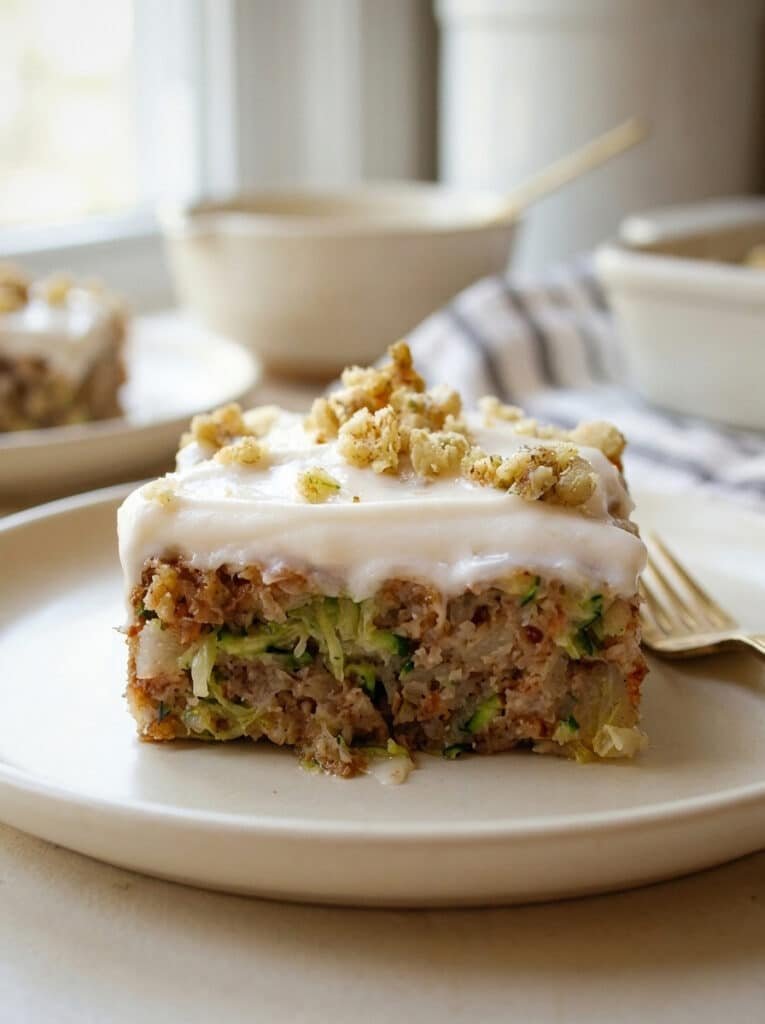

Pineapple Zucchini Sheet Cake
Description
An easy sheet cake for a crowd, using up garden zucchini with pineapple and warm spices.
Ingredients:
Instructions
-
Preheat the oven to 350F and grease a 16x11 inch baking pan.
-
In a large bowl combine the flour, sugar, shredded coconut, baking soda, salt, cinnamon, nutmeg and ginger.
-
Add the oil, eggs, vanilla, grated zucchini and drained crushed pineapple to the dry ingredients. Do not squeeze the zucchini first, as its water is the liquid in this recipe.
-
Stir by hand until evenly combined, avoiding overmixing, which would pulp the zucchini. Get it into the oven promptly, since the baking soda has already started reacting with the pineapple.
-
Pour into the prepared pan, spread evenly and bake 30 to 35 minutes until a toothpick comes out clean or with a few moist crumbs.
-
Cool completely on a wire rack, at least an hour, before frosting.
-
Beat the softened butter and cream cheese until smooth. Add the powdered sugar and vanilla and mix until light, adding a splash of milk or the reserved pineapple juice if needed for a spreadable consistency.
-
Spread over the completely cooled cake, sprinkle with chopped nuts if using, then slice and serve..
Note
Do not squeeze the zucchini, which the notes state directly: its water is the liquid in this recipe, since there are only three tablespoons of oil and two eggs otherwise, and squeezed zucchini gives a dense dry cake. Drain the pineapple though, since canned syrup is loose liquid rather than moisture held in tissue, and reserve the juice for thinning the frosting. The two teaspoons of baking soda with no baking powder is deliberate, as the pineapple is acidic and soda needs acid to react; mix and bake promptly. Stir by hand rather than using a mixer, which would pulp the zucchini. The source specifies a 16x11 pan; a 9x13 gives a thicker cake needing closer to 45 minutes. Cool completely before frosting, as cream cheese frosting slides off a warm cake and thins irreversibly.