


A sour cream coffee cake with espresso in the batter and a cocoa cinnamon swirl through the middle. Nine slices.
One streusel mixture, split into two
Which is the cleverest part of the recipe and easy to get wrong.
You make a single crumb mixture, then divide it. Half stays coarse and goes on top as streusel. The other half gets a tablespoon of cocoa powder mixed in until fine, and that becomes the middle swirl.
Two different textures from one bowl: coarse for the top so it stays craggy, fine for the middle so it forms a distinct dark line rather than lumps.
The cocoa is for colour, not flavour

A tablespoon, marked optional, and the notes explain the reasoning.
The problem it solves is a swirl that disappears into the cake. Cinnamon and brown sugar are almost the same colour as the batter, so the layer vanishes once baked.
Cocoa darkens it enough to read as a distinct band when you cut a slice. At a tablespoon across half the streusel it contributes no detectable chocolate flavour.
Cool the coffee before it goes in
Espresso powder dissolved in boiling water, then set aside to reach room temperature.
Hot coffee poured into a batter containing an egg and sour cream starts cooking the egg, and it melts the butter structure you have built.
Dissolving in boiling water first is the right approach, since instant espresso does not dissolve properly in cold liquid. It just needs the cooling time afterwards.
Brewed coffee works instead
The notes offer a third of a cup of strong brewed coffee in place of the water and powder.
Use something strong. A weak filter coffee diluted through a whole cake contributes very little, and the entire point of this version is that the coffee is detectable.
A double shot of espresso topped up to a third of a cup is the suggestion and it works well.
Melted butter, not creamed
Half a cup, melted and cooled slightly, whisked with the other wet ingredients.
This is the muffin method, which is why the whole cake comes together in one bowl with a whisk. There is no mixer and no creaming stage.
Cooled slightly matters. Hot butter meeting a room temperature egg starts scrambling it.
Room temperature sour cream and egg
Both specified, and both matter for the same reason.
Cold sour cream added to melted butter causes the butter to solidify into small lumps, and those lumps do not disperse. The batter goes grainy and bakes unevenly.
Half an hour on the counter is enough for both. If you forget, a few seconds in the microwave takes the chill off the sour cream without warming it.
Do not overmix
Dry into wet until just combined, which the recipe flags with care.
Sour cream is acidic and it tenderises, but flour still develops gluten when worked. In a cake this dense, overmixing gives a tough chewy crumb rather than a tender one.
Stop when the last streak of flour disappears.
Dollop the top layer, do not spread
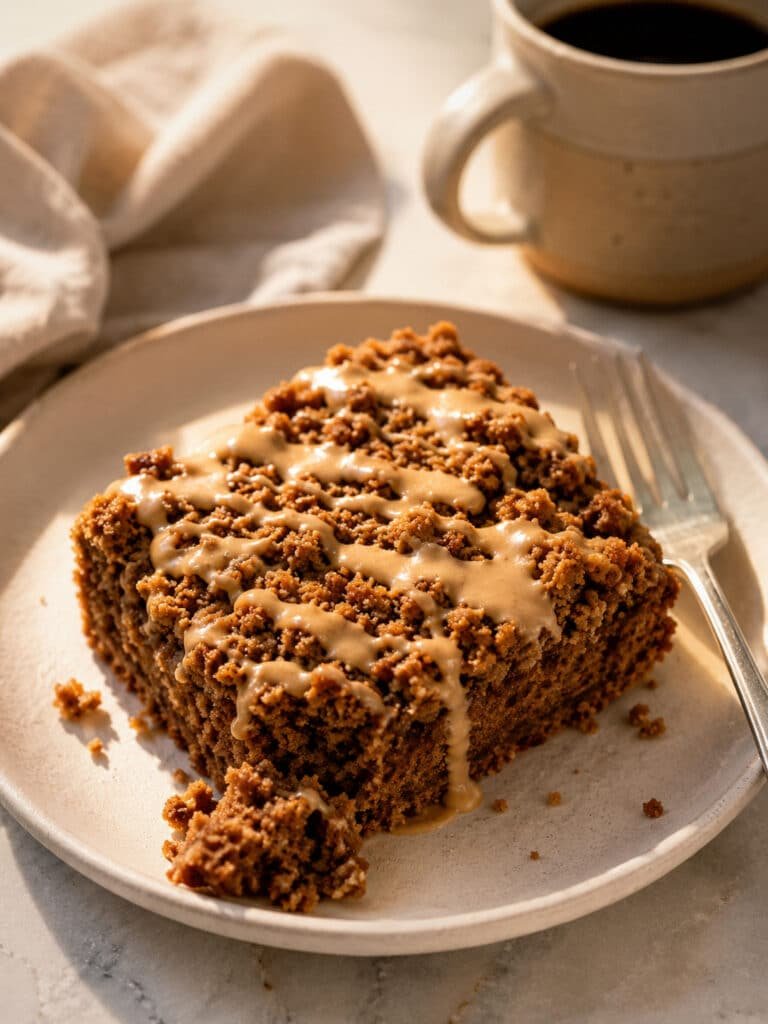
The remaining batter dropped over the filling and spread carefully.
Spreading batter directly across a loose crumb filling drags it around and mixes the layers. Dolloping first, then gently joining the dollops, keeps the swirl intact.
The recipe is reassuring that it does not have to be perfect, which is true.
Tent if it browns early
Loosely with foil.
A streusel topping carrying three quarters of a cup of brown sugar browns faster than the cake beneath it cooks. Thirty five to forty minutes at 350F is usually fine, but ovens vary.
Foil laid loosely over the top slows the browning without steaming the crust.
Why sour cream
Half a cup of full-fat sour cream brings acidity that reacts with the baking soda and tenderises the crumb, plus fat and moisture without extra liquid. Full-fat rather than light, which is mostly water. Greek yogurt substitutes at the same quantity.
Storing
Three days covered at room temperature. The streusel softens over that time; a few minutes in a low oven crisps it back.
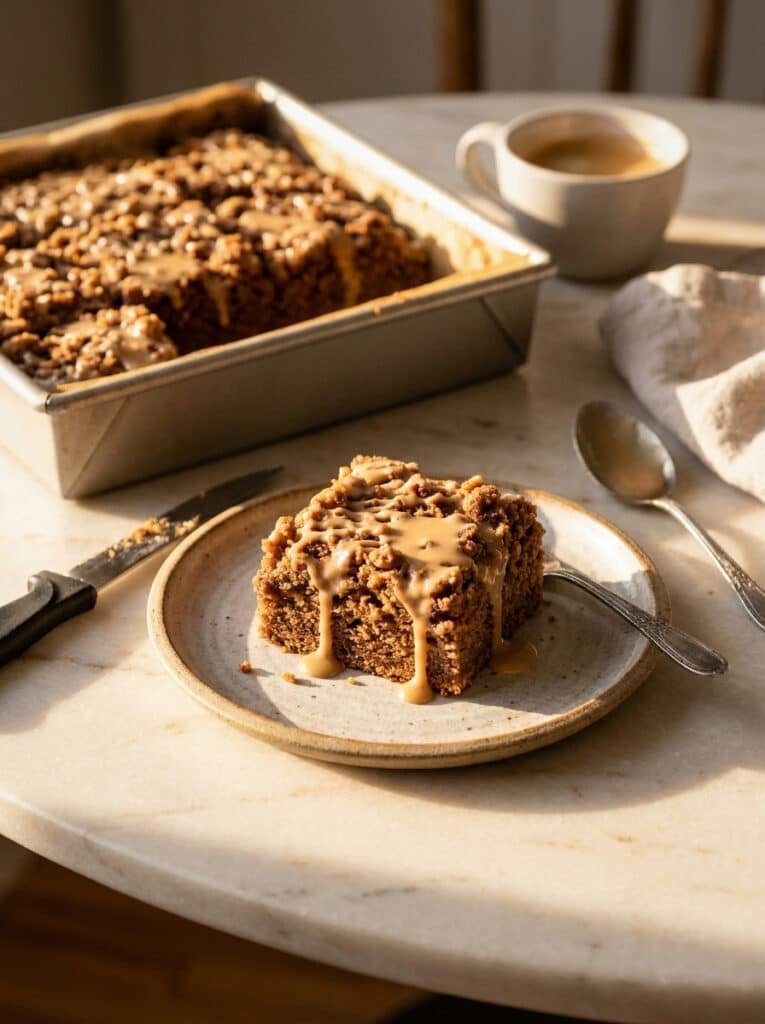

Espresso Coffee Cake
Description
A coffee cake that actually tastes of coffee, with espresso in both the batter and the icing.
Ingredients:
Instructions
-
Preheat the oven to 350F. Butter an 8x8 inch pan and line the bottom and sides with parchment.
-
For the streusel, combine the flour, brown sugar, cinnamon and salt in a medium bowl. Add the melted butter and mix until crumbly. Portion about half into another bowl and mix in the cocoa powder until it becomes a fine crumb. You now have a coarse mixture for the topping and a fine cocoa mixture for the filling.
-
Dissolve the espresso powder in the boiling water and set aside to cool to room temperature.
-
Whisk the flour, cinnamon, baking powder, baking soda and salt together in a medium bowl.
-
In a large bowl combine the cooled coffee, melted butter, brown sugar, egg, sour cream and vanilla and whisk to combine. Add the dry ingredients and mix until just combined, stopping when the last streak of flour disappears.
-
Pour about half the batter into the prepared pan and spread evenly. Sprinkle the cocoa crumb mixture over it. Dollop the remaining batter on top and carefully spread it to cover, which does not need to be perfect. Sprinkle the remaining coarse streusel over.
-
Bake 35 to 40 minutes, until a skewer inserted in the centre comes out with a few moist crumbs but no wet batter. Tent loosely with foil if the top browns too quickly.
-
Cool completely in the pan. Whisk the powdered sugar with 1 tablespoon of cooled coffee until smooth and pourable, adding more if needed, and drizzle over the cooled cake..
Note
One streusel mixture is made and then split: half stays coarse for the topping, half gets a tablespoon of cocoa mixed in until fine for the middle swirl. The cocoa is for colour rather than flavour, since cinnamon and brown sugar are close to the batter colour and the swirl otherwise disappears. Cool the dissolved espresso to room temperature before adding, as hot coffee cooks the egg and melts the butter structure. Dissolve instant espresso in boiling water first, since it does not dissolve in cold. If using brewed coffee instead, make it strong. Cool the melted butter slightly before it meets the egg. Do not overmix once the flour goes in. Dollop the top batter layer rather than spreading it, which would drag the filling. Tent loosely with foil if the streusel browns before the cake is done.