



Chicken breasts floured and browned, then simmered in cream and stock with sundried tomatoes, chilli and parmesan. One pan, about an hour.
The name is marketing and the dish is genuinely good, which is a rarer combination than it should be.
Cook in the sundried tomato oil
A jar of sundried tomatoes in oil, drained with three tablespoons of that oil reserved.
Two tablespoons fry the chicken and the third goes in with the onion. That oil has been sitting with tomatoes, and often garlic and herbs, for months. It is deeply savoury and tomato-scented in a way that plain olive oil is not.
Draining it off and reaching for fresh oil is throwing away free flavour that is already in your kitchen.
If your tomatoes are the dry-packed kind rather than oil-packed, use olive oil and expect a slightly less rounded sauce.
Brown the chicken without cooking it through
Eight to ten minutes over medium heat, golden all over, then set aside.

Not cooked through is the instruction and it matters. The chicken goes back into the sauce for another twenty minutes, and breast meat that was already done at this stage arrives dry and stringy at the end.
Flour the chicken first, seasoned with salt and pepper. The flour browns readily and it thickens the sauce later when it comes off the chicken during the simmer.
Soften the onion slowly, without colour
Eight to ten minutes over medium-low, until softened but not golden.
The distinction is deliberate. Browned onion brings a roasted, slightly bitter sweetness. Softened onion goes sweet and mild and disappears into the sauce.
This sauce already has sundried tomatoes, chilli and parmesan pulling in assertive directions. The onion is meant to be the quiet base underneath, not another loud voice.
Garlic for one minute, then everything else
Crushed or finely grated, in for a minute before the tomatoes, chilli and herbs.
One minute is enough to take the raw edge off. Longer over direct heat and it browns and turns bitter, and there is no removing that once it has happened.
Half to one teaspoon of chilli flakes depending on taste. Half gives a warm background. A full teaspoon is noticeable without being hot.
Twenty minutes with the lid on
Chicken back in, cream and stock poured over, seasoned well, lid on, medium-low for about twenty minutes with a turn halfway.
The lid keeps the liquid in so the chicken poaches gently rather than the sauce reducing away around it. Turning halfway means both sides spend time submerged.
Chicken should reach an internal temperature of 165F. The source works on appearance, and twenty minutes at a gentle simmer will get four breasts there comfortably, but a thermometer removes the question.
Parmesan at the end
Thirty five grams grated, stirred in after the chicken is cooked.
Added earlier it would sit in a simmering sauce for twenty minutes and separate into oil and strings. Stirred in at the end, the residual heat melts it smoothly and it thickens the sauce as it goes.
Basil and lemon to serve
Eight to ten leaves torn over, and lemon wedges on the side.
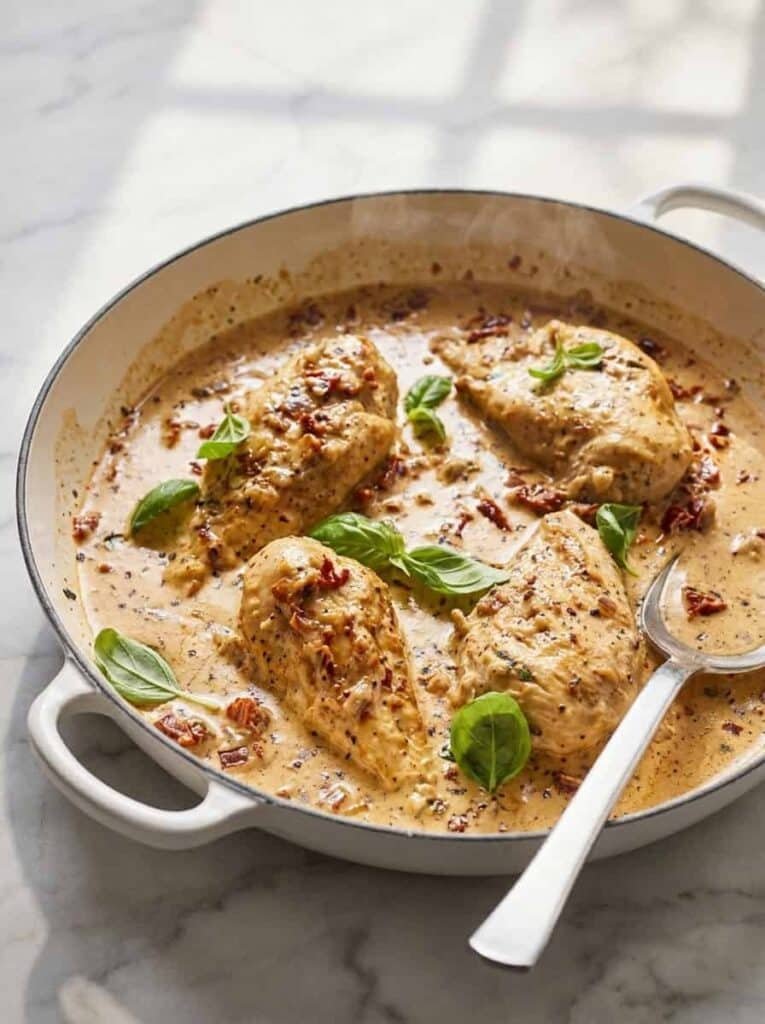
Both are doing the same job from different directions. This is a rich sauce, with cream, parmesan and oil in it, and there is no acidity anywhere in the ingredient list. Torn basil brings freshness and a squeeze of lemon at the table brings the sharpness.
Skipping the lemon leaves the dish heavier than it needs to be.
A note on the measurements
The original publishes its US conversions with a warning that they are machine-generated and unreviewed.
The metric quantities are the tested ones, so those are what appear here, with checked US equivalents alongside. If you are working from another version of this recipe, the metric column is the one to trust.
Serving
<p>Mash, new potatoes or green beans, which is what the sauce is asking for. Rice or crusty bread work equally well for the same reason: you need something to get the sauce with. ## Using thighs instead Boneless thighs work and are more forgiving. They carry more fat and connective tissue, so twenty minutes in the sauce leaves them tender rather than risking dryness. Add five minutes to the simmer and check for 165F.
Making it ahead
It reheats well over low heat with a splash of stock to loosen the sauce. Keeps three days refrigerated. Cream-based sauces can split on reheating if pushed hard, so keep the heat gentle and stir.
Marry Me Chicken
Description
A creamy one pan chicken casserole with sundried tomatoes, chilli flakes and parmesan, finished with torn basil.
Ingredients:
Instructions
-
Put the flour on a plate and season with salt and freshly ground black pepper. Coat the chicken in the flour.
-
Heat 2 tablespoons of the reserved sundried tomato oil in a large lidded frying pan over medium heat and fry the chicken 8 to 10 minutes until golden all over but not cooked through. Set aside on a plate.
-
Drizzle the remaining 1 tablespoon of sundried tomato oil into the pan and reduce the heat to medium-low. Fry the onion 8 to 10 minutes until softened but not golden.
-
Stir in the garlic and cook another minute, then add the sundried tomatoes, chilli flakes and herbs, stirring well.
-
Return the chicken to the pan, pour over the cream and chicken stock and season well. Put the lid on and cook on medium-low about 20 minutes, turning the chicken halfway, until it reaches an internal temperature of 165F and the sauce has thickened a little.
-
Stir in the parmesan, then serve scattered with torn basil and lemon wedges on the side..
Note
The original publishes its US conversions with a warning that they are machine-generated and unreviewed; the metric quantities are the tested ones. Reserve three tablespoons of oil from the sundried tomato jar and cook in that rather than fresh olive oil. Brown the chicken without cooking it through, since it returns to the sauce for a further 20 minutes. Soften the onion without letting it colour. Chicken should reach an internal temperature of 165F. Stir the parmesan in at the end so it does not split. Serve with lemon wedges; the sauce has no acidity otherwise. Keeps 3 days refrigerated; reheat gently.