


One cup of brown basmati rice, one cup of water, eighteen minutes at high pressure. That is the whole recipe.
Brown basmati is difficult to get right on the stove, where it tends to come out either chalky in the middle or blown out and mushy. Pressure cooking removes most of that variability.
Natural release for ten minutes
Eighteen minutes at high pressure, then leave it alone for ten before releasing the rest.
This is not optional and it is where quick-release attempts go wrong. During natural release, the rice continues cooking gently in the residual heat and steam, and the grains reabsorb moisture that would otherwise be driven off.
Release the pressure immediately and you get rice that is wet on the outside and underdone in the centre, plus a spray of starchy water out of the valve.
Ten minutes, then turn the knob to venting for whatever remains.
Rinse, and drain properly
Rinsed and well drained before it goes in.

Rinsing washes off surface starch, which is what makes rice clump. That part is standard.
The draining is the part specific to pressure cooking. The rice to water ratio here is one to one, which is tighter than stovetop cooking, and water clinging to wet rice throws it off. Even a couple of tablespoons of extra water changes the texture noticeably at this ratio.
Let it sit in the sieve a minute or two and shake it out.
The ratio is a starting point
One cup rice to one cup water, and the source is explicit that brands differ.
Brown basmati varies in how much the bran layer has been polished and how dry the grain is, and both affect absorption. The ratio here produces rice with a distinct chew, which is the intended result.
If yours comes out chewier than you like, add another quarter cup of water next time. For properly soft fluffy rice, add a quarter to half a cup more.
More liquid means softer rice. That is the whole rule and it is worth writing on the packet after your first attempt.
Water or unsalted stock
Either works and stock adds a savoury background.
Unsalted specifically. Stock reduces under pressure the way it does in any closed pot, and a salted stock concentrates into something noticeably salty by the time the rice has absorbed it.
Season lightly, or not at all
Salt to taste after cooking, and the advice is to under-season rather than over.
Brown basmati is a side dish and it is going next to something with its own seasoning. Rice that tastes perfect on its own often tastes salty alongside a curry or a stew.
Taste it plain, add a little, and stop early.
Fluff with a fork
Straight after opening, before serving.
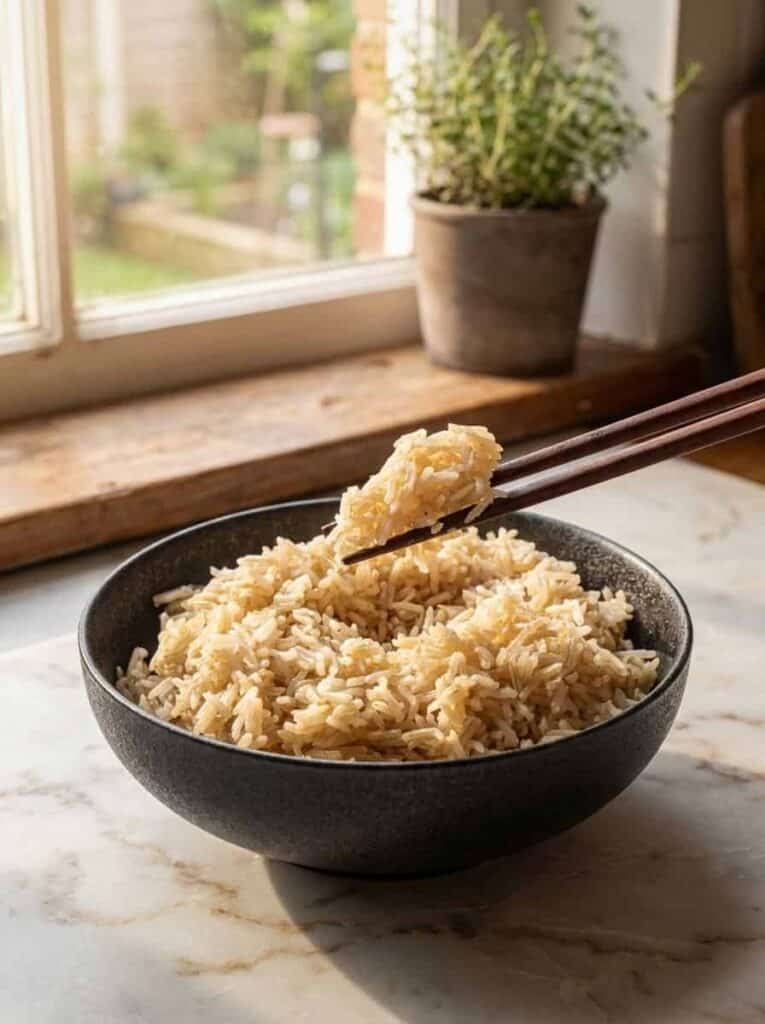
Pressure cooked rice settles into a dense mass at the bottom of the pot. A fork separates the grains without crushing them, where a spoon compacts them.
Come in from the edges and lift rather than stirring.
Why brown basmati specifically
Basmati is a long grain aromatic rice, and the brown version keeps the bran layer that white basmati has had polished off.
That bran is where the fibre and most of the nutrients sit, and it is also why brown rice takes considerably longer to cook. It is a physical barrier that water has to get through.
The flavour is nuttier and more pronounced than white basmati, and the texture has a chew that some people prefer and others find heavy. It holds up well next to strongly flavoured dishes.
About the nutrition
The figures published with the original list 82.5 calories and 16.5g carbohydrates per serving across four.
A cup of dry brown rice is around two hundred grams and carries roughly 150g of carbohydrate in total, which is closer to 37g per serving. The published figures look like roughly half of what they should be. <p>They are not reproduced here rather than published wrong. ## Scaling it up The ratio holds when doubled or tripled, and the cook time stays at eighteen minutes regardless of quantity. Pressure cooking time depends on the thickness of what is being cooked rather than the volume, and rice sits in a fairly even layer either way.
Do not fill past the halfway mark of the pot. Rice expands and foams, and an overfilled cooker can block the valve.
Leftovers
Cool quickly and refrigerate within an hour, then eat within three days. Reheat thoroughly with a splash of water. Cooked rice left at room temperature for long stretches is one of the more common causes of food poisoning, so this is worth taking seriously.
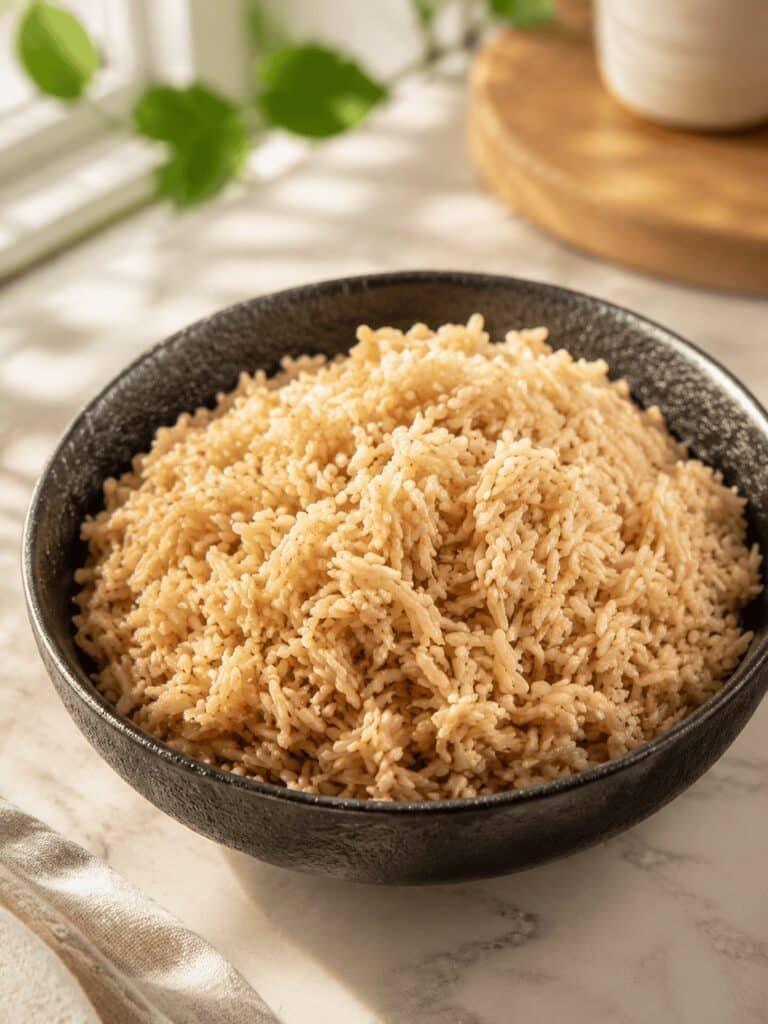

Instant Pot Brown Basmati Rice
Description
Fluffy pressure cooked brown basmati rice with a tested rice to water ratio and a natural release.
Ingredients:
Instructions
-
Add the rinsed and drained brown basmati rice to the Instant Pot. Pour in the cold water, swirl a few times and make sure all the rice is submerged
-
Close the lid and turn the venting knob to sealing. Pressure cook at high pressure for 18 minutes
-
Natural release for 10 minutes, then release the remaining pressure by turning the venting knob to venting. Open the lid carefully
-
Fluff the rice with a fork, coming in from the edges and lifting rather than stirring. Taste and season lightly with salt if you like.
Note
The nutrition published with the original lists 82.5 calories and 16.5g carbohydrates per serving, which is roughly half what a cup of dry brown rice across four servings should give. It is not reproduced here. Natural release for 10 minutes is required; a quick release gives rice that is wet outside and underdone in the centre. Drain the rinsed rice thoroughly, since the one to one ratio is tight and clinging water changes the texture. Brands vary; add a quarter cup more water for softer rice. Use unsalted stock if substituting, since stock concentrates under pressure. Cool leftovers quickly, refrigerate within an hour and eat within three days.