


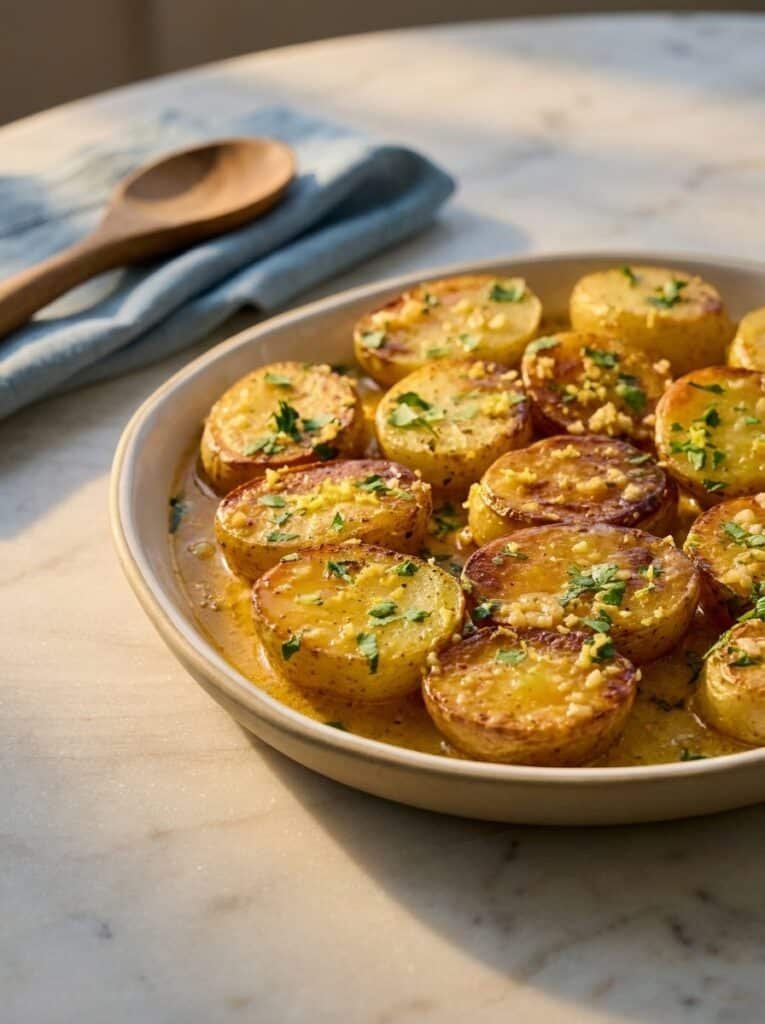

Thick slices of Yukon Gold roasted hard at 500F, then finished in broth, lemon and garlic that they soak up as they collapse.
Eight servings at 160 calories, and ten minutes of actual work.
Metal pan only, and the reason matters
The recipe says not to use a glass dish because it could shatter, and that is worth taking seriously rather than treating as boilerplate.
Most household glass bakeware is rated below 500F, and thermal shock does the rest. A glass dish at 500F that then receives half a cup of cold broth can fail, and it fails by breaking apart rather than cracking quietly.
Metal handles both the temperature and the sudden cold liquid without complaint.

Add the broth at arm’s length
Which the recipe hints at with the word carefully.
Half a cup of cold liquid hitting a 500F metal pan of hot oil and butter produces an immediate violent burst of steam. It comes straight up out of the pan.
Pull the rack out, pour from the side rather than leaning over it, and keep your face back. It is over in a second and it is genuinely hot.
500F is the whole technique
Rack in the upper third.
Melting potatoes work because the outside caramelises hard and fast while the inside stays dense, and then the braising stage softens that interior into something that collapses.
At a lower temperature the potatoes cook through before they colour, and you end up with roast potatoes that are soft rather than crisp-edged.
The upper third position puts them nearer the top element for more direct heat.
One inch thick, single layer
Scrubbed rather than peeled, sliced into rounds.
An inch is thick enough that the middle stays creamy while the faces brown. Thinner slices dry out; thicker ones do not soften through in the time given.
Single layer with space between. Overlapping potatoes steam against each other and neither face browns.
Yukon Gold specifically. They sit between waxy and floury, which is what lets them hold their shape through the roasting and then collapse during the braise. A pure waxy potato stays firm; a floury one falls apart too early.
Cold butter, cubed, in two additions
Two tablespoons scattered before roasting and one more at the very end.
The first two melt into the pan and help the potatoes brown. The last tablespoon is doing something entirely different.
Swirl the final butter, do not stir it
Added immediately out of the oven, with the pan swirled until fully melted and emulsified.
That word emulsified is the point. Cold butter swirled into a hot liquid disperses into tiny droplets suspended in the sauce rather than separating into a slick of fat on top.
Cold rather than room temperature is what makes it work. It melts slowly enough to emulsify instead of splitting.
Swirl the pan rather than stirring with a spoon, which breaks the potatoes.
Undisturbed for the last eight to ten minutes
After the broth goes in.
This is the melting stage. The potatoes are absorbing liquid and going tender, and moving them around at this point breaks the browned faces off.
Most of the liquid should be absorbed by the end. If a lot remains, give it another two or three minutes.
Zest and juice at different points
Juice into the broth mixture, zest scattered at the end.
Juice adds acidity that cooks into the potatoes. Zest carries the aromatic oils, which are volatile and would largely be lost in the oven.
Both from the same lemon. Zest before you juice; zesting a squeezed half is unpleasant work.
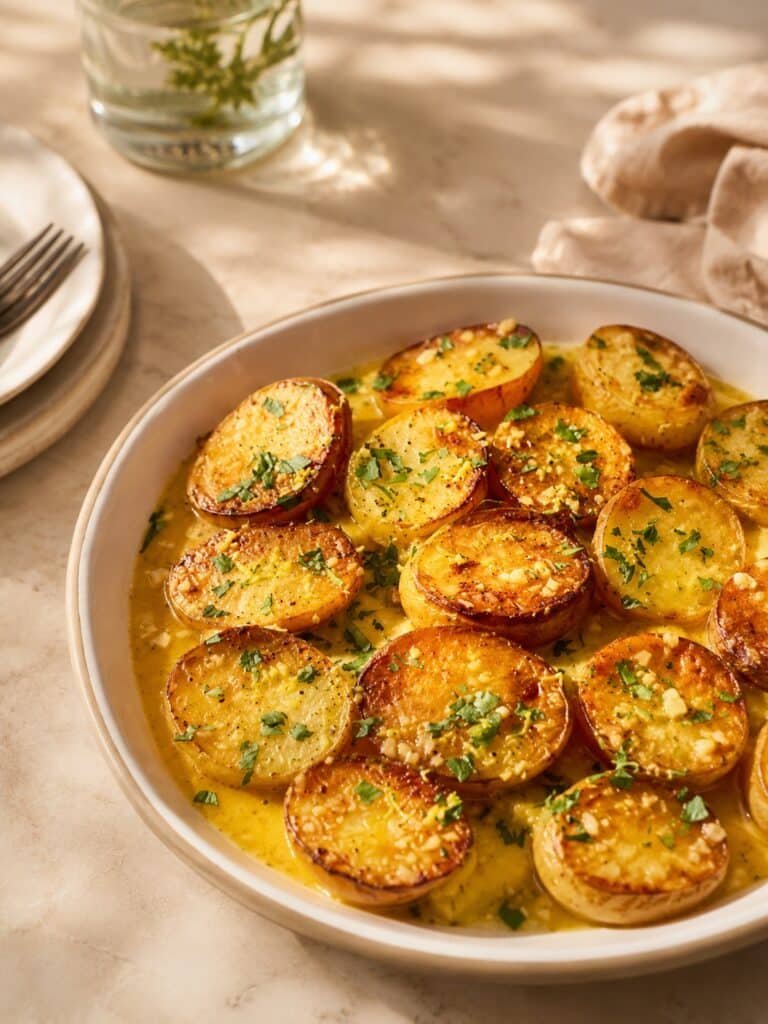
Serving
With the pan sauce spooned over and parsley on top. These suit steak, pork chops, roast chicken or fish, and the lemon means they hold their own against something rich. Why they are called melting potatoes The technique comes from French fondant potatoes, where cylinders of potato are browned in butter and then braised in stock until they collapse.
This version simplifies it into slices and one pan, keeping the essential idea: brown in fat first, then braise in liquid the potato soaks up.
Making them ahead
They do not hold well. The browned edges soften within twenty minutes and reheating gives you something closer to a gratin.
The potatoes can be sliced and kept in cold water for a few hours, drained and dried thoroughly before roasting.
Lemon Garlic Melting Potatoes
Description
A one pan side dish of melting potatoes finished with lemon, garlic and cold butter.
Ingredients:
Instructions
-
Position a rack in the upper third of the oven and preheat to 500F
-
Combine the sliced potatoes, olive oil, salt and pepper in a large bowl and toss until evenly coated. Arrange in a single layer with space between in a 9-by-13-inch metal baking pan. Do not use a glass dish, which could shatter at this temperature. Scatter 2 tablespoons of the cubed butter over the potatoes
-
Roast, flipping once with a spatula, until browned, about 30 minutes
-
Combine the broth, lemon juice and minced garlic in a liquid measuring cup. Pull the rack out and carefully add the broth mixture to the pan from the side, keeping your face back, as cold liquid hitting a 500F pan produces a violent steam burst
-
Continue roasting undisturbed until the potatoes are very tender and most of the liquid is absorbed, 8 to 10 minutes
-
Remove from the oven and immediately add the remaining 1 tablespoon of cold cubed butter, swirling the pan rather than stirring until the butter is fully melted and emulsified
-
Sprinkle with the parsley and lemon zest before serving.
Note
Use a metal pan, not glass. Most household glass bakeware is rated below 500F and adding cold broth to a hot glass dish can shatter it. Add the broth mixture carefully and at arm's length: cold liquid hitting a 500F pan of hot fat produces an immediate violent steam burst. Slice the potatoes 1 inch thick in a single layer with space between, since overlapping potatoes steam rather than brown. Yukon Gold sits between waxy and floury, which is what lets them hold shape then collapse. The final tablespoon of butter must be cold and the pan swirled rather than stirred, so it emulsifies into the sauce instead of separating. Leave them undisturbed for the last 8 to 10 minutes. Zest before juicing, and add the zest at the end since its oils are volatile.