


Oat and coconut biscuits sandwiched with melted chocolate. Twenty sandwiches, which means forty individual biscuits.
The water is missing from the ingredient list
Worth catching before you start. The method calls for two tablespoons of cold water, added to the butter and golden syrup, and water appears nowhere in the ingredients.
It is not optional. Two tablespoons is what loosens the butter and syrup mixture enough to coat a bowl of dry oats, flour, sugar and coconut evenly.
It has been added to the list here.

Twelve minutes, not fifteen
The cook time field says fifteen and both methods say to bake for twelve.
Twelve is the figure to work to, with the visual cue of lightly golden around the edges. These are teaspoon-sized biscuits and three extra minutes at that scale is the difference between crisp and dark.
The notes say to keep an eye on them toward the end because ovens vary, which is the right instinct.
They crisp as they cool
Which the notes state and which matters for judging doneness.
Straight from the oven these are soft. If you bake until they feel crisp in the tray, they will be hard by the time they are cool.
Lightly golden at the edges with a soft centre is correct. Ten minutes on the tray then onto a rack.
Quick oats, not rolled
A hundred grams, and the notes explain why.
Quick oats are rolled thinner and cut smaller, so they hydrate faster and give a finer, smoother texture. Rolled oats stay as distinct flakes and make a chunkier, more rustic biscuit.
Neither is wrong. Quick oats are what gives Kingstons their particular fine crunch.
Bicarb into the hot mixture
Stirred through the melted butter and syrup before it meets the dry ingredients.
Bicarbonate of soda reacts with the acidity in golden syrup, and the heat accelerates it. You will see the mixture foam and lighten.
That reaction is what gives these their open, crisp texture rather than a dense one. Move fairly promptly once it goes in.
The notes say to check that both your flour and bicarb are fresh, which is sound; bicarb loses potency sitting in a cupboard and these depend on it.
Roll them small
Teaspoon-sized, three to four centimetres apart.
The notes make the point directly: you are sandwiching two together, so a large biscuit becomes an unwieldy double. Bite-sized is the target.
Press down lightly after rolling. They spread modestly and a ball left tall bakes unevenly.
Three to four trays for the full batch, which is what forty small biscuits needs.
Cool the chocolate before spreading
Melted at fifty percent power in thirty second bursts, then left until slightly thickened.
Thin hot chocolate runs off the biscuit and out of the sandwich when you press the two together. Slightly thickened, it stays where you put it and grips both halves.
Fifty percent power and short bursts matter. Chocolate seizes if overheated and there is no recovering it.
You will not need all the chocolate
The recipe lists 250g and a teaspoon per sandwich across twenty comes to roughly 100 to 120g.
Melting the full 250g gives you a comfortable working depth in the bowl, which does make spreading easier. Just expect leftovers rather than assuming you have miscounted.
Any surplus sets and keeps for remelting.
Sandwich gently
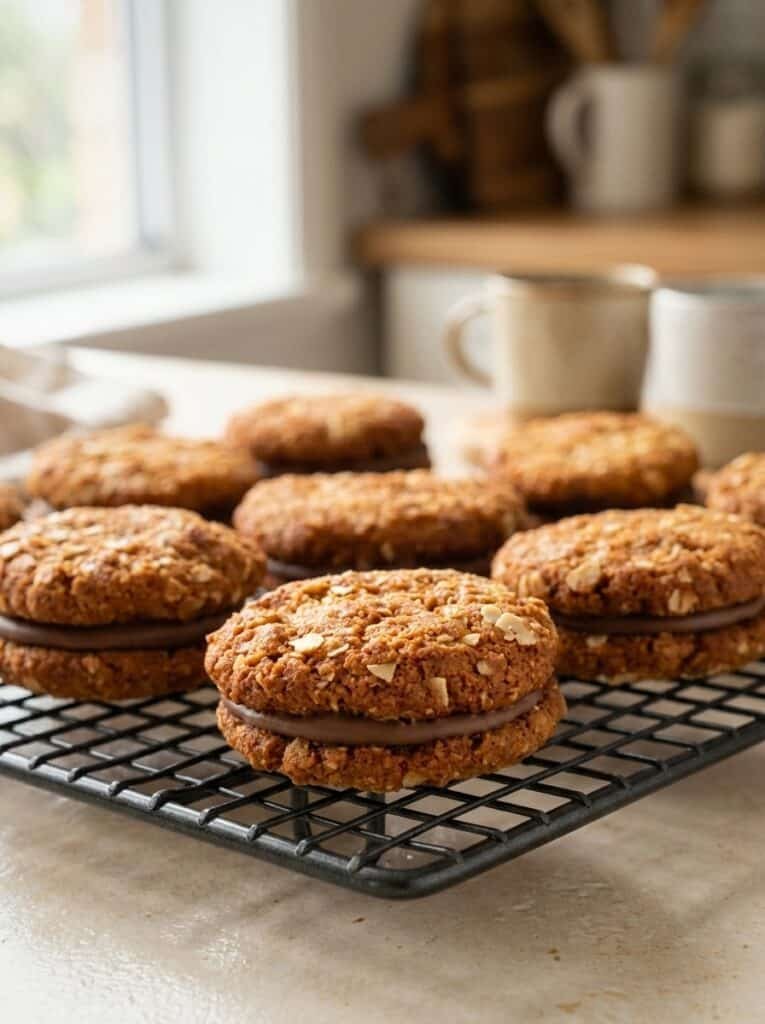
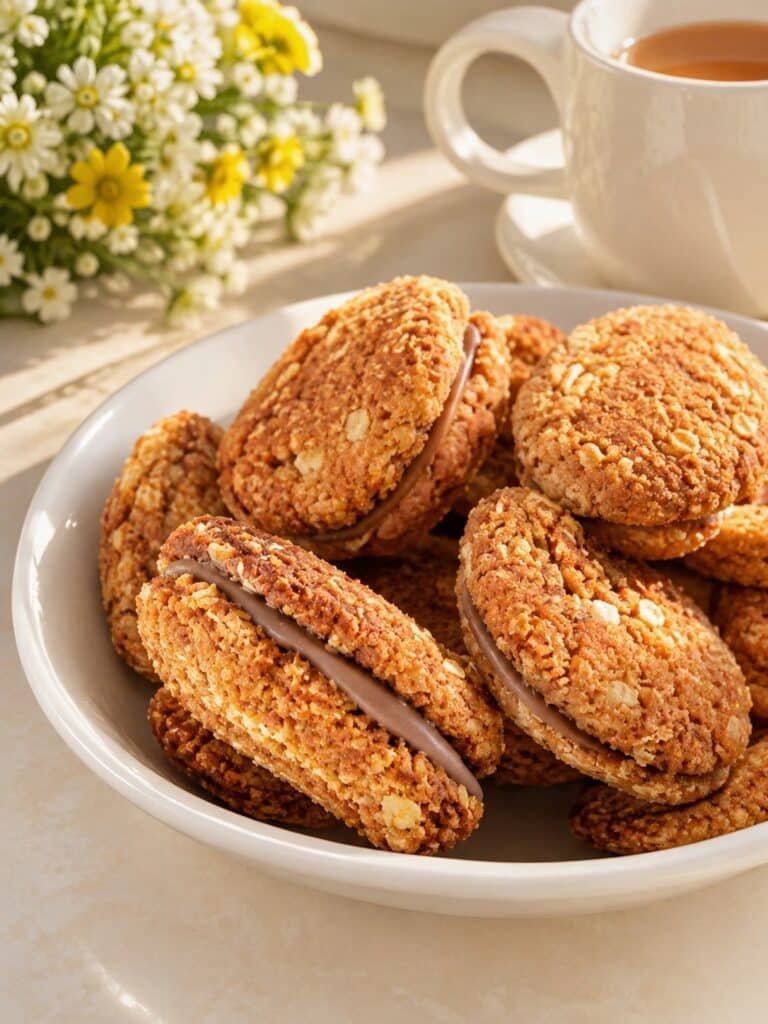
Flat side to flat side.
These are crisp and they snap under pressure. Press only until the chocolate meets both surfaces and stop.
Storing
Airtight at room temperature three to five days, or frozen up to three months with baking paper between the layers. <p>The paper matters when freezing. Chocolate-sandwiched biscuits stick to each other and separating a frozen block breaks them. ## Golden syrup Eighty grams, and there is no direct substitute.
It is an inverted sugar syrup with a distinctive caramel flavour, and it is also the acid the bicarbonate of soda reacts with. Honey is the closest option and tastes noticeably different. Corn syrup is neutral and would leave them flat.
Making them by machine
The source includes a Thermomix method, which melts the butter, syrup and sugar together first, then adds the bicarb and water, then the dry ingredients on reverse.
The order differs from the conventional method but the result is the same. Reverse speed is used so the blades push rather than cut, which stops the oats being chopped.

Kingston Biscuits
Description
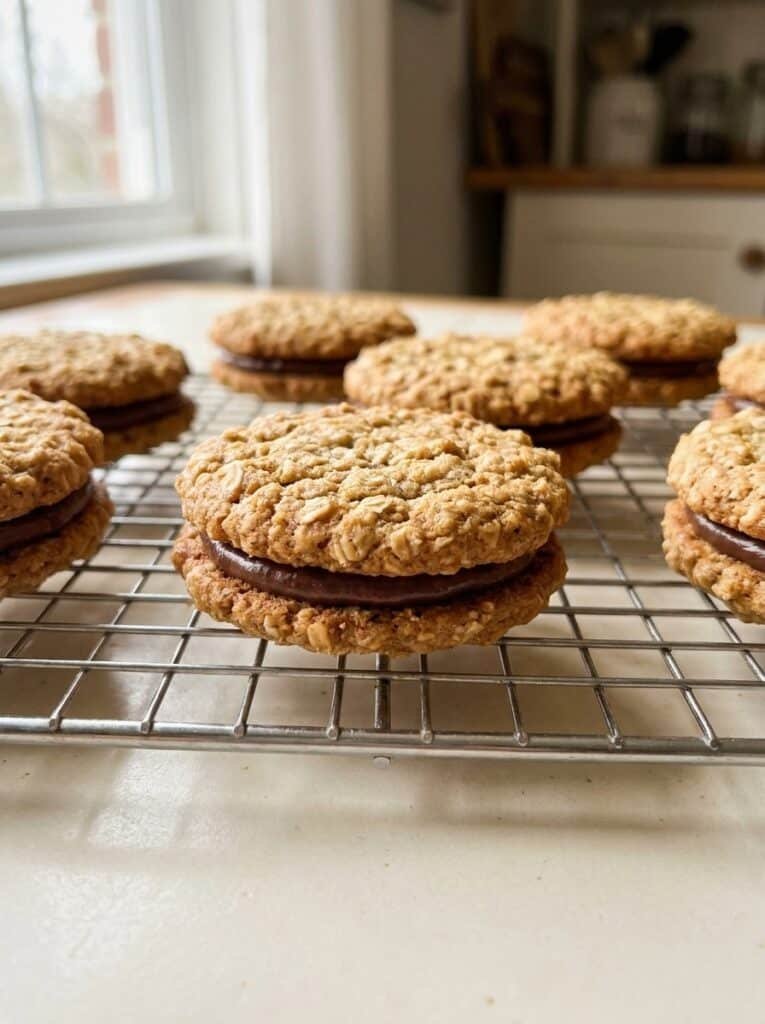
Golden oat and coconut biscuits joined in pairs with melted chocolate, made in one bowl.
Ingredients:
Instructions
-
Preheat the oven to 160C fan-forced. Grease and line 3 to 4 baking trays with baking paper.
-
Combine the quick oats, plain flour, caster sugar, coconut and a pinch of salt in a bowl.
-
Place the butter, golden syrup and 2 tablespoons of cold water into a microwave-safe bowl and heat 3 minutes at 50% power, or until melted.
-
Stir the bicarbonate of soda through the hot mixture. It will foam and lighten as it reacts with the golden syrup.
-
Pour the butter mixture over the oat mixture and stir to combine.
-
Roll into teaspoon-sized balls and place 3 to 4cm apart on the prepared trays. Press down lightly.
-
Bake 12 minutes, until lightly golden around the edges. They will still be soft and will crisp as they cool.
-
Cool on the trays 10 minutes before moving to a wire rack to cool completely.
-
Once completely cooled, melt the chocolate in a microwave-safe bowl at 50% power in 30 second bursts until just melted. Allow to cool until slightly thickened.
-
Spread a teaspoon of chocolate onto the flat side of one biscuit and sandwich gently with another. Set aside for the chocolate to set..
Note
The source method calls for 2 tablespoons of cold water but water appears nowhere in its ingredient list; it has been added here and is not optional, since it loosens the butter and syrup enough to coat the dry ingredients. The cook time field says 15 minutes but both methods say 12; use 12 with the visual cue of lightly golden edges. They crisp as they cool, so soft in the tray is correct. Use quick oats rather than rolled, as they are thinner and give a finer texture. The bicarb goes into the hot butter and syrup, where it reacts with the syrup's acidity and foams; check that it is fresh. Roll teaspoon-sized, since two are sandwiched together. Cool the melted chocolate until slightly thickened or it runs out of the sandwich. The listed 250g of chocolate is roughly double what 20 sandwiches need at a teaspoon each. Freeze with baking paper between layers.