


Zwetschgenkuchen shows up in German kitchens the week the Italian plums land and disappears again a few weeks later. It is a sheet cake, not a fussy one. Yeast dough pressed flat, plums packed on top standing upright, streusel scattered over, thirty five minutes in the oven. The whole thing is built for feeding a lot of people from one pan.
Two hours start to finish, and most of that is the dough rising without you. Actual work is closer to twenty five minutes.
Yeast dough, not cake batter

This is what separates the real version from every plum cake made with a butter batter. The base here is a soft enriched dough, closer to brioche than to sponge. It bakes into something with a bit of chew that holds up under wet fruit instead of going soggy under it.
That matters more than it sounds. Plums release a lot of juice. A cake batter base turns to pudding underneath. The yeast dough absorbs some of it and stays structural, which is why this recipe has survived unchanged for as long as it has.
Use Italian plums if you can find them
Italian plums, sometimes sold as prune plums, are the small oval ones with dense flesh and a pit that slips out cleanly. They hold their shape through baking and they concentrate rather than collapse. Round eating plums have more water and go mushy.
Pit them and quarter them, then arrange them close together with the cut sides facing up. Pack them tighter than feels reasonable. They shrink considerably, and a sparse layer bakes into a cake with bald patches.
For the streusel, the butter needs to be cold. Rub it into the flour and sugar with your fingertips until you have rough clumps somewhere between crumbs and small pebbles. If it warms up and turns to paste, put the bowl in the fridge for ten minutes and start again.
Pressing the dough out
An enriched yeast dough on a sheet pan behaves differently than pizza dough. It is softer and stickier, and it does not want to hold a rectangle. Press from the center outward with flat hands rather than fingertips, and work it toward the corners in stages. If it springs back, walk away for two minutes and come back. Fighting it just tears it.
Flour your hands rather than the dough. Extra flour worked into the surface at this stage makes the baked base dry, and this dough is already on the lean side of enriched.
How it goes together
Warm the milk to about 110F. Hotter than that kills the yeast. Combine it with the yeast and two tablespoons of the sugar and leave it until the surface goes frothy, five to ten minutes. No froth means dead yeast, and there is no recovering the batch from there.
Mix the flour and salt, add the yeast mixture along with the melted butter, remaining sugar, and egg, then knead until smooth. Cover and leave it an hour to rise.
Press the dough out across a half sheet pan, all the way to the corners. It will fight you a little and want to spring back. Let it rest two minutes and it will cooperate. Lay on the plums, scatter the streusel, and bake at 350F for thirty to thirty five minutes until the streusel is golden and the edges have pulled slightly from the pan.
Serving and storing
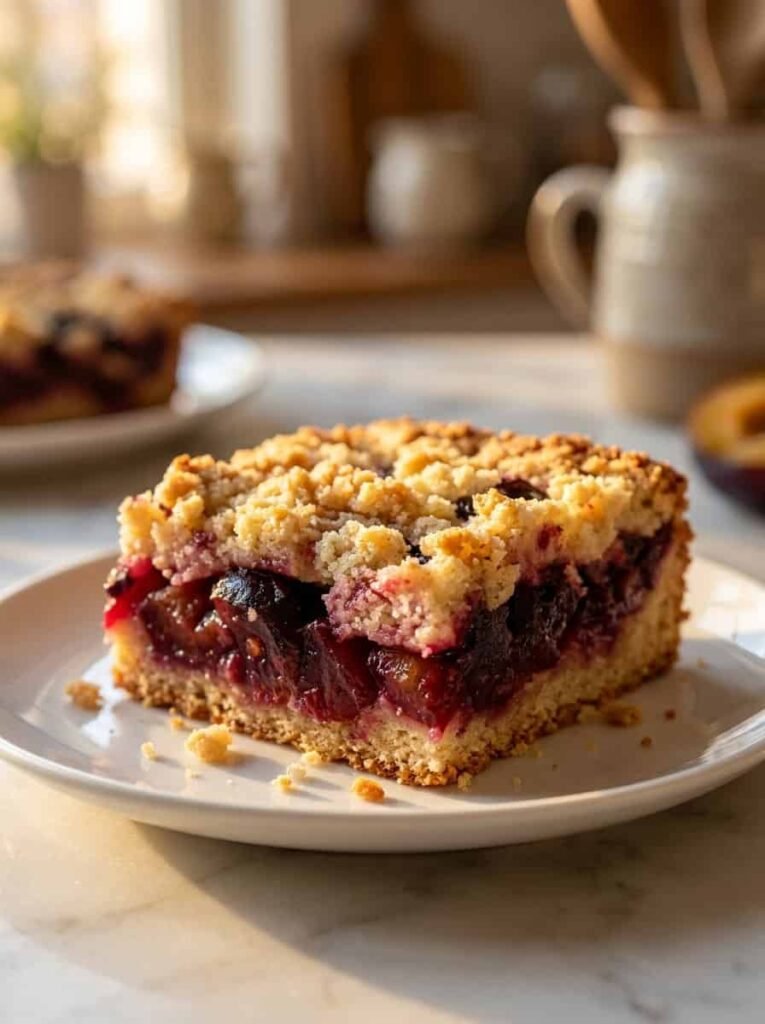
Warm, with unsweetened whipped cream, is how this is meant to be eaten. It keeps two days covered at room temperature and the dough stays good, though the streusel loses its crispness after the first day.
A note on the streusel
Cinnamon in the streusel is common in southern Germany and absent further north. A half teaspoon is plenty. It warms the whole cake without competing with the plums, which are already doing something tart and specific.
If your plums are underripe
Toss the quarters with an extra tablespoon of sugar and let them sit fifteen minutes before arranging them. Underripe plums stay sour through baking otherwise, and there is not enough sugar elsewhere in the cake to cover for them.
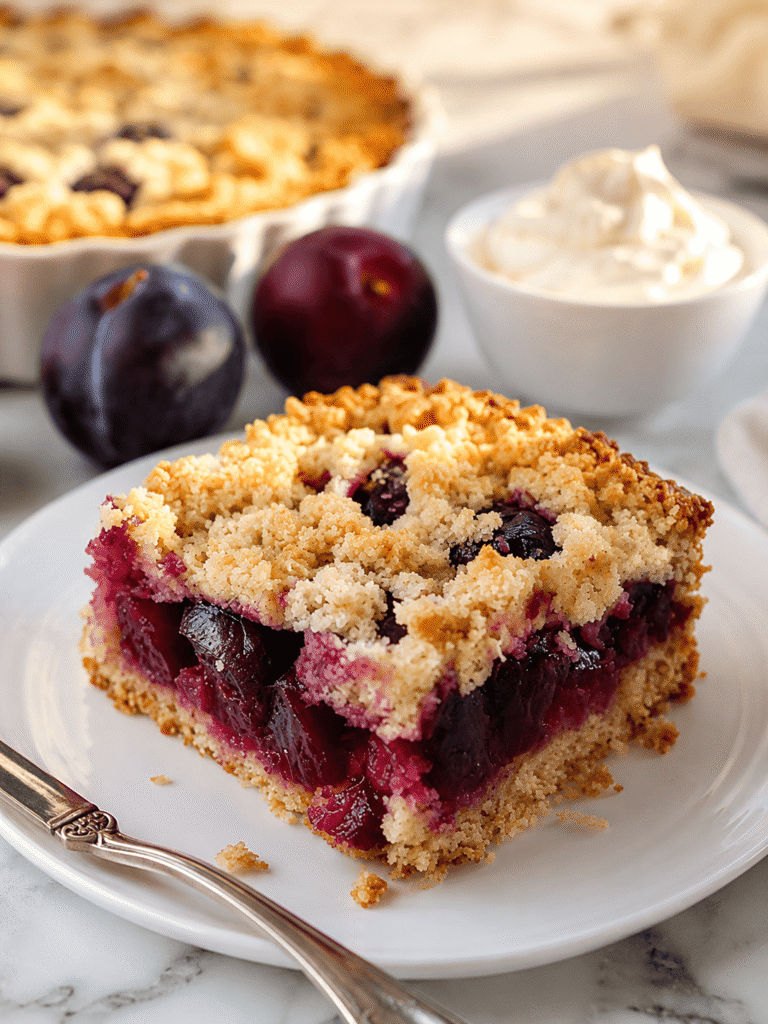

German Plum Cake (Zwetschgenkuchen)
Description
Traditional German plum cake with a soft yeast dough base, quartered Italian plums, and a crumbly streusel topping.
Ingredients:
Instructions
-
Combine the warm milk, yeast, and 2 tablespoons of the sugar. Let sit 5 to 10 minutes until frothy.
-
Mix the flour and salt, then add the yeast mixture, melted butter, remaining sugar, and egg. Knead until smooth.
-
Cover and let the dough rise 1 hour, until roughly doubled.
-
Preheat the oven to 350F (180C).
-
Pit and quarter the plums. Make the streusel by rubbing the cold butter into the sugar and flour until rough clumps form.
-
Press the dough across a 13 by 18 inch half sheet pan, out to the corners. Arrange the plums cut side up, packed close together, then scatter the streusel over the top.
-
Bake 30 to 35 minutes, until the streusel is golden and the edges pull slightly from the pan..
Note
Nutrition per serving from source: 250 calories, 8g fat, 42g carbohydrates, 4g protein. Add half a teaspoon of cinnamon to the streusel for a southern German version. Best served warm with whipped cream. Keeps 2 days covered at room temperature.