



This is bread for people who do not want to make bread. There is no kneading, no shaping, no proofing basket, no scoring. You stir everything together with a spoon, dump half into each pan, let it rise once, and bake. The dough is closer to a thick batter than anything you would recognize as bread dough, and that is deliberate.
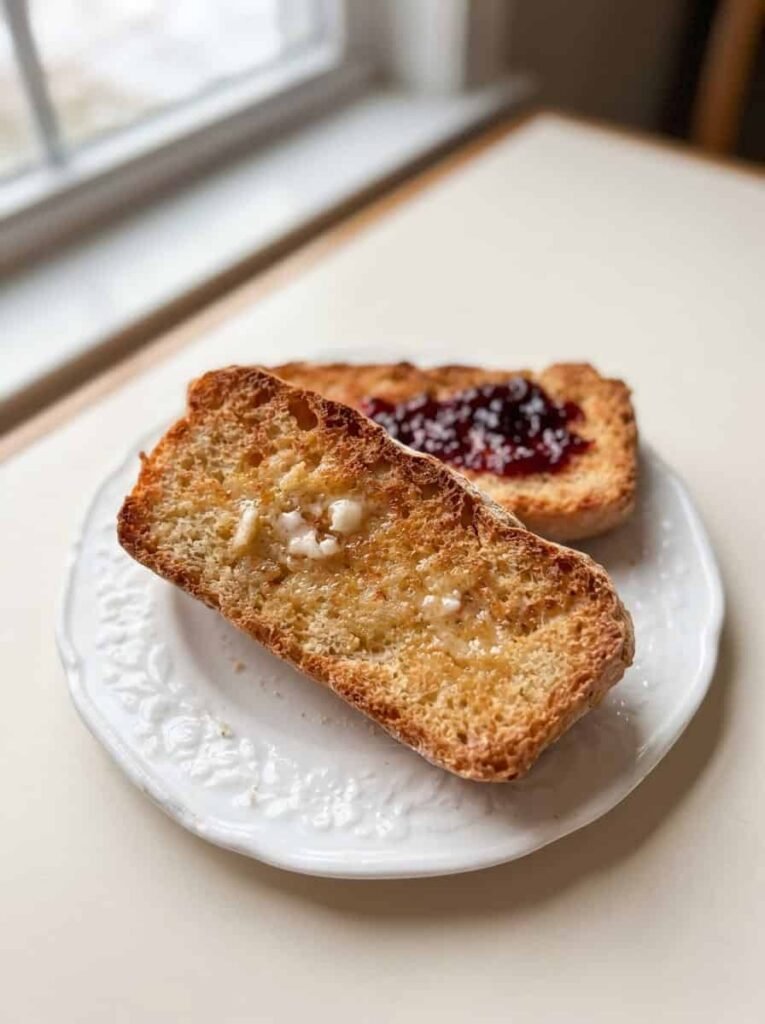
What comes out has the open crumb and the craggy holes of an English muffin, which is entirely the point. Toasted, with butter melting down into the craters, it does the thing a store bought English muffin does but from a slice instead of a split round.
The cornmeal is structural, not decorative

Grease the pans, then dust cornmeal over the bottom and up the sides before the dough goes in. It bakes into a thin gritty crust that keeps the loaf from sticking and gives you that faint sandy texture on the outside of a real English muffin. Skipping it costs you both things.
Sprinkle a little more over the top of the dough before it rises if you want. It is optional there, but it looks right.
Baking soda alongside the yeast
A quarter teaspoon of baking soda goes into the flour with the salt. It seems out of place in a yeast bread and it is doing something specific. It nudges the pH and helps open up the crumb, which is where the holes come from. This is the difference between a loaf that toasts like an English muffin and one that toasts like sandwich bread.
Do not increase it. More does not mean more holes, it means a soapy aftertaste.
Two loaves is not a typo
Five cups of flour and over two cups of milk makes more dough than one pan holds. The recipe is built for two, and I have never regretted it. One loaf gets eaten within a day and a half, and the second goes into the freezer sliced, which turns it into a week of toast that requires no thought.
Working through it
Start the yeast in half a cup of warm water with the sugar. Stir it and leave it ten minutes until it bubbles. If nothing happens the yeast is dead and there is no point continuing.
Whisk the flour, baking soda, and salt together in a large bowl. Add the yeast mixture and the warm milk, then stir with a spoon until everything is wet and incorporated. It will look shaggy and loose and slightly wrong. That is correct. Resist the urge to add flour.
Divide the dough between two greased and cornmeal dusted 9 by 5 pans, using the spoon. Level the tops with the back of a floured wooden spoon. Cover and put somewhere warm for forty five to sixty minutes.
The dough should roughly double and come up near the top of the pans. It probably will not rise above the rim, and that is fine. I heat my oven to 170F, turn it off, then put the covered pans in there to rise, which gives a consistent warm spot regardless of the season.
Heat the oven to 400F and bake twenty five to thirty minutes, until the tops are browned. Let the loaves cool ten minutes in the pans, turn them out, then cool completely before you slice. Cutting warm bread of this style compresses the crumb and closes the holes you just worked for.
How to eat it
Toasted, always. Fresh and untoasted it is soft and a little bland. Toasted it turns crisp at the edges and the holes catch butter and jam the way they are supposed to. It makes two loaves, which is convenient, because one of them tends to disappear on the first day.
Storing it
Wrapped at room temperature it holds three or four days and toasts well the whole time. Do not refrigerate it, which stales bread faster than the counter does. The second loaf freezes well sliced, so you can pull out single pieces straight into the toaster.
If the rise is slow
Cold kitchens stretch this out. Give it the full hour and judge by the dough rather than the clock. It should look visibly puffed and reach close to the top of the pan.
English Muffin Bread
Description
Easy no-knead English muffin bread with a cornmeal crust and an open crumb built for toasting.
Ingredients:
Instructions
-
Grease two 9 by 5 inch bread pans and dust the bottoms and sides with cornmeal.
-
Combine the warm water, yeast, and sugar in a bowl. Stir and let sit 10 minutes, until the yeast bubbles.
-
Whisk the flour, baking soda, and salt together in a mixing bowl. Add the yeast mixture and the warm milk, stirring with a spoon until fully incorporated and wet.
-
Divide the dough between the two pans with a spoon. Level the tops using the back of a floured wooden spoon. Sprinkle with a little more cornmeal if desired.
-
Cover and set in a warm place to rise 45 to 60 minutes, until the dough roughly doubles and comes near the top of the pans.
-
Heat the oven to 400F and bake 25 to 30 minutes, until browned on top.
-
Cool 10 minutes in the pans, then turn out and cool completely before slicing..
Note
Best toasted with butter and jam. To create a warm rising spot, heat the oven to 170F, turn it off, cover the pans with a towel and place them inside. Makes 2 loaves. Do not increase the baking soda.