


Cold-start pan-seared chicken breasts is an America’s Test Kitchen technique that produces a deeply browned, juicy chicken breast from a cold pan rather than a preheated one. The chicken goes into an unheated, dry skillet, the heat goes to high, and the breast is flipped every two minutes throughout the cook. The result is a chicken breast with a deep, even crust and a juicy interior that a standard hot-pan sear often misses. A mustard and caraway pan sauce builds in the same pan in about five minutes while the chicken rests.
The cold-start method works because it changes the heat dynamic. A hot pan sears the exterior immediately and creates a steep temperature gradient between the outside and the inside. The outside can overcook before the center reaches temperature. A cold pan warms the chicken gradually from the outside in, and the frequent flipping keeps the cooking even from both sides simultaneously rather than concentrating heat on one face at a time.
Preparing the chicken

Buy chicken breasts weighing up to ten ounces each for best results. Breasts over twelve ounces toughen on the exterior before the interior reaches temperature and should not be used for this method. Gently pound the thicker end of each breast until it’s about half an inch thick, matching the thickness of the thinner end. Pat dry with paper towels. Brush both sides with vegetable oil and season each breast with half a teaspoon of kosher salt. The oil brush rather than a heavy pour is specific; too much oil causes splattering in the cold pan as the heat builds.
Arrange the breasts skin-side down in a twelve-inch nonstick or carbon-steel skillet with the narrow ends of the breasts opposite the wider ends of their neighbors. This arrangement maximizes the use of the pan and keeps the thicker parts from crowding.
The cold-start cook
Place the cold skillet over high heat. Cook two minutes, flip, cook two more minutes. At this point there should be light browning. Reduce heat to medium and continue cooking, flipping every two minutes, for another six to eight minutes until the exterior is well browned and the thickest part of the breast registers 155 degrees on an instant-read thermometer.
The frequent flipping is the mechanism that produces even cooking. Each flip transfers heat from the browned side to the pan surface and allows the previously cooled side to start building its crust. The chicken essentially cooks from both directions simultaneously in alternating two-minute intervals rather than from one side until the heat penetrates through. The result is more evenly cooked meat with a crust on both faces rather than a darker bottom and pale top.
Pull the chicken at 155 degrees, not 165. Transfer to a plate, tent with foil, and rest for at least ten minutes. The internal temperature will continue rising to 165 during the rest, which is the food-safe serving temperature. Pulling at 155 and resting rather than cooking to 165 in the pan is what preserves the juiciness; overcooked chicken is chicken that was held at high temperature too long.
The mustard and caraway pan sauce
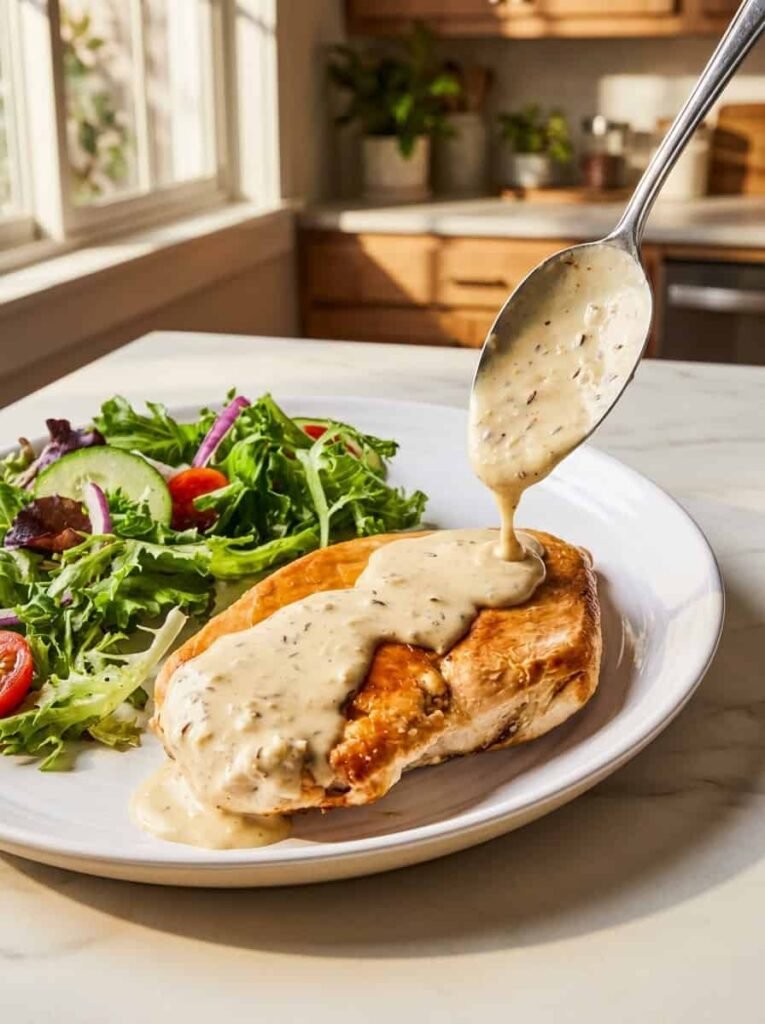
Heat a tablespoon of olive oil in the now-empty skillet over medium heat. Add three tablespoons of minced shallot and cook until lightly golden, about two minutes. Add a cup of chicken broth and increase heat to medium-high, scraping up the browned bits from the pan. Simmer rapidly until reduced to about a quarter cup, roughly three minutes. Stir in a third cup of heavy cream and any accumulated chicken resting juices. Return to a simmer and cook until the sauce coats the back of a spoon, one to two minutes. Stir in a tablespoon of Dijon mustard and a teaspoon of crushed caraway seeds. Season with salt and pepper. If the sauce is too thick, add water a teaspoon at a time off the heat.
Caraway seeds are the herb-adjacent ingredient that makes this pan sauce specific rather than generic. Their warm, anise-adjacent flavor works with the Dijon’s sharpness and the cream’s richness in a combination that tastes Central European and considered. Crush them in a mortar or under the bottom of a heavy pan; whole caraway seeds have a different texture and release less flavor. Serves 4. No nutrition data provided for this recipe.
The 155-degree pull explained
USDA guidelines specify 165 degrees as the safe minimum for poultry. Pulling at 155 and resting is safe because the chicken continues cooking during the rest and reaches 165 before the foil is removed. This is called carryover cooking and it happens with every protein; pulling slightly under the target temperature and resting accounts for it. Checking with a thermometer after the ten-minute rest confirms the chicken has reached 165 before serving.
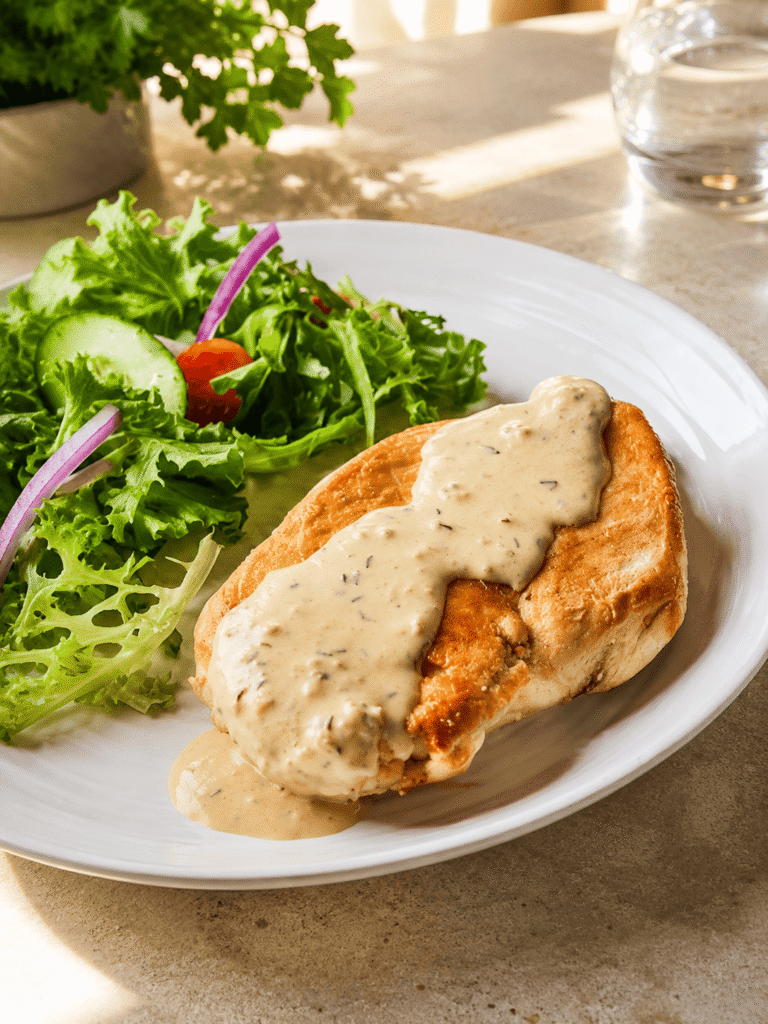

Cold-Start Pan-Seared Chicken Breasts with Mustard Caraway Pan Sauce
Description
Chicken breasts cooked from a cold pan over high heat, flipped every 2 minutes until 155 degrees, rested to 165. Mustard and caraway cream pan sauce. Serves 4.
Ingredients
Instructions
-
Gently pound the thicker end of each breast until about 1/2 inch thick. Pat dry with paper towels. Brush both sides with vegetable oil and season each breast with 1/2 teaspoon kosher salt.
-
Arrange the breasts skin-side down in a 12-inch nonstick or carbon-steel skillet, alternating narrow and wide ends. Place over HIGH heat and cook 2 minutes. Flip and cook 2 more minutes (light browning should be visible).
-
Reduce heat to medium. Continue cooking, flipping every 2 minutes, for 6 to 8 more minutes, until well browned and the thickest part registers 155 degrees F on an instant-read thermometer.
-
Transfer to a plate, tent with foil, and rest at least 10 minutes (temperature will rise to 165 degrees during rest).
-
Make the pan sauce: heat olive oil in the empty skillet over medium heat. Cook shallot until lightly golden, about 2 minutes. Add broth; increase to medium-high; scrape up browned bits; simmer until reduced to 1/4 cup, about 3 minutes.
-
Stir in cream and any accumulated chicken resting juices. Simmer until sauce coats the back of a spoon, 1 to 2 minutes. Stir in mustard and caraway seeds. Season with salt and pepper. Spoon over chicken and serve..
Note
Use breasts up to 10 oz; do not use breasts over 12 oz. Pull at 155 degrees internal temperature; the chicken reaches 165 during the 10-minute rest. If using Morton kosher salt, use 1 1/2 teaspoons. No nutrition data was provided for this recipe.