


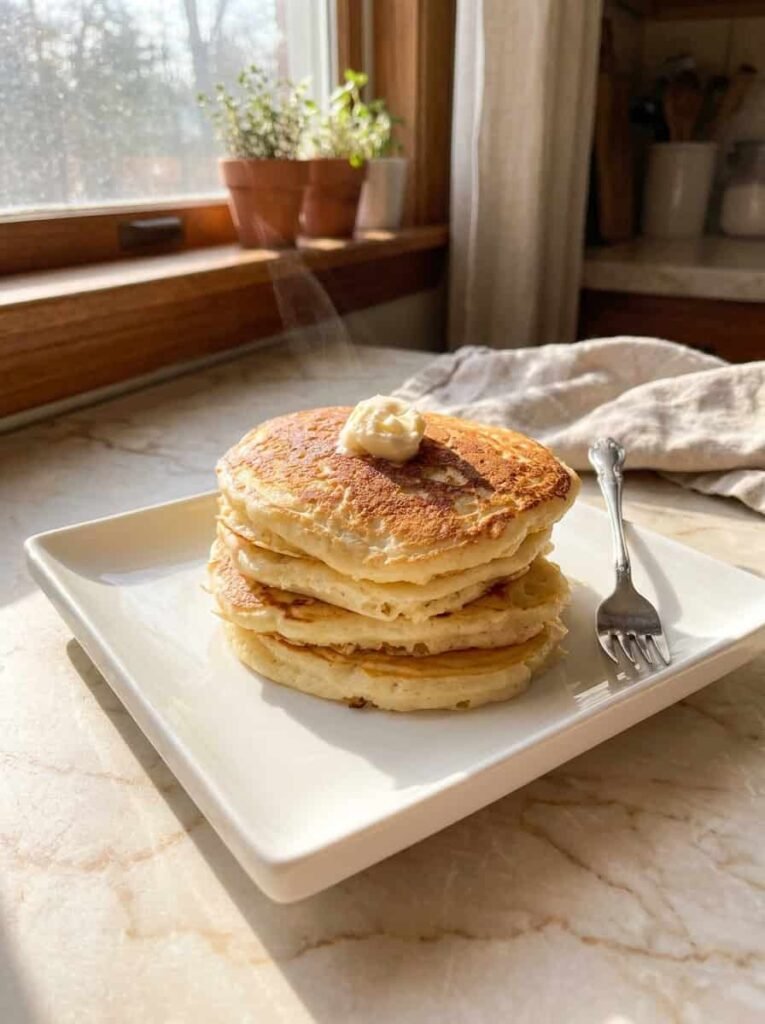

Buttermilk pancakes are a twenty-minute breakfast that produces eight to twelve golden, tender pancakes from one bowl of dry ingredients and one bowl of wet. The buttermilk is the ingredient that makes these different from a plain milk pancake: its acidity reacts with the baking soda to create lift and tenderness, and its slight tang gives the finished pancake a flavor depth that milk alone doesn’t produce. The technique rule is to undermix the batter deliberately and cook on a buttered griddle until bubbles form before flipping.
The buttermilk and baking soda reaction starts the moment they combine, which is why the batter should be cooked soon after mixing rather than left to rest. Some pancake recipes call for a rest period; this one works best cooked immediately while the leavening is still active.
Mixing the batter

Whisk together the dry ingredients in a medium bowl: two cups of sifted flour, two tablespoons of sugar, two teaspoons of baking powder, one teaspoon of baking soda, and one teaspoon of salt. In a separate bowl, whisk two eggs with two cups of buttermilk. Make a well in the center of the dry ingredients, pour in the wet ingredients, and stir with a wooden spoon until almost combined. When a few streaks of flour remain, add two tablespoons of melted butter and fold together until just incorporated.
The wooden spoon switch and the deliberately incomplete mixing are the most important technique points in this recipe. A whisk mixes too efficiently and develops the gluten in the flour; a wooden spoon mixes less aggressively and leaves the lumps that produce a tender, soft pancake. Lumpy batter is correct batter. A few visible streaks of flour and unmixed pockets of batter going onto the griddle will smooth out during cooking and produce a more tender result than a fully smooth batter would.
The butter goes in at the end rather than with the other wet ingredients to prevent it from interacting with the baking soda before the batter is on the heat. Fold it in gently rather than stirring it through.
Cooking
Preheat a griddle or large flat pan to medium heat. Butter the surface before each batch. Scoop a third cup of batter per pancake and let it spread naturally on the griddle. Watch for bubbles to form across the surface and the edges to look set and slightly dry. This is the flip signal; it means the bottom is cooked and the middle has enough structure to flip without breaking. Flip once and cook until the underside is golden.
Medium heat rather than high is the temperature that produces a golden exterior without burning before the interior is cooked through. A griddle that’s too hot browns the bottom immediately but leaves the center raw; medium heat gives the batter time to cook through before the outside overcooks.
Serving
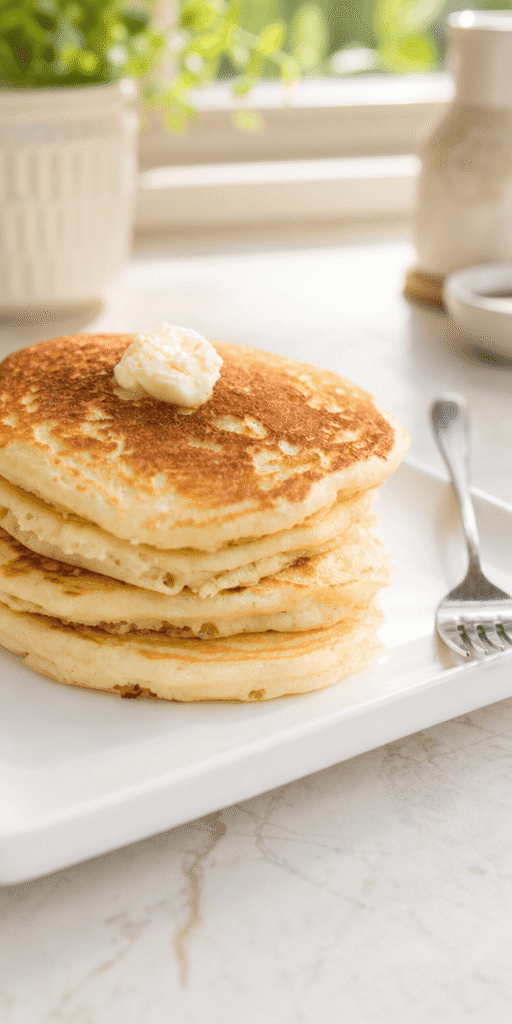
Serve immediately. Pancakes held in a warm oven lose their crisp edges and the centers continue to steam and soften. If cooking for a group, serve in batches as they come off the griddle rather than holding them. Leftover pancakes freeze well for two to three months; reheat in a toaster for a result close to fresh. Makes 8 to 12 pancakes depending on size. Nutrition per pancake: 204 calories, 30g carbohydrates, 7g protein.
Why buttermilk specifically
Buttermilk’s acidity serves two purposes: it activates the baking soda (which needs an acid to produce carbon dioxide bubbles for lift) and it partially breaks down the gluten in the flour, which produces a more tender crumb than a neutral milk batter would. The combination of baking powder and baking soda in this recipe uses both a leavening agent that works in neutral batter and one that works specifically with the buttermilk’s acid. The result is a pancake that rises from both sources of leavening and has the tenderness that the acid contributes. If you don’t have buttermilk, add a tablespoon of white vinegar or lemon juice to two cups of milk and let it sit for five minutes; the acidity won’t be identical but the chemistry is similar enough to work.
Buttermilk substitute
To make a quick buttermilk substitute: add 2 tablespoons of white vinegar or fresh lemon juice to a measuring cup, then fill to the 2-cup line with whole milk. Stir briefly and let stand for 5 minutes until the milk curdles slightly. This approximates the acidity of buttermilk and will activate the baking soda similarly. The flavor won’t be identical but the pancakes will be nearly as tender as the buttermilk version.
Buttermilk Pancakes
Description
Classic buttermilk pancakes mixed with a wooden spoon to keep the batter intentionally lumpy. Cook until bubbles form before flipping. Makes 8 to 12 pancakes.
Ingredients
Instructions
-
Preheat a griddle or large flat pan to medium heat.
-
Whisk together the flour, sugar, baking powder, baking soda, and salt in a medium bowl.
-
In a separate bowl, whisk together the eggs and buttermilk.
-
Make a well in the center of the dry ingredients. Switch to a wooden spoon. Pour in the wet ingredients and stir until almost combined with a few streaks of flour remaining.
-
Add the melted butter and fold together until just incorporated. Do not overmix; a lumpy batter is correct.
-
Butter the griddle. Scoop 1/3 cup of batter per pancake. Cook until bubbles form across the surface and the edges look set, then flip once. Cook until the underside is golden.
-
Serve immediately..
Nutrition Facts
Servings 10
- Amount Per Serving
- Calories 204kcal
- % Daily Value *
- Total Fat 6g10%
- Saturated Fat 3g15%
- Trans Fat 0.1g
- Cholesterol 55mg19%
- Sodium 530mg23%
- Potassium 232mg7%
- Total Carbohydrate 30g10%
- Dietary Fiber 1g4%
- Sugars 6g
- Protein 7g15%
- Vitamin A 246 IU
- Calcium 124 mg
- Iron 2 mg
* Percent Daily Values are based on a 2,000 calorie diet. Your daily value may be higher or lower depending on your calorie needs.
Note
Do not overmix; lumpy batter with flour streaks is correct. Use a wooden spoon, not a whisk, once the wet ingredients are added. Cook immediately after mixing while the leavening is active. Servings set to 10 as midpoint of 8-12. Nutrition per pancake: 204 calories, 30g carbohydrates, 7g protein, 6g fat, 3g saturated fat, 55mg cholesterol, 530mg sodium, 232mg potassium, 1g fiber, 6g sugar, 246IU vitamin A, 124mg calcium, 2mg iron.