


Magic lemon cobbler is a dump-and-bake dessert that assembles in layers without stirring: butter melted in the baking dish, batter poured over the butter without mixing, and dollops of lemon pie filling dropped over the batter. During baking the layers shift and sink and the cobbler self-organizes into a cakey, custardy interior with a golden crust. The lemon flavor comes from both a tablespoon of lemon extract in the batter and the canned lemon pie filling on top.
The no-stir instruction after each pour is the mechanism behind the “magic.” When batter is poured over melted butter and left undisturbed, the butter works its way around the edges and underneath as the batter rises, producing a buttery, crisp perimeter and a soft center. Stirring collapses this and produces a homogeneous batter that bakes more uniformly and less interestingly.
The butter and the dish

A half cup of unsalted butter, one stick, goes into a nine by nine baking dish and melts in the preheating oven for three to four minutes. Remove the dish once the butter is fully melted and coats the bottom. The butter should be liquid and spread across the full base before the batter goes in; pooled butter that hasn’t spread evenly produces uneven browning on the finished cobbler.
The batter
One cup of flour, one and a half teaspoons of baking powder, a quarter teaspoon of salt, and one cup of granulated sugar whisked together. Stir in one cup of buttermilk, a tablespoon of vanilla extract, and a tablespoon of lemon extract until just combined. Don’t overmix; a few small lumps are fine and produce a more tender texture. Pour the batter directly over the melted butter in the dish. Do not stir.
The buttermilk adds the same acidity and tenderness it brings to pancakes and quick breads: it activates the baking powder more efficiently than plain milk would and tenderizes the gluten in the flour. The lemon extract is strong; a full tablespoon makes the batter clearly lemon-flavored rather than just hinting at it. This is the right amount for a dessert that’s also getting lemon pie filling on top.
The pie filling and the bake
Drop spoonfuls of the twenty-one-ounce can of lemon pie filling over the surface of the batter. Distribute the dollops as evenly as possible across the whole surface so that every serving gets some of the concentrated lemon filling. Don’t press the dollops into the batter or stir; let them sit on the surface and sink as the cobbler bakes.
Bake at 350 degrees for forty-five to fifty-five minutes until the edges are golden and the center is set. Check at forty-five minutes; oven temperatures vary and the cobbler can go from golden to overbaked quickly in the last ten minutes. The edges will look done before the center does; this is correct. Let cool slightly before serving.
What happens in the oven
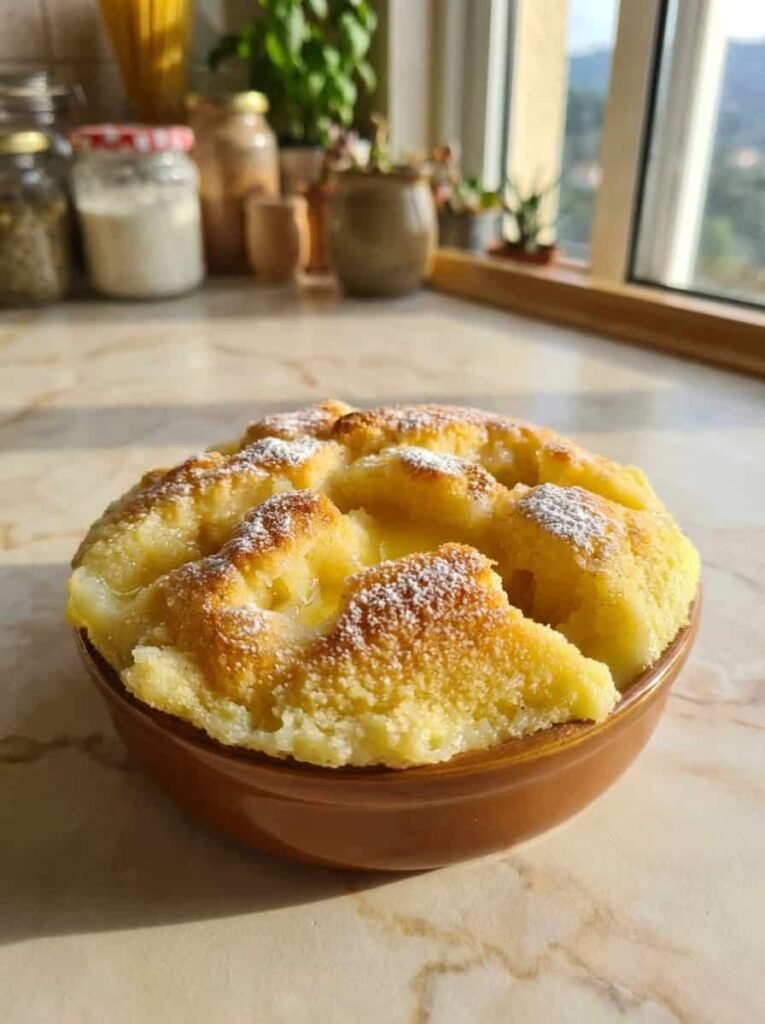
The batter rises around and through the pie filling as it bakes, partially encasing the lemon custard dollops within the cobbler rather than leaving them entirely on top. The butter migrates to the perimeter as the batter sets, creating the crisp, golden edge that’s the best bite of the cobbler. The center remains softer and more custardy where the pie filling has sunk slightly. The result is a single pan with three distinct textures: crisp buttery edge, soft cakey center, and pockets of lemon filling throughout.
Serve warm with vanilla ice cream or whipped cream. The contrast between the warm cobbler and cold cream is the right way to eat this. Serves approximately nine from a nine by nine pan, one square per person. No nutrition data was provided for this recipe.
Variations
Cherry pie filling works in place of lemon for a completely different flavor direction using the same method. Blueberry pie filling with a teaspoon of almond extract in the batter instead of lemon extract is another common variation. Any thick, canned pie filling works; thin fruit toppings won’t hold their shape as dollops and will merge entirely into the batter. The butter-batter-filling layering method stays the same regardless of the filling.
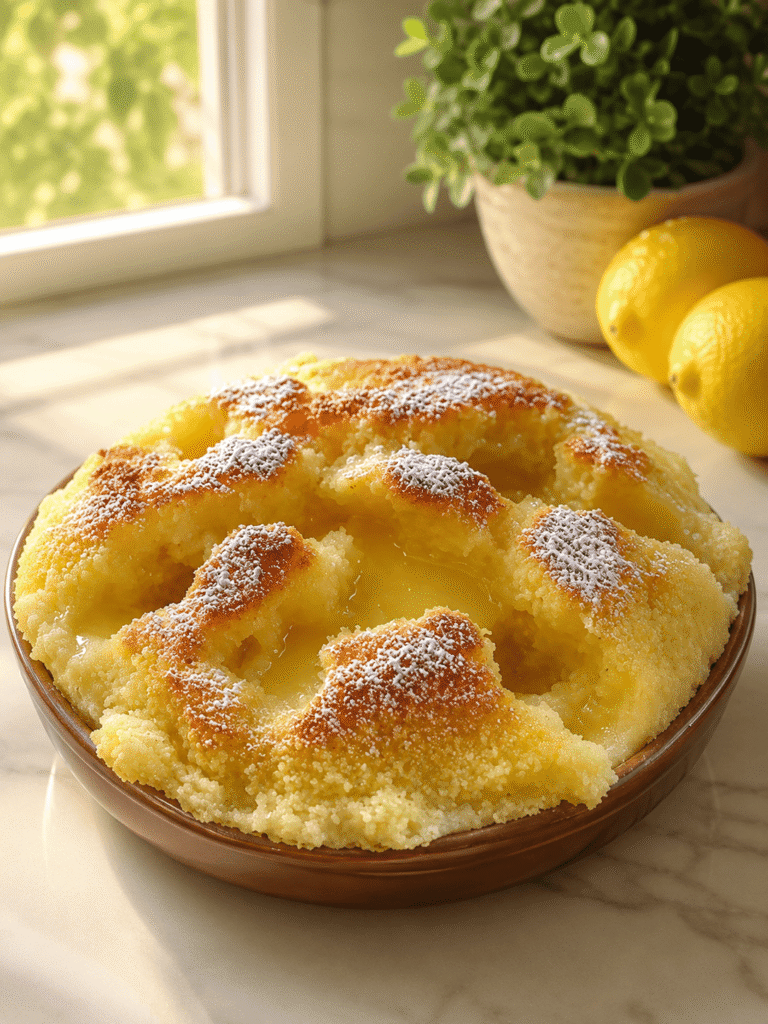

Magic Lemon Cobbler
Description
Magic lemon cobbler with butter melted in the pan, buttermilk batter poured over, and lemon pie filling dolloped on top without stirring. Bakes into a cakey, custardy dessert with a golden crust.
Ingredients
Instructions
-
Preheat the oven to 350 degrees Fahrenheit. Place the butter in a 9x9-inch baking dish and melt in the oven for 3 to 4 minutes until fully melted and coating the base. Remove and set aside.
-
In a bowl, whisk together the flour, baking powder, salt, and sugar. Stir in the buttermilk, vanilla extract, and lemon extract until just combined. Do not overmix.
-
Pour the batter over the melted butter. Do not stir.
-
Drop spoonfuls of the lemon pie filling evenly over the top of the batter. Do not stir.
-
Bake for 45 to 55 minutes until the edges are golden. Check at 45 minutes. Let cool slightly before serving..
Note
Do not stir after pouring the batter over the butter, and do not stir after adding the pie filling. Check at 45 minutes. No nutrition data was provided for this recipe.