


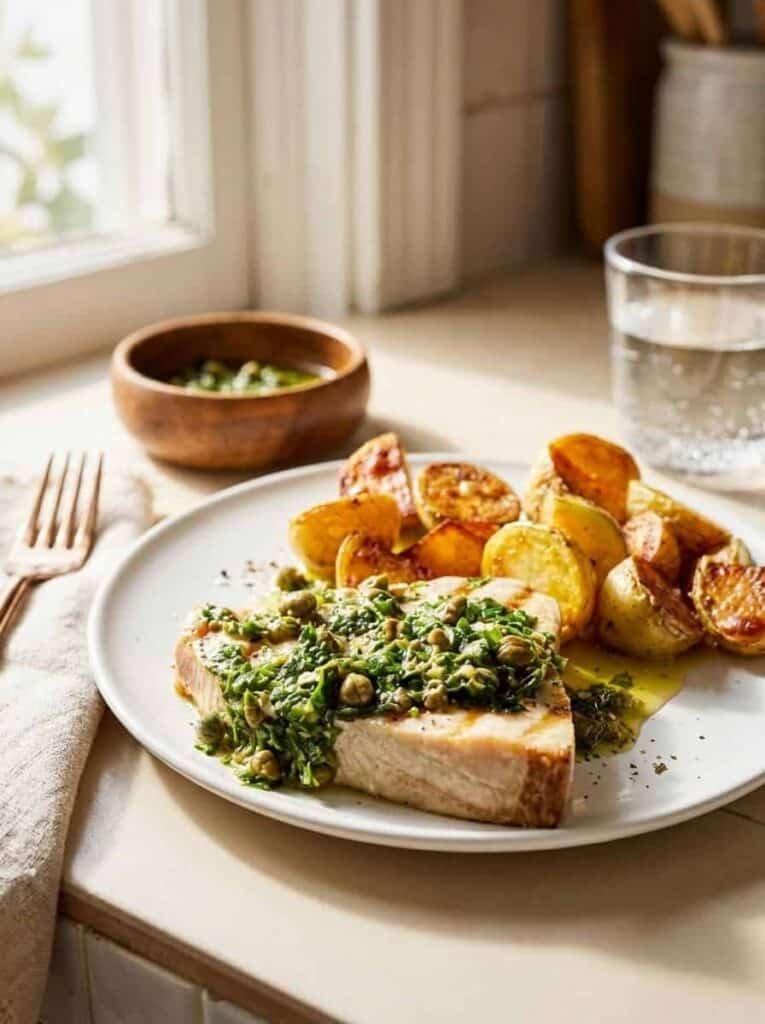

Twenty minutes, and most of that is making a sauce that needs no cooking. The tuna itself takes seven or eight minutes total.
Capers mashed with lemon, parsley and olive oil, spooned over tuna cooked on a grill or under a broiler.
Mash the capers with a fork
Three tablespoons, drained, crushed against the side of the bowl before anything else goes in.

Whole capers stay whole in a sauce and you get concentrated salty bursts with nothing in between. Mashed, they break down and release their brine and flavour through the whole mixture.
A fork is enough. You are not making a paste, just breaking them open.
The oil goes in last
Lemon juice, parsley, salt and pepper first, then six tablespoons of olive oil stirred in.
Adding the oil at the end lets everything else combine into the acid first, which distributes the salt and the caper brine properly. Oil poured in early coats everything and slows that mixing.
This is a loose sauce rather than an emulsion. It will separate as it stands and that is fine; stir it again before spooning it over.
Split the seasoning
Three quarters of a teaspoon of salt and half a teaspoon of pepper total, divided between the sauce and the fish.
Half a teaspoon of salt and a quarter of pepper go into the sauce. The remaining quarter teaspoon of each goes onto the tuna.
Seasoning the fish directly matters more than it might seem. Capers are salty and it is tempting to let the sauce carry everything, but unseasoned tuna underneath tastes flat by comparison.
Four minutes, then three or four more
Over a grill or under a broiler, for steaks about three quarters of an inch thick.
That timing gives medium rare, which is how tuna steaks are usually served and what the recipe assumes. The centre stays pink and the texture stays like steak rather than going dry and flaky.
Tuna cooked through is a different thing entirely. It goes firm, pale and considerably drier, closer to canned tuna in texture. Some people prefer it and it is not wrong, it just needs another two or three minutes.
The recipe says to cook until done to your taste, which is the correct instruction for a steak-style fish rather than a fixed temperature.
Two tablespoons of oil on the fish
Separate from the six in the sauce, and it is there for the cooking rather than the flavour.
Tuna is lean and it sticks to a grill grate readily. A coating of oil is what releases it cleanly and helps it colour rather than steaming.
Grill or broiler
Either, and they give slightly different results.
A grill gives you bar marks and a little smoke, and the direct heat from below sears hard. A broiler heats from above and colours the surface more evenly, without the marks.
Both work at high heat, which is what a thin steak wants. Low and slow gives you dry tuna with no crust.
Parsley, and how much
A quarter cup chopped, which is a generous amount for a sauce this size.
It is a component here rather than a garnish. Flat leaf parsley is grassy and slightly peppery, and against capers and lemon it provides the green freshness that stops the sauce being purely sharp and salty.
Chop it just before using. Parsley chopped in advance oxidises at the cut edges and loses both colour and aroma.
Curly parsley works and is milder. Flat leaf is the better choice if you have it.
Serving
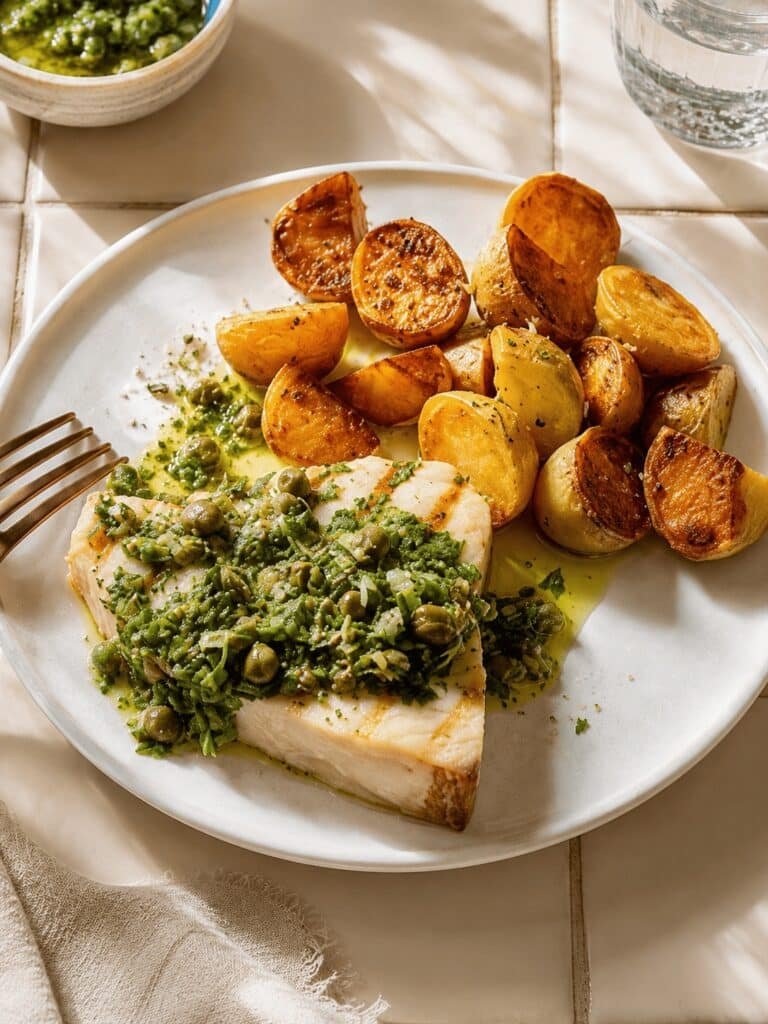
The sauce spooned over rather than the fish sitting in it, so the surface stays as it came off the heat. <p>Two pounds of tuna across four servings is generous. Boiled new potatoes, a green salad or grilled vegetables all suit it, and the sauce is loose enough to work on those too. ## Buying tuna steaks Look for steaks that are deep red and firm, cut evenly at about three quarters of an inch. Uneven thickness is the main cause of one part being overcooked while another is raw.
Yellowfin and albacore are the common choices. Both work here.
The sauce on other things
It keeps two days refrigerated and works on almost any grilled fish, on chicken, or spooned over roasted vegetables. It is essentially a salsa verde with capers doing the work anchovies often would.
Tuna Steaks with Lemon Caper Sauce
Description
Quick grilled tuna steaks served with a bright lemon and caper sauce made without cooking.
Ingredients:
Instructions
-
Light the grill or heat the broiler. In a small glass or stainless-steel bowl, mash the capers with a fork.
-
Stir in the lemon juice, parsley, 1/2 teaspoon of the salt and 1/4 teaspoon of the pepper, then stir in 6 tablespoons of the oil.
-
Coat the tuna with the remaining 2 tablespoons of oil and sprinkle with the remaining 1/4 teaspoon each of salt and pepper.
-
Grill or broil the tuna 4 minutes. Turn and cook until done to your taste, 3 to 4 minutes longer for medium rare.
-
Stir the sauce again and spoon it over the tuna to serve..
Note
Mash the capers with a fork before adding anything else so their flavour spreads through the sauce. Add the olive oil last. The salt and pepper are divided between the sauce and the fish; season the tuna directly rather than relying on the sauce. The stated timing gives medium rare, which is standard for tuna steaks and is what the recipe assumes. Cook 2 to 3 minutes longer if you prefer it cooked through, though it goes firmer and drier. Coat the tuna in oil so it releases from the grate. Spoon the sauce over rather than sitting the fish in it. The sauce keeps 2 days refrigerated.