


Steak and potato skewers with bacon, cheddar, and a sour cream drizzle are a grilling project that takes about forty minutes and produces something with the flavors of a steakhouse dinner and a loaded baked potato on a single stick. The technique is practical: par-cook the potatoes before threading, partially render the bacon before it goes on the skewer, and everything finishes at the same time on the grill rather than the steak being overdone while the potatoes are still hard.
The loaded sour cream drizzle is quick and genuinely good, a thin sour cream sauce with buttermilk, lemon juice, and the same seasoning that goes on the skewers, drizzled over the top at the end and finished with chives. It brings a cool, tangy contrast to the charred, smoky ingredients on the skewer.
Par-cooking the potatoes

Baby potatoes in cold salted water, brought to a boil and cooked for ten to twelve minutes until just fork-tender. Not fully cooked, just tender enough that a fork pierces through without resistance. They’ll finish on the grill. Halve any larger ones so everything is a similar size; small ones can stay whole. Let them cool slightly before threading so they don’t fall apart on the skewer.
Raw potatoes on a skewer take much longer to cook than steak, which means you’d either have overdone steak and undercooked potatoes, or properly cooked potatoes and ruined steak. Par-cooking solves this by bringing the potatoes most of the way to done before the skewer even hits the grill. Eight to ten minutes of grill time is enough for everything when the potatoes start nearly cooked.
Partially rendering the bacon
Bacon cut into one and a half-inch pieces, cooked in a skillet over medium heat for three to four minutes until some fat has rendered but the bacon is still flexible rather than fully crisp. Fully cooked bacon on a skewer will burn on the grill before the steak is done and cause flare-ups from the rendered fat. Partially rendered bacon has enough fat cooked out to grill cleanly while still having enough structure to thread onto a skewer and crisp properly during the grill time.
Seasoning and assembly
The steak, par-cooked potatoes, bell pepper, and red onion go into a large bowl with olive oil, a campfire-style seasoning blend (a smoked paprika and garlic-forward mix with some black pepper and brown sugar), salt if needed, and black pepper. Toss until evenly coated. Thread everything onto the skewers alternating ingredients: steak, potato, bacon, pepper, onion, repeat. Consistent sizing on the cuts helps ensure even cooking since larger pieces take longer. The goal is that every skewer looks similar and every bite has a bit of everything.
If using wooden skewers, soak them in water for at least thirty minutes before threading so they don’t catch fire on the grill. Metal skewers skip this step.
On the grill
Medium-high heat, eight to ten minutes total, turning every two to three minutes. Four or five turns through the cook time ensures all sides get direct heat and char. The steak is done at 130 to 135 degrees internal temperature for medium-rare; use an instant-read thermometer for precision since grill heat varies. In the last minute, scatter shredded cheddar over the skewers and close the lid so the cheese melts without overcooking the steak below it. Adding the cheddar at the very end keeps it creamy rather than dried out.
The loaded sour cream drizzle
A quarter cup of sour cream, one to two tablespoons of buttermilk or milk to thin it to a drizzleable consistency, half a teaspoon of the same seasoning blend used on the skewers, a squeeze of lemon juice or a splash of apple cider vinegar, and a teaspoon of the chives. Whisked together and refrigerated while everything grills. It should pour in a thin stream, not sit in a dollop. Drizzle over the plated skewers and finish with the remaining chives and a light dusting of seasoning.
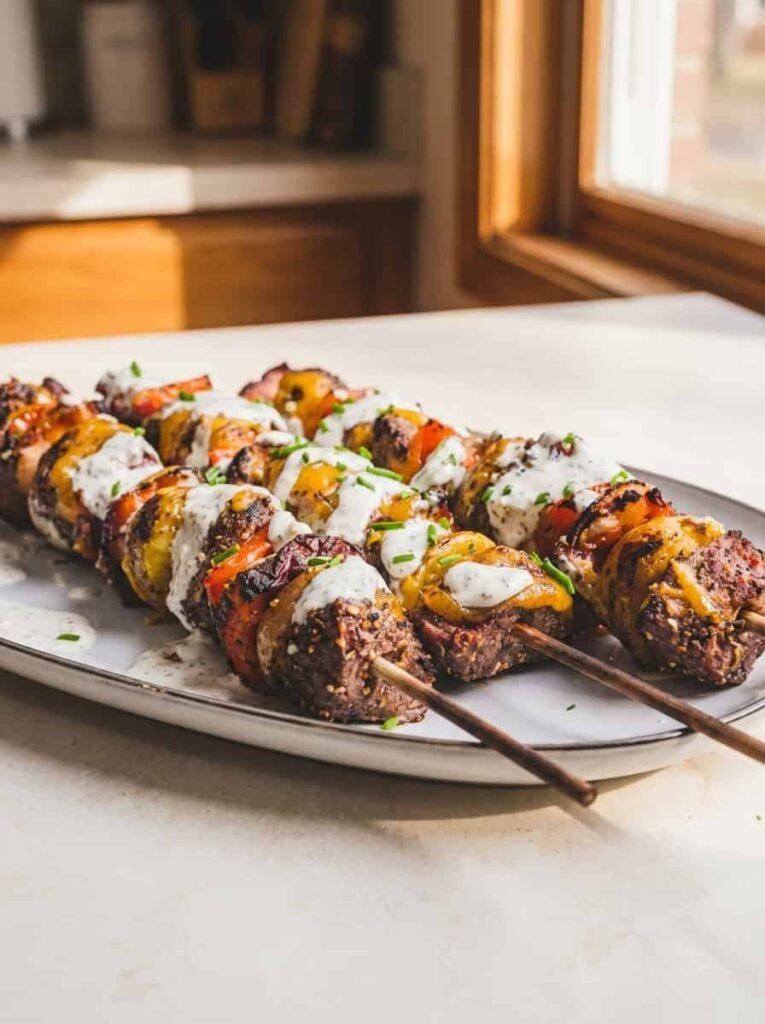
Skewers as a format
I find skewer cooking interesting because it solves a serving and presentation problem at the same time it solves a cooking problem. Threading ingredients onto a stick means every person gets the same combination of things, the portioning is done before serving, and the presentation looks like more effort than it took. The loaded-baked-potato-meets-steakhouse combination here is specifically American in its flavor profile, which is the right context for a campfire-style seasoning and a sour cream sauce. Serves 4. If using wooden skewers, don’t forget to soak them.
Make your own campfire-style seasoning
If you don’t have a campfire-style seasoning blend, combine 1 tablespoon smoked paprika, 1 teaspoon garlic powder, 1 teaspoon onion powder, 1 teaspoon brown sugar, 1/2 teaspoon black pepper, 1/2 teaspoon cumin, and 1/4 teaspoon cayenne. This approximates the smoky, savory-sweet profile of a campfire spice blend and can be scaled up and stored in a jar. Use the same quantities as the recipe specifies for the branded blend.
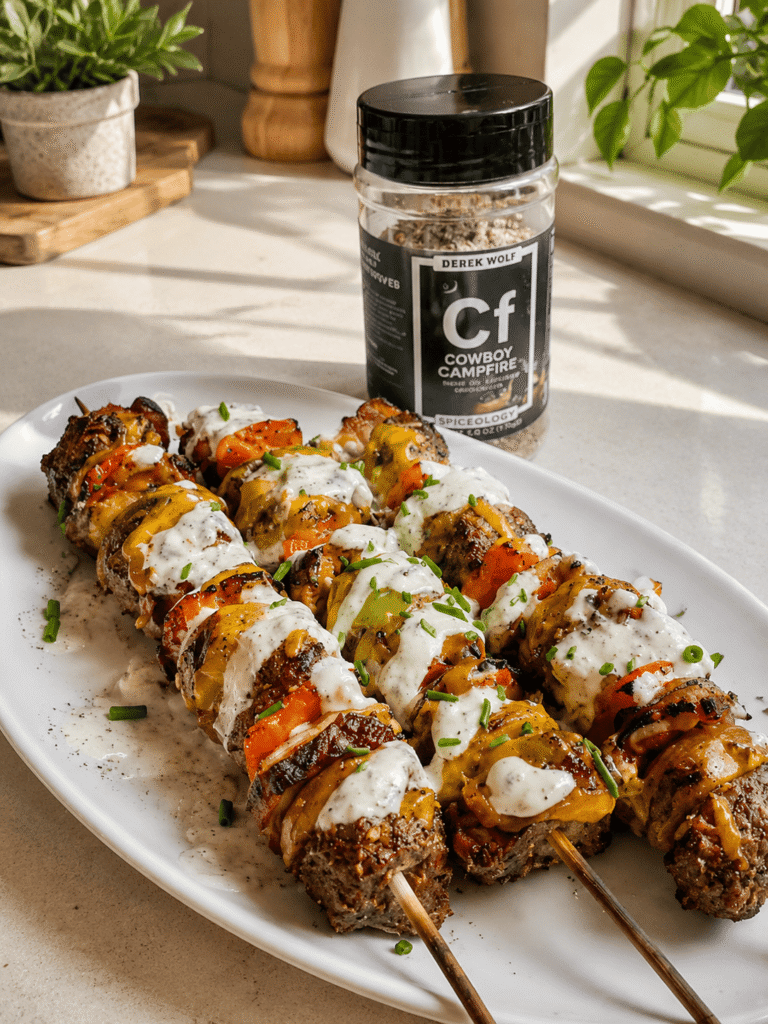

Steak and Potato Skewers with Bacon and Cheddar
Description
Sirloin and baby potato skewers with partially rendered bacon, bell pepper, and cheddar, grilled over medium-high heat with a loaded sour cream drizzle. Serves 4.
Ingredients
Instructions
-
If using wooden skewers, soak in water for at least 30 minutes
-
Par-cook the potatoes: place in a pot, cover with cold salted water, bring to a boil, and cook for 10 to 12 minutes until just fork-tender. Drain and cool slightly. Halve any larger potatoes
-
Partially render the bacon: cook the bacon pieces in a skillet over medium heat for 3 to 4 minutes until some fat has rendered but the pieces are still flexible. Drain on paper towels
-
Make the drizzle: whisk together the sour cream, buttermilk, 1/2 teaspoon seasoning, lemon juice, and 1 teaspoon of the chives until thin enough to drizzle. Refrigerate until serving
-
Toss the steak, potatoes, bell pepper, and onion with the olive oil, 1 1/2 tablespoons seasoning, salt, and black pepper until evenly coated
-
Thread the steak, potatoes, bacon, bell pepper, and onion onto the skewers, alternating ingredients
-
Grill over medium-high heat for 8 to 10 minutes total, turning every 2 to 3 minutes, until the steak reaches 130 to 135 degrees F for medium-rare
-
Scatter the cheddar over the skewers and close the grill lid for about 1 minute until melted. Transfer to a platter, drizzle with the sour cream sauce, and finish with remaining chives.
Note
Soak wooden skewers at least 30 minutes. Par-cook potatoes so everything finishes together on the grill. Only partially render the bacon before threading. Add cheddar in the last minute with the lid closed. Use a meat thermometer for steak doneness. No nutrition data was provided for this recipe.