


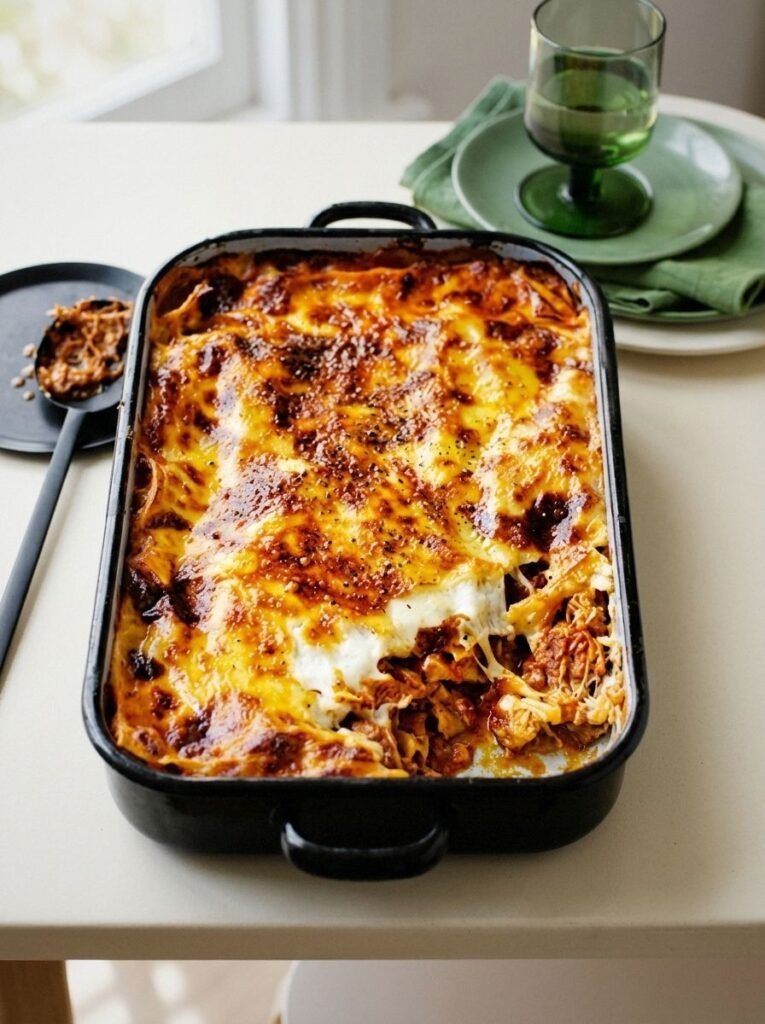

Slow-cooked pork neck, tomato, rosemary, fennel, chile, Parmesan béchamel, fresh pasta, and mozzarella build a deeply savory lasagna for a weekend table.
Pork fennel and rosemary lasagna is not a quick weeknight bake, but it is a smart weekend project because the long pork braise does most of the work. Pork neck simmers in tomato with rosemary, fennel seed, garlic, and chile until it can be pulled apart with forks. That rich ragu is layered with fresh pasta and a Parmesan béchamel, then baked under mozzarella. The result is generous enough for eight and actually benefits from a proper rest before dinner. Start in the early afternoon, put on something to listen to, and let the pot take its time.
A shreddable ragu behaves better between pasta sheets
Ground meat ragu can spill from a slice. Slow-cooked pork creates longer, tender strands that hold sauce and give each layer structure. Browning the whole piece first adds roasted flavor without requiring you to sear several small batches. The covered simmer tenderizes the pork; the final uncovered half hour concentrates the tomato base. Keep the meat in the sauce while shredding so the fibers immediately absorb liquid. Béchamel provides a creamy layer without overwhelming the fennel and rosemary, and fresh pasta keeps the assembled lasagna tender despite the substantial filling.

Balance the pork, herbs, and white sauce
Pork neck is ideal because its connective tissue softens over a long simmer. Shoulder is a practical substitute of similar weight. Lightly crush the fennel seeds if they are very large so no one bites into a hard cluster. Four rosemary sprigs sound assertive, but the tomato and pork can support them. For the béchamel, add milk in stages and whisk each addition smooth before the next. Fresh nutmeg should sit in the background. A full 1/4 teaspoon is enough to warm the sauce without making the lasagna taste sweet.
Plan the cooking in three relaxed stretches
Brown the seasoned pork in a Dutch oven, turning only when each side releases easily. Add both tomatoes, paste, herbs, spices, garlic, and water. The liquid should nearly cover the meat. Once it simmers, cover and reduce the heat to low. Check occasionally, but avoid lifting the lid every ten minutes. After 3 1/2 hours, the pork should yield to a fork. Uncover for 30 minutes, then shred and taste. Make the béchamel while the ragu cools slightly. Melt butter, cook flour for one minute, and whisk in milk gradually. Simmer until it coats a spoon before adding Parmesan. To assemble, start with enough ragu to protect the pasta from the dish. Repeat pasta, béchamel, and ragu without overfilling each layer. Finish with white sauce and mozzarella. Bake the dish on a tray to catch bubbles, then wait the full 15 minutes before cutting.
Cover and refrigerate leftovers for up to 4 days. Reheat individual pieces covered at 350°F, then uncover for the final few minutes. The assembled unbaked lasagna can be chilled one day before baking.
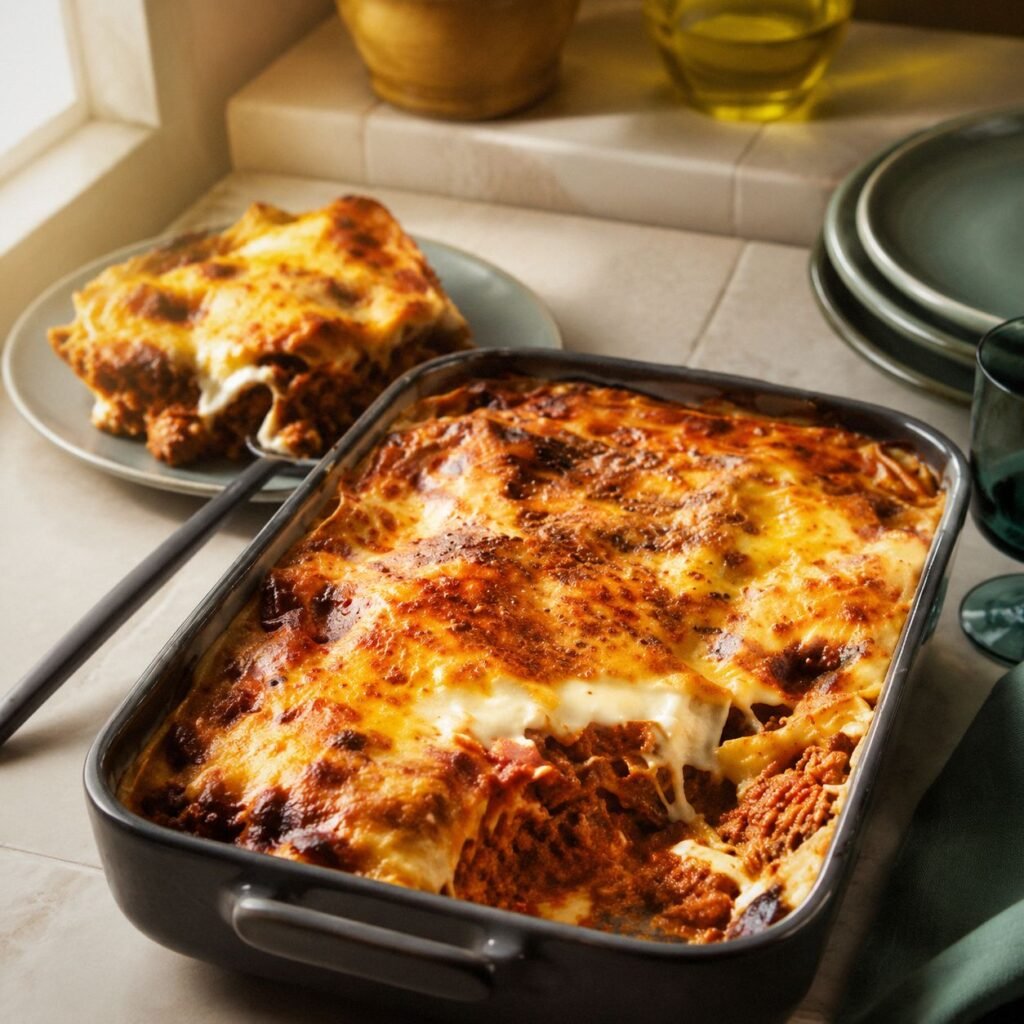
Serving pork fennel and rosemary lasagna
This lasagna already brings pork, tomato, pasta, cheese, herbs, and heat. It needs a sharply dressed green salad and not much else. Roasted broccoli is useful for a larger table, but skip another creamy side. Cut eight squares with a sharp knife and lift with a thin spatula. For neater portions, let the dish rest 20 minutes rather than 15, although servings will be less piping hot. Warm bread is welcome for sauce left on the plate. I would serve fruit afterward; another baked, creamy dessert makes the meal heavier than it needs to be. Put red pepper flakes on the table instead of adding more to the entire ragu.
Pork Fennel and Rosemary Lasagna
Description
Pork neck simmers until shreddable in a rosemary-fennel tomato ragu, then layers with Parmesan béchamel and fresh lasagna sheets.
Ingredients
Instructions
-
Heat the olive oil in a large flameproof Dutch oven over high heat. Season the pork and brown on all sides for 6 to 8 minutes.
-
Add passata chopped tomatoes tomato paste rosemary fennel garlic red pepper flakes and 2 cups water. Season lightly. Cover lower the heat and simmer for 3 1/2 hours until the pork is tender.
-
Uncover and simmer 30 minutes until the sauce reduces by about one-third. Cool briefly. Shred the pork with two forks directly in the sauce and season to taste.
-
Melt the butter in a saucepan over medium heat. Stir in the flour for 1 minute. Add the milk gradually in four additions while whisking.
-
Simmer the béchamel for about 5 minutes until thick. Stir in nutmeg and Parmesan. Season lightly.
-
Heat the oven to 400°F (200°C) or 350°F (180°C) fan.
-
Spread a little ragu in a 4-quart baking dish. Add pasta then about 1 cup béchamel and more ragu. Repeat finishing with béchamel.
-
Scatter mozzarella over the top. Set the dish on a sheet pan and bake 40 minutes until bubbling and golden.
-
Rest 15 minutes before slicing..
Note
Begin at least 5 hours before serving. Pork should be tender enough to shred easily before assembly. Nutrition information was not supplied by the source. Cool leftovers promptly and refrigerate within 2 hours.