


Plum torte looks almost too plain when it goes into the oven. A shallow layer of batter, a crowd of plum halves, and a little cinnamon do not suggest much drama. Then the fruit sinks, the edges turn golden, and the juices stain the cake in deep purple patches. This plum torte is the sort of bake I want when ripe plums are softening faster than we can eat them. It uses ordinary pantry ingredients, and the uneven top is part of its charm. Mine never looks perfectly arranged after baking. Good. It tastes better than a polished cake with twice the work.
Why the simple batter is enough
The batter is thick because it has to support all that fruit. As the plums heat, they release juice into the cake instead of sitting on a loose batter that might become soggy. Butter gives the edge a crisp, almost cookie-like finish, while the center stays tender around the fruit. The recipe allows three quarters to one cup of sugar. I use the smaller amount when the plums are fully ripe and the larger amount when they are sharp. Taste a slice first. That small check is more useful than guessing from the color of the skin.
Choosing the fruit and topping

Purple plums are ideal because their skins soften and their tart flesh keeps the cake from becoming flatly sweet. Cut them in half and remove the pits, but do not worry if the halves are different sizes. Place them skin side up so the flesh can melt into the batter. Twenty-four halves sounds crowded. It should be.
The lemon juice is best used lightly. A few drops brighten sweet fruit, but too much can make the top wet. Cinnamon belongs here, though I keep it to about a teaspoon so the plums still lead. A final dusting of sugar helps the fruit caramelize at the edges. Salt is listed as optional; I add the pinch because it sharpens the butter and fruit flavors.
Baking it without overthinking it
Heat the oven to 350°F and grease an 8, 9, or 10-inch springform pan. A smaller pan produces a thicker cake and may need a careful check near the center. Cream the softened butter with the sugar until the mixture looks lighter, then beat in the eggs. Add the sifted flour, baking powder, and salt. Mix only until the batter is even.
Spread it in the pan and arrange the plum halves across the top. Sprinkle with sugar, lemon juice, and cinnamon. Bake for about one hour. The torte is ready when the exposed cake is browned and a tester pushed into a cake section, not a plum, comes out without wet batter. Let it cool before releasing the pan.
Serve it lukewarm, plain or with whipped cream. It also freezes well when double-wrapped. Thaw it and warm it briefly at 300°F. The top softens a little after storage, but the plum flavor gets deeper by the next day.

If the cake is destined for the next day, let it cool completely before covering it. Trapped steam softens the browned edge. A springform pan makes removal easy, but a well-greased cake pan can work if you plan to serve it from the pan. Run a thin knife around the edge after cooling. When slicing, wipe the knife between cuts because the soft fruit clings to the blade. The torte is rich enough for small pieces, especially with cream, and eight servings is a sensible yield.
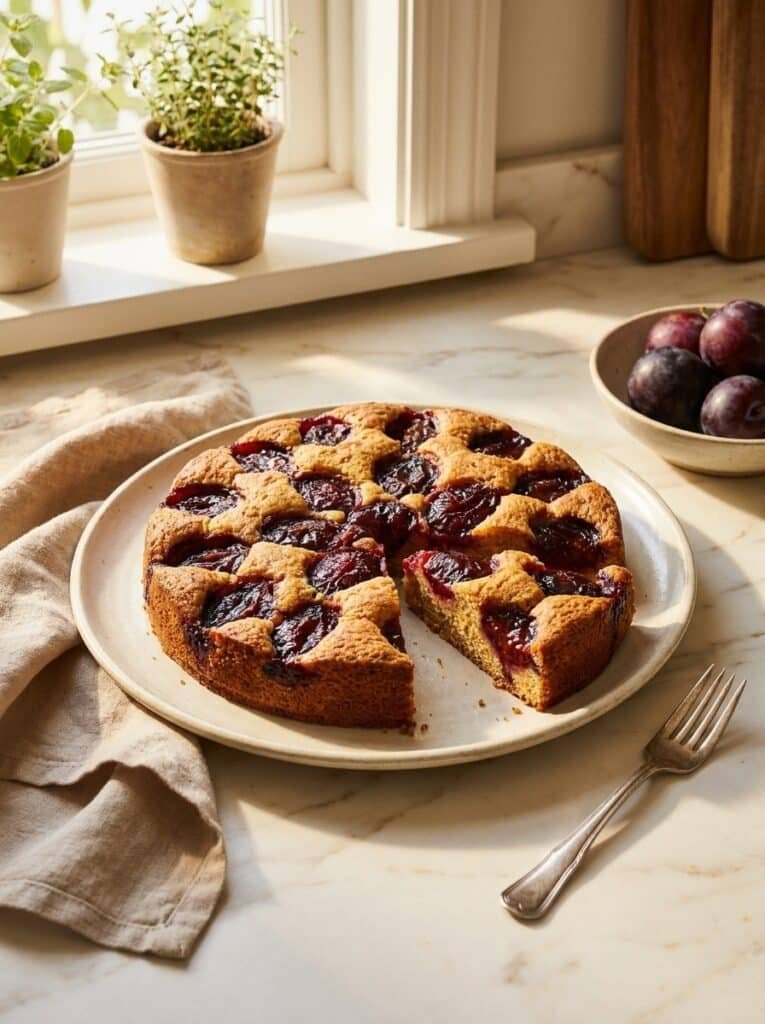

Plum Torte
Description
This simple plum torte bakes ripe fruit into a tender butter cake with crisp golden edges.
Ingredients:
Instructions
-
Heat oven to 350°F.
-
Cream sugar and butter.
-
Beat in flour, baking powder, salt, and eggs.
-
Spread in a greased 8, 9, or 10-inch springform pan.
-
Arrange plums skin side up.
-
Sprinkle lightly with sugar, lemon juice, and cinnamon.
-
Bake about 60 minutes.
-
Cool before serving..
Note
Double-wrap and freeze if desired. Thaw and reheat briefly at 300°F.