


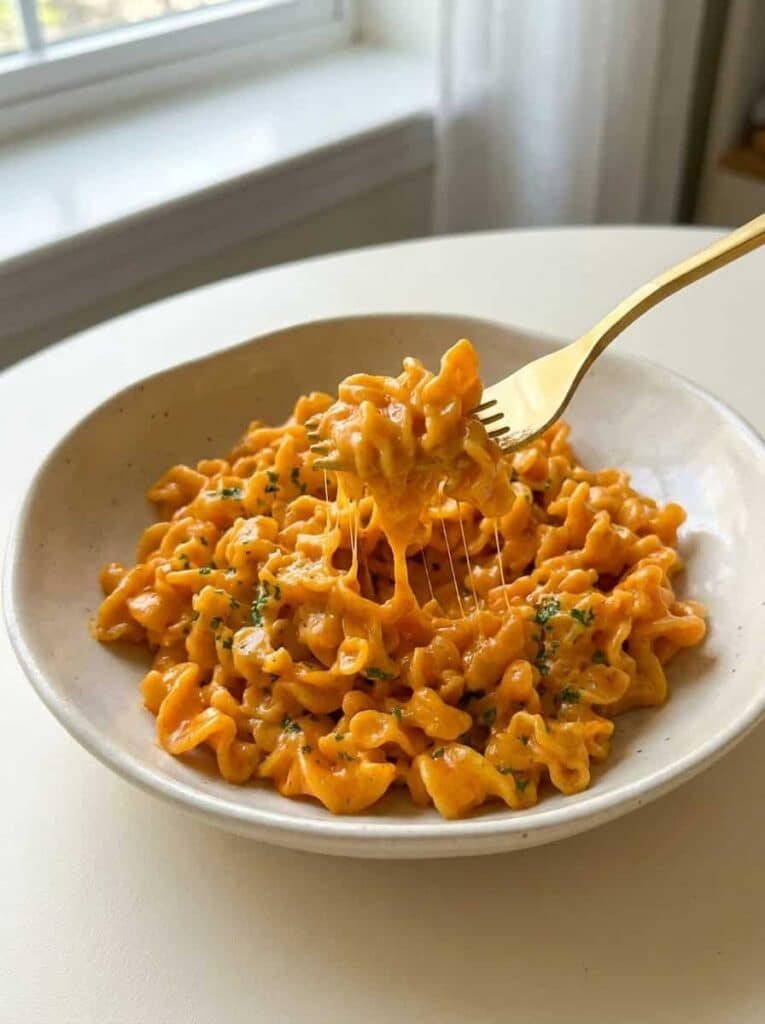

Ten minutes, one pan, no colander. Everything goes in cold at the same time and comes out as a creamy pasta with miso and gochujang doing the work that a long simmered sauce usually does.
The trick is cooking the pasta in the sauce rather than cooking them separately and combining them at the end.
The starch is the sauce

Normally you boil pasta in a big pot of water, drain most of the starch down the sink, then try to build a creamy sauce separately and hope it clings.
Here the pasta cooks in a small amount of broth and cream. All the starch it releases stays in the pan and thickens the liquid into something glossy that coats every piece. That is why this comes out creamy with only a quarter cup of cream in the whole dish.
It also means the liquid ratio matters more than usual. Two to two and a half cups of broth for one cup of pasta, and you may need to top it up. If the pasta absorbs everything before it is tender, add a splash more broth and keep going.
Miso and gochujang are doing different jobs
A tablespoon of each and they are not interchangeable.
Miso brings salt and a deep fermented savouriness. Gochujang brings heat, but also sweetness and a fermented funk of its own. Together they give you something that tastes slow cooked in a dish that took ten minutes.
Both are salty, and this is where the soy sauce becomes a judgement call rather than a measurement. Half a teaspoon to one full teaspoon, adjusted for how salty your broth already is. Taste before you add it. Shop bought chicken broth varies enormously and a salty one plus miso plus gochujang plus soy will overshoot.
Pasta shape changes the result
Short shapes work best. Penne, rigatoni, fusilli, anything with ridges or hollows that the thickened sauce can grab onto. Long pasta is harder to manage in a shallow pan and tends to clump before it softens enough to lie flat.
Whatever you use, one cup is a rough measure rather than a precise one. Weigh out about 100g per person if you want to be exact about it.
Everything in at once
Melted butter, minced garlic, pasta, broth, cream, miso paste, gochujang, soy sauce and black pepper. All into a large skillet or pot together, cold.
It feels wrong. Every instinct says to soften the garlic first and build the sauce in stages. Not needed here. The garlic cooks through in the liquid, and starting cold means everything comes up to temperature together.
Simmering it down
Bring it to a simmer over medium and let it cook, stirring occasionally, until the pasta is tender and most of the liquid has gone.
Stirring matters more than in normal pasta cooking. There is not much liquid and the starch is thickening as you go, so anything sitting still on the bottom of the pan will stick.
Watch the liquid level rather than the clock. Different pasta shapes drink different amounts.
Parmesan off the heat
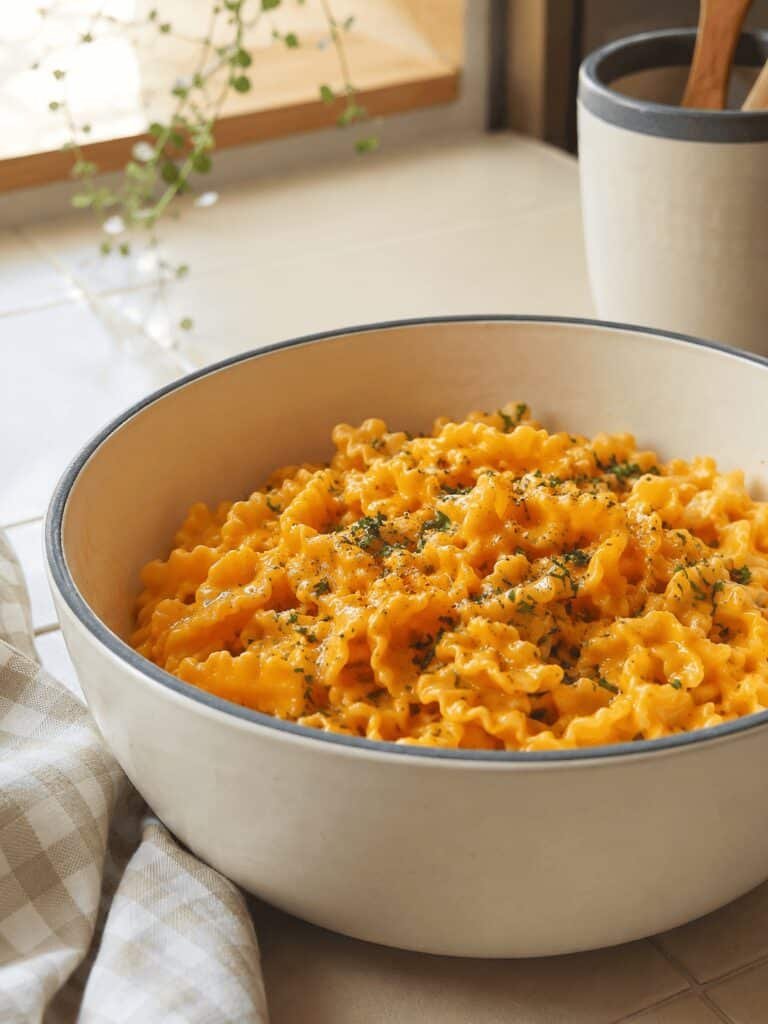
Turn the heat off completely before the parmesan goes in. A third of a cup, stirred through until it melts into the sauce.
Cheese added to a pan that is still simmering will split and go stringy instead of creamy. Off the heat, the residual warmth is enough to melt it smoothly.
Chopped parsley on top and serve straight away. This does not hold. The pasta keeps drinking the sauce as it sits and within ten minutes it goes from creamy to dry.
Adjusting the heat
One tablespoon of gochujang gives a warm background heat rather than anything aggressive. Brands vary a lot in strength, so if yours is fierce start with two teaspoons and taste before adding more.
Making it vegetarian
Swap the chicken broth for vegetable broth. Everything else in the dish is already meat free, and the miso keeps the savoury depth that the chicken broth would otherwise provide.
One Pot Miso Gochujang Pasta
Description
A creamy one pot pasta built on miso, gochujang and parmesan, cooked in the sauce so the starch thickens it.
Ingredients:
Instructions
-
In a large skillet or pot combine the melted butter minced garlic pasta chicken broth heavy cream miso paste gochujang soy sauce and black pepper.
-
Bring to a simmer over medium heat. Cook, stirring occasionally, until the pasta is tender and most of the liquid is absorbed. Add a little more broth if the pasta absorbs too much liquid before it is fully cooked.
-
Turn off the heat and stir in the parmesan until the sauce turns creamy.
-
Garnish with chopped parsley and serve immediately..
Note
Adjust the soy sauce based on how salty your broth is, since miso and gochujang are both already salty. Add more broth if the pasta absorbs the liquid before it is tender. Stir in the parmesan off the heat so it does not split. Serve immediately; the pasta continues absorbing sauce as it sits. Use vegetable broth for a vegetarian version.