


Lobster roll pasta salad is a composed summer dish that translates the flavors of a lobster roll into a pasta salad format: cavatappi cooked slightly past al dente, chopped cooked lobster meat, celery, red onion, and fresh chives, dressed in a lightened mayonnaise and Greek yogurt mixture seasoned with celery salt. Twenty-five minutes, ten cups of salad, and lobster in every forkful rather than rationed across a sandwich.
The key ratio is the one between lobster and pasta. Sixteen ounces of cooked lobster meat in eight ounces of dry pasta is a generous quantity that puts lobster in every bite rather than making it an occasional find. Lobster roll pasta salad made with less lobster is just pasta salad; this version is clearly about the lobster.
The lobster

Sixteen ounces of cooked lobster meat from four one-and-a-quarter-pound whole lobsters or four four-ounce tails. If starting with raw lobster, steam it until just cooked through before shelling. Overcooked lobster becomes rubbery, and rubbery lobster in a cold pasta salad has no redemptive quality. Steam just until the flesh is opaque and pulls cleanly from the shell, then cool before chopping into roughly one-inch chunks. Large chunks rather than small pieces give each serving identifiable pieces of lobster rather than shredded bits lost among the pasta.
The pasta
Eight ounces of cavatappi, cooked one to two minutes longer than al dente and rinsed under cold water until fully cooled. Cavatappi, the corkscrew-shaped pasta, holds dressing in its ridges and curves more effectively than smooth pasta and pairs well with chunky ingredients like the lobster pieces. The longer cook produces a pasta that’s tender when cold rather than the firm, slightly starchy texture that al dente pasta has after refrigeration. Drain well and shake the colander before adding to the bowl; waterlogged pasta dilutes the dressing.
The dressing
A third cup of light mayonnaise and a quarter cup of nonfat Greek yogurt. The yogurt replaces part of the mayo and produces a dressing that’s lighter in fat and calories while still creamy enough to coat the pasta and lobster. A quarter cup of Greek yogurt alongside a third cup of mayo is the right proportion; more yogurt and the dressing tastes tangy rather than creamy. The celery salt and kosher salt season the dressing without adding herbs that would compete with the fresh chives.
Fresh chives are the herb that connects this to the lobster roll format. A quarter cup is a generous amount that makes the chive flavor present in every spoonful rather than an occasional hint. Dried chives don’t work here; the fresh version has a brightness that dried chives lack.
Assembly
Toss the cooled pasta, lobster chunks, celery and celery leaves, red onion, chives, and dressing together until well combined. Serve chilled. The salad is good immediately after assembly and better after an hour in the fridge once the dressing has worked into the pasta and the flavors have merged. If making ahead, the pasta will absorb some dressing during refrigeration; stir in an extra tablespoon of mayo before serving if it seems dry.
Lobster roll as a reference point
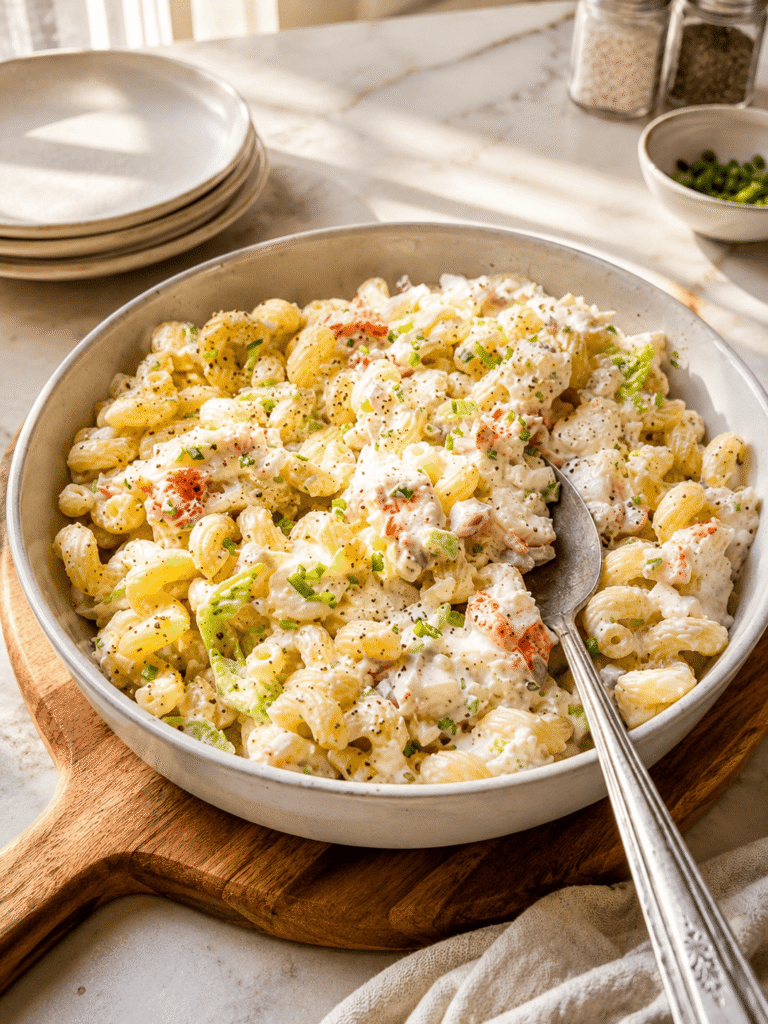
The lobster roll is a New England sandwich format: steamed or boiled lobster meat, often with celery and a light mayonnaise dressing, served in a split-top hot dog bun. The Connecticut version uses warm lobster with butter; the Maine version uses cold lobster with mayo. This salad is the Maine version translated to pasta, with the bun replaced by cavatappi and the dressing lightened with Greek yogurt. The flavors are the same: sweet lobster, celery crunch, light creamy dressing, and fresh chives. Serves 5 as a main at two cups per serving, or 10 as a side dish at one cup. Nutrition per 2-cup main serving: 282 calories, 23.5g protein, 34g carbohydrates, 5.5g fat.
Sourcing lobster
Frozen lobster tails are the most practical option for making this outside of New England. Four four-ounce tails thawed overnight in the fridge, steamed for eight to ten minutes, and cooled before shelling produce the full sixteen ounces this recipe needs. Fresh whole lobsters from a fish counter also work; the shells from whole lobsters can be used to make a quick stock. Pre-cooked frozen lobster meat is an option when available and saves the steaming step, though the texture is sometimes less firm than freshly cooked.
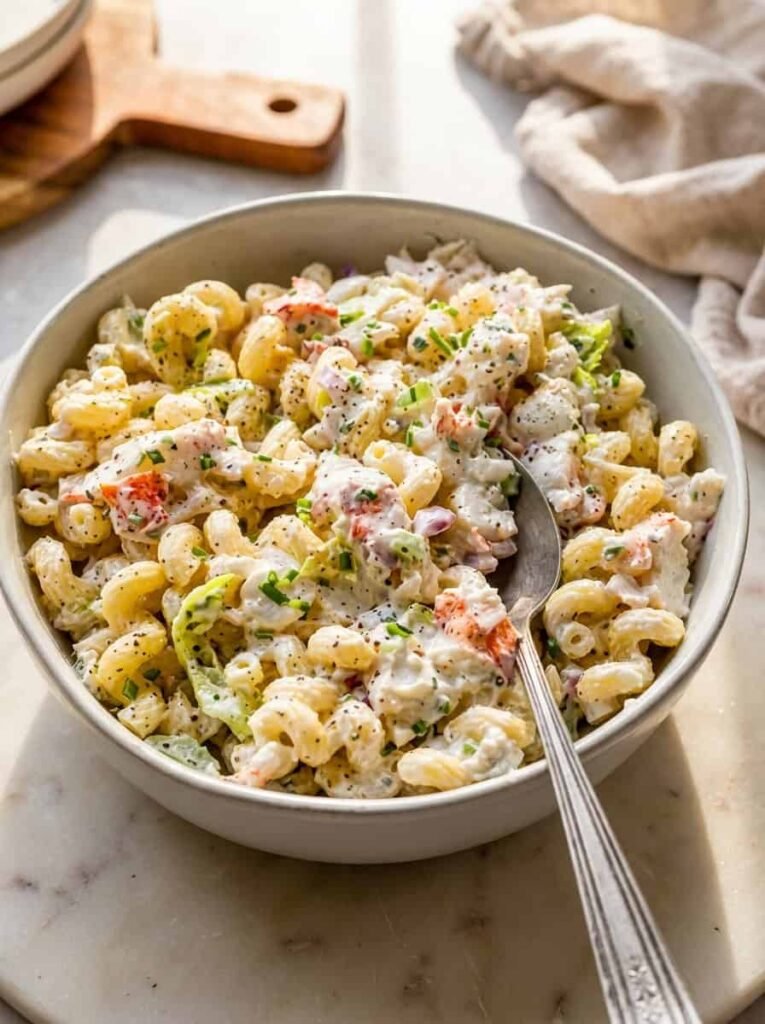

Lobster Roll Pasta Salad
Description
A pasta salad with generous chunks of cooked lobster, celery, chives, and a lightened mayo and Greek yogurt dressing. Inspired by the Maine lobster roll. Serves 5 as a main.
Ingredients
Instructions
-
If using raw lobster, steam until just cooked through and cool completely before removing the meat from the shell. Chop into roughly 1-inch chunks.
-
Cook the cavatappi in well-salted boiling water for 1 to 2 minutes longer than al dente. Drain and rinse under cold water until completely cool. Shake to remove excess water.
-
In a large bowl, combine the cooled pasta, lobster, celery, red onion, and chives.
-
In a small bowl, stir together the mayonnaise, Greek yogurt, celery salt, and kosher salt. Add to the pasta mixture and toss to coat.
-
Serve chilled. Stir in an extra tablespoon of mayo before serving if the salad has dried out from refrigeration..
Nutrition Facts
Servings 5
- Amount Per Serving
- Calories 141kcal
- % Daily Value *
- Total Fat 2.5g4%
- Saturated Fat 0.5g3%
- Cholesterol 68.5mg23%
- Sodium 383mg16%
- Total Carbohydrate 17g6%
- Dietary Fiber 1g4%
- Sugars 1g
- Protein 11.5g23%
* Percent Daily Values are based on a 2,000 calorie diet. Your daily value may be higher or lower depending on your calorie needs.
Note
Nutrition listed for 2-cup main serving (serves 5). As a side dish at 1 cup per serving (serves 10): 141 calories, 11.5g protein, 17g carbs, 2.5g fat. Cook pasta past al dente. Use fresh chives, not dried. Nutrition per 2-cup serving: 282 calories, 34g carbohydrates, 23.5g protein, 5.5g fat, 0.5g saturated fat, 137mg cholesterol, 766mg sodium, 2g fiber, 1.5g sugar.