


Fresh tomatoes simmered down into a sauce with white wine, tossed through linguine with Cajun shrimp. Six servings.
Shrimp reach 145F
The method says pink outside and no longer translucent in the centre, which is a good visual cue.
Fish and shellfish should reach an internal temperature of 145F. For medium shrimp that happens in about five minutes over medium-high heat, which matches the recipe.
The better guide is shape. A shrimp curled into a loose C is done; curled into a tight O it has gone past and turned rubbery.
Five minutes is a maximum rather than a target. Pull them as soon as they turn opaque.
The editor note flags a discrepancy

The source carries a note that the magazine version of this recipe uses a different amount of linguine and a different cooking time.
That is a caution rather than an error, and the version here is the one published online: a sixteen ounce package, cooked about eleven minutes.
If you have seen a different set of figures elsewhere for the same recipe, that is why.
Thirty minutes for the sauce is not optional
Simmered, stirring frequently.
Four cups of diced tomatoes carry a great deal of water, and thirty minutes is what drives it off and turns them from chopped tomatoes into a sauce.
Stirring frequently matters because a reducing tomato sauce catches on the base as it thickens. Scrape the bottom as you go.
Fresh tomatoes take the full time. Canned are already partly reduced and may be ready a few minutes earlier.
Butter at the end, off the boil
Two tablespoons stirred in once the tomatoes have become a sauce.
This is the standard finish for a pan sauce. Butter swirled into a sauce below boiling emulsifies and gives it gloss and body. Boiled hard, it splits into oil on the surface.
Season after the butter, not before, since it rounds the acidity and changes how salty the sauce reads.
Cook the shrimp separately
In their own pan with the remaining oil.
Adding raw shrimp to a simmering tomato sauce poaches them, which gives a soft texture and no browning. Searing them separately gives colour and keeps them firm.
They then go into the sauce at the end, warmed through rather than cooked further.
Season the shrimp before they hit the pan
Cajun seasoning, salt and pepper.
Seasoning after cooking leaves it sitting on the surface. Applied before, it forms part of the crust as the shrimp sear.
A teaspoon of Cajun seasoning across a pound is moderate. Most blends are salt-forward, so go carefully with additional salt.
A cup of wine, reduced into the sauce
Added with the tomatoes at the start.
Thirty minutes of simmering cooks off most of the alcohol and leaves the acidity and depth. Dry white rather than sweet, since a sweet wine against tomato and Cajun spice is an odd combination.
Something you would drink. There is enough of it here that a poor wine shows.
Two separate additions of olive oil
Two tablespoons for the sauce and two more for the shrimp, listed separately in the ingredients.
That is easy to misread as one quantity of four. Each pan needs its own, and the shrimp in particular want a properly oiled hot pan to sear rather than steam.
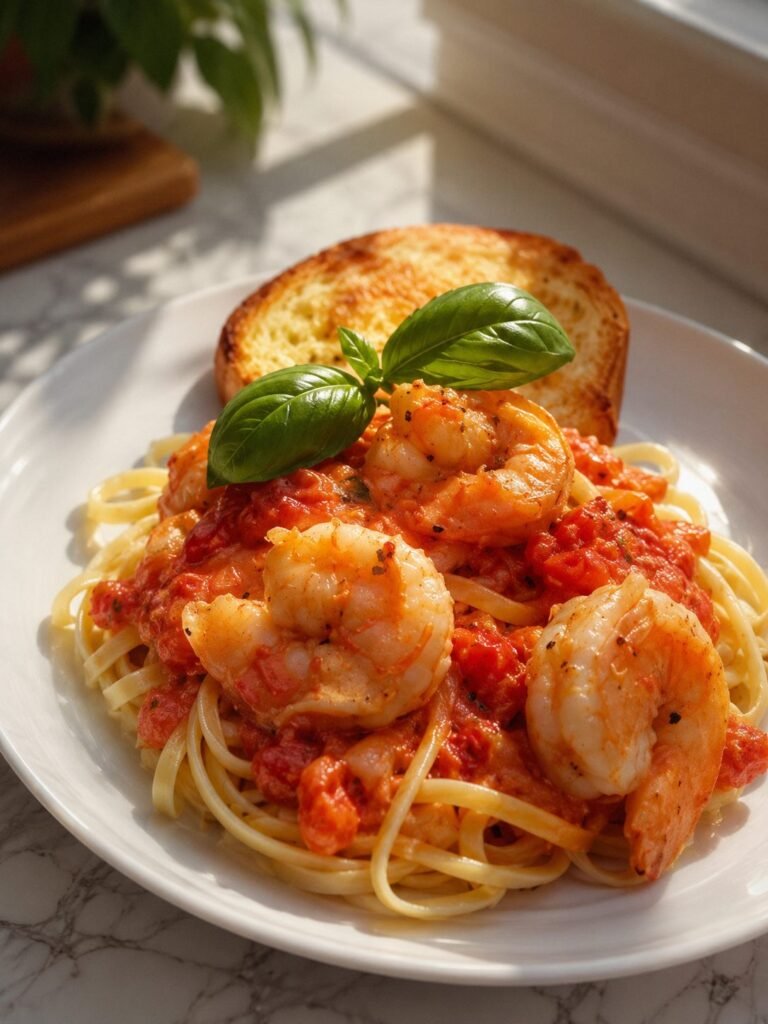
Firm to the bite
About eleven minutes for the linguine.
The pasta gets tossed in hot sauce afterwards and softens further. Cooked to fully done in the pot it arrives soft.
Drain well. Water clinging to linguine thins a sauce you have spent thirty minutes reducing.
Fresh or canned tomatoes
Four cups either way. Fresh is what the recipe was built around and it is worth it in season. Canned works year round and is already partly reduced, so check the sauce a few minutes early.
Storing
Three days refrigerated. The shrimp toughen on reheating, so gentle warming with a splash of water is better than a hot pan.
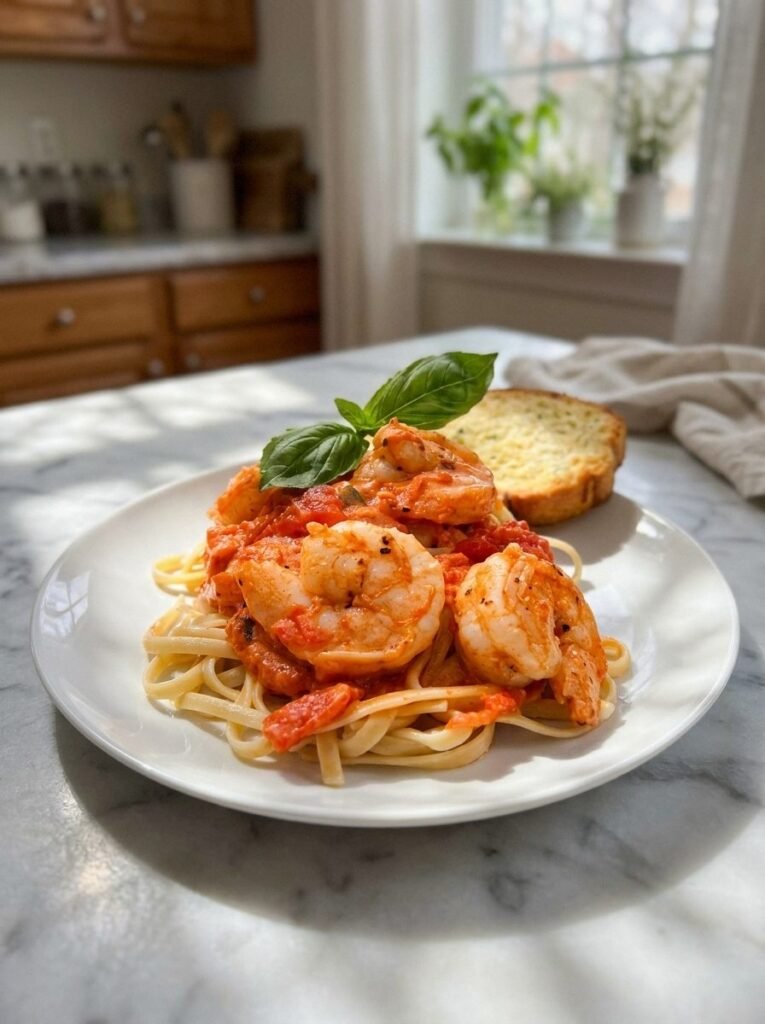

Linguine with Shrimp and Tomatoes
Description
A summer pasta using a lot of ripe tomatoes, finished with Cajun seasoned shrimp.
Ingredients:
Instructions
-
Heat 2 tablespoons of olive oil in a large saucepan over medium heat. Stir in the garlic and cook 2 minutes.
-
Add the tomatoes and wine. Bring to a simmer and cook 30 minutes, stirring frequently and scraping the base, until the tomatoes have reduced into a sauce.
-
Stir in the butter off the boil so it emulsifies, then season with salt and pepper.
-
Fill a large pot with lightly salted water and bring to a rolling boil. Cook the linguine uncovered, stirring occasionally, until cooked through but still firm to the bite, about 11 minutes. Drain well.
-
Season the shrimp with the Cajun seasoning, salt and pepper before cooking. Heat the remaining 2 tablespoons of olive oil in a large skillet over medium-high. Cook the shrimp until pink outside and opaque in the centre, reaching 145F, about 5 minutes. They should curl into a loose C rather than a tight O.
-
Stir the shrimp into the tomato sauce, then toss the sauce through the drained linguine and serve..
Note
Shrimp should reach an internal temperature of 145F, which the source does not state; the better guide is shape, since a shrimp curled into a loose C is done and a tight O has gone past. Five minutes is a maximum rather than a target. The source carries an editor note that the magazine version uses a different amount of linguine and a different cooking time; the figures here are the online version. The 30 minute tomato simmer is what turns four cups of diced tomatoes into a sauce, and stirring frequently stops it catching as it thickens. Add the butter off the boil so it emulsifies rather than splitting, and season after it goes in. Cook the shrimp separately rather than poaching them in the sauce. Season them before they hit the pan. Drain the linguine well, as clinging water thins the reduced sauce.