


Lemon butter cake is a two-layer baked dessert in a single nine-inch pan: a buttery lemon cake base on the bottom and a cream cheese and powdered sugar layer on top that bakes into something between a cheesecake and a glaze. Forty minutes in the oven, fully cooled before slicing, and dusted with powdered sugar before serving. The lemon zest goes into both layers and the lemon juice goes into the cake base, which gives the whole dessert a consistent citrus flavor from bottom to top.
The cream layer is what makes this cake different from a plain lemon butter cake. It starts as a thick, spreadable mixture of softened cream cheese, powdered sugar, egg, and lemon zest, which sets during baking into a smooth, slightly firm layer that sits between a frosting and a set custard in texture. It doesn’t sink into the cake the way a thinner mixture would; it bakes as a separate layer on top with its own texture.
The cake base

Cream three-quarters cup of sugar with half a cup of melted butter until smooth. Add one egg, one and a half teaspoons of vanilla, the zest of two lemons, and the juice of one lemon. Sift one and a quarter cups of flour with a teaspoon of baking powder and a quarter teaspoon of salt, then incorporate the dry into the wet until just combined. Do not overmix; the cake base is supposed to be dense and buttery, not light and airy, and overmixing develops gluten that makes it tough.
Transfer the batter to a greased nine-inch cake pan or pie dish. The batter is thick and won’t spread on its own; press it into the pan with a spatula so it covers the base evenly. A pie dish works well because its sloped sides make it easy to spread the batter to the edges.
The cream layer
Beat one eight-ounce package of softened cream cheese until smooth. Add two and a half cups of powdered sugar gradually and beat until fully combined. Add one egg and the zest of one lemon and mix until smooth. Spread this mixture over the cake batter in an even layer covering the full surface. The cream layer is thicker than a frosting and needs to be spread deliberately to the edges rather than poured.
Softened cream cheese is essential. Cold cream cheese won’t beat smooth and produces a lumpy layer that bakes unevenly. Leave it at room temperature for thirty minutes before starting. The powdered sugar in this quantity produces a very sweet, thick layer; the lemon zest provides some brightness that keeps it from being cloying.
Baking and cooling
Bake at 350 degrees Fahrenheit for thirty-eight to forty minutes until the top is just starting to brown. The cream layer should be set across the whole surface but still have a very slight give in the center when gently pressed; it will firm up as it cools. Overbaking dries the cream layer and can crack it. The cake underneath is fully cooked well before the cream layer is done; the cream layer is what dictates the bake time.
Cool completely before slicing. The cream layer needs to firm fully before it can be cut cleanly; a warm cake produces layers that blur together at the cut edge. Dust the top with powdered sugar just before serving. Serves 6 to 8. No nutrition data was provided for this recipe.
Two types of lemon flavor
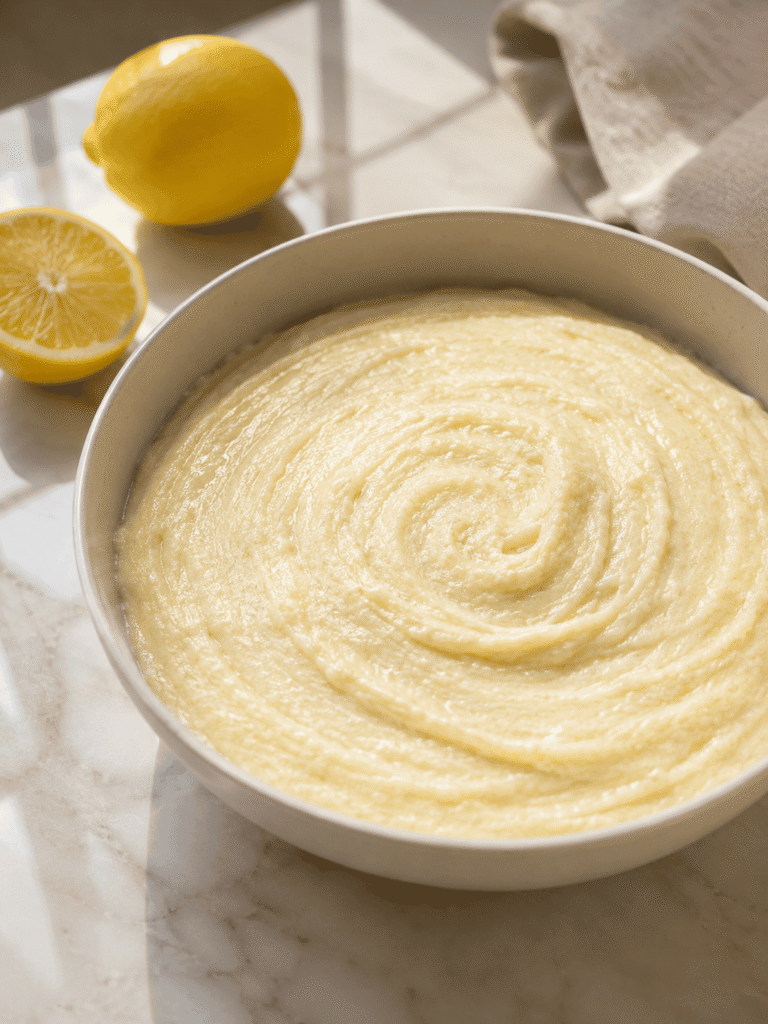
Lemon juice and lemon zest do different things in a baked cake. The juice adds acidity that activates the baking powder slightly and provides a clean, sharp lemon flavor. The zest adds the aromatic oils from the lemon skin, which are more complex and floral than the juice. Using both produces a fuller lemon flavor than either alone would. Both layers have zest and the cake base has juice; the lemon flavor is built into every part of this dessert rather than concentrated in one component.
Variations
The same method works with orange as the citrus: swap lemon juice for orange juice and use orange zest in both layers. The cream layer will be sweeter and less tart. Lime juice and zest produce a sharper, more acidic version. A teaspoon of lavender extract in the cream layer alongside the lemon zest produces a lemon-lavender combination. All of these keep the same baking method and time.

Lemon Butter Cake
Description
A lemon butter cake with a cream cheese and powdered sugar layer spread on top before baking. Two-layer result in one pan. Serves 6 to 8.
Ingredients
Instructions
-
Preheat the oven to 350 degrees Fahrenheit. Grease a 9-inch cake pan or pie dish
-
Cream the butter and sugar together until smooth. Add the egg, vanilla, zest of 2 lemons, and juice of 1 lemon
-
Sift together the flour, baking powder, and salt. Add to the wet ingredients and mix until just combined. Transfer to the prepared pan and spread evenly across the base
-
Make the cream layer: beat the softened cream cheese until smooth. Gradually add the powdered sugar until fully combined. Add the egg and zest of 1 lemon and mix until smooth
-
Spread the cream layer evenly over the cake batter
-
Bake for 38 to 40 minutes until the top is just starting to brown and the cream layer is set. Cool completely before slicing. Dust with powdered sugar before serving.
Note
Cream cheese must be fully softened before beating. Cool completely before slicing; warm cream layer won't cut cleanly. Servings set to 7 as midpoint of 6-8. No nutrition data was provided for this recipe.