



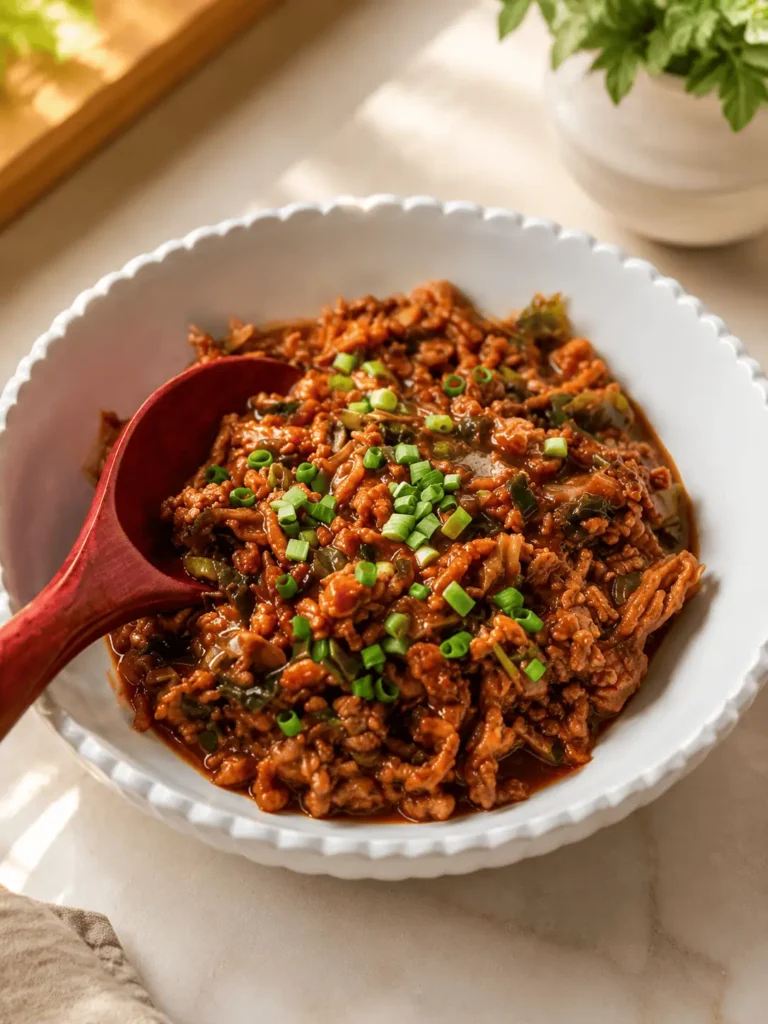
Nikumiso is a Japanese-style seasoned pork mince that comes together in twenty-five minutes and tastes like it took considerably longer. Ground pork cooked with ginger, garlic, and green onions, then finished in a glossy sauce of miso, soy, mirin, and a little sugar. The sauce thickens around the pork and turns deep, sticky, and savory, the kind of thing that makes plain rice taste like a complete meal.
The versatility is the other appeal. Serve it over rice, toss it with noodles, scoop it into lettuce cups, use it as a base for a stir-fry. The miso and soy combination is rich enough to stand on its own but neutral enough to adapt to almost anything you put alongside it.
The sauce: mix it before the heat

Two tablespoons of miso paste, a tablespoon each of dark soy sauce and mirin, and three teaspoons of caster sugar go into one bowl. In a separate small bowl, dissolve three teaspoons of cornflour in a tablespoon of water until fully smooth, then stir that slurry into the miso mixture. Set it aside.
Mixing the cornflour separately and dissolving it first is the step that prevents lumps. Cornflour added directly to a hot pan or mixed into other ingredients without water first clumps and stays lumpy through the cooking. The slurry method takes thirty extra seconds and gives you a smooth sauce every time.
White miso is what this recipe uses, and it’s the most widely available type. It’s mild, slightly sweet, and works well here. Red miso is stronger and saltier; if that’s what you have, add an extra teaspoon of sugar to the sauce and taste as you go. Miso varies considerably in saltiness between brands, which is why the recipe calls for adjusting with extra soy or sugar at the end rather than prescribing exact final seasoning.
Cooking the pork
Sesame oil in a large, deep frying pan over medium-high heat. Five hundred grams of pork mince, added and broken up with a wooden spoon as it cooks. Five minutes, until the color changes and the pork is cooked through. Drop the heat to medium, add the sliced green shallots, grated ginger, and crushed garlic, and cook for another one to two minutes until everything smells aromatic.
Pork mince for this rather than chicken or beef. Pork has the right amount of fat to stay tender through the short cook time and to carry the miso sauce without getting dry. Chicken mince works as a substitute but is leaner and can go dry faster; add a splash more water if using chicken. Beef works too, with a slightly different flavor profile that’s earthier and less delicate against the miso.
Sesame oil as the cooking fat here rather than just as a finishing drizzle. Cooking in it is fine at this temperature, and it builds the sesame flavor into the base of the dish from the start rather than adding it only at the end. If you have roasted sesame oil, that works with a slightly more intense flavor. Regular sesame oil is fine.
The sauce going in
Pour the miso mixture over the pork along with an extra half cup of water. Cook over medium heat, stirring, for five minutes until the sauce has thickened and turned glossy. The cornflour is doing its work here: the sauce should look like a glaze coating the pork rather than a watery liquid pooling at the bottom of the pan. If it’s thickening too fast before the five minutes are up, add a splash of water. If it looks too loose, keep cooking for another minute.
Now taste and adjust. More soy if it needs salt. More sugar if the miso is sharp. This final seasoning step is what makes the dish yours; the baseline is well-balanced but miso and soy both vary enough between brands that a small adjustment is often needed.
Miso as an everyday ingredient
Miso paste sits in a lot of home kitchens unopened because people bought it for one specific recipe and weren’t sure what else to do with it. Nikumiso is one of the better arguments for keeping it around and using it regularly. The paste dissolves into sauces, soups, and braises easily and adds an immediate depth that takes longer to build from other ingredients. A tablespoon stirred into a butter sauce, a soup base, or a braise adds umami without identifiable miso flavor. Two tablespoons in this recipe make the miso the point of the dish.
I’ve cooked with miso for years, partly because North African and Middle Eastern fermented condiments that serve a similar purpose, preserved lemons, aged harissa, fermented butter, taught me early to value what fermentation does to flavor. Miso is Japanese in origin but the principle is the same: time and salt and microbes transforming something simple into something complex. It keeps for months in the fridge and earns its place in the door. Serves 4 over rice.
Serving ideas beyond rice
Rice is the default and a good one: the glossy sauce over steamed white rice is the version most people make first and keep coming back to. Noodles, udon or soba, work just as well with the sauce clinging to them. Lettuce cups make it a lighter meal, the cold crisp lettuce against the warm, rich pork. Sauteed mushrooms stirred through the finished pork add volume and another layer of umami. Shredded raw carrot, thin-sliced radishes, or a handful of shredded cabbage piled on top add crunch and freshness. Any of these are good. Broccolini alongside is the complete plate.
Leftovers
Nikumiso reheats well in a pan over medium heat with a splash of water to loosen the sauce. Cold from the fridge it makes a genuinely good jaffle or wrap filling. It keeps for three to four days refrigerated. The sauce tightens up cold; always add water when reheating to bring it back to the right glossy consistency.
Japanese Nikumiso Pork Mince
Description
Japanese-style seasoned pork mince in a glossy miso and soy sauce with ginger and garlic. Ready in 25 minutes and versatile enough for rice, noodles, or lettuce cups.
Ingredients
Instructions
-
In a bowl, combine the miso paste, soy sauce, mirin, and sugar. In a small bowl, dissolve the cornflour in 1 tablespoon of water until smooth, then stir the slurry into the miso mixture. Set aside.
-
Heat the sesame oil in a large deep frying pan over medium-high heat. Add the pork mince and cook, breaking it up with a wooden spoon, for about 5 minutes until cooked through.
-
Reduce the heat to medium. Add the sliced green shallots, grated ginger, and crushed garlic. Cook, stirring, for 1 to 2 minutes until aromatic.
-
Pour the miso mixture and the extra 1/2 cup of water into the pan. Cook, stirring, for about 5 minutes until the sauce has thickened and turned glossy.
-
Taste and adjust with more soy sauce for saltiness or more sugar for balance. Serve over steamed rice, topped with extra sliced green onions..
Note
Always dissolve cornflour in water before adding to the sauce to prevent lumps. Taste and season at the end since miso and soy vary in saltiness between brands. N