


German apple cake is a dense, moist single-layer cake built around fresh apples and a simple oil-based batter. Two cups of flour, one cup of sugar, oil, applesauce, eggs, vanilla, cinnamon, and baking soda, combined without a mixer, and three large apples added either folded into the batter or arranged on top before baking. Forty-five minutes at 350 degrees, cooled, and dusted with confectioners’ sugar. Twelve servings from one nine by thirteen pan.
The applesauce does double duty in this recipe: it adds moisture and apple flavor while replacing part of the fat that would otherwise come from oil or butter. Oil-based cakes stay moist longer than butter-based cakes because oil remains liquid at room temperature rather than solidifying; combined with the moisture from both the applesauce and the fresh apples, this cake can hold its texture for several days without drying out.
The batter

Beat together half a cup of vegetable oil, half a cup of applesauce (or plain yogurt, which adds a slight tang), two eggs, a cup of sugar, and a teaspoon of vanilla until smooth. In a separate bowl, whisk together two cups of flour, a teaspoon of cinnamon, a teaspoon of baking soda, and half a teaspoon of salt. Add the dry ingredients to the wet gradually and mix until just smooth. Don’t overmix; a few turns past the point where the flour disappears is enough. Overmixed batter develops gluten that produces a tougher crumb.
Vegetable oil can be substituted with an equal quantity of melted butter for a richer flavor at the cost of some of the oil-based moisture retention. The applesauce substitute for yogurt works in either direction depending on what you have; yogurt adds more tang and slightly less sweetness than applesauce.
The apple decision
Three large apples, peeled and sliced. The recipe offers two approaches: arrange the slices on top of the batter before baking, or fold half the slices into the batter with a wooden spoon and arrange the rest on top. The top-only version produces a more defined apple surface and a denser cake below. The half-and-half version distributes apple through the crumb and produces a moister result because the apple pieces inside the batter release their juice into the surrounding cake as they bake.
Use firm apples. Granny Smith, Honeycrisp, or Braeburn hold their shape through the forty-five-minute bake rather than collapsing into mush. Softer varieties like McIntosh break down and become indistinguishable from the batter, which some people prefer and others find disappointing. Firm apples give you distinct, identifiable pieces.
Baking
Pour the batter into a greased nine by thirteen pan (or a nine-inch round for a deeper cake with slightly longer bake time) and arrange the apple slices on top or fold them in as decided. Bake at 350 degrees Fahrenheit for forty-five minutes until a toothpick inserted in the center comes out clean. Don’t push past the point of doneness; an apple cake has significant moisture from the fruit and can dry out quickly if overbaked. Pull it when the toothpick comes out clean and not a minute later.
Cool completely before dusting with confectioners’ sugar. Confectioners’ sugar on a warm cake melts into the surface and disappears; on a cooled cake it sits as a visible dusting. Serves 12. Nutrition per serving: 201 calories, 28g carbohydrates, 2g protein, 10g fat.
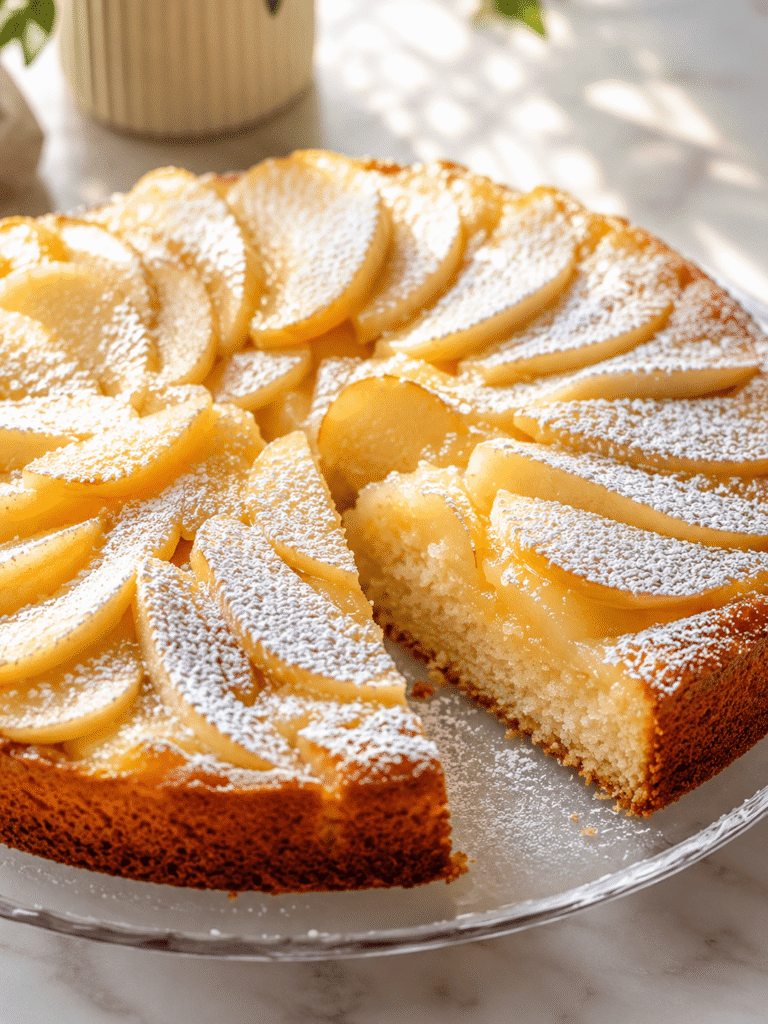
German apple cake in context
Apple cakes are one of the most common categories of home baking in German-speaking countries, appearing in dozens of regional variations. What most share is a dense, moist crumb and a generous proportion of fruit to batter. This version is simple enough to make any day of the week rather than just for special occasions, which is where most German home baking lives: practical, satisfying, made from what’s available. The confectioners’ sugar dusting is the traditional finish.
Make it in a different pan
A 9-inch round springform pan produces a deeper cake; add 5 to 10 minutes to the bake time and check with a toothpick. A 10-inch cast iron skillet works and produces crispier edges. A Bundt pan also works; reduce the apple slices to 2 medium apples and fold them all into the batter so they distribute evenly rather than piling up in the center of the pan.
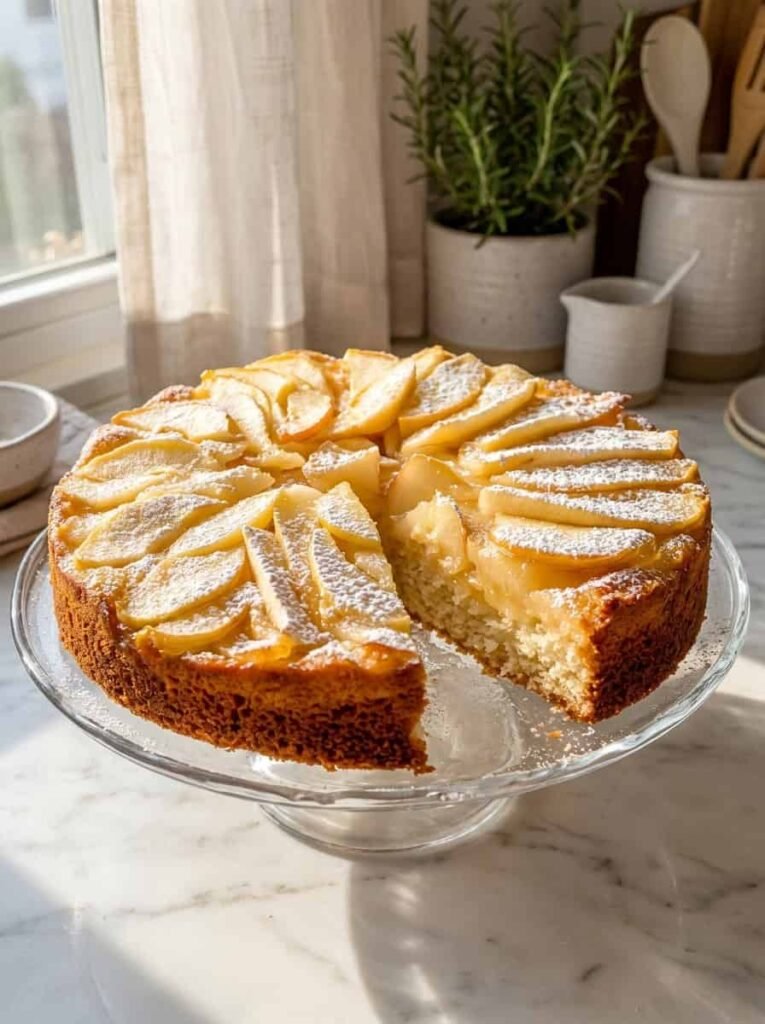

German Apple Cake
Description
German apple cake with an oil and applesauce batter, cinnamon, and three large apples folded in or arranged on top. Stays moist for days. Serves 12.
Ingredients
Instructions
-
Preheat the oven to 350 degrees Fahrenheit. Grease a 9x13-inch baking pan
-
In a large bowl, beat together the oil, applesauce, eggs, sugar, and vanilla until smooth
-
In a separate bowl, whisk together the flour, cinnamon, baking soda, and salt
-
Gradually add the dry ingredients to the wet and mix until just smooth. Do not overmix
-
Pour the batter into the prepared pan. Arrange the apple slices on top, or fold half into the batter and arrange the rest on top
-
Bake for 45 minutes until a toothpick inserted in the center comes out clean. Do not overbake
-
Cool completely, then dust with confectioners' sugar before serving.
Note
Use firm apples. Pull from oven as soon as toothpick comes out clean. Folding half the apples into the batter produces a moister result. Nutrition per serving (serves 12): 201 calories, 28g carbohydrates, 2g protein, 10g fat, 1.5g saturated fat, 30mg cholesterol, 200mg sodium, 18g sugar.