


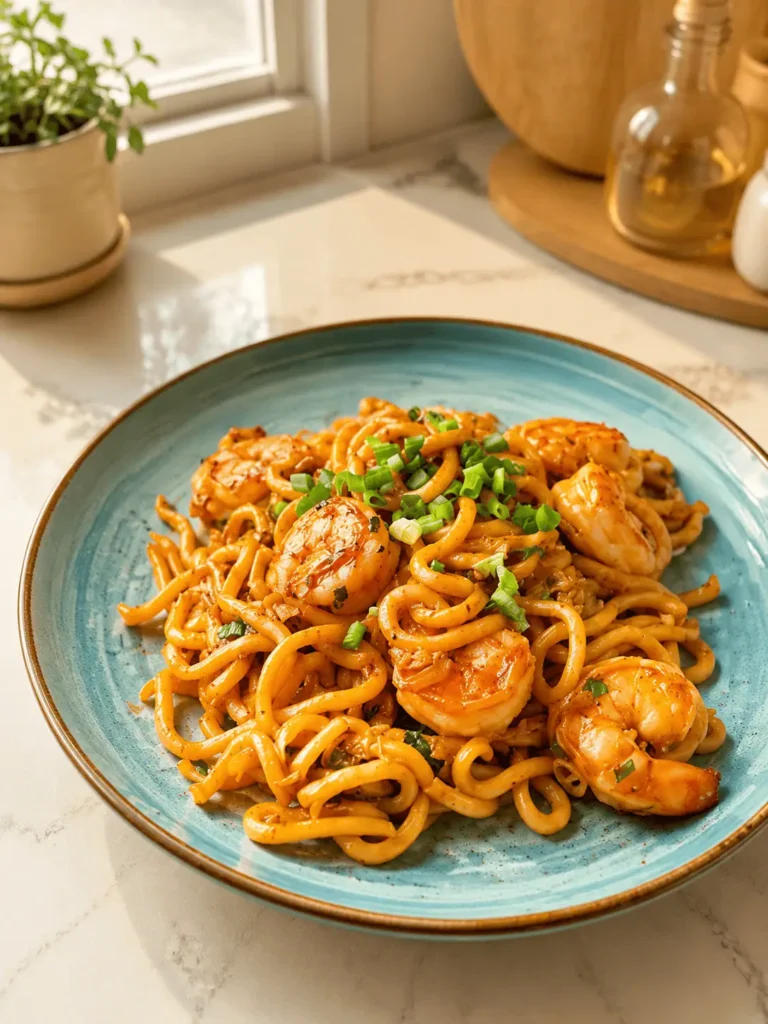

Garlic prawn udon is a fifteen-minute stir-fry that punches above its ingredient list. Pre-cooked udon noodles, prawns, cabbage, garlic, and a sauce of soy sauce and oyster sauce produce something glossy, savory, and satisfying in a way that takes longer to explain than to make. High heat, fast movements, and the right order of additions is the whole technique.
Pre-cooked udon noodles, the kind sold as compact cakes in vacuum-sealed packets, are the key shortcut. They go into boiling water for about thirty seconds just to separate, tossed with sesame oil, and they’re ready to stir-fry. No long boiling, no timing window to miss. They go into the wok with enough body to hold up to the high heat and come out chewy and slightly charred at the edges.
The cabbage technique

High heat in a wok or large frying pan with two tablespoons of vegetable oil. Add the sliced cabbage and stir-fry without moving it too much until the edges start to char. The charring is not a mistake; it’s the point. Cabbage with dark, slightly burnt edges has a smoky sweetness that raw or steamed cabbage doesn’t, and it’s one of the signatures of good restaurant stir-fry cooking.
Once the cabbage has color, add half a teaspoon of sugar and half a tablespoon of soy sauce and stir-fry for another minute. The sugar accelerates the caramelization and the soy adds a savory glaze. The cabbage should be nicely colored and slightly sweet before the garlic goes in.
Garlic for twenty seconds, just until fragrant. Then the prawns and chilli flakes, stir-fried until the prawns are just cooked through. The moment they’ve turned pink and opaque, move to the next step. Overcooked prawns are rubbery and that’s a waste of good shellfish. They finish cooking in the residual heat when the noodles go in, so pulling them the moment they look done is the right call.
The noodles and the sauce
The udon noodles, already separated and tossed in sesame oil, go into the wok with the remaining soy sauce (one and a half tablespoons), the remaining sugar (half a teaspoon), and three tablespoons of oyster sauce. Stir-fry for another thirty seconds until the sauce thickens and coats everything. The oyster sauce is the element that makes the dish glossy and rich; it reduces and clings differently from plain soy and gives the noodles that dark, lacquered restaurant finish.
Toss through half a cup of finely sliced spring onion at the very end, off or just before removing from heat. The spring onion adds freshness and a mild allium note that cuts through the richness of the oyster sauce. Serve immediately.
Why high heat matters more than anything else
The difference between a good stir-fry and a mediocre one is almost always heat. Home stoves don’t produce the same BTU output as restaurant woks, but you can compensate by not crowding the pan, working in batches if needed, and keeping the heat cranked as high as it will go throughout the cook. A pan that’s hot enough will char the cabbage in thirty seconds; a pan that’s too cool will steam it and you get a soft, wet result that bears no resemblance to what you’re going for.
Serves two. This scales well: double the ingredients and work in a large wok or cook in two batches, because crowding drops the heat and the stir-fry becomes a braise. Two servings at a time is the right approach if you’re cooking for four.
The sauce balance and adjustments
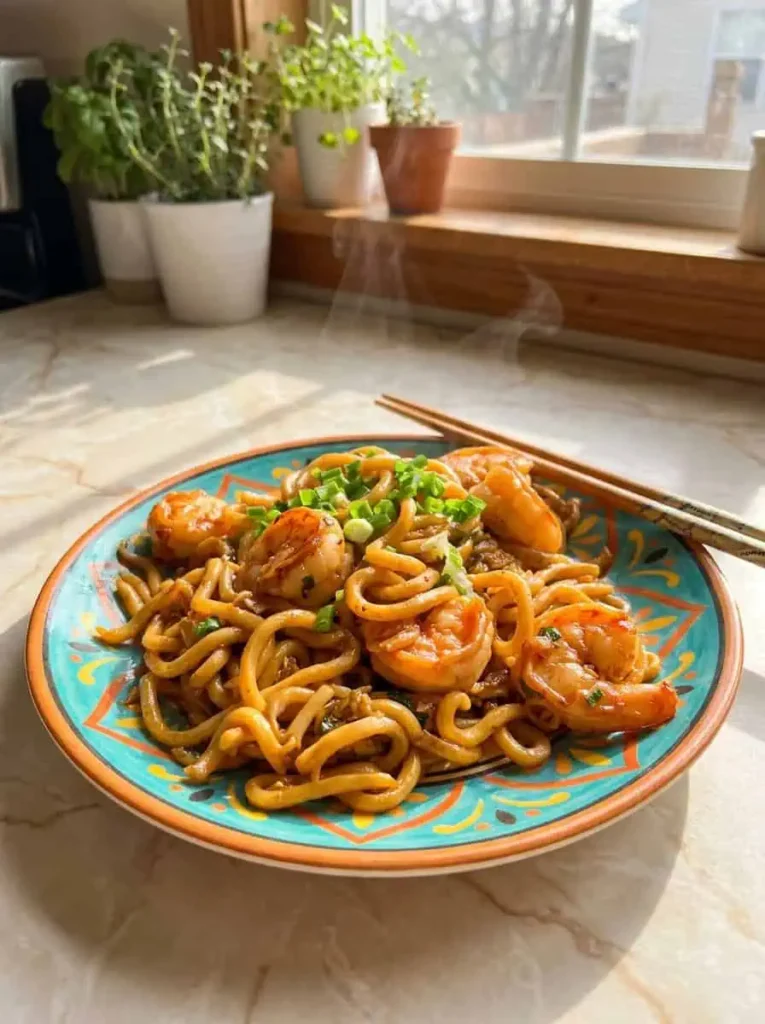
The sauce as written lands savory-forward with a background sweetness from the oyster sauce. If you want it saltier, another half tablespoon of soy sauce does it. Sweeter, add another quarter teaspoon of sugar. For more heat, double the chilli flakes or add a drizzle of chilli oil at the table. The oyster sauce is the component that gives the dish its richness and gloss; don’t reduce it to cut calories unless you’re prepared for a thinner, less satisfying result.
The thirty seconds of stir-frying after adding the noodles and sauce is not very long, and it’s on purpose. The sauce tightens fast at high heat and you want to stop before it goes sticky and heavy rather than glossy and clingy. Watch the noodles rather than the clock: when the sauce looks like it’s coating them with a sheen rather than pooling at the bottom of the wok, it’s done.
Udon as a weeknight staple
I’ve cooked with udon noodles for years, partly because they’re forgiving (hard to overcook by much, hard to undercook), partly because the packets keep in the fridge for weeks and make a proper meal available without planning. The pre-cooked variety is one of the more useful ingredients in a pantry built for fast weeknight cooking. This recipe is the version I make most often when I want something that tastes like it came from a noodle restaurant and took ten minutes to make. Serves 2.
Make it your own
Swap the prawns for sliced chicken thigh, thinly sliced beef, or firm tofu for a different protein in the same method. Add a handful of beansprouts or sliced mushrooms with the cabbage. A soft-boiled egg halved on top adds richness. The sauce ratio, soy to oyster sauce to sugar, is the foundation that stays constant; everything else is variable.
Garlic Prawn Udon
Description
A quick stir-fry of pre-cooked udon noodles, prawns, and charred cabbage in a glossy oyster-soy sauce. High heat, fast technique, 15 minutes. Serves 2.
Ingredients
Instructions
-
Bring a pot of water to a boil. Add the udon noodle cakes and use tongs to gently separate them, about 30 seconds. Transfer to a bowl and toss with the sesame oil.
-
Heat the vegetable oil in a wok or large frying pan over high heat. Add the cabbage and stir-fry until the edges start to char.
-
Add 1/2 teaspoon of the sugar and 1/2 tablespoon of the soy sauce. Stir-fry for another minute until the cabbage is nicely colored. Add the garlic and stir-fry for 20 seconds.
-
Add the prawns and chilli flakes. Stir-fry until the prawns are just cooked through and pink.
-
Add the noodles, the remaining 1 1/2 tablespoons soy sauce, remaining 1/2 teaspoon sugar, and the oyster sauce. Stir-fry for about 30 seconds until the sauce thickens and coats everything.
-
Toss through the spring onions and serve immediately..
Note
Use the highest heat your stove can produce. Don't crowd the pan or the stir-fry turns into a braise. For 4 servings, double the recipe and cook in two batches. No nutrition data was provided for this recipe.