


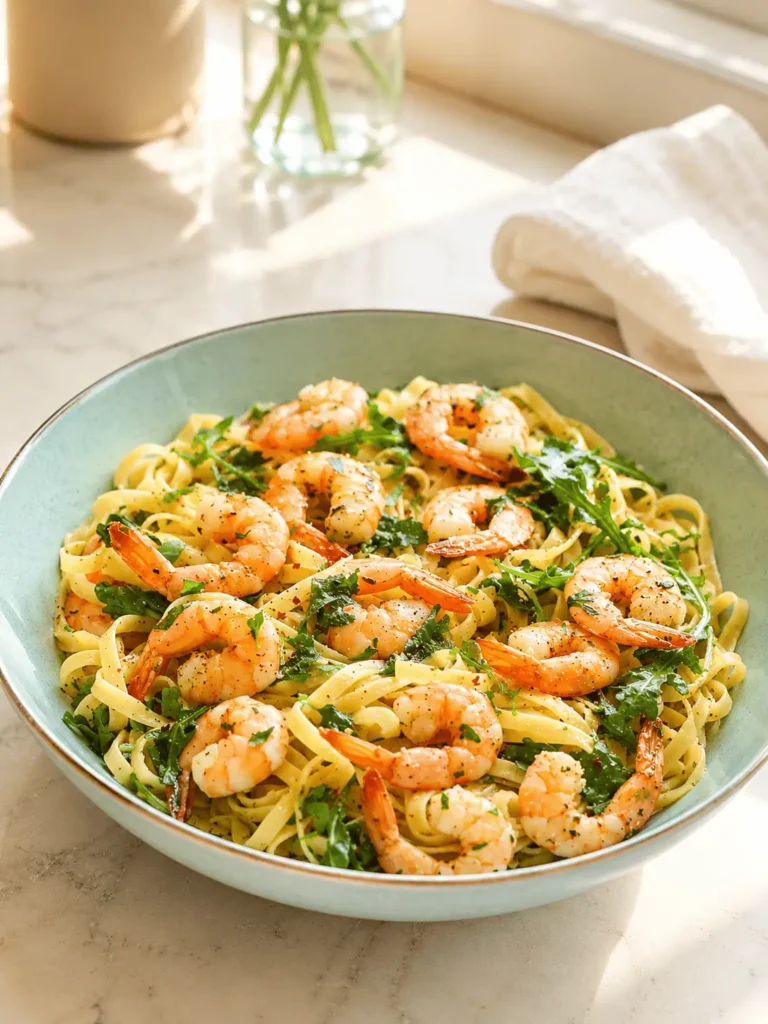

Garlic butter shrimp pasta is the weeknight dinner I make when I want something that looks and tastes like it took more time than it did. Fettuccine or linguine tossed in eight tablespoons of butter with garlic, parmesan, and wilted arugula, with shrimp cooked separately in garlic and oregano and returned to the pan at the end. Shrimp first, pasta second, everything combined at the end: that sequence is the technique that keeps the shrimp from overcooking while the rest of the dish comes together.
Eight tablespoons of butter is a full stick, which sounds like a lot and produces a sauce that’s rich, glossy, and clinging rather than watery. This is not a light pasta. It’s a generous, satisfying one-pan pasta that earns its butter.
Cook the pasta first

A large pot of well-salted water to a boil, eight ounces of fettuccine, linguine, or spaghetti cooked until al dente according to package directions, then drained thoroughly. Al dente here is not just a preference; pasta that’s fully soft will continue cooking when it hits the hot butter and can become mushy by the time it’s served. A minute or two short of done is exactly right.
Drain thoroughly, not rinsed. Rinsing removes the surface starch that helps the butter sauce cling to the noodles. Just drained, then set aside while the shrimp cook.
The shrimp
Season a pound of peeled and deveined shrimp with salt and pepper. In a large cast-iron skillet over medium-high heat, melt two tablespoons of the butter. Add the minced garlic, dried oregano, and red pepper flakes and cook for one to two minutes, stirring, until fragrant. The garlic goes in with the butter before the shrimp so it has time to bloom in the fat and soften slightly before the shrimp arrive.
Add the shrimp in batches, not all at once. Crowding shrimp in a pan drops the temperature and the shrimp steam instead of sear. Two to three minutes per batch until pink and opaque throughout, then out of the pan. Don’t push past the moment they’re cooked; the shrimp go back in at the end and will pick up more heat then. Overcooked shrimp are rubbery and there’s no fixing that.
The butter pasta
Melt the remaining six tablespoons of butter in the same skillet. The brown bits from the shrimp and garlic left in the pan are flavor; they’ll dissolve into the butter and add depth to the sauce. Add the cooked pasta, two cups of baby arugula or spinach, and a quarter cup of freshly grated parmesan. Stir continuously for about two minutes until the greens wilt and the parmesan melts into the butter.
Arugula over spinach is worth trying if you haven’t. Arugula holds its texture slightly better under heat and its peppery note plays well against the richness of the butter and parmesan. Spinach is milder and softer and disappears more completely into the dish. Both are correct; it’s a preference call.
Return the shrimp to the skillet and toss everything together. The shrimp warm through in about thirty seconds of tossing in the hot pasta. Serve immediately with fresh parsley scattered over the top.
Why the shrimp come out and go back in
This staging approach, cooking the shrimp first and adding them back at the end, is the technique that makes this dish work. If the shrimp go in with the pasta and cook through the full butter-and-parmesan phase, they’re overcooked before the pasta is ready. Cooking them first and adding them back means they’re properly cooked when they leave the pan, and the brief toss at the end just reheats them without continuing to cook them. It’s the difference between tender, just-done shrimp and the chewy, shrunken version that comes from too much time on heat.
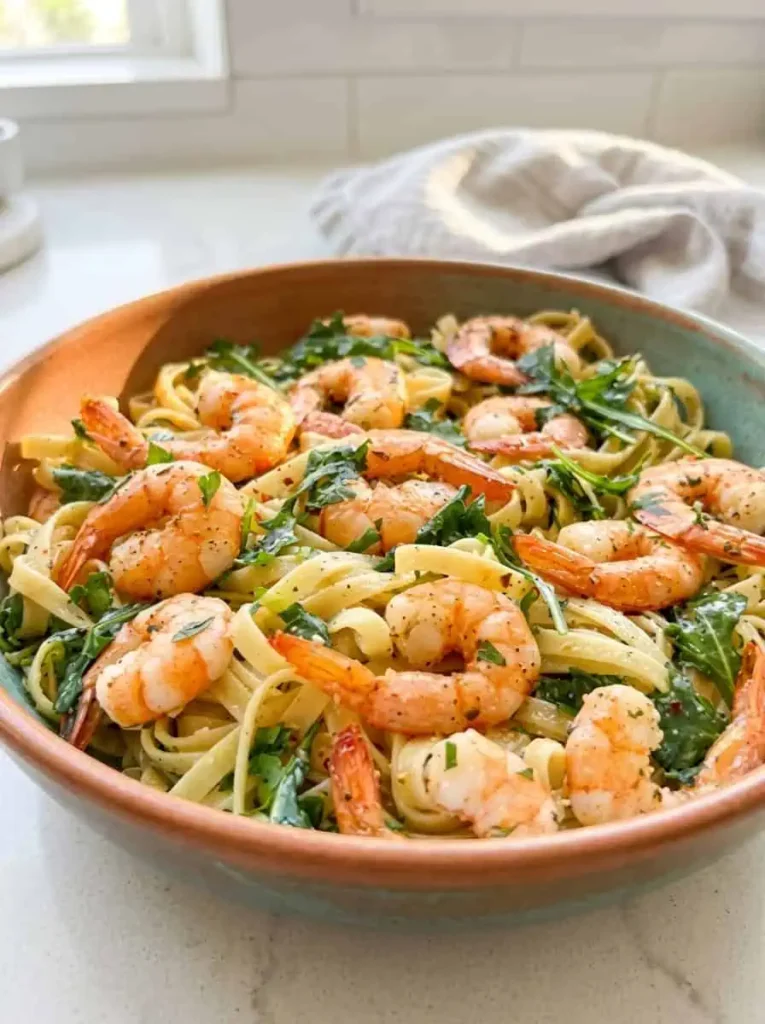
A simple dish with specific opinions
Garlic butter pasta is one of the categories of Italian-American cooking I find most interesting precisely because it’s so simple that every choice matters more than it would in a complex dish. Fresh garlic rather than garlic powder. Real parmesan grated at the table rather than the pre-grated kind. Good butter. None of these are expensive upgrades; they’re decisions about what kind of cook you want to be at the moment you’re making dinner.
The dish is twenty minutes start to finish if the water was already hot, twenty-five if it wasn’t. It serves four people without making anyone feel like they’re eating something that required effort. That’s the category this belongs to: not fancy, not difficult, but genuinely good at the job it set out to do. No nutrition data was provided for this recipe. Serves 4.
A few things that improve it
A quarter cup of pasta water reserved before draining adds starch that helps the butter emulsify into a creamier sauce. A splash of dry white wine added to the pan after the garlic and before the shrimp adds acid and depth. A handful of cherry tomatoes halved and added with the arugula burst slightly in the heat and add a bright, acidic note that cuts through the richness. Any one of these is a small addition that moves the dish in a noticeably better direction.
Garlic Butter Shrimp Pasta
Description
Fettuccine tossed in garlic butter with Parmesan and arugula, with shrimp cooked separately and returned at the end to stay tender. Ready in 20 minutes.
Ingredients
Instructions
-
Bring a large pot of well-salted water to a boil. Cook the pasta until al dente according to package directions. Drain thoroughly without rinsing.
-
Season the shrimp with salt and pepper.
-
In a large cast-iron skillet over medium-high heat, melt 2 tablespoons of the butter. Add the garlic, oregano, and red pepper flakes. Cook, stirring, for 1 to 2 minutes until fragrant.
-
Add the shrimp in batches and cook for 2 to 3 minutes until pink and just cooked through. Remove from the skillet and set aside.
-
Melt the remaining 6 tablespoons of butter in the same skillet. Add the cooked pasta, arugula, and Parmesan. Stir continuously for about 2 minutes until the greens wilt.
-
Return the shrimp to the skillet and toss to combine. Serve immediately, garnished with fresh parsley..
Note
Do not rinse the pasta after draining; the surface starch helps the sauce cling. Cook shrimp in batches so they sear rather than steam. Use freshly grated Parmesan; pre-grated contains anti-caking agents that prevent smooth melting. No nutrition data was provided for this recipe.