


Fig upside-down cake is a late summer dessert that shows off fresh figs at their best. The fruit goes into the pan first, nested in a brown sugar caramel that bakes into a glossy, slightly sticky topping when the cake is flipped. The batter is a simple creamed butter cake made with cake flour and evaporated milk, which produces a more tender, finer crumb than all-purpose flour and whole milk. Two hours from start to eating, most of which is resting and cooling time.
Fresh figs are the ingredient this cake is built around, and they need to be handled carefully because they’re soft and break apart easily. Tossing them in lemon juice, granulated sugar, and cornstarch before arranging them in the pan gives them structure and keeps the liquid they release during baking from making the bottom of the cake soggy. The cornstarch thickens the fig juices into a jammy, glossy layer rather than a wet puddle.
The caramel base

Melt three tablespoons of butter in a small saucepan over medium heat, then add half a cup of light brown sugar and two teaspoons of corn syrup. Stir to combine and cook for three to four minutes until the sugar dissolves and the mixture darkens slightly. Pour into a lightly greased nine-inch round cake pan and smooth into an even layer. Transfer to the refrigerator for fifteen minutes.
The corn syrup is there to prevent crystallization. Caramel made with only sugar and butter can crystallize as it cools and lose its smooth, pourable texture. The corn syrup interrupts crystallization and keeps the caramel smooth through the chilling step and the bake. The fifteen-minute chill sets the caramel so it doesn’t flow around when you arrange the figs on top of it.
Preparing and arranging the figs
One pound of fresh figs, stemmed and sliced lengthwise into three to four slices each. Add a tablespoon of lemon juice, a quarter cup of granulated sugar, and a tablespoon of cornstarch to the bowl of fig slices and toss gently. Be careful here; ripe figs are tender and fall apart under heavy handling. The goal is to coat each slice without crushing it.
Remove the pan from the refrigerator. Arrange the fig slices cut-side down in a single layer on the set caramel. Press them gently into the caramel with your hands so they adhere. Spoon any excess liquid from the bowl over the arranged figs. That liquid contains the dissolved sugar and cornstarch and becomes part of the caramel layer during baking.
The batter
Cake flour produces a more tender, finer crumb than all-purpose flour because of its lower protein content. Sift a cup of cake flour with a teaspoon of baking powder and a quarter teaspoon of salt. The evaporated milk is diluted with an equal amount of water, four tablespoons of each, because undiluted evaporated milk is too concentrated for this recipe. If you don’t have evaporated milk, use eight tablespoons of whole milk and skip the water entirely.
Cream four tablespoons of room-temperature butter with half a cup of granulated sugar until light and fluffy. Add one egg and beat until creamy. Then alternate the dry ingredients and the evaporated milk mixture in two additions each, adding the vanilla with the last addition of milk. Don’t overmix; stop as soon as each addition is incorporated. Overmixed batter develops gluten that makes the cake tough rather than tender.
Spoon the batter over the arranged figs and smooth into an even layer. The batter is fairly thick and won’t self-level; use a spatula to spread it carefully to the edges without disturbing the fig arrangement underneath.
Baking and the critical rest
350 degrees Fahrenheit, forty-three to forty-eight minutes, until a toothpick inserted in the center comes out clean. Then, and this is the step most people skip: let the cake stand in the pan for at least thirty to forty-five minutes before flipping. The caramel is liquid when the cake comes out of the oven and needs time to partially set. Flip too early and the caramel runs off the cake rather than clinging to it, and the figs may slide or fall off. Patient waiting produces the glossy, caramel-coated fig topping the recipe is designed to show.
Place a large plate over the pan, hold both firmly, and invert in one confident motion. Tap the bottom of the pan with a butter knife to encourage the cake to release. If it sticks slightly, run a thin knife around the edge first.
Figs and the brief window
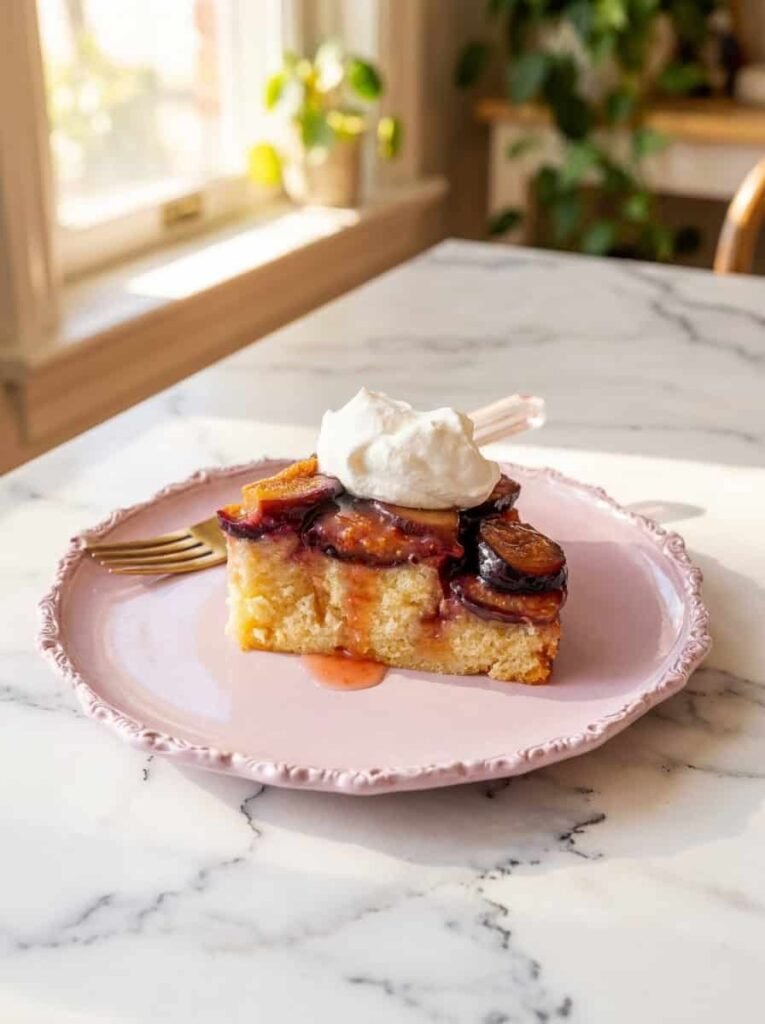
Fresh figs appear for a few weeks in late summer, and they’re one of the fruits worth making something special with when they’re available. The sugar and caramel in this cake deepen their natural honeyed sweetness and the lemon juice sharpens it. Whipped cream alongside is the right accompaniment, cool and lightly sweet against the warm, richly flavored cake. Serves 8. Best eaten the day it’s made; the caramel softens overnight but the cake is still good the next day.
If your figs aren’t perfectly ripe
Slightly underripe figs work better in this cake than fully soft ones. Very ripe figs collapse during baking and release so much liquid that the caramel layer can become too wet. Figs that yield slightly when pressed but still hold their shape will produce cleaner slices and a more defined caramel-fig layer after baking.
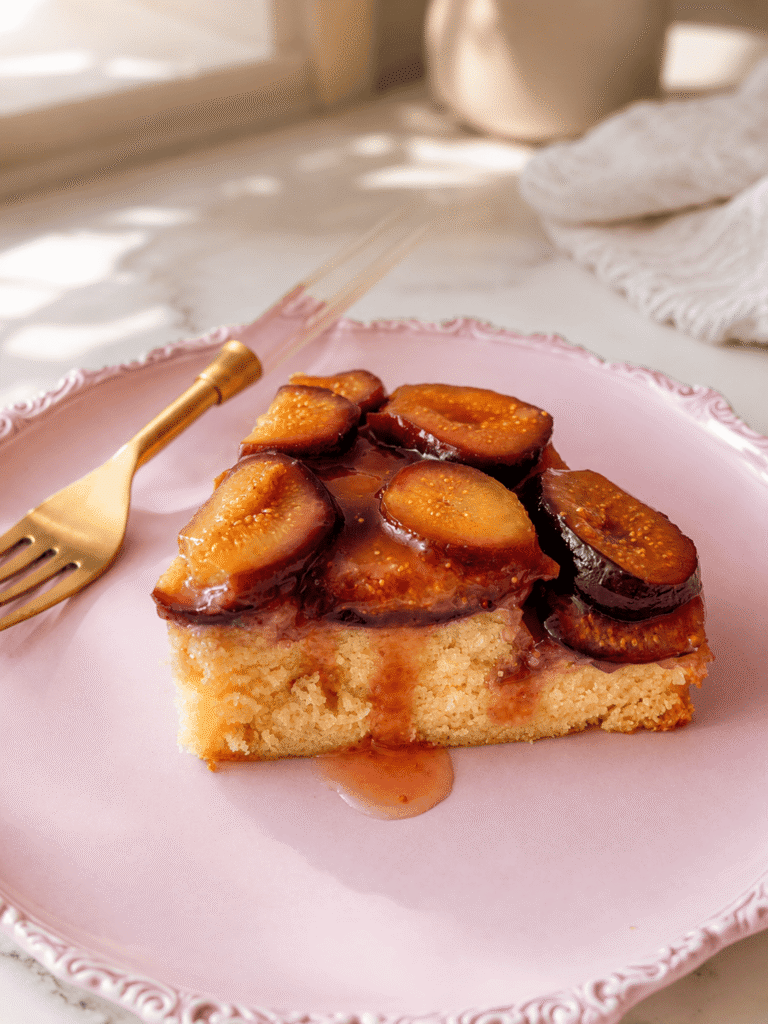

Fig Upside-Down Cake
Description
An upside-down cake with fresh figs nested in a brown sugar caramel and a tender cake-flour batter on top. Must rest 30 to 45 minutes before flipping. Serves 8.
Ingredients
Instructions
-
Preheat the oven to 350 degrees Fahrenheit. Lightly grease a 9-inch round cake pan.
-
Make the caramel: melt 3 tablespoons butter in a small saucepan over medium heat. Add the brown sugar and corn syrup. Cook, stirring occasionally, for 3 to 4 minutes until the sugar dissolves and the mixture darkens slightly. Pour into the prepared pan and smooth to an even layer. Refrigerate for 15 minutes.
-
Prepare the figs: gently toss the fig slices with the lemon juice, 1/4 cup granulated sugar, and cornstarch. Set aside.
-
Make the batter: sift together the cake flour, baking powder, and salt. Combine the evaporated milk and water in a small bowl. Cream the 4 tablespoons butter with 1/2 cup sugar until light and fluffy. Add the egg and beat until creamy. Alternately add the dry ingredients and the milk mixture in two additions each, adding vanilla with the last addition. Beat until just combined; do not overmix.
-
Arrange the figs cut-side down on the set caramel, pressing gently to adhere. Spoon any excess liquid from the bowl over the figs. Spoon the batter over the figs and smooth to an even layer.
-
Bake for 43 to 48 minutes until a toothpick inserted in the center comes out clean.
-
Let stand in the pan for 30 to 45 minutes at room temperature. Place a large plate over the pan and invert to release the cake. Tap the pan with a butter knife if needed to release. Serve with whipped cream..
Note
Rest Time includes 15-minute caramel chill plus 30 to 45-minute post-bake rest before flipping (75 minutes total). Do not skip the post-bake rest; the caramel needs time to set before flipping. If no evaporated milk, use 8 tablespoons whole milk and omit the water. No nutrition data was provided for this recipe.