


Rolled dumplings dropped into a broth made from condensed soup, canned broth and water, with cooked chicken already in it.
Eight servings, forty minutes.
Boiling water in the dumpling dough
Three quarters of a cup, added a little at a time to flour and shortening.
This is the technique that makes Southern rolled dumplings work and it is not intuitive. Boiling water partially gelatinises the starch in the flour and it denatures some of the protein, which limits gluten development.
The result is a dough that rolls out thin without springing back and produces tender dumplings rather than chewy ones.
Cold water would give you something closer to pasta. Add it gradually, since flour varies in how much it takes.

Cut the shortening in first
A quarter cup, worked into the self-rising flour with a pastry blender or fork before any water.
Same principle as pastry: fat coats the flour particles and shortens the gluten strands that form later. That is what makes the dumplings tender.
Work it until the mixture looks like coarse crumbs. Then the water goes in.
Add them a few at a time
Several squares at a time to the boiling broth, replacing the lid for about thirty seconds between additions.
Dropping them all in at once drops the broth temperature sharply, and dumplings that sit in barely simmering liquid go gluey on the outside before they cook through.
Replacing the lid brings the temperature back up between batches. It takes a few minutes and it is the difference between distinct dumplings and a pot of paste.
Then simmer, not boil
Heat lowered once all the dumplings are in, twenty minutes covered.
A rolling boil knocks rolled dumplings against each other and they break apart. A simmer cooks them through while they hold their shape.
Twenty minutes is enough for eighth-inch dough. Thicker dumplings need longer.
Eighth of an inch, and no thinner
Rolled out on a floured board, cut into strips then squares.
Thin dumplings swell as they absorb broth, so an eighth of an inch going in becomes considerably thicker in the pot. Roll them thicker and the centres stay doughy.
Flour the board well. This dough is sticky from the boiling water.
Self-rising flour, and what it contains
Two cups, and there is no separate leavening or salt in the dumpling ingredients.
Self-rising flour is plain flour with baking powder and salt already blended in, in set proportions. Using plain flour instead means adding about a tablespoon of baking powder and a teaspoon of salt.
It is a Southern baking staple and this recipe assumes it.
The broth is built from cans
One can of condensed cream of chicken soup, two cans of chicken broth and three cans of water.
The cans are the measure, which is a practical way to scale a recipe without a measuring jug. Three 10.5 ounce cans of water is roughly four cups.
That is a lot of liquid and it needs to be, since the dumplings absorb a considerable amount as they cook and the flour on them thickens what remains.
Condensed soup is doing the thickening and much of the seasoning. It is also where most of the sodium comes from, and reduced sodium versions exist.
The chicken is already cooked
Four cups chopped, chicken or turkey.
This is a leftovers recipe at heart. A roast chicken carcass or leftover holiday turkey is exactly what it is designed around, and rotisserie chicken is the shortcut.
It only needs heating through, which is why it goes in at the start with the broth rather than being cooked separately.
Drop dumplings instead
Pinched off and dropped rather than rolled, which the recipe offers.

Faster, and the result is fluffier and more scone-like where rolled dumplings are flat and silky. <p>Keep each pinch uniform so they cook at the same rate. ## Season at the end Salt and pepper to taste after the dumplings have simmered. Condensed soup and canned broth both carry substantial salt already, and the dumplings absorb some of it as they cook, so judging at the start is guesswork.
Keeping it
Three days refrigerated. The dumplings keep absorbing liquid and by the next day this is closer to a stew. Loosen with broth and reheat gently rather than boiling, which breaks the dumplings apart.
It does not freeze well, as the dumplings go mushy on thawing.
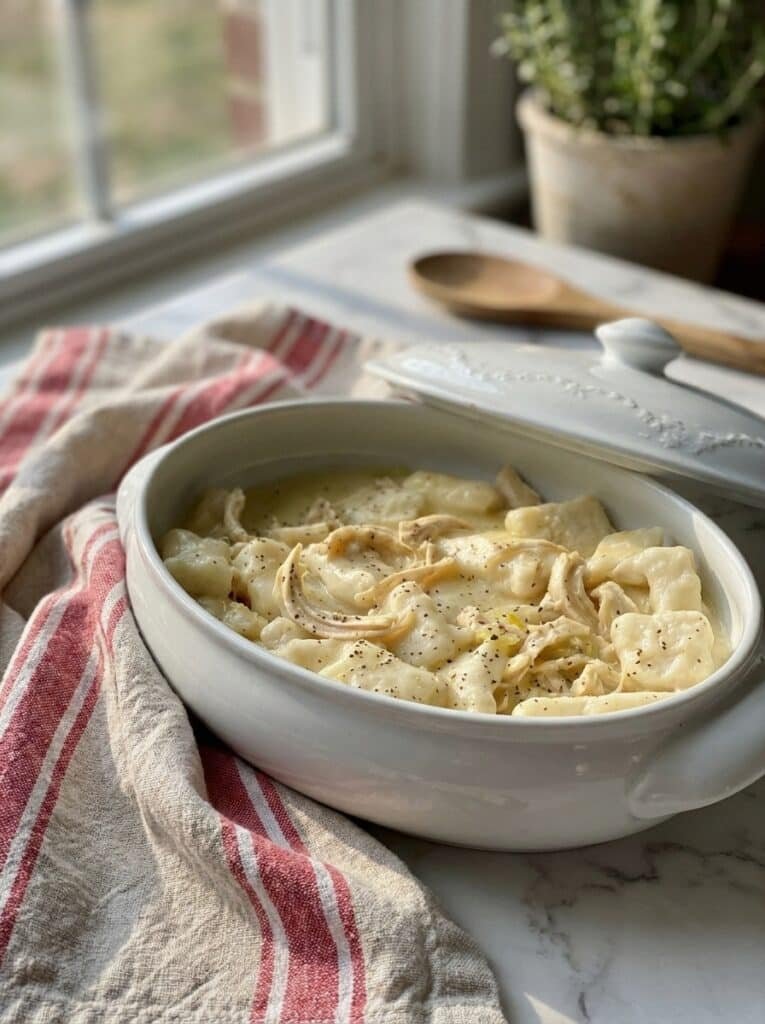

Easy Chicken and Dumplings
Description
A quick Southern chicken and dumplings using cooked chicken and rolled self-rising flour dumplings.
Ingredients:
Instructions
-
Place the chicken, celery, condensed soup, chicken broth and water in a soup pot, bring to a boil and cover
-
Pour the self-rising flour into a large bowl and cut in the shortening with a pastry blender or fork until the mixture resembles coarse crumbs
-
Add the boiling water a little at a time until you can shape the mixture into a ball. Roll out to about 1/8 inch thick on a floured board and cut into strips, then squares
-
Remove the lid and add several squares at a time to the boiling broth, replacing the lid each time for about 30 seconds, until all the dumplings are added
-
Once all the dumplings are in, lower the heat to a simmer and cook about 20 minutes. Season with salt and pepper to taste
-
For drop dumplings, do not roll the dough out; pinch off uniform pieces and drop them into the broth the same way.
Note
The boiling water in the dumpling dough is the technique that makes these tender: it partially gelatinises the starch and limits gluten, so the dough rolls thin without springing back. Cut the shortening in before any water. Add the dumplings a few at a time, replacing the lid for about 30 seconds between additions, so the broth temperature does not drop. Then lower to a simmer rather than boiling, which breaks them apart. Roll to an eighth of an inch, as they swell considerably. Self-rising flour already contains baking powder and salt; using plain flour means adding about a tablespoon of baking powder and a teaspoon of salt. Season at the end, since condensed soup and canned broth are already salty. Keeps 3 days refrigerated and does not freeze well.