


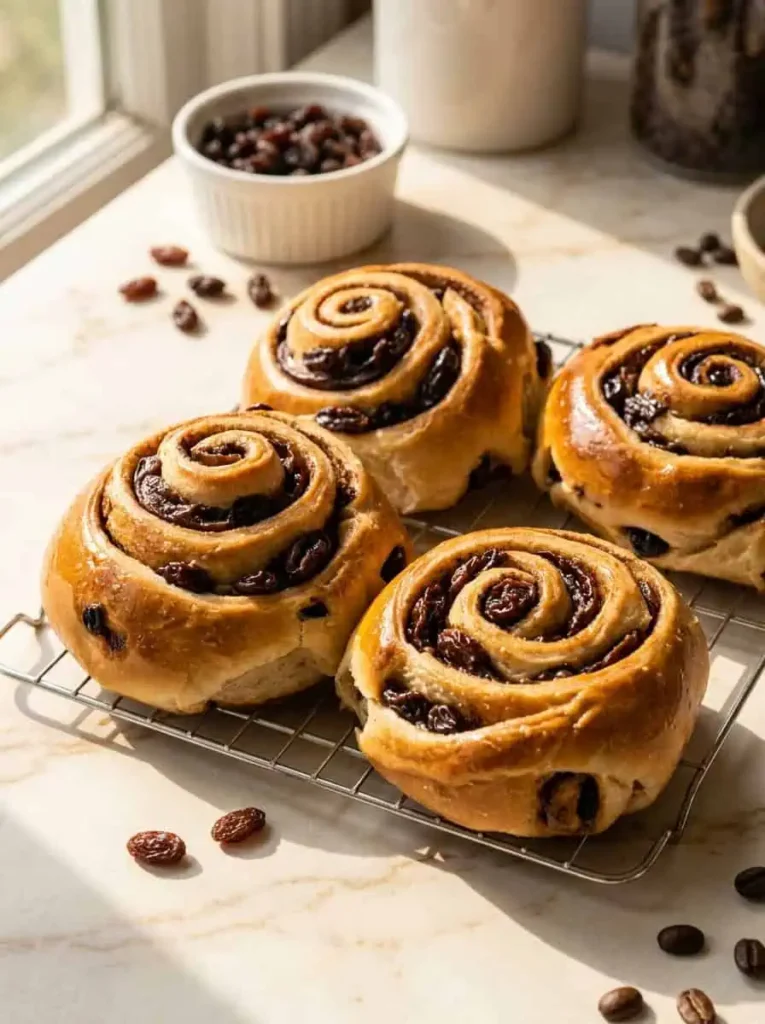
Cinnamon raisin rolls sit between a classic cinnamon roll and a fruit-studded breakfast bun. The dough is enriched with eggs, butter, and milk, which gives it a soft, pillowy crumb. The filling is brown sugar, cinnamon, and butter with a generous scatter of raisins that plump up and go almost jammy in the oven. Glaze or no glaze, they’re the kind of thing that fills the kitchen with a smell that makes everyone find their way to the kitchen.
This is a weekend project rather than a weeknight recipe. Two rises add up to about two hours of waiting, but neither requires you to do anything except cover the bowl or pan and step away. The active time is probably thirty minutes total. The rest is just patience.
The dough, built for softness

Active dry yeast needs to be proofed first, which is the step that distinguishes it from instant yeast. Combine it with the warm milk in a small bowl and leave it for five to ten minutes. You’re looking for foam, which tells you the yeast is alive and working. Warm milk means warm, not hot: around 100 to 110 degrees Fahrenheit. Water much above 120 degrees starts killing yeast, which gives you flat rolls and no explanation for why.
Whisk together the flour, sugar, and salt in a large bowl, then add the foamy yeast mixture, melted butter, eggs, and vanilla. Mix until a soft dough comes together, then turn it out onto a floured surface and knead for five to seven minutes until it’s smooth and springs back when you poke it. The dough should be slightly tacky but not sticky. If it’s sticking to everything, add flour a tablespoon at a time. If it’s dry and tearing, wet your hands slightly rather than adding more flour.
The eggs are doing real work here. They add structure, richness, and help the rolls stay moist for longer after baking. Don’t be tempted to reduce them for a lighter dough; you’ll lose the texture that makes these worth making.
The first rise and the filling
Dough in a lightly greased bowl, covered, in a warm spot for one to one and a half hours until doubled. The inside of a turned-off oven with the light on is a reliable 70 to 75 degree environment. A cold kitchen will slow the rise considerably; give it extra time rather than forcing it with heat.
While the dough rises, mix the brown sugar and cinnamon together in a small bowl. Brown sugar over white here because it has molasses in it, which gives the filling a deeper, more caramel-like flavor and keeps it slightly moist inside the rolls rather than crystallizing dry. The softened butter goes on the dough first, then the cinnamon sugar, then the raisins.
Softened means genuinely soft, not melted, not cold. Butter that’s too cold tears the dough when you try to spread it. Butter that’s melted soaks into the dough immediately and the filling runs instead of staying in distinct, swirly layers. Room temperature for an hour is enough; you should be able to press your finger into it without resistance.
Rolling, cutting, and the second rise
Roll the risen dough into a rectangle about 12 by 18 inches on a lightly floured surface. Spread the soft butter all the way to the edges on all four sides. Sprinkle the cinnamon sugar evenly over the butter, then scatter the raisins. Starting from the long side, roll the dough tightly into a log. The tighter you roll it, the more defined the spiral in each slice will be and the less likely the filling is to spill out when you cut them.
Cut the log into twelve equal pieces with a sharp knife or, for cleaner cuts that don’t compress the dough, unflavored dental floss. Slide the floss under the log, cross it over the top, and pull. Each slice comes off clean without the squashing that a knife causes when the dough is soft.
Arrange the rolls cut-side up in a greased 9 by 13 baking dish with a little space between each one, cover, and let rise for another thirty to forty-five minutes until puffy and touching each other. The touching is what makes pull-apart rolls; space them further apart if you want more individual, crusty-sided rolls.
Baking and glazing
350 degrees, twenty to twenty-five minutes until golden brown on top. The rolls in the center of the pan take longest to cook through, so check the center with a toothpick or look for a golden color all the way to the middle of the pan. Pull them out slightly underdone if anything; residual heat finishes them and overdone cinnamon rolls are dry.
The glaze is optional but good. Powdered sugar, milk, and vanilla whisked until smooth, then drizzled while the rolls are still warm. Warm rolls absorb the glaze slightly rather than just sitting underneath it, which gives you a more integrated sweetness rather than a hard sugar shell. If you want a thicker glaze, add more powdered sugar a tablespoon at a time until it reaches the consistency you want.
Raisins, and the people who didn’t expect to like them
Raisins in a cinnamon roll are divisive in a way that raisins in oatmeal aren’t, possibly because cinnamon rolls are usually associated with pure sweetness and raisins introduce something more complex. In this recipe they go almost jammy under the heat, soft and fruity rather than the chewy, dried-fruit texture people object to. I’ve converted several raisin skeptics with these rolls, not by hiding the raisins but by making sure they’re distributed evenly and baked long enough to soften completely.
If you genuinely can’t get behind raisins, dried cranberries are a fine substitute with more tartness, or leave them out entirely. The rolls work without them. They’re just a little less interesting. Makes 12 rolls. Store covered at room temperature for two days or refrigerate for four.
Make them the night before
After cutting and placing the rolls in the baking dish, cover tightly with plastic wrap and refrigerate instead of doing the second rise at room temperature. In the morning, pull the pan out, let it sit at room temperature for thirty to forty-five minutes while the oven preheats, then bake as directed. The slow overnight rise in the cold fridge actually develops more flavor in the dough. Fresh rolls for breakfast with almost no morning effort.

Cinnamon Raisin Rolls
Description
Enriched dough rolls filled with brown sugar, cinnamon, and raisins. Two rises, baked at 350, and finished with a simple vanilla glaze. Makes 12.
Ingredients
Instructions
-
Proof the yeast: combine the warm milk and yeast in a small bowl and let sit for 5 to 10 minutes until foamy.
-
In a large bowl, whisk together the flour, sugar, and salt. Add the yeast mixture, melted butter, eggs, and vanilla. Mix until a soft dough forms.
-
Turn the dough out onto a lightly floured surface and knead for 5 to 7 minutes until smooth and elastic. Place in a lightly greased bowl, cover, and let rise in a warm place for 1 to 1 1/2 hours until doubled.
-
Mix the brown sugar and cinnamon together. On a floured surface, roll the risen dough into a 12 x 18-inch rectangle. Spread the softened butter evenly over the entire surface. Sprinkle the cinnamon sugar over the butter, then scatter the raisins evenly.
-
Starting from the long side, roll the dough tightly into a log. Cut into 12 equal pieces using a sharp knife or unflavored dental floss.
-
Place the rolls cut-side up in a greased 9 x 13-inch baking dish. Cover and let rise for 30 to 45 minutes until puffy and touching.
-
Preheat the oven to 350 degrees Fahrenheit. Bake for 20 to 25 minutes until golden brown. Cool slightly.
-
Optional glaze: whisk together powdered sugar, milk, and vanilla until smooth. Drizzle over warm rolls and serve..
Note
Rest Time is approximately 60 to 90 minutes first rise plus 30 to 45 minutes second rise (105 minutes midpoint estimate). Use softened, not melted, butter for the filling so it stays in distinct layers. For make-ahead rolls, refrigerate after cutting and do the second rise in the fridge overnight; bring to room temperature before baking. No nutrition data was provided for this recipe.