


These chocolate chip cookies use melted butter rather than creamed butter, which produces a different texture than the standard recipe: chewier in the center, with crisp edges, and a slightly denser crumb that stays soft for days. The thirty-minute chill before baking is the other key step. The combination of melted butter and refrigerated dough is what makes these specific rather than just another chocolate chip cookie.
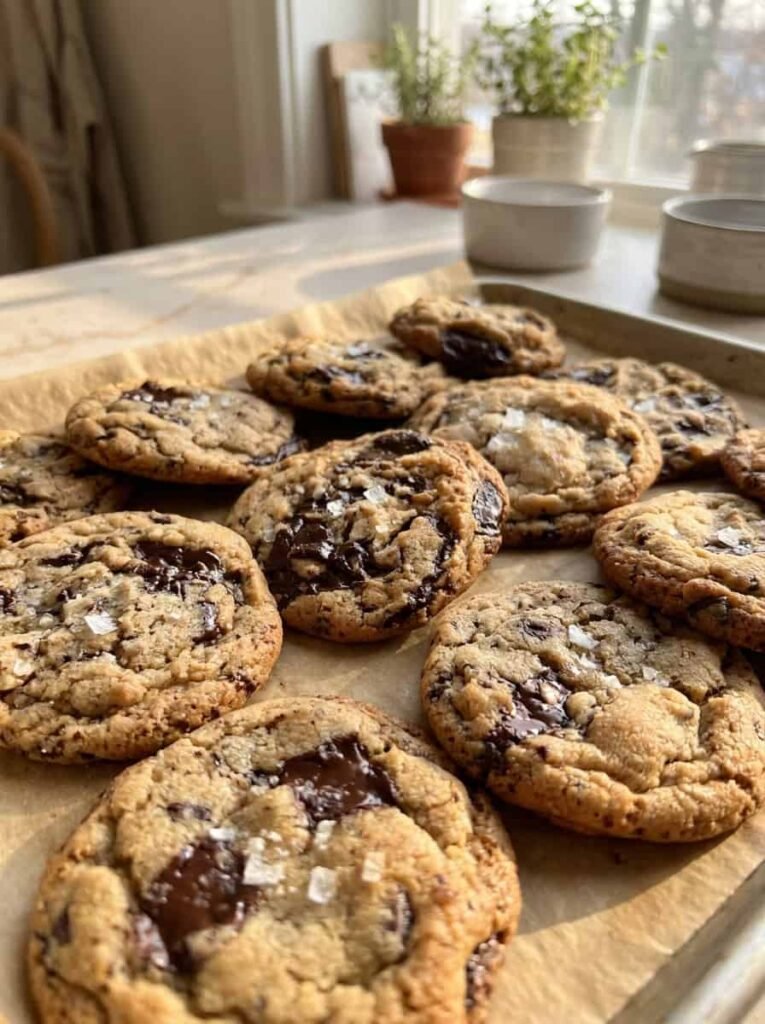
Flaky sea salt on top before they go in the oven is not optional here. The salt doesn’t disappear into the cookie; it sits on the surface and you taste it in each bite alongside the chocolate. The contrast between the sweetness of the dough and the salt crystals is the finishing detail that makes people ask what’s in them.
Melted butter and what it does

Most chocolate chip cookie recipes cream softened butter with sugar, which incorporates air and produces a lighter, cakier cookie. This recipe uses melted butter mixed directly into the dry ingredients, which skips that air incorporation and produces a denser, chewier result. Melted butter also means the fat fully coats the flour proteins before they hydrate, which limits gluten development and contributes to the tender, slightly fudgy center.
The butter should be melted and cooled slightly before using, not still hot from the microwave. Hot butter added to sugar begins melting it and can change the spread and texture of the finished cookie. Room temperature is fine; slightly warm is fine. Steaming hot is not.
The method
Dry ingredients in a large bowl first: two cups of flour, two-thirds cup light brown sugar, half a cup of granulated sugar, half a teaspoon each of salt, baking powder, and baking soda, and one and a quarter cups of chopped chocolate or chocolate chips. Mixing the chocolate into the dry ingredients before the wet go in helps distribute it evenly through the dough without overworking it.
Pour in the melted butter, one egg, and a tablespoon of vanilla extract. Mix just until the dough comes together. The instruction about not overmixing is worth following: after the wet ingredients go in, the gluten in the flour begins developing the moment you stir. A few extra stirs past “just combined” won’t ruin the cookies but will make them slightly tougher. Stop when you can no longer see dry flour.
The chill
Cover the dough and refrigerate for at least thirty minutes before baking. Chilling solidifies the butter and relaxes the gluten, which means the cookies spread more slowly in the oven and maintain more height rather than flattening completely. Cold dough also allows the flour to fully hydrate, which develops more complex flavor in the finished cookie. Thirty minutes is the minimum; overnight in the fridge produces an even better result if you’re planning ahead.
Baking
350 degrees, twelve minutes, pulled when the edges have just started to brown and the centers still look slightly underdone. Like most thick cookies, these set up further on the pan during the two minutes of resting before you move them to a wire rack. Baking to fully done in the oven produces a dry, overcooked cookie by the time they’ve cooled. The slight underdone look at twelve minutes is the target, not a mistake.
Scoop with a cookie scoop onto parchment-lined baking sheets, two inches apart, and sprinkle flaky salt on each cookie before it goes in the oven. The salt needs to go on before baking so it adheres to the top of the cookie as the surface sets. Salt added after baking sits on top and slides off.
Chopped chocolate versus chocolate chips
The recipe gives you both options. Chopped chocolate from a good bar produces irregular pieces that melt differently in the oven: some pockets of fully melted chocolate, some larger chunks that hold their shape, some thin shards that crisp against the cookie edge. Chocolate chips are more uniform and designed to hold their shape during baking, which gives you distinct chips rather than melted pockets. Both work; chopped chocolate is worth trying if you want a more varied texture.
A cookie that delivers what it promises
The title of the source recipe promises a lot, and these cookies back it up mostly because of the two things that make them different from a standard recipe: melted rather than creamed butter, and a mandatory chill. Neither of these steps takes long, and both produce a meaningfully different cookie than skipping them would. Crisp edges, soft chewy center, flaky salt on top. Makes twenty cookies. Nutrition per cookie: 213 calories, 9.8g fat, 6.0g saturated fat, 29g carbohydrates, 18.6g sugars, 0.7g fiber, 1g protein, 109.9mg sodium.
Storage and keeping
Stored in a sealed container at room temperature these stay soft for four to five days, which is longer than most chocolate chip cookies because the melted-butter dough retains moisture better than a creamed-butter dough. The unbaked dough keeps refrigerated for up to three days or frozen for up to three months; scoop and freeze individual portions and bake directly from frozen, adding two to three minutes to the bake time.

Chocolate Chip Cookies
Description
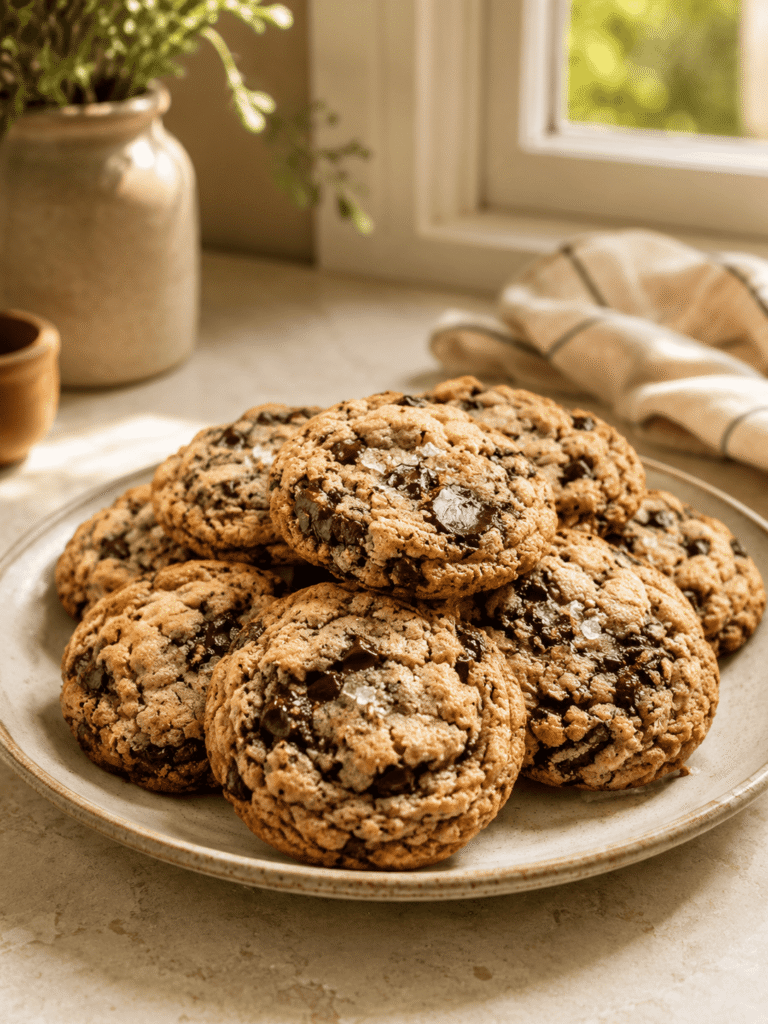
Classic chocolate chip cookies with melted butter for a chewy texture, chilled dough for height, and flaky sea salt on top. Makes 20 cookies.
Ingredients
Instructions
-
In a large mixing bowl, whisk together the flour, both sugars, salt, baking powder, baking soda, and chopped chocolate.
-
Pour in the melted butter, egg, and vanilla. Mix just until the dough comes together. Do not overmix.
-
Cover and refrigerate the dough for at least 30 minutes.
-
Preheat the oven to 350 degrees Fahrenheit. Line baking sheets with parchment paper.
-
Scoop the dough onto the baking sheets, leaving at least 2 inches between cookies. Sprinkle each with flaky sea salt.
-
Bake for 12 minutes until the edges have just started to brown. The centers should still look slightly underdone.
-
Let the cookies rest on the pan for 2 minutes before transferring to a wire rack to cool..
Nutrition Facts
Servings 20
- Amount Per Serving
- % Daily Value *
- Total Fat 9.8g16%
- Saturated Fat 6g30%
- Trans Fat 0.3g
- Cholesterol 27.7mg10%
- Sodium 109.9mg5%
- Total Carbohydrate 29g10%
- Dietary Fiber 0.7g3%
- Sugars 18.6g
- Protein 2.3g5%
* Percent Daily Values are based on a 2,000 calorie diet. Your daily value may be higher or lower depending on your calorie needs.