


A three layer chocolate sheet cake with whipped caramel and fudge frosting between the layers. Twelve to sixteen servings across two days.
Hot sugar is the real hazard here
The caramel goes to 350 to 360F. Water boils at 212F, so this is well over a hundred degrees hotter than anything else most home cooks handle.
Molten sugar sticks to skin rather than running off, which is why sugar burns are worse than scalds from water. Treat the pan with the same caution you would hot oil.
When the cream goes in it will bubble up violently and steam. Add it slowly, in a thin stream, standing back and stirring with a long spoon. Adding it all at once can send hot caramel over the pan rim.
Warming the cream first reduces the reaction considerably, which the recipe does not mention and which is worth doing.

Keep children out of the kitchen for this step. If caramel does contact skin, run it under cold water immediately and do not try to peel it off.
The assembly stops before the cake is finished
The source’s final instruction is to apply a thin crumb coat and freeze fifteen minutes to set it. Then it ends.
A crumb coat is a preparatory layer that traps loose crumbs so the final frosting goes on clean. It is not a finish.
After the crumb coat sets, apply the remaining fudge frosting in a thicker layer and smooth it with an offset spatula. That step is missing and the cake is not done without it.
Do not stir the caramel while it cooks
Stir only to dissolve the sugar at the start, then leave it.
Stirring a cooking sugar syrup encourages crystallisation, and once crystals form they seed the whole pan and you get grainy caramel that cannot be recovered.
Swirl the pan gently if it colours unevenly. If crystals form on the sides, brush them down with a wet pastry brush.
Make the caramel a day ahead
Which the recipe recommends and which is not optional in practice.
It needs to chill fully before whipping, and whipping warm caramel gives you a loose sauce rather than a fluffy filling.
Wrap directly on the surface so no skin forms, then refrigerate overnight. Beat on high before assembling, at which point it lightens in colour and turns fluffy.
Mayonnaise in a chocolate cake
Half a cup, and it is doing exactly what you would expect once you think about it.
Mayonnaise is oil and egg emulsified together, which are two things a cake batter wants anyway. It contributes fat and moisture in an already stable emulsion, which makes for a notably tender crumb.
It does not taste of mayonnaise. This is a technique from wartime baking that has stayed around because it works.
Slightly chilled butter for the frosting
Two cups, and the temperature is specified deliberately.
This frosting takes a full ganache plus two cups of powdered sugar. Fully softened butter cannot hold that volume and the frosting goes soupy.
Slightly chilled means cool to the touch but yielding. Beat it two minutes before the ganache goes in.
Cool the ganache to room temperature
Before it meets the butter.
Warm ganache melts butter on contact and the frosting breaks. Room temperature is the requirement, and it takes longer than you expect.
Cut the cake horizontally into three
From a single 9×13 sheet.
A long serrated knife and a steady hand. Marking the sides with toothpicks at the cutting height first gives you a guide to follow.
Chill the cake before cutting. A cold cake cuts cleanly where a room temperature one tears.
The piping needle
The recipe suggests placing a piping needle in the middle of the pan before baking, which is a heating core. It conducts heat into the centre so a large flat cake bakes evenly and rises level rather than doming.
It is optional. Without one, expect a slight dome and level it off before splitting the layers.
Dark cocoa
A full cup in the cake and three quarters in the frosting, specified as high-fat. Higher fat cocoa gives a deeper colour and a smoother texture. Standard cocoa works and the result is lighter in both senses.
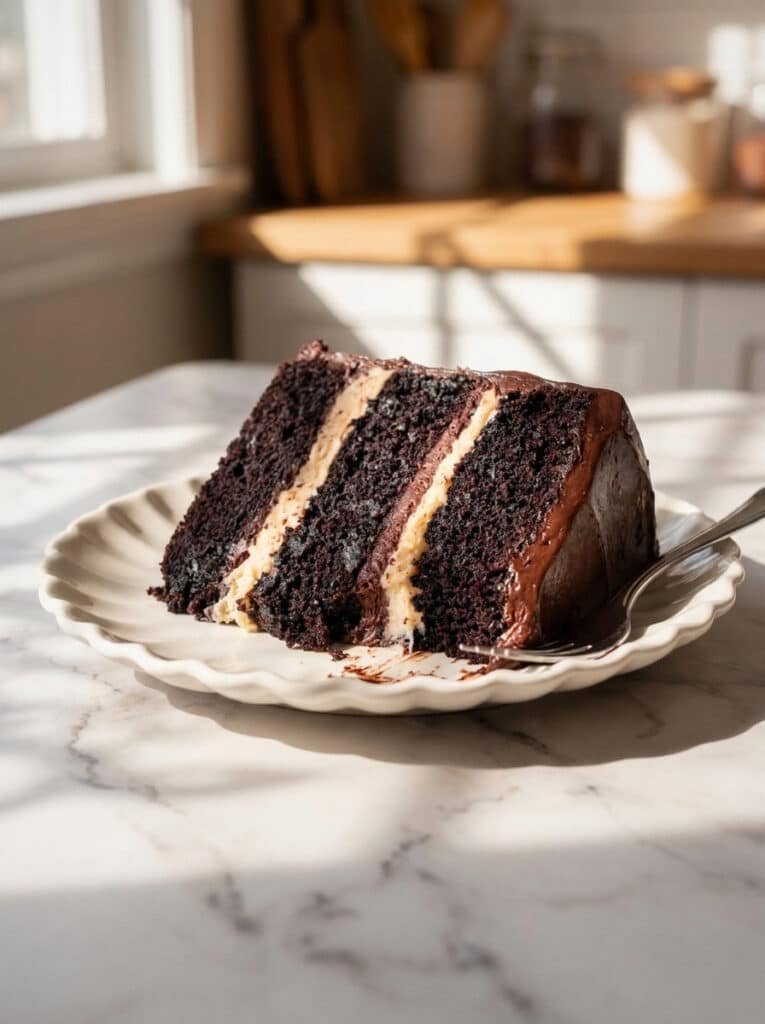

Chocolate Caramel Layer Cake
Description
A rich layered chocolate sheet cake with a whipped caramel filling and dark fudge frosting.
Ingredients:
Instructions
-
Make the caramel a day ahead. In a medium saucepan combine the sugar and water over medium heat. Stir only until the sugar dissolves, then stop stirring and let it cook undisturbed.
-
Once the mixture turns amber, around 350 to 360F, remove from the heat and stir in the butter. Then add the cream slowly in a thin stream while standing back, as it will bubble violently and steam. Warming the cream first reduces this reaction. Stir in the vanilla and salt.
-
While still hot, pour the caramel over the white chocolate chips in a heatproof bowl and stir until smooth. Cool to room temperature, press plastic wrap onto the surface and refrigerate overnight.
-
For the cake, preheat the oven to 350F. Spray a 9x13 inch light metal pan, line with parchment and spray again. Combine the flour, sugar, cocoa, baking soda, baking powder and salt in a stand mixer with the paddle and mix on low.
-
In another bowl combine the buttermilk, mayonnaise, hot water, oil, eggs and vanilla. With the mixer on low, slowly add the wet to the dry, scraping the bowl. Pour into the pan and bake 30 to 35 minutes until a toothpick comes out with a few moist crumbs. Cool in the pan 15 minutes then turn out onto a rack to cool completely.
-
For the frosting, heat the chocolate chips and cream in a microwave-safe bowl about a minute and stir smooth. Cool to room temperature. Sift the powdered sugar and cocoa together in another bowl.
-
Beat the slightly chilled butter 2 minutes on medium-high. On low, add the cooled ganache, scrape the bowl, then beat on medium-high about a minute until smooth. Gradually add the sugar and cocoa mixture a cup at a time, followed by the corn syrup, vanilla and salt, and beat until smooth.
-
Beat the chilled caramel on high until it lightens and looks fluffy. Chill the cake, then cut it horizontally into three equal layers with a long serrated knife.
-
Place the first layer on a board. Pipe or spread half the whipped caramel, then about a cup of fudge frosting. Repeat with the second layer. Place the third layer on top, cut side down.
-
Apply a thin crumb coat of fudge frosting and freeze 15 minutes to set. Then apply the remaining frosting in a thicker even layer and smooth with an offset spatula..
Note
Hot sugar safety: the caramel reaches 350 to 360F, well over a hundred degrees hotter than boiling water, and molten sugar sticks to skin rather than running off. Add the cream slowly in a thin stream while standing back, as it bubbles violently; warming the cream first reduces this. Keep children away from this step. The source assembly ends after the crumb coat, which is only a preparatory layer; apply the remaining fudge frosting in a thicker layer afterwards or the cake is unfinished. Do not stir the caramel once the sugar has dissolved, since stirring encourages crystallisation. Make the caramel a day ahead, as it must chill fully before whipping. Use slightly chilled butter for the frosting and cool the ganache to room temperature before combining, or the frosting breaks. Chill the cake before cutting it into three layers.