


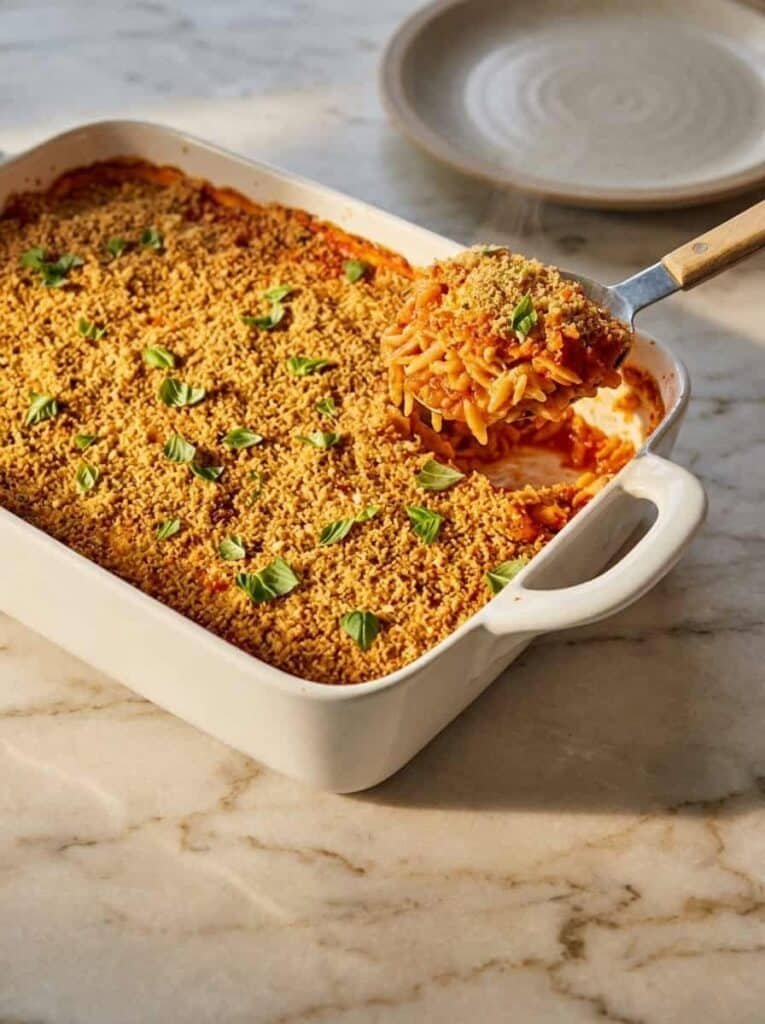

Everything goes into the dish raw, including the orzo, and the oven does the rest. There is no browning, no separate pot for pasta, and no layering.
Fifteen minutes of active work, an hour and ten in total, four servings.
The orzo cooks in the dish
A cup and a half of uncooked orzo stirred into three cups of stock, a jar of marinara and half a cup of cream, then covered tightly and baked.
Pasta cooked directly in its sauce absorbs the liquid rather than being boiled in water and drained. All the starch it releases stays in the dish, which is what thickens the sauce into something that clings.
The liquid ratio is calibrated for this, so measure it properly. Too little and the orzo stays hard in patches; too much and you get soup.
Cover it tightly with foil

For the whole first stage, thirty five to forty minutes at 425F.
Tightly is the word that matters. The orzo needs trapped steam to cook evenly, and a loose cover lets it escape. The top layer would dry out while the bottom stayed wet.
425F is high for a covered bake and it is what gets the liquid to a simmer quickly so the pasta starts absorbing.
The chicken goes in after
Two cups of shredded rotisserie chicken folded in once the orzo is al dente.
It is already cooked, so adding it at the start would mean forty minutes of it sitting in simmering liquid, going stringy and dry. Folded in at the end it heats through in the second bake.
Rotisserie chicken is the shortcut this recipe is built around. It arrives seasoned and shredded and it is what keeps the active time to fifteen minutes.
Breadcrumbs and parmesan mixed, not layered
Half a cup of Italian-seasoned breadcrumbs stirred with a third of a cup of grated parmesan, then sprinkled over the mozzarella.
Mixing them first means every part of the topping browns. Breadcrumbs alone go pale and dusty; parmesan alone browns hard in patches. Together they give an even golden crust.
This is what stands in for the fried, breaded cutlet in a real chicken parmesan. The dish is not pretending to be the original, it is borrowing the flavours and the crunch.
Twelve to fourteen minutes uncovered
Until lightly browned and the sauce is bubbling at the edges.
The foil comes off for this stage so the surface can dry and colour. Under foil the cheese would melt but never brown, and the breadcrumbs would go soggy.
Ten minutes standing
Before serving, and it matters more than in most bakes.
Orzo continues absorbing liquid as it sits, so a dish that looks slightly loose coming out of the oven firms up during those ten minutes. Served immediately it can be soupier than you want.
It also lets the cheese set enough to spoon cleanly.
Low-moisture mozzarella
Four ounces shredded, and the type is specified for a reason.
Fresh mozzarella carries a great deal of water, and in a baked dish that water runs out and thins the sauce. Low-moisture mozzarella melts into a stretchy layer without releasing much liquid.
It is the same reason low-moisture is standard on pizza.
What this is and is not
A real chicken parmesan is a breaded cutlet, fried, then baked under sauce and cheese. This is not that and it does not claim to be.
What it takes is the flavour combination, which is tomato, mozzarella, parmesan and a crisp breadcrumb element, and applies it to a baked pasta. The chicken is shredded rather than a cutlet, and there is no frying anywhere.
Judged on its own terms it is a good weeknight bake. Judged against a properly made chicken parmesan it will disappoint, which is true of most shortcuts.
Serving
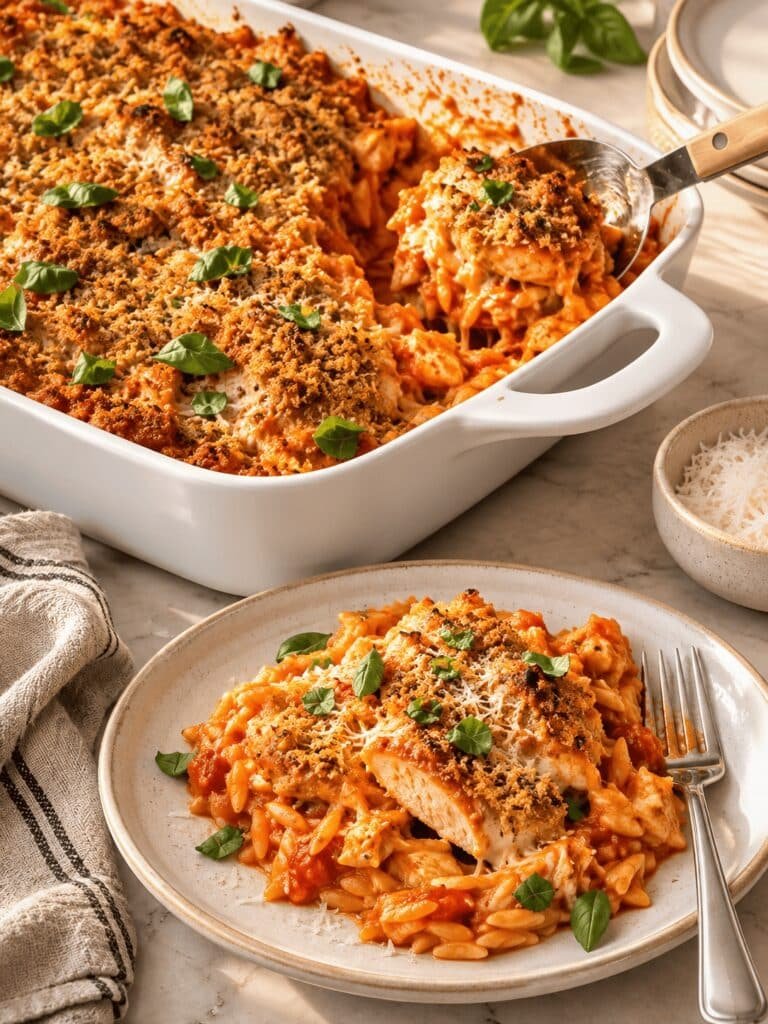
Basil sliced thinly over the top, added after baking so it stays green and aromatic. <p>The dish is rich enough that a green salad alongside is the sensible partner rather than bread. ## Making it ahead Assemble and bake the orzo base ahead, then add the mozzarella and breadcrumb topping just before serving and bake until golden. That splits the work and keeps the topping crisp.
Leftovers keep three days refrigerated. Reheat in a 350F oven rather than the microwave to re-crisp the topping.
The marinara
A 15.5 ounce jar, and the quality of it shows since it is a main component rather than a background note. Use one you would happily eat on pasta.
Chicken Parmesan Orzo Bake
Description
A one dish chicken parmesan orzo bake where the pasta cooks in the sauce and the topping browns uncovered.
Ingredients:
Instructions
-
Preheat the oven to 425F. Stir together the chicken stock marinara sauce orzo heavy cream garlic Italian seasoning salt and black pepper in a 3 quart casserole dish until combined
-
Cover tightly with foil and bake until the orzo is al dente, 35 to 40 minutes
-
Fold in the shredded chicken until combined, then sprinkle the mozzarella over the top
-
In a small bowl stir together the breadcrumbs and Parmesan, then sprinkle the mixture over the mozzarella
-
Return to the oven and bake uncovered until lightly browned and the sauce is bubbling, 12 to 14 minutes
-
Remove from the oven and let stand 10 minutes. Garnish with basil and serve.
Note
The orzo goes in uncooked and absorbs the liquid, so measure the stock, sauce and cream properly. Cover tightly with foil for the first stage; a loose cover lets the steam escape and the top dries out. Fold the rotisserie chicken in only after the orzo is al dente, since it is already cooked and would go stringy over 40 minutes. Mix the breadcrumbs and parmesan together before topping so the crust browns evenly. Use low-moisture mozzarella rather than fresh, which releases water and thins the sauce. Let it stand 10 minutes; the orzo keeps absorbing and firms up. Keeps 3 days refrigerated; reheat in a 350F oven to re-crisp the topping.