


A sonker is a North Carolina dessert that sits in the space between a pie and a cobbler and refuses to be either. The defining move is pouring a thin, batter-like topping over hot fruit and letting it bake up around the filling, creating something that’s simultaneously juicy fruit at the bottom, a tender, cakey layer through the middle, and a slightly crisp, turbinado-sugared crust on top. It’s one of those regional desserts that people outside its home state haven’t encountered and immediately want to make again once they have.
This version uses eight cups of fresh blueberries, which is a lot, and they earn that quantity. The blueberries cook down with lemon juice, cornstarch, and butter before the batter goes on top, releasing their juice into the base of the pan. When the batter goes over the hot fruit, it begins to cook immediately and the whole thing bakes into a dish where every scoop has some caramelized fruit juice, some soft batter, and some golden crust.
The fruit base

Eight cups of fresh blueberries in a thirteen by nine baking dish, tossed with a tablespoon of cornstarch, a quarter cup of sugar, and a quarter teaspoon of salt until evenly coated. Butter pieces go on top, then a drizzle of fresh lemon juice and a tablespoon of water. Into a 400-degree oven for fifteen minutes, just until the butter has melted and the blueberries begin releasing their liquid.
The cornstarch is there to thicken the blueberry juices as they cook, turning what would otherwise be a watery puddle into a glossy, slightly jammy sauce that suspends the blueberries rather than letting them float. The lemon juice is the brightness agent, the same role it plays in most fruit desserts: it sharpens the blueberry flavor and keeps the sweetness from going flat.
The fifteen-minute pre-bake is what separates a sonker from a standard cobbler where the fruit and batter go in together. Starting the fruit hot means the batter goes onto an already-cooking base, which produces a different internal texture in the finished dessert. The batter bottom is more custardy and the fruit is more jammy than if everything baked from room temperature together.
The batter
One cup of flour, a tablespoon of baking powder, the remaining cup of granulated sugar, and half a teaspoon of salt, whisked together. Then a cup of whole milk and a teaspoon of vanilla, whisked in until smooth. This is a thin, pourable batter closer to a crepe batter than a drop-biscuit topping, which is exactly what makes a sonker different from a cobbler. Cobbler toppings are usually dropped or spread thick; sonker batter is poured over the hot fruit and spreads itself.
Pour the batter evenly over the hot blueberry base directly from the bowl. It will spread across the entire surface. Scatter turbinado sugar over the top of the batter before it goes back in the oven. The turbinado is coarser than regular sugar and stays on the surface as distinct grains that caramelize into a crunchy crust rather than melting into the batter.
The second bake
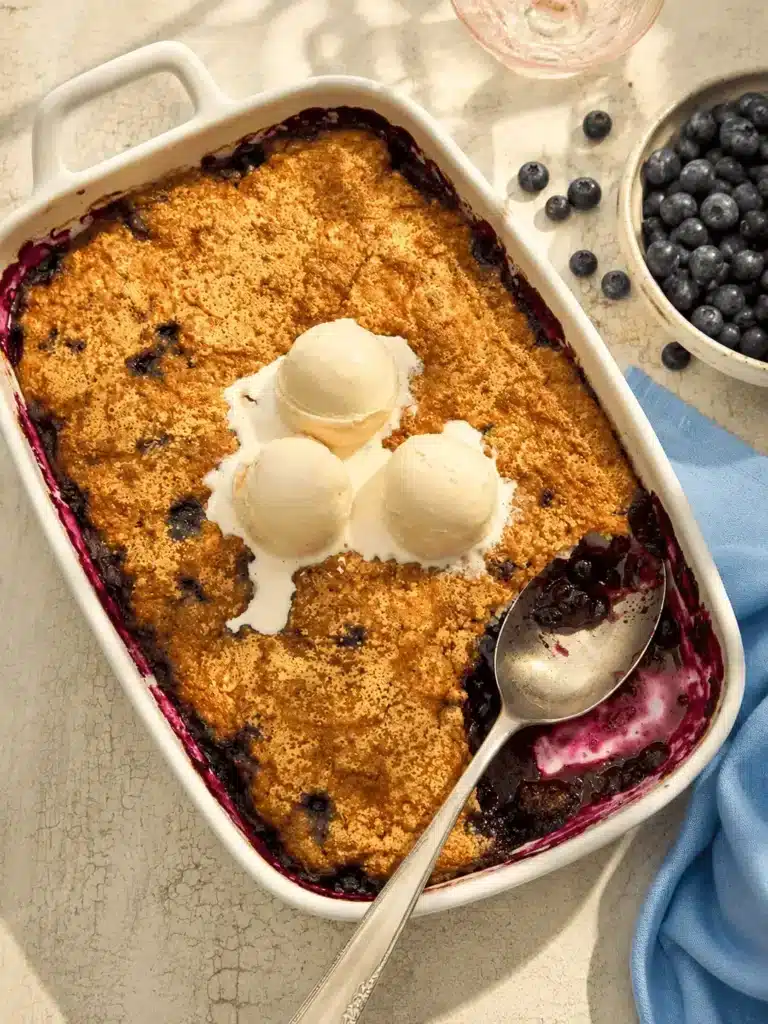
Reduce the oven to 350 degrees and bake for thirty-five to forty minutes until the top is golden brown. The lower temperature for the second bake lets the thick layer of batter cook through without burning the crust that formed when it first hit the hot pan. A finished sonker should be golden all the way across the top, with the fruit visible bubbling around the edges of the dish.
Let it cool for fifteen minutes before serving. This rest matters: the blueberry juices need time to settle slightly or the first scoop will be all liquid. Fifteen minutes is not long enough for the dessert to lose its warmth, but it’s enough for the structure to set so each portion holds together on the plate.
Serve with vanilla ice cream
This is not optional in the spirit of the dish. A scoop of cold vanilla ice cream against the warm, jammy blueberry and the slightly cakey topping is the whole point. The ice cream melts at the edges and pools with the fruit juice, and the combination of cold-warm, creamy-jammy, crunchy-soft is what makes a dessert like this memorable rather than merely good.
Regional food and why it matters
I find regional American food genuinely interesting because it’s often the product of a specific place, a specific set of available ingredients, and a specific tradition of cooking that doesn’t translate easily elsewhere. A sonker is made in North Carolina’s Surry County with whatever fruit was in season, and the slightly unusual batter technique is a local solution to the practical question of how to make a filling fruit dessert with what’s available. It’s the same logic behind every regional dish I’ve eaten across North Africa and the Middle East: specific geography, specific ingredients, specific answer.
This blueberry version is a good entry point because blueberries hold up well to the double-bake and produce enough juice to make the base properly glossy. Peaches, blackberries, and sweet cherries all work in the same method and produce sonkers with their own character. Serves 10 with vanilla ice cream. Leftovers reheat in a low oven; the crust softens overnight but the flavor is excellent.
Make it with other fruit
Peach sonker is the most traditional version in Surry County, made when peaches are at their summer peak. Use the same weight of sliced peaches and reduce the cornstarch to 2 teaspoons since peaches release less juice than blueberries. Blackberries and sweet cherries (pitted) both work at the same quantities as the blueberries. Mixed berry sonker, half blueberries and half blackberries, is excellent and produces a deeper-colored base than either berry alone.

Blueberry Sonker
Description
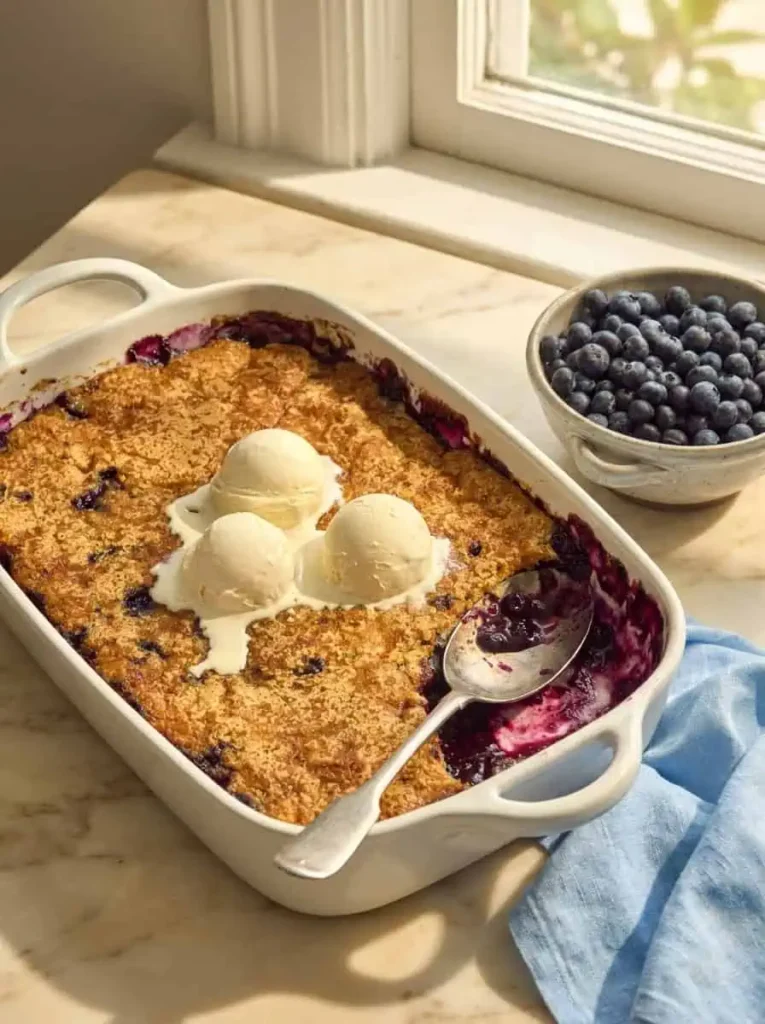
A blueberry sonker: fresh blueberries baked with lemon, butter, and cornstarch, then covered in a thin poured batter and baked golden. A North Carolina classic. Serves 10.
Ingredients
Instructions
-
Preheat the oven to 400 degrees Fahrenheit.
-
Toss the blueberries with the cornstarch, 1/4 cup of the granulated sugar, and 1/4 teaspoon of the salt in a 13x9-inch baking dish until evenly coated. Top with the butter pieces and drizzle with the lemon juice and water.
-
Bake for about 15 minutes until the butter is melted and the fruit begins to release liquid.
-
Whisk together the flour, baking powder, remaining 1 cup sugar, and remaining 1/2 teaspoon salt. Whisk in the milk and vanilla until smooth.
-
Pour the batter evenly over the hot blueberry mixture. Sprinkle with the turbinado sugar.
-
Reduce the oven to 350 degrees Fahrenheit. Bake for 35 to 40 minutes until the top is golden brown.
-
Cool for 15 minutes before serving. Serve with vanilla ice cream..
Note
The oven temperature drops from 400 to 350 after the batter goes on. Let the sonker rest 15 minutes before serving or the first scoop will be all liquid. Turbinado sugar on top creates a crunchier crust than granulated sugar. No nutrition data was provided for this recipe.