


Buttermilk pancakes with lemon zest and juice, leavened with both baking soda and baking powder. Serves four, fifty minutes.
Two leaveners doing different jobs
Three quarters of a teaspoon of baking soda and half a teaspoon of baking powder.
Baking soda needs an acid to react with, and there is plenty here between the buttermilk and four teaspoons of lemon juice. That reaction starts the moment the wet meets the dry.
Baking powder contains its own acid, so it works with any liquid and part of it activates again in the heat of the griddle.
Together they give a fluffier pancake than either alone. The soda handles the initial lift, the powder sustains it.
Keep the batter lumpy
Stirred gently with a rubber spatula until just combined.

Lumps are the target rather than a failure. Every extra stir develops gluten, and gluten in a pancake gives a chewy, rubbery result rather than a tender one.
If you can see streaks of dry flour, keep going. If you can see lumps but no dry flour, stop.
Rest the batter ten minutes
After mixing, before cooking.
Two things happen. The flour hydrates fully, which improves texture and lets any lumps relax on their own. And the leaveners get a head start, so the batter is already aerated when it hits the griddle.
Use the time to heat the griddle, which is what the recipe sequences you to do.
Heat the griddle low first, then raise it
Oiled, then low heat for at least five minutes, then up to medium for a final minute.
That slow start is about evenness. A griddle brought straight to medium has hot spots where the burners sit and cool patches between them, and pancakes cook unevenly across it.
Five minutes on low lets the heat distribute through the metal. Then a minute on medium brings the surface to cooking temperature.
An electric griddle set to 350F skips all of this.
Spread the batter into a circle
A third of a cup scooped, then scraped out and spread into a five inch circle.
Buttermilk pancake batter is thick and it does not spread on its own. Poured and left, it sits as a tall mound that browns outside before the middle cooks.
Spreading it deliberately gives you an even thickness, which is what lets the two to three minutes on the first side actually cook it through.
Judge the first side by the edges
Until the edges are set and the surface is deep golden brown, two to three minutes.
Set edges mean the batter has cooked inward from the perimeter far enough to hold together when you slide a spatula under.
The second side needs only one to two minutes, since the pancake is already mostly cooked. It also browns less evenly, which is normal.
A stovetop griddle over two burners cooks unevenly
The recipe warns about this and it is worth expecting.
One burner will run hotter than the other, so one half of the griddle browns faster. Rotate pancakes between halves partway through if the difference is noticeable, or simply pull the faster ones earlier.
Zest to taste
Half to one teaspoon, with the recipe suggesting the full teaspoon for a stronger lemon flavour.
Zest carries the aromatic oils and it is where the lemon flavour actually lives. The four teaspoons of juice contribute acidity for the baking soda more than they contribute taste.
One lemon gives you both, which is why the ingredient list groups them.
Serving
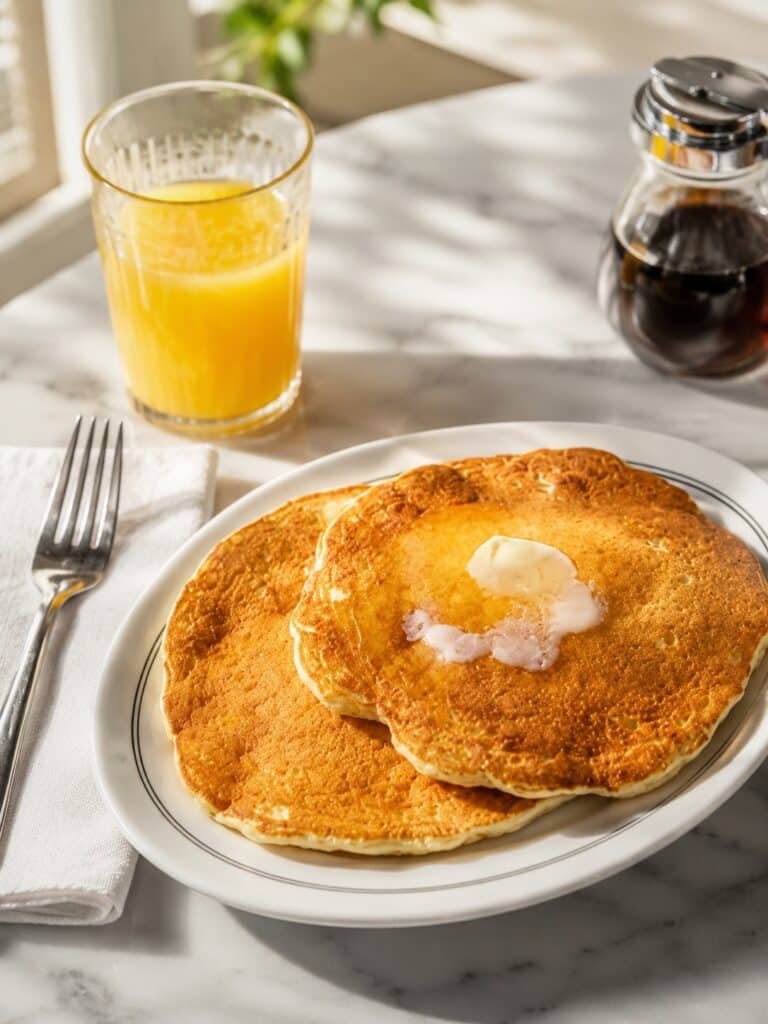
Butter and maple syrup. These are from a diner recipe and they are meant to be eaten straight off the griddle. Held in a warm oven they soften, which is a reasonable trade if you are cooking for four. ## No griddle A 12-inch nonstick skillet over medium heat, in batches: two medium pancakes at a time or one large. The batter behaves the same; you simply cook fewer at once.
Buttermilk
A cup and a third, and it is doing more than adding tang. Its acidity is what the baking soda reacts with, and without it the soda has nothing to work against and the pancakes come out flat and faintly soapy.
If you have none, a tablespoon of lemon juice stirred into regular milk and left a few minutes approximates it.
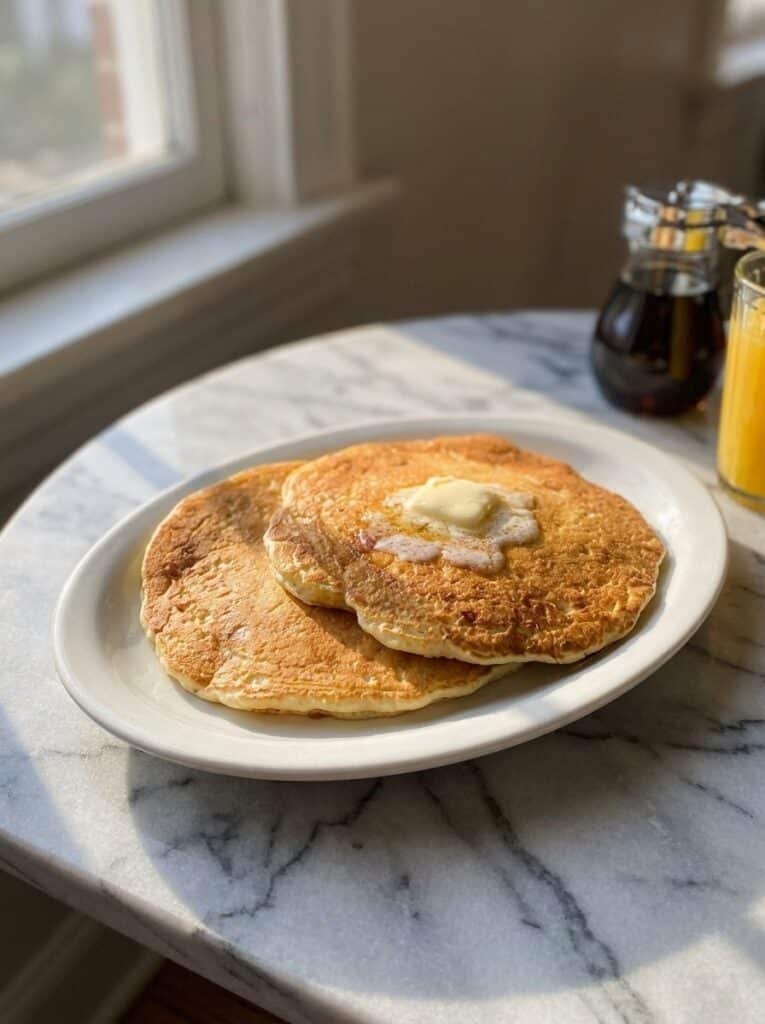

Lemon Buttermilk Flapjacks
Description
Diner style lemon buttermilk flapjacks, cooked on a griddle and served with butter and maple syrup.
Ingredients:
Instructions
-
In a large bowl whisk together the flour, sugar, baking soda, baking powder and salt.
-
In a medium bowl whisk the buttermilk, egg and egg yolk, and lemon zest and juice until combined. Add the melted butter and whisk until well combined.
-
Add the buttermilk mixture to the flour mixture. Use a rubber spatula to stir gently until just combined; the batter should remain lumpy, so do not overmix. Let the batter sit 10 minutes.
-
Meanwhile add the oil to a large griddle and spread it into a thin even coating with a paper towel. For a stovetop griddle, place over 2 burners and heat on low at least 5 minutes. For an electric griddle, heat to 350F.
-
When the batter is ready, if using a stovetop griddle increase the heat to medium and heat 1 more minute. Use a 1/3 cup measure to scoop batter onto the griddle, scraping it out and spreading it into a 5 inch circle. Repeat 3 more times, leaving space between them.
-
Cook until the edges are set and the first side is deep golden brown, 2 to 3 minutes. Flip and cook until the second side is golden, 1 to 2 minutes. One side of a two-burner griddle may cook faster than the other.
-
Transfer to plates and repeat with the remaining batter. Serve with butter and maple syrup..
Note
The two leaveners do different jobs: baking soda reacts with the buttermilk and lemon juice immediately, while baking powder brings its own acid and activates again in the heat. Keep the batter lumpy, since every extra stir develops gluten and makes the pancakes chewy. Rest the batter 10 minutes so the flour hydrates and the leaveners get a head start. Heat a stovetop griddle on low for at least 5 minutes before raising it, which distributes heat evenly. Spread each scoop into a 5 inch circle, as this batter is thick and will not spread on its own. Judge the first side by the edges being set. A griddle over two burners will cook unevenly. Buttermilk is essential, as its acidity is what the soda reacts with.