


This is the steak I make when the occasion asks for something considered. Two ribeyes, thick-cut, pressed into a mix of crispy shallots and fresh thyme before they hit the pan. On top when they come off the heat: a slice of roasted garlic and herb compound butter that melts into the crust as the steaks rest. It’s a restaurant technique that takes less than an hour at home, and most of that time is the garlic roasting in the oven.
The compound butter can be made days in advance. The shallot-thyme crust takes two minutes to press on. The steaks cook in under ten minutes. Everything about this recipe front-loads the effort so that the actual dinner moment is calm and controlled.
Start with the compound butter
One head of garlic, top sliced off to expose the cloves, drizzled with olive oil, wrapped in foil, and roasted at 400 degrees for thirty to thirty-five minutes until the cloves are soft and golden. Set it aside to cool enough to handle, then squeeze the cloves out into a bowl. They’ll be soft and almost paste-like.

Into the bowl: half a cup of softened unsalted butter, two tablespoons of chopped fresh parsley, a tablespoon each of fresh chives and fresh thyme, salt and pepper. Mix until fully combined. Scoop the mixture onto a sheet of plastic wrap, roll it into a log about an inch and a half in diameter, twist the ends tight, and refrigerate until firm. An hour in the fridge is enough; overnight is better. The compound butter keeps for a week refrigerated and freezes for two months, so making a full batch and saving the rest is worth it.
This is the component that makes the dish. A plain seared ribeye is excellent. A seared ribeye with a slice of roasted garlic and herb butter melting over the crust is something else entirely. The butter picks up the fond from the pan, the herbs bloom in the heat, and the garlic flavor, already mellowed by roasting, settles into the meat as the steak rests.
The shallot-thyme crust
In a shallow dish, combine a cup of crispy shallots and two tablespoons of chopped fresh thyme. Store-bought crispy shallots work well here and save time. If you’re making your own, slice shallots thin, fry in oil over medium heat until golden and crisp, and drain on paper towels. They keep for a few days in an airtight container.
Season both sides of the ribeyes generously with salt and pepper, then press each steak firmly into the shallot-thyme mixture on both sides. The shallots are already cooked so they won’t burn easily in the pan; they’ll deepen in color and adhere to the crust that forms on the exterior of the steak.
Searing the ribeye
Ribeye is a forgiving cut because of its fat content, but the fat also means it needs high heat to sear properly rather than rendering slowly in a lukewarm pan. Heat two tablespoons each of olive oil and butter in a large skillet over medium-high until the butter stops foaming and the fat is shimmering. Add the steaks.
Four to five minutes on the first side without touching them. Let the crust form and release naturally from the pan before you flip. When the steak lifts without resistance and the bottom is deep golden with the shallots crisped against it, flip once. Another four to five minutes on the second side for medium-rare. Use a meat thermometer for accuracy: 130 degrees internal is medium-rare, 140 is medium, and the reading will rise another five degrees or so during resting.
Pull the steaks from the pan and let them rest on a board or plate for five minutes. The resting is not a suggestion. The internal temperature rises and the muscle fibers relax, redistributing the juices so they stay in the meat rather than flooding the cutting board when you slice. A steak cut immediately after cooking is drier and tougher than one that rested. Five minutes, then serve.
Serving and the butter’s role
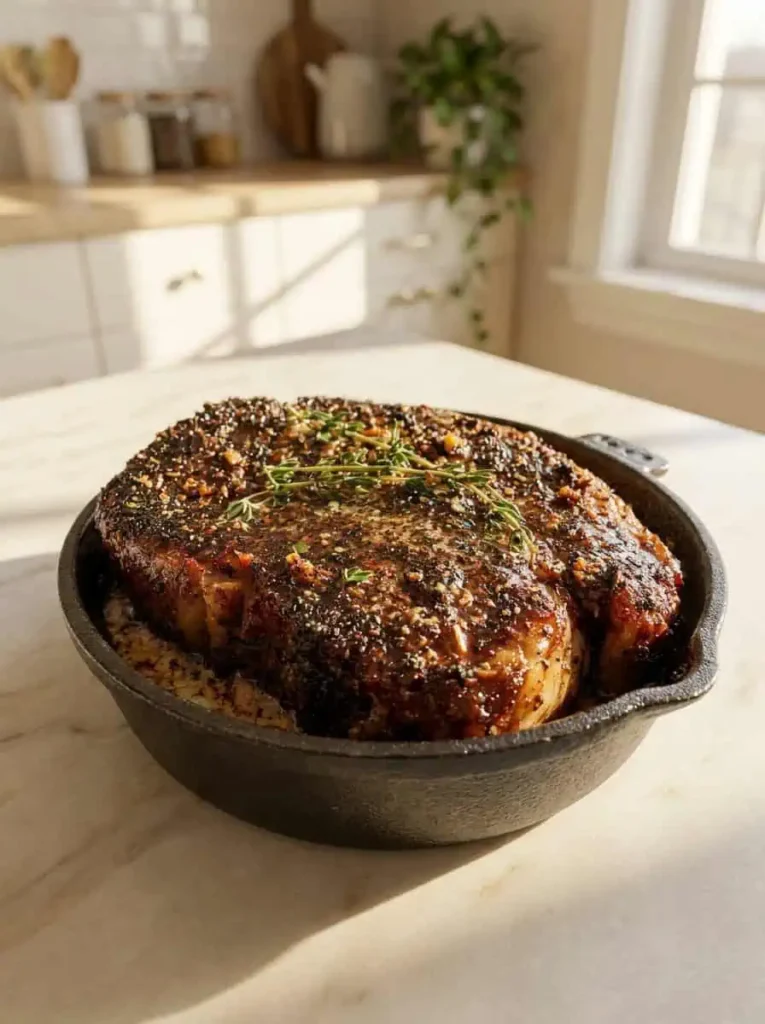
Cut the compound butter log into half-inch coins while the steaks rest. One or two coins per steak, placed on top while the meat is still hot. The butter starts to melt immediately, and within a minute it’s pooling around the crust and running down the sides. The thyme and parsley in the butter are vivid green against the browned shallot crust, and the garlic flavor, quiet and sweet from roasting, threads through the whole plate.
Serve with roasted potatoes, creamed spinach, or simply a green salad. The steak is the point of the plate and doesn’t need competition. Any side that would sit comfortably next to a quality steak will work.
Why compound butter changes steak
I’ve eaten steak in a lot of different contexts. At a fire, on a griddle in a small kitchen with no ventilation, in good restaurants, in bad ones. The single technique that most reliably elevates a steak from good to memorable is finishing butter. It adds fat at the moment the meat is hottest and most receptive to absorbing flavor, and compound butter gives that fat a direction: garlic, or herb, or blue cheese, or anchovy, whatever reads as right against that particular cut.
Roasted garlic specifically is worth knowing because it’s the version of garlic that most people who claim not to love garlic actually enjoy. The sharpness is gone. What’s left is a mellow, almost nutty sweetness that pairs with beef better than raw or even sautéed garlic does. Making a batch of compound butter costs about fifteen minutes and changes a weeknight steak into something you’d pay for. Serves 2.
The butter beyond steak
A log of roasted garlic and herb compound butter in the fridge is a useful thing to have around. Melt a coin of it into cooked pasta with a splash of the pasta water. Toss it with roasted vegetables right out of the oven. Spread it on toast under a fried egg. Finish a chicken breast with it. The butter is the same; the applications are almost limitless. Making a double batch when you have the oven on for the garlic costs nothing extra and pays forward into the rest of the week.
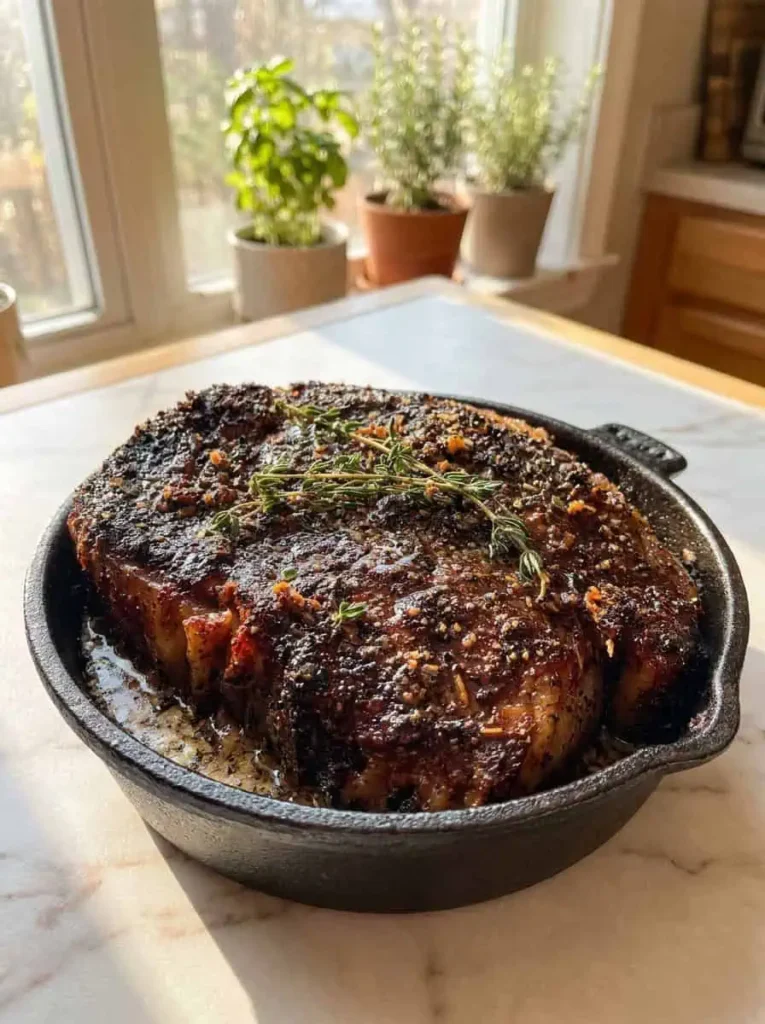

Shallot and Thyme-Crusted Ribeye with Roasted Garlic Compound Butter
Description
Ribeye steaks crusted with crispy shallots and thyme, seared in butter, and finished with a roasted garlic and herb compound butter. Restaurant technique, home kitchen.
Ingredients
Instructions
-
Preheat the oven to 400 degrees Fahrenheit. Slice the top off the garlic head to expose the cloves, drizzle with olive oil, wrap in foil, and roast for 30 to 35 minutes until soft and golden. Cool slightly then squeeze the cloves into a bowl
-
Make the compound butter: mix the roasted garlic with the softened butter, parsley, chives, thyme, salt, and pepper until fully combined. Roll in plastic wrap into a log and refrigerate until firm, at least 1 hour
-
In a shallow dish, combine the crispy shallots and chopped thyme. Season both sides of the ribeyes generously with salt and pepper, then press each steak firmly into the shallot-thyme mixture on both sides
-
Heat the olive oil and butter in a large skillet over medium-high until the butter stops foaming. Add the steaks and cook for 4 to 5 minutes on the first side without moving them until a golden crust forms
-
Flip once and cook another 4 to 5 minutes for medium-rare (130 degrees internal). Use a thermometer for accuracy
-
Remove the steaks and let rest for 5 minutes. Top each with 1 to 2 coins of compound butter and serve immediately.
Nutrition Facts
Servings 2
- Amount Per Serving
- Calories 650kcal
- % Daily Value *
- Total Fat 50g77%
- Total Carbohydrate 6g2%
- Dietary Fiber 1g4%
- Sugars 1g
- Protein 45g90%
* Percent Daily Values are based on a 2,000 calorie diet. Your daily value may be higher or lower depending on your calorie needs.
Note
The compound butter can be made up to a week ahead and refrigerated, or frozen for 2 months. Pull the steaks from the pan 5 degrees below your target temperature and let them rest 5 minutes; the temperature rises during resting. Never skip the rest step.