


Seasoned rice is the side dish I wish more people made at home instead of reaching for the instant stuff. This version is built around butter-toasted rice, soy sauce, and a few warm spices, and it tastes like the kind of thing a steakhouse serves alongside a big plate of meat. Thirty-five minutes, one skillet, and it goes with almost everything.
The trick that separates this from plain rice is toasting the grains in butter before any liquid goes in. Five minutes of stirring dry rice in melted butter changes the flavor completely. The grains turn slightly nutty and golden, and they hold their shape better once the broth goes in. It’s the same idea behind pilaf, and it’s the step that makes people ask what you did differently.
What the soy sauce is actually doing
Half a cup of soy sauce sounds like a lot for four servings of rice, and if you’re picturing something that tastes like a salt block, I understand the hesitation. But the soy sauce cooks down into four cups of chicken broth, and what you end up with isn’t salty so much as savory. It gives the rice a deep, almost caramelized flavor and a golden-brown color that butter and spices alone can’t get you.
Use low-sodium soy sauce. Full-sodium will push it over the edge, and since you’re also adding chicken broth that carries its own salt, the low-sodium version gives you room to season at the end instead of being locked into too much from the start. Taste before you add any extra salt. You probably won’t need much.
The spice layer
Paprika is the backbone, two full teaspoons, and it does double work: color and a gentle sweetness that plays well against the soy. A quarter teaspoon of cayenne sits underneath, not enough to make the rice spicy but enough to give it warmth. If you like heat, bump it to half a teaspoon. If you’re feeding kids, leave it out entirely and nobody will miss it.

Garlic powder over fresh garlic here, and on purpose. Fresh garlic in a skillet with butter and rice tends to burn before the rice finishes toasting, and burned garlic makes everything bitter. Garlic powder distributes evenly and doesn’t scorch. It’s one of those cases where the “lesser” ingredient is actually the right call.
The onion goes in after the rice has toasted, diced small so it softens in two or three minutes and melts into the finished dish. You want it translucent, not browned. Browned onion adds a sweetness that fights with the soy sauce; translucent onion just adds body and a mild savory note.
Cooking the rice properly
Once the spices and soy sauce are stirred in, pour in the chicken broth and let it come to a simmer. Five minutes at a steady simmer lets the flavors start merging before the rice absorbs everything. Then drop the heat to low, cover, and let it go for another twelve to fifteen minutes until the liquid is absorbed and the grains are tender.
Resist the urge to lift the lid and stir during that last stretch. Stirring releases starch and turns the rice gummy. The steam trapped under the lid is doing the work. When the time is up, pull it off the heat and let it sit covered for five minutes. Then fluff with a fork, not a spoon, to keep the grains separate.
If you find the rice is tender but there’s still a little liquid at the bottom, leave the lid off for a minute or two and let the excess steam off. If it’s dry before the rice is cooked through, add a splash more broth, cover, and give it another few minutes. Every stove runs differently, so the first time is a calibration. After that you’ll know exactly how your burner handles it.
Where I picked up the habit
Rice as a side dish at a steakhouse was something I found strange the first time I saw it. Where I come from, rice is the center of the plate, not the supporting act. But the more I traveled, the more I saw rice played that way, seasoned and rich, sitting next to a piece of grilled meat and catching the juices. It grew on me, and now I make this version at home more than almost any other side.
The butter and soy combination is what sold me. It bridges the gap between the way I grew up eating rice, always with something savory and warming, and the way it shows up in American steakhouse cooking. Simple ingredients, real flavor, no pretension about it.
Serving and storing
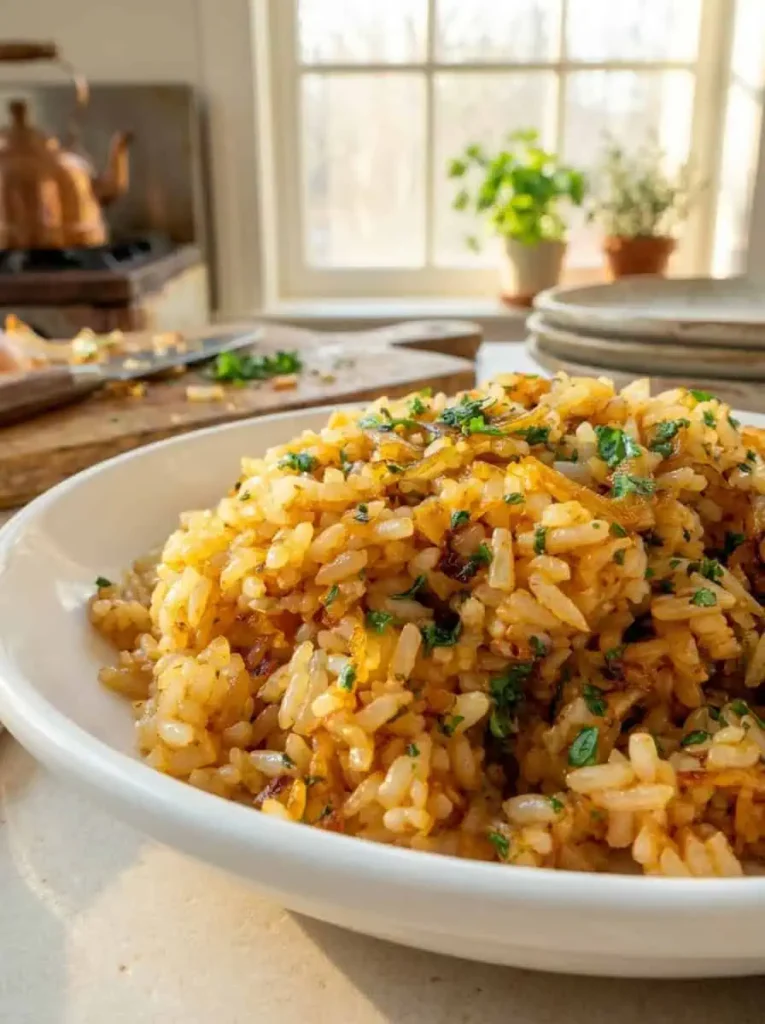
This goes next to steak, obviously, but also grilled chicken, pork chops, roasted vegetables, or a fried egg on top for a fast solo dinner. Fresh parsley chopped over the top before serving adds a brightness that the warm spices want next to them.
Leftovers keep in the fridge for three or four days. Reheat in a skillet with a splash of broth or water and a small knob of butter to bring back the moisture. The microwave works in a pinch but the stovetop reheat is better because it re-toasts the edges slightly and the rice tastes almost as good as fresh. Serves four as a generous side.
Turn it into a main
If you want a one-skillet dinner instead of a side, stir in cooked shredded chicken or sliced steak and a handful of frozen peas or corn in the last two minutes of cooking. The protein heats through, the vegetables barely cook so they keep some bite, and you have a full meal from the same pan. Add a squeeze of lime and a drizzle of sriracha and it becomes something else entirely.
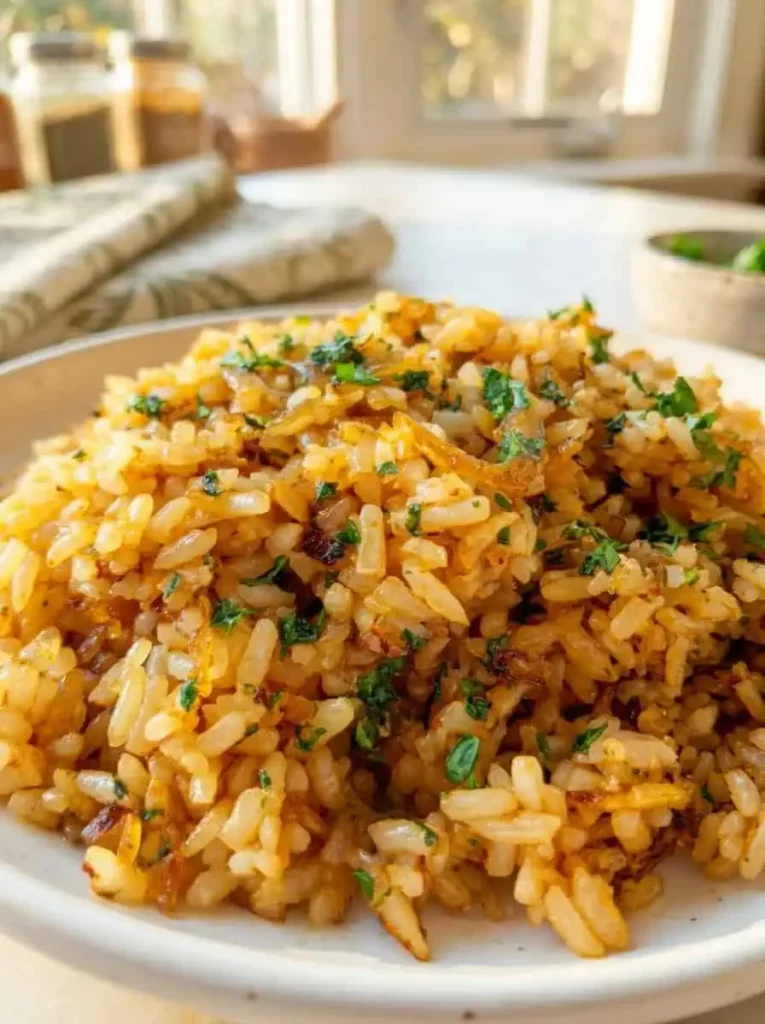

Seasoned Rice
Description
A savory seasoned rice made by toasting white rice in butter, then simmering it in chicken broth with soy sauce, paprika, and cayenne. Ready in 35 minutes.
Ingredients
Instructions
-
Melt the butter in a large skillet over medium heat. Add the rice and saute for about 5 minutes, stirring continuously, until the grains are lightly golden and nutty.
-
Stir in the diced onion and cook until translucent, about 2 to 3 minutes.
-
Mix in the garlic powder, paprika, cayenne pepper, soy sauce, and parsley. Stir to coat the rice evenly.
-
Pour in the chicken broth and let it simmer for 5 minutes to meld the flavors.
-
Reduce the heat to low, cover, and simmer for 12 to 15 minutes until the liquid is absorbed and the rice is tender. Do not stir during this time.
-
Remove from heat and let sit covered for 5 minutes. Fluff with a fork, season with salt and pepper to taste, and serve warm..
Nutrition Facts
Servings 4
- Amount Per Serving
- Calories 350kcal
- % Daily Value *
- Total Fat 14g22%
- Saturated Fat 9g45%
- Trans Fat 3g
- Cholesterol 30mg10%
- Sodium 550mg23%
- Total Carbohydrate 48g16%
- Dietary Fiber 1g4%
- Protein 6g12%
* Percent Daily Values are based on a 2,000 calorie diet. Your daily value may be higher or lower depending on your calorie needs.
Note
Use low-sodium soy sauce; full-sodium will make the rice too salty. Do not stir the rice once you cover and reduce the heat, or it will turn gummy. Nutrition per serving (serves 4): 350 calories, 48g carbohydrates, 6g protein, 14g fat, 9g saturated fat, 3g unsaturated fat, 0g trans fat, 30mg cholesterol, 550mg sodium, 1g fiber, 0g sugar.