


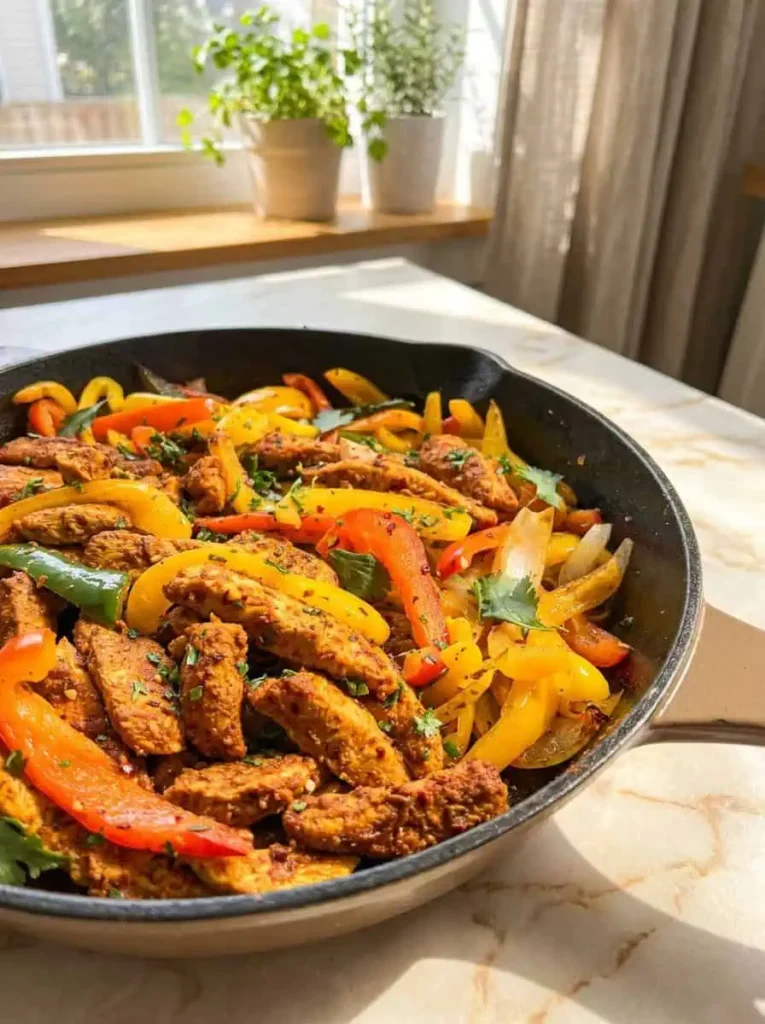

A good fajita marinade is the difference between fajitas that taste like a restaurant and fajitas that taste like seasoned regret. This one takes five minutes to whisk together, works on steak, chicken, shrimp, or pork, and leans on real chiles instead of a dusty packet. Once you make it, the packet never comes back.
The base is simple: olive oil, fresh lime juice, garlic, and a spice mix built around smoked paprika and ancho powder. The ancho is the part most fajita recipes skip, and it’s the part that makes this one taste like it came off a proper grill.
Why I stopped buying the packet
I grew up around spice markets where you bought chiles whole and ground them at home, so the first time I read the ingredient list on a fajita seasoning packet I was genuinely confused. Maltodextrin, silicon dioxide, “natural flavor.” For what? The real thing is seven spices you probably own and it takes the same five minutes.
The packet version also can’t do the one thing a marinade is for, which is getting flavor into the meat instead of dusting it on top. Oil carries the fat-soluble spice flavors in, lime opens up the surface, and time does the rest. A dry packet shaken over chicken at the stove is seasoning. This is marinating. Different results entirely.
What ancho powder is doing here
Ancho is just dried poblano, ground up. It’s mild, a little sweet, almost raisin-like, and it gives the marinade a deep red color and a roasted backbone that plain chili powder can’t fake. I use one tablespoon as the floor and often go to two when I want the flavor to really sit forward. Guajillo powder works the same way if that’s what you can find, slightly brighter and more tart.

The cayenne is the actual heat, a full teaspoon of it, plus chili flakes to taste on top of that. As written this marinade has a genuine kick. If you’re feeding people who flinch at spice, drop the cayenne to a quarter teaspoon and skip the flakes; the smoked paprika and ancho still carry plenty of character without the burn.
The teaspoon of brown sugar isn’t there to make things sweet. It rounds out the lime’s acidity and helps the edges of the meat char and caramelize in the pan. You won’t taste sugar, you’ll taste better browning.
The marinade, assembled
Everything goes in one bowl: three tablespoons of olive oil, a quarter cup each of lime juice and water, four minced garlic cloves, the smoked paprika and ancho, cayenne, onion powder, oregano, brown sugar, cumin, salt, pepper, and chili flakes. Whisk until it looks consistent and slightly thick. That’s it. Five minutes, most of which is mincing garlic.
Fresh lime juice matters here. The bottled stuff has a cooked, flat taste that fights with the chiles, and since lime is the only acid in the marinade, it’s doing real work tenderizing and brightening. Two limes usually gets you a quarter cup.
The water looks odd in an ingredient list but it’s intentional. It loosens the marinade so it coats everything evenly instead of clinging in thick patches, and it keeps the lime from being so concentrated that it starts cooking the surface of shrimp or thin-cut steak before the pan does.
Timing by protein, because it isn’t one-size-fits-all
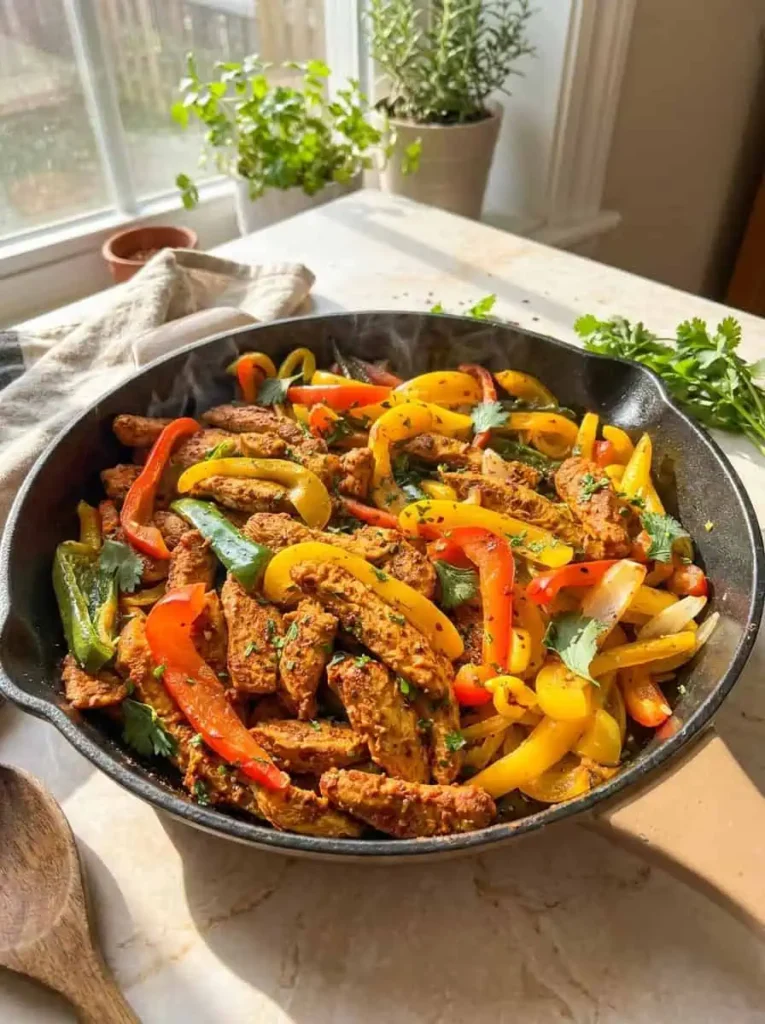
This batch handles up to two pounds of protein or vegetables. The timing is where people go wrong, so here’s the short version: shrimp gets thirty minutes, no more. The lime will start turning it opaque and mushy past that, ceviche-style, and then the pan just finishes the damage.
Chicken and steak want at least thirty minutes, and they’re better overnight. Skirt steak especially rewards the long soak; it’s a loose-grained cut and the marinade actually gets into it rather than sitting on the surface. If I’m making fajitas for the weekend, the steak goes into the marinade Friday night and I don’t think about it again until the pan is hot.
Pork sits in the middle. A few hours is good, overnight is fine. Vegetables, peppers, onions, mushrooms, zucchini, need only twenty or thirty minutes before they hit the grill or skillet.
Whatever you’re marinating, pull it out of the fridge twenty minutes before cooking and let the excess drip off. A soaking-wet surface steams instead of searing, and the sear is where fajitas live. High heat, a screaming hot cast iron or grill, and don’t crowd the pan.
Beyond fajitas
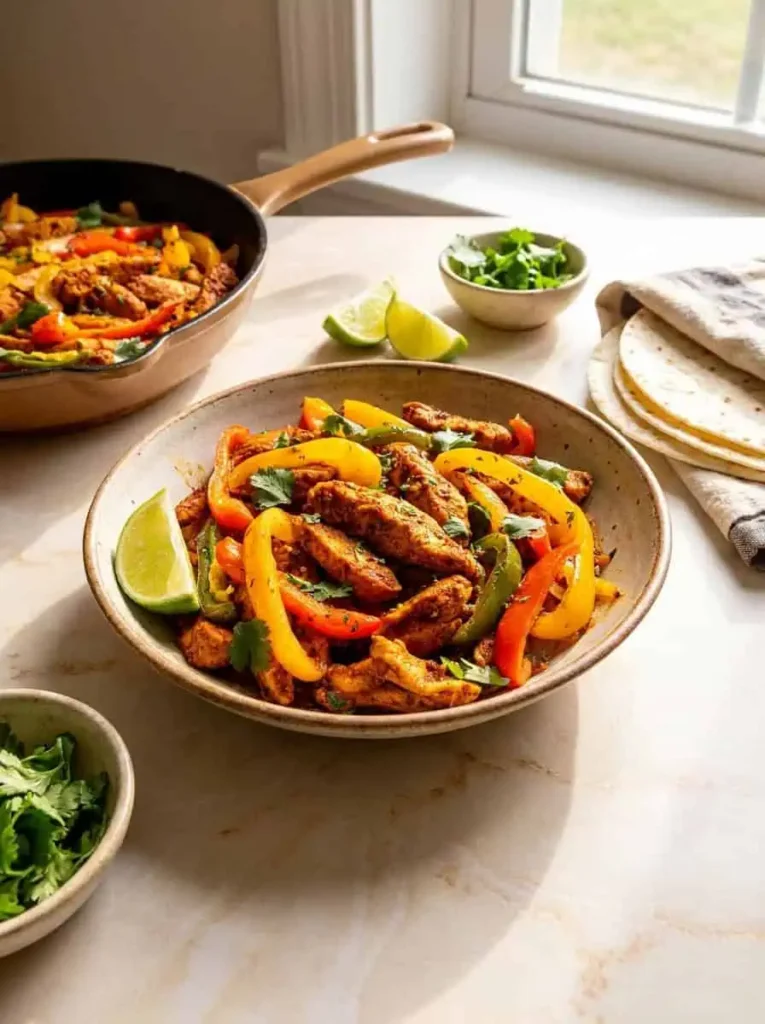
I call it a fajita marinade but it doesn’t stay in that lane. It’s excellent on chicken thighs destined for tacos, on shrimp skewers, brushed over halloumi or portobellos for the vegetarians, even tossed with potato wedges before roasting. The smoke-chile-lime triangle works on almost anything that meets high heat.
It also keeps. Whisk a batch and it holds in a jar in the fridge for about a week, so you can make it Sunday and marinate twice during the week. Give it a shake before using since the oil separates. The one rule: never reuse marinade that’s touched raw meat. If you want some for drizzling or dipping after cooking, set a few spoonfuls aside before the protein goes in.
Build the full fajita night
The marinade is the engine, but the assembly matters too. Sear your marinated protein hard, pull it to rest, then cook sliced peppers and onions in the same pan so they pick up everything left behind. Warm flour tortillas, something cool like sour cream or guacamole, a squeeze of fresh lime over the top. The resting step is the one nobody does and everybody should: five minutes under foil keeps the juices in the meat instead of on the cutting board.
Fajita Marinade (Steak, Chicken, Shrimp, Pork)
Description
An easy fajita marinade with olive oil, fresh lime juice, garlic, smoked paprika, and ancho powder. Five minutes to whisk, works on any protein.
Ingredients
Instructions
-
Whisk all of the ingredients together in a large bowl until consistent
-
Use to marinate chicken, shrimp, steak, pork, or vegetables for fajitas. Shrimp: 30 minutes. Chicken and steak: at least 30 minutes, or overnight for deeper flavor
-
Remove the protein from the marinade, let excess drip off, and cook over high heat until charred at the edges and cooked through.
Nutrition Facts
Servings 6
- Amount Per Serving
- Calories 81kcal
- % Daily Value *
- Total Fat 7g11%
- Saturated Fat 1g5%
- Sodium 25mg2%
- Potassium 91mg3%
- Total Carbohydrate 4g2%
- Dietary Fiber 1g4%
- Sugars 1g
- Protein 1g2%
- Vitamin A 1122 IU
- Vitamin C 4 mg
- Calcium 22 mg
- Iron 1 mg
* Percent Daily Values are based on a 2,000 calorie diet. Your daily value may be higher or lower depending on your calorie needs.
Note
Ideal for up to 2 pounds of protein or vegetables. Shrimp should marinate 30 minutes; chicken and steak at least 30 minutes or overnight. Nutrition per serving: 81 calories, 4g carbohydrates, 1g protein, 7g fat, 1g saturated fat, 25mg sodium, 91mg potassium, 1g fiber, 1g sugar, 1122IU vitamin A, 4mg vitamin C, 22mg calcium, 1mg iron.