Vietnamese Peanut Dipping Sauce
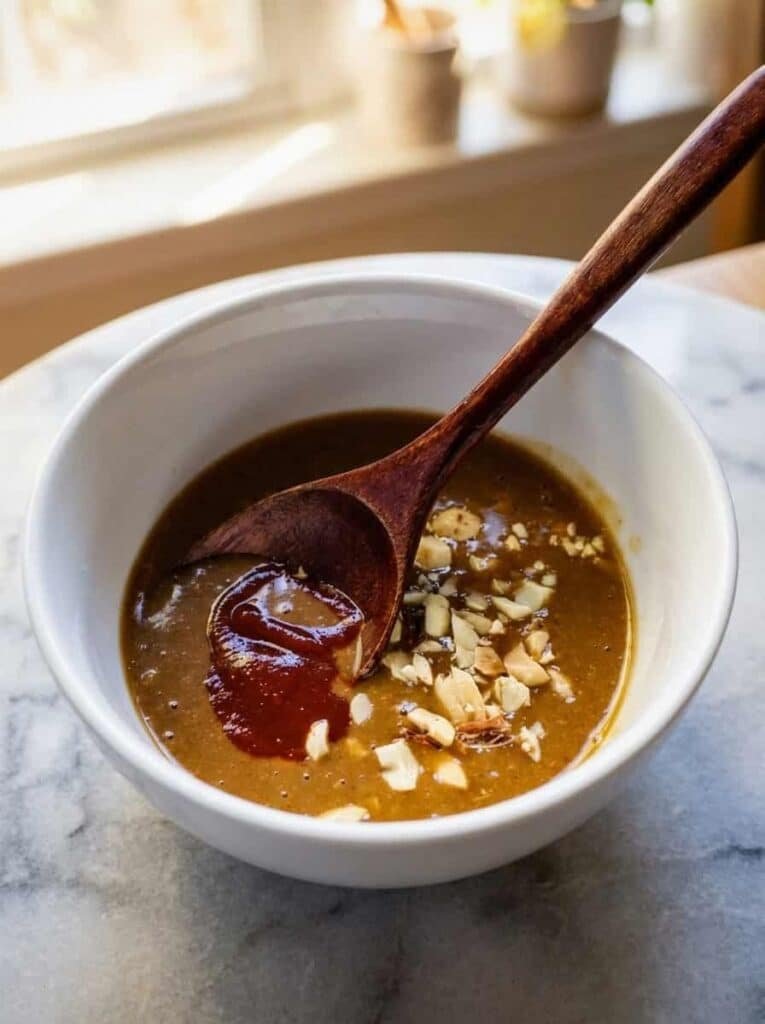
5 ingredients whisked in a bowl. No cooking, no blender, and about five minutes.
Nuoc tuong cham is a Vietnamese dipping sauce served with fresh spring rolls, grilled meats and rice paper wraps. This version leans on hoisin and coconut milk rather than the more common fish sauce base.
Whisk the liquids first, peanut butter last
Hoisin, sriracha, rice vinegar and coconut milk together, then the peanut butter added gradually.
The order is the only technique in the recipe and it matters. Peanut butter is thick and stiff, and dropped into a bowl of liquid it stays as a lump that resists whisking.
Adding it gradually into an already combined liquid base lets each addition disperse before the next arrives. The recipe says to do this to eliminate chunks, and that is exactly right.
If it still resists, warm the peanut butter for fifteen seconds in the microwave first. It loosens considerably.
Chunky peanut butter, deliberately
Two tablespoons, and the recipe specifies chunky rather than smooth.
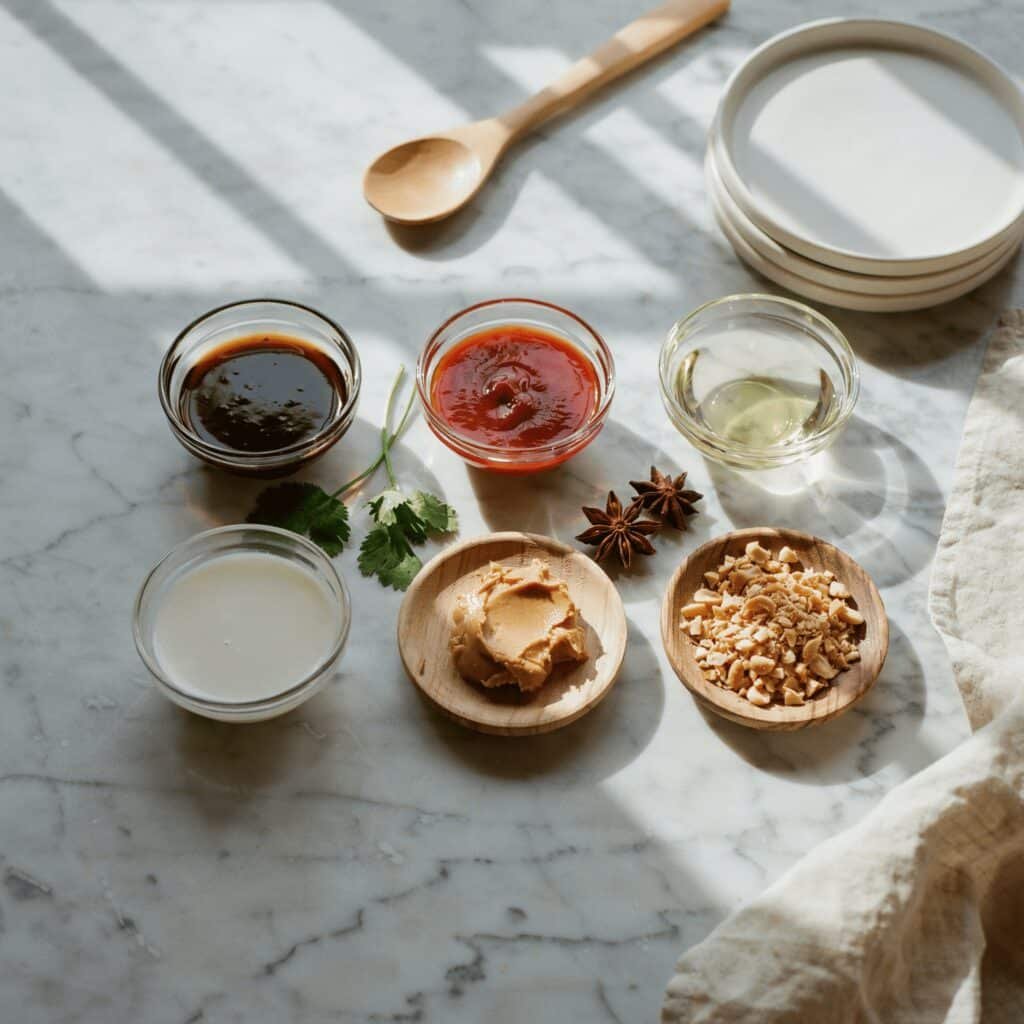
The peanut pieces stay through the sauce and give texture, which matters in a dipping sauce that is otherwise entirely smooth. Combined with the toasted peanuts on top, you get crunch in two forms.
Smooth peanut butter works and gives a silkier sauce. That is a different thing rather than a worse one.
Coconut milk keeps it pourable
Half a cup, matching the half cup of hoisin.
Hoisin on its own is thick, dark and intensely sweet and salty. Undiluted it would be a paste rather than a dipping sauce, and far too strong.
Coconut milk thins it to a pourable consistency and adds richness and a mild sweetness that suits peanut. It also softens the saltiness of the hoisin considerably.
Full fat rather than light. Light coconut milk is mostly water and the sauce comes out thin.
Rice vinegar for balance
Two tablespoons, unseasoned.
Hoisin is sweet, peanut butter is rich, coconut milk is rich again. Without acid the sauce sits heavy on the tongue and tastes cloying after a few bites.
Unseasoned specifically. Seasoned rice vinegar has sugar and salt added, which this sauce does not need any more of.
Sriracha and how much heat
A tablespoon, which gives a mild background warmth rather than real heat once it is spread through a cup of liquid.
Increase it if you want more. The sweetness of the hoisin absorbs a surprising amount of chilli, so you can go to two tablespoons without it becoming aggressive.
A note on the source
The original carries a note about substituting rendered bacon fat with Chinese sausage, describing it as a family tradition.
Neither ingredient appears anywhere in the ingredient list or the method, so the note appears to belong to a different version of the recipe. What is written here is the five ingredient version as listed.
The source also gives no yield and no times. This makes roughly a cup and a quarter, which is enough for four to six people dipping, and it takes five minutes.
Garnish with the peanuts
A tablespoon of chopped toasted peanuts scattered over, plus a swirl of sriracha.
Toasting is worth doing if your peanuts are raw. Three minutes in a dry pan roughly doubles their flavour and makes them properly crisp.
Add them just before serving. Left sitting in the sauce they soften within an hour.
Serving and keeping
Fresh spring rolls are the classic partner, along with grilled pork, chicken satay, rice paper rolls or as a dressing for a noodle salad. <p>It keeps four or five days refrigerated in a sealed container. It thickens considerably as it chills, so let it come back toward room temperature or whisk in a spoonful of water before serving. ## Making it thinner or thicker Water or more coconut milk thins it. More peanut butter thickens it. For a dipping sauce you want it to coat the back of a spoon without running off; for a noodle dressing, considerably looser.
Hoisin, and what it is
A thick fermented soybean sauce with garlic, sugar and spices, dark and glossy and intensely savoury-sweet. It is the backbone of this sauce and there is no real substitute. Most supermarkets stock it alongside the soy sauce.
A quick Vietnamese-style peanut dipping sauce for spring rolls, grilled meats and rice paper rolls.
- 1/2 cup hoisin sauce
- 1 tablespoon sriracha
- 2 tablespoons unseasoned rice vinegar
- 1/2 cup full fat coconut milk
- 2 tablespoons chunky peanut butter
- 1 tablespoon toasted chopped peanuts.
- 1 In a small mixing bowl whisk together the hoisin, sriracha, rice vinegar and coconut milk until combined.
- 2
Gradually whisk in the chunky peanut butter, adding it a little at a time so it disperses without leaving lumps. Warm the peanut butter 15 seconds first if it resists.- 3
Taste and adjust, adding more sriracha for heat or a little water to thin.- 4
Garnish with the toasted peanuts and a swirl of sriracha just before serving..NoteThe source gives no yield and no times; this makes roughly a cup and a quarter, enough for four to six people dipping, and takes five minutes. The source also carries a note about substituting rendered bacon fat with Chinese sausage, but neither ingredient appears in the ingredient list or method, so it appears to belong to a different version. Whisk the liquids together first and add the peanut butter gradually, or it stays as a lump. Warming the peanut butter 15 seconds helps if it resists. Use full fat coconut milk and unseasoned rice vinegar. Add the toasted peanuts just before serving, as they soften in the sauce within an hour. Keeps 4 to 5 days refrigerated and thickens as it chills; loosen with a spoonful of water.
Nutty, Sweet, Savory - 2