Stuffed grape leaves, dolmas or warak enab depending on where you're from, are a dish I grew up eating rather than learning from a recipe. My mother made them, her mother made them, and the method passed through the same way most important kitchen knowledge does: by watching, helping, and eventually doing it yourself until the rolling becomes automatic. This recipe uses long-grain rice stuffed with fresh mint, parsley, tomatoes, and green onion, rolled into the leaves and simmered in lemon water until the rice is tender and the leaves are soft. Eighty grape leaves, two hours of work, eight generous servings.
The dish looks time-consuming because of the rolling and it is time-consuming, but it's not technically difficult. The method becomes faster after the first twenty leaves once your hands understand what a properly rolled dolma should feel like. Getting family involved, as the recipe notes, is both practical and how this dish has always been made.
Preparing the grape leaves
Two options: fresh or preserved. Fresh grape leaves, if you can find them, need washing and a one-to-three-minute blanch in boiling water to soften, then rinsing and cooling before use. Preserved leaves in jars, available at Middle Eastern grocery stores and increasingly at larger supermarkets, need only a thorough rinse under cold water to remove the salt they were packed in. Both work; preserved leaves are more consistent in size and texture, which makes rolling easier for beginners.
Before rolling, trim any tough stems at the base of each leaf. The stem end is where you start rolling, so a clean base makes a neater, tighter roll.
The stuffing
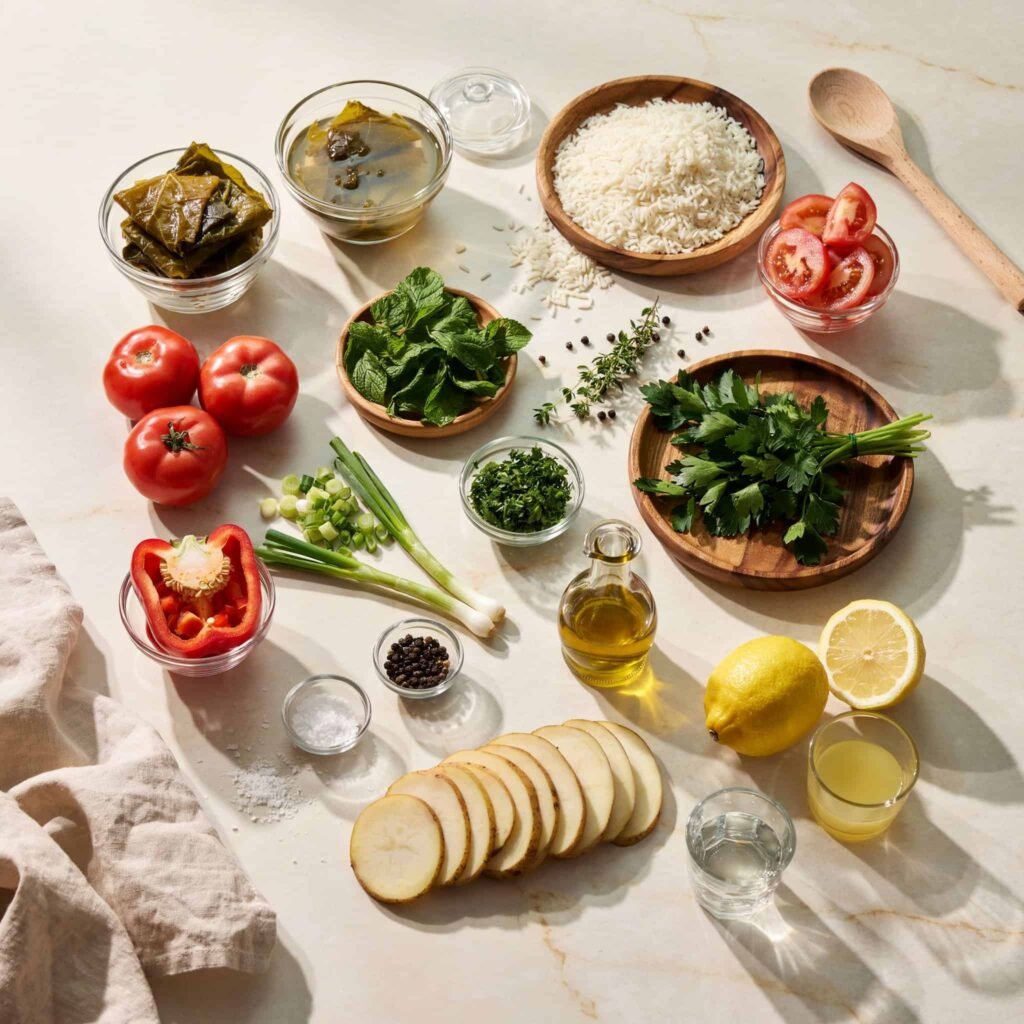
One cup of long-grain rice, rinsed three to four times until the water runs clear. This removes excess starch that would make the rice clump and turn gluey inside the rolled leaf. The rinsed rice goes into a large bowl with finely chopped tomatoes, mint, parsley, and green onions, and optionally a quarter cup of red pepper. Season with salt and a teaspoon of black pepper, drizzle with a quarter cup of olive oil, and mix well.
The herbs are what give this version its character. Fresh mint is essential, not dried; it provides a brightness that dried mint can't replicate in this context. The parsley adds a grassy freshness. Together with the tomato and onion they create a fragrant, herb-forward filling that carries through the long cooking time and comes out deeply flavorful rather than muted.
The raw rice goes in uncooked. It absorbs the liquid during the two-hour simmer and cooks inside the leaf, which is why the rolling needs to leave room for the rice to expand. Overfilled dolmas burst open in the pot.
Rolling
Lay a grape leaf shiny side down on a clean surface. Place a teaspoon of stuffing near the stem end, in the center. Fold the sides of the leaf inward over the filling, then roll upward from the stem end toward the tip, keeping the roll tight but not so tight that the rice can't expand. Think of it like rolling a small spring roll: sides in first, then roll to close. The seam side goes down when you place it in the pot, which holds it closed during cooking.
One teaspoon per leaf and no more. The rice will swell to roughly double its dry volume during cooking and a generously filled leaf will burst at the seam and unravel in the pot. The rolls should feel slightly firm but yield a little when you press them.
Assembly and cooking
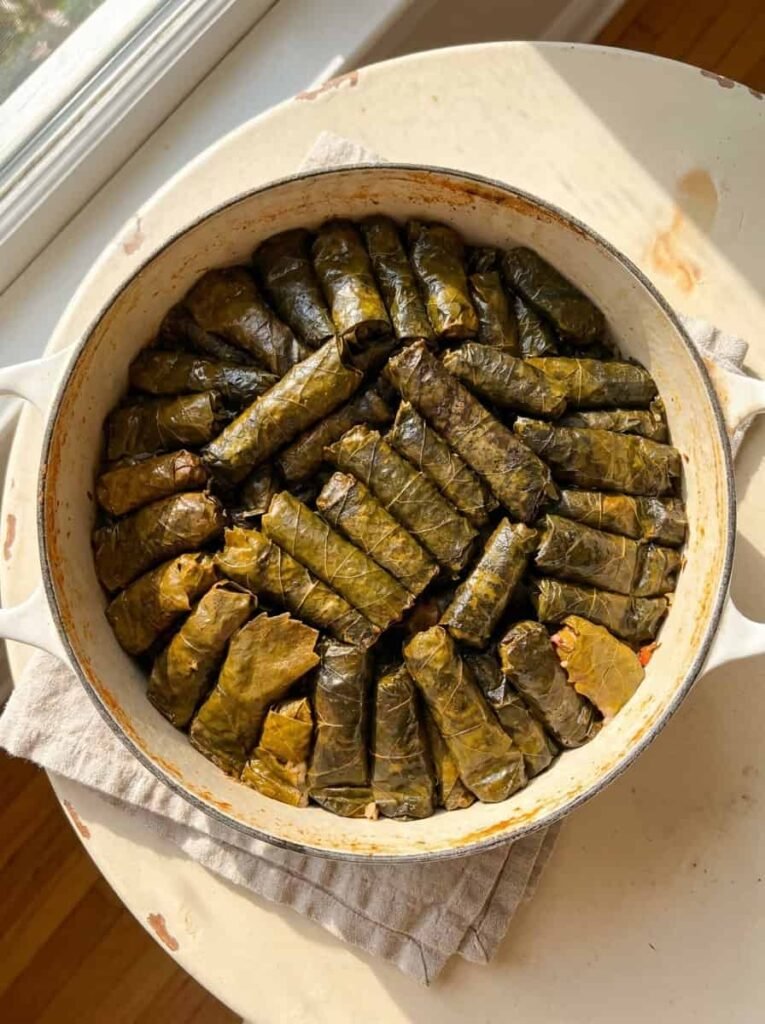
Lightly oil the bottom of a heavy pot. Lay sliced tomatoes and potatoes across the bottom as a protective layer that prevents the delicate dolmas from scorching against the hot pan. Arrange the stuffed grape leaves seam-side down in tight, even layers on top. Packing them closely keeps them from moving and unrolling during cooking.
Mix together the remaining quarter cup of olive oil, half a cup of lemon juice, and half a cup of water. Pour over the arranged dolmas until they're partially submerged. Place an inverted plate directly on top of the rolls and weight it down with something heavy: a full water pot, a heavy stone. The plate keeps the dolmas pressed in place during cooking so they stay tight and don't float apart as the liquid comes to a simmer.
Cook covered on medium heat for thirty minutes until most of the water is absorbed. Then reduce to low heat, keep covered, and simmer for another thirty minutes. The total cook time is an hour of gentle, lidded simmering. After cooking, remove from the heat and let the dolmas rest uncovered for twenty to thirty minutes. The resting time is when they finish absorbing the remaining liquid and the flavors consolidate.
Eating dolmas
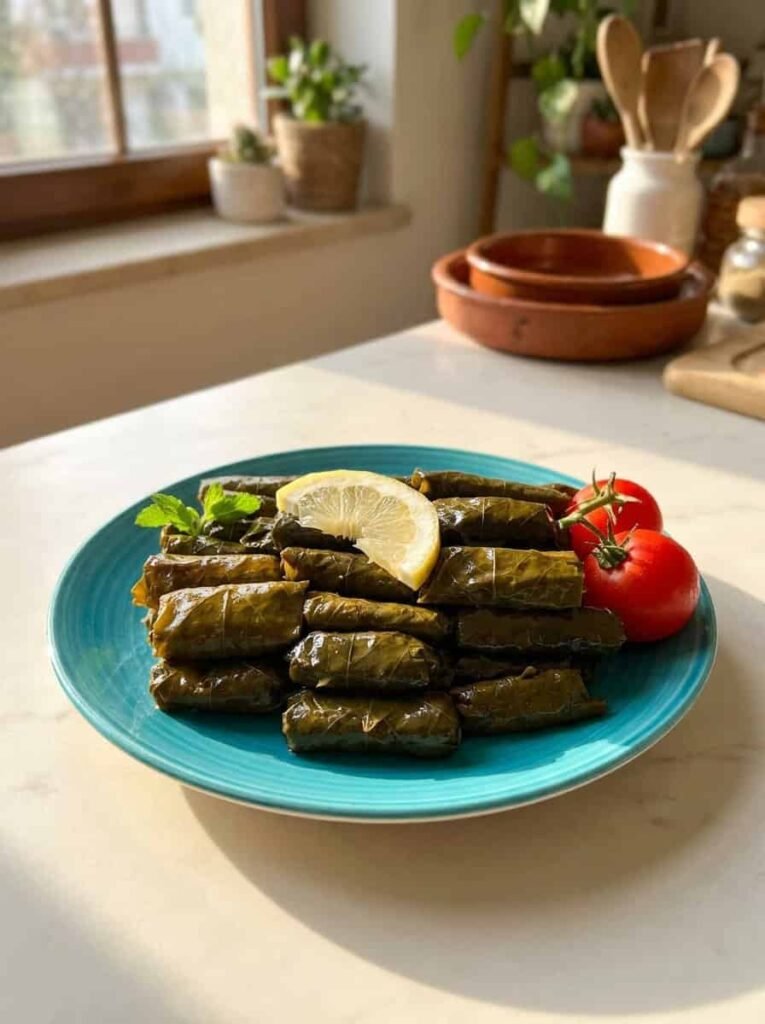
Served at room temperature or slightly warm, arranged on a platter with lemon wedges alongside. In Moroccan and Lebanese tradition, dolmas appear as part of a spread alongside other mezze dishes and are eaten in multiple pieces as part of a longer meal rather than in a single serving. They also hold well in the refrigerator for up to a week and are, in my experience, better the next day when the filling has fully absorbed the lemon and herb flavors. Makes 80 pieces, serves 8 generously. Nutrition per serving: 283 calories, 37g carbohydrates, 5g protein, 15g fat.
Variations
A meat version adds 200 to 300 grams of ground lamb or beef to the rice and herb filling, which turns the dish from vegetarian to a more substantial main. Some recipes add a tablespoon of tomato paste to the cooking liquid for a richer, deeper-colored broth. Pine nuts toasted in olive oil and stirred through the filling before rolling add richness and a slight crunch. All of these are within the range of how this dish is made across the region; the core method doesn't change.
Grape leaves stuffed with herb and rice filling and simmered in olive oil and lemon water. A Lebanese-Mediterranean recipe that makes 80 pieces and serves 8. Better the next day.
Ingredients
80grape leaves (fresh blanched or preserved in jars rinsed)
1cup long-grain white rice (rinsed until water runs clear)
2medium tomatoes (finely chopped)
0.7oz fresh mint leaves (about 1/2 cup finely chopped)
3.5oz fresh parsley (about 1 cup finely chopped)
1bunch green onions (about 1 cup finely chopped)
1/2red bell pepper finely chopped (optional)
Salt to taste
1teaspoon black pepper
1/2cup olive oil (divided)
1/2cup fresh lemon juice (from about 2 large lemons)
1/2cup water
Sliced tomatoes and potatoes for the bottom of the pot
Instructions
1
Prepare the grape leaves: if fresh, wash and blanch in boiling water for 1 to 3 minutes, then rinse and cool. If preserved, rinse under cold water and drain.
2
Make the stuffing: rinse the rice 3 to 4 times until the water runs clear. Combine the rice, finely chopped tomatoes, mint, parsley, green onions, and red pepper (if using) in a large bowl. Season with salt and pepper and drizzle with 1/4 cup of the olive oil. Mix well.
3
Prepare the pot: lightly oil the bottom, then lay a protective layer of sliced tomatoes and potatoes.
4
Roll the dolmas: trim the stems from each leaf. Lay each leaf shiny-side down. Place 1 teaspoon of stuffing near the stem end, fold the sides in, and roll tightly upward. Arrange seam-side down in tight layers in the pot.
5
Mix the remaining 1/4 cup olive oil, the lemon juice, and water. Pour over the dolmas to partially cover. Place an inverted plate on top and weigh it down.
6
Cook covered on medium heat for 30 minutes until most of the water is absorbed. Reduce to low and simmer covered for another 30 minutes.
7
Remove from heat and rest uncovered for 20 to 30 minutes before serving. Serve at room temperature or slightly warm..
Nutrition Facts
Servings 8
Amount Per Serving
Calories283kcal
% Daily Value *
Total Fat15g24%
Saturated Fat2g10%
Sodium454mg19%
Potassium471mg14%
Total Carbohydrate37g13%
Dietary Fiber7g29%
Sugars5g
Protein5g10%
Vitamin A 9749 IU
Vitamin C 60 mg
Calcium 167 mg
Iron 3 mg
* Percent Daily Values are based on a 2,000 calorie diet. Your daily value may be higher or lower depending on your calorie needs.
Note
Use only 1 teaspoon of filling per leaf; the rice doubles in size during cooking and overfilled leaves burst. The weighted plate during cooking is essential to keep the rolls from unrolling. Rest 20 to 30 minutes after cooking before serving.