Strawberry Pavlova
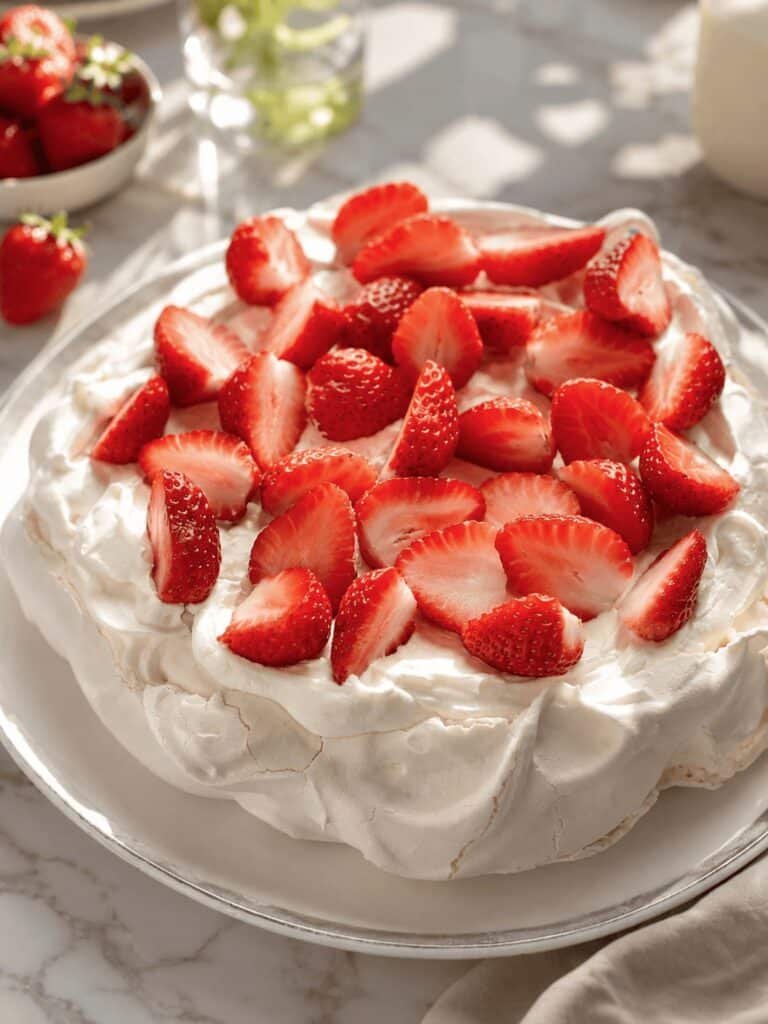
Pavlova looks like a difficult dessert and it is not. Four egg whites, sugar, a spoonful of cornflour and a spoonful of vinegar. That is the entire meringue. What makes it look impressive is the shape, and the shape mostly makes itself.
Crisp shell on the outside, soft and marshmallowy in the middle, whipped cream and strawberries on top.
If it cracks, it is meant to
Let me get this out of the way because it is the thing people worry about most.
The top will crack. Almost always. That is not a failure and it is not something to fix. A pavlova with a fissured top is the normal appearance of the dessert, and once cream and fruit go on nobody can see it anyway. Traditional pavlovas look rustic.
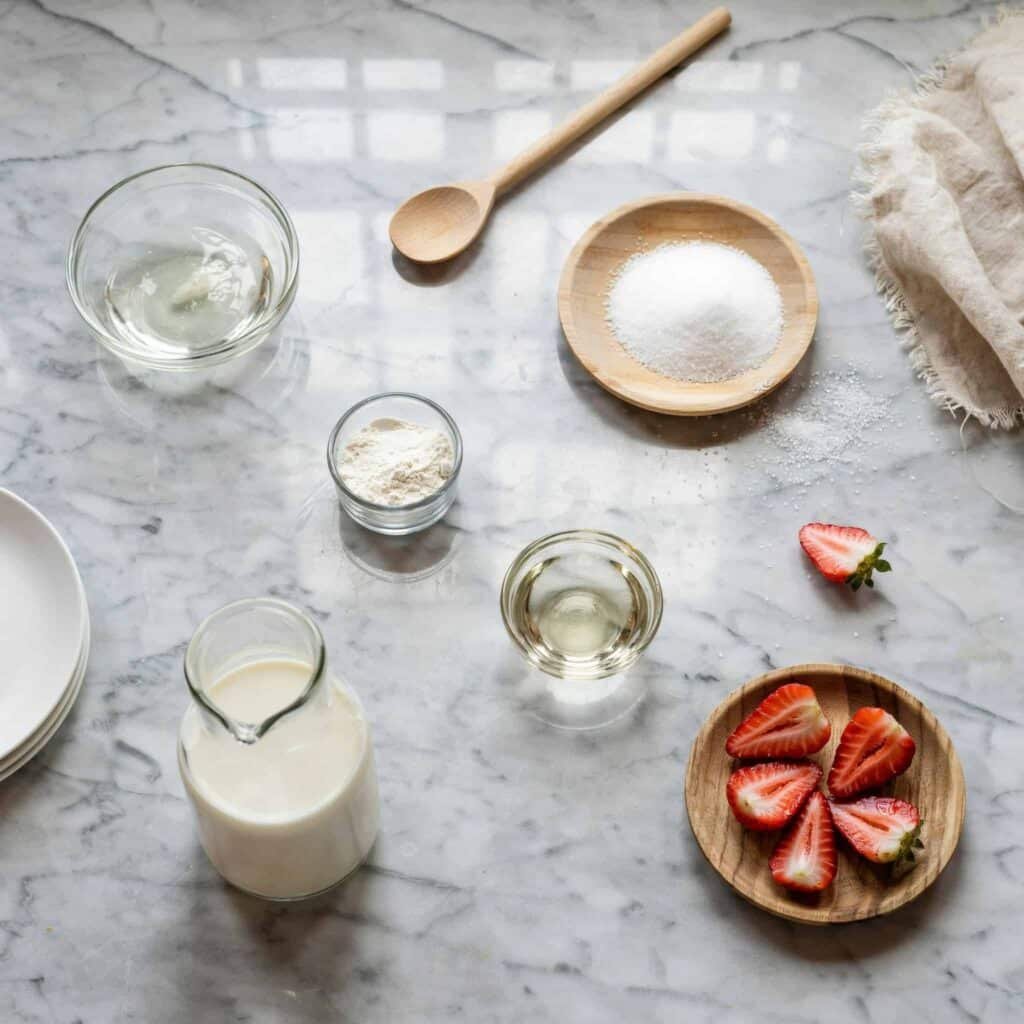
Cornflour and vinegar are what make the middle soft
A plain meringue baked dry all the way through is crisp everywhere. Pleasant, but it is not pavlova.
The cornflour stops the egg white proteins from bonding as tightly as they otherwise would, leaving the interior soft and chewy. The vinegar does something similar by lowering the pH, which stabilises the foam and keeps the middle from setting hard.
Blend the two together before whisking them into the meringue. Adding them separately gives you streaks of unmixed cornflour, which show up as pale patches in the baked shell.
Add the sugar slowly
Whisk the egg whites until they are stiff and cloud-like first. Then add the caster sugar a teaspoon at a time, whisking well between each addition.
This is tedious. It is also the whole recipe. Sugar dumped in quickly does not dissolve, and undissolved sugar weeps out as syrupy amber beads on the surface during baking.
To check, rub a little between your fingers. If it feels gritty, keep whisking. Smooth means the sugar has gone in properly.
Start with a spotless bowl
Any trace of fat will stop egg whites whipping properly, and this is the most common reason a pavlova fails before it reaches the oven. Grease from a previous job, a plastic bowl that has held butter, or a speck of yolk that slipped in while separating.
Glass or metal, wiped with a little vinegar on kitchen paper if you want to be certain. Separate each egg into a small cup before adding it to the main bowl, so one broken yolk does not ruin the batch.
Build the sides higher than the middle
Mark a nine inch circle on your baking parchment first, then spread the meringue to fill it.
Push more of the mixture toward the outside so the sides stand taller than the centre, forming a shallow well. That well holds the cream and fruit. A flat pavlova sends everything sliding off the edge onto the plate.
Drop the temperature the moment it goes in
Preheat to 160C, then reduce to 150C as soon as the pavlova is in the oven.
That initial burst of higher heat sets the outside shell quickly. Dropping it straight after means the inside cooks gently for the next hour without drying out. Bake about an hour, until it is firm to the touch and a pale beige colour rather than white.
Let it cool in the oven
Turn the oven off and leave the pavlova inside until it is completely cold. Keep the door shut.
Meringue cracks badly when it meets a sudden temperature change. Cooling slowly in the closed oven keeps the shell together and encourages a softer marshmallow interior.
This takes hours, so it suits making the day before.
Topping and serving
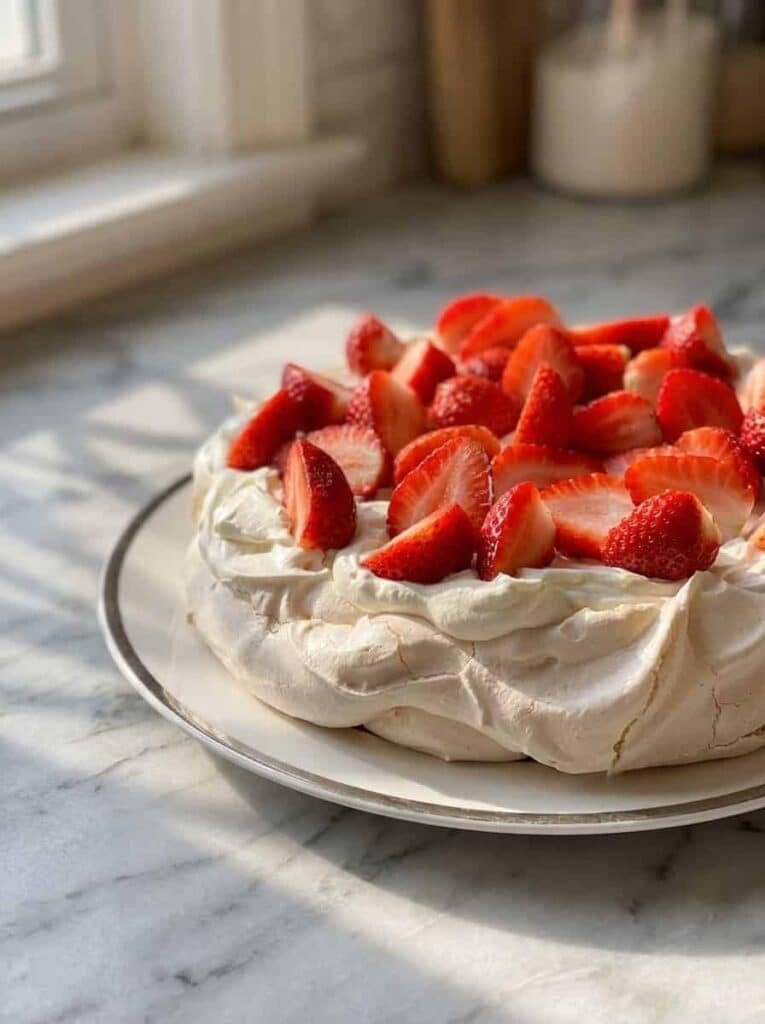
Slide the cold pavlova off the parchment onto a serving plate. Top with the whipped cream, then the halved or sliced strawberries.
Chill for an hour before serving. Not much longer than that. Cream sitting on meringue slowly softens the shell, and after several hours the crisp edge is gone.
Making it ahead
The bare meringue shell keeps two or three days in an airtight container at room temperature. Do not refrigerate it undressed, since the fridge is humid and meringue absorbs moisture. Assemble on the day.
Other fruit
Raspberries, passionfruit, mango and blueberries all work in place of strawberries or alongside them. Something sharp is better than something sweet, since the meringue is already carrying a lot of sugar.
Classic strawberry pavlova with a crisp outside and marshmallowy middle, finished with whipped cream and fresh berries.
- 4 large egg whites
- 225g caster sugar (8oz)
- 2 level teaspoons cornflour
- 2 teaspoons white wine vinegar
- 300ml whipping or double cream whipped (1/2 pint)
- 350g strawberries halved or sliced. (12oz)
- 1 Preheat the oven to 160C / Fan 140C / gas 3. Lay non-stick baking parchment on a baking sheet and mark a 23cm (9in) circle on it.
- 2
Put the egg whites into a large bowl and whisk until stiff and cloud-like.- 3
Add the caster sugar a teaspoonful at a time, whisking well after each addition, until all the sugar has been added.- 4
Blend the cornflour and vinegar together and whisk into the meringue mixture.- 5
Spread the meringue to cover the marked circle, building up the sides so they sit higher than the middle.- 6
Place in the oven and immediately reduce the temperature to 150C / Fan 130C / gas 2. Bake about 1 hour, until firm to the touch and a pale beige colour.- 7
Turn the oven off and leave the pavlova inside until completely cold, keeping the door closed.- 8
Remove the cold pavlova from the parchment and slide onto a serving plate. Top with the whipped cream and strawberries, then chill 1 hour before serving..NotePreheat to 160C / 320F (fan 140C) then reduce to 150C / 300F (fan 130C) immediately after the pavlova goes in. Cracks on the surface are normal and expected. Cool completely in the switched off oven with the door closed for a softer marshmallow centre. The undressed meringue shell keeps 2 to 3 days in an airtight container at room temperature; do not refrigerate it before topping.
Light, Fruity, Impressive - 2