Sticky Korean Beef Mince and Rice
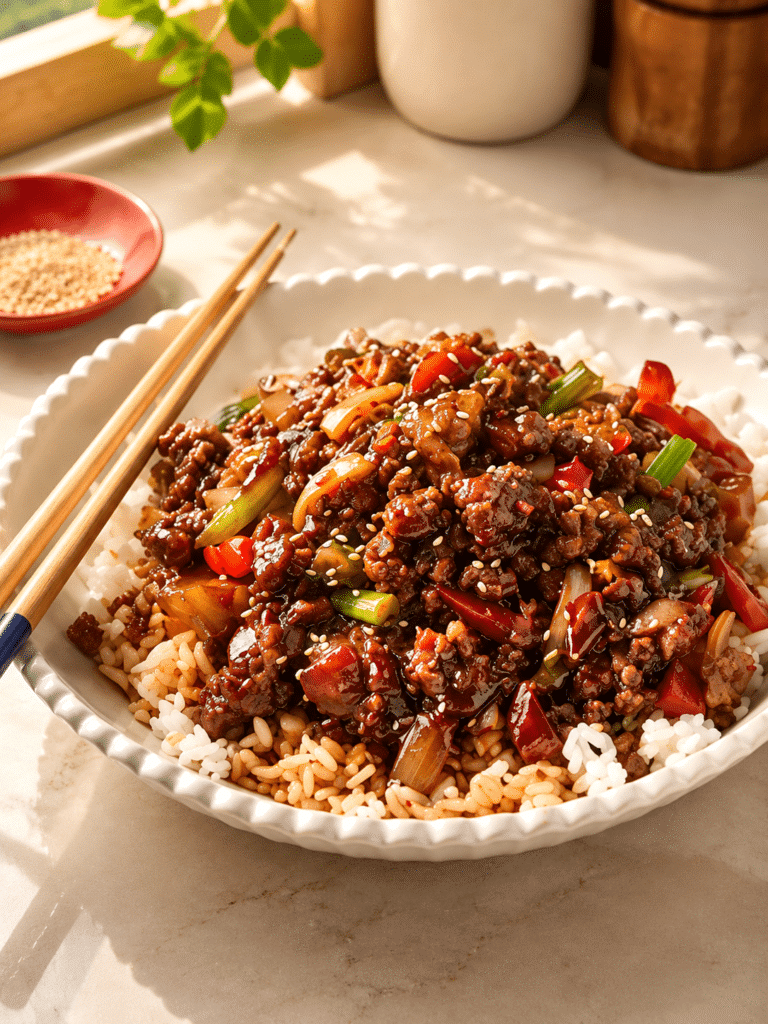
Sticky Korean beef mince is the weeknight dinner I reach for when I want something that tastes considered but takes almost no thought to put together. Ground beef cooked until the edges start to crisp, stir-fry vegetables added straight from frozen, and a sauce built from dark soy, grated pear, brown sugar, garlic, and ginger poured over everything and reduced until sticky and glossy. Thirty minutes from fridge to table, most of which is the rice cooking on its own.
The grated pear is the ingredient that makes this different from a plain soy-and-sugar beef bowl. It melts into the sauce during cooking, adding a gentle natural sweetness and a slight glossiness that sugar alone doesn't produce. It also tenderizes the beef as it cooks. Grated apple works too, though pear breaks down a little faster and adds more sweetness. Both are correct and both are traditional in Korean-style bulgogi cooking.
Getting the beef to crisp
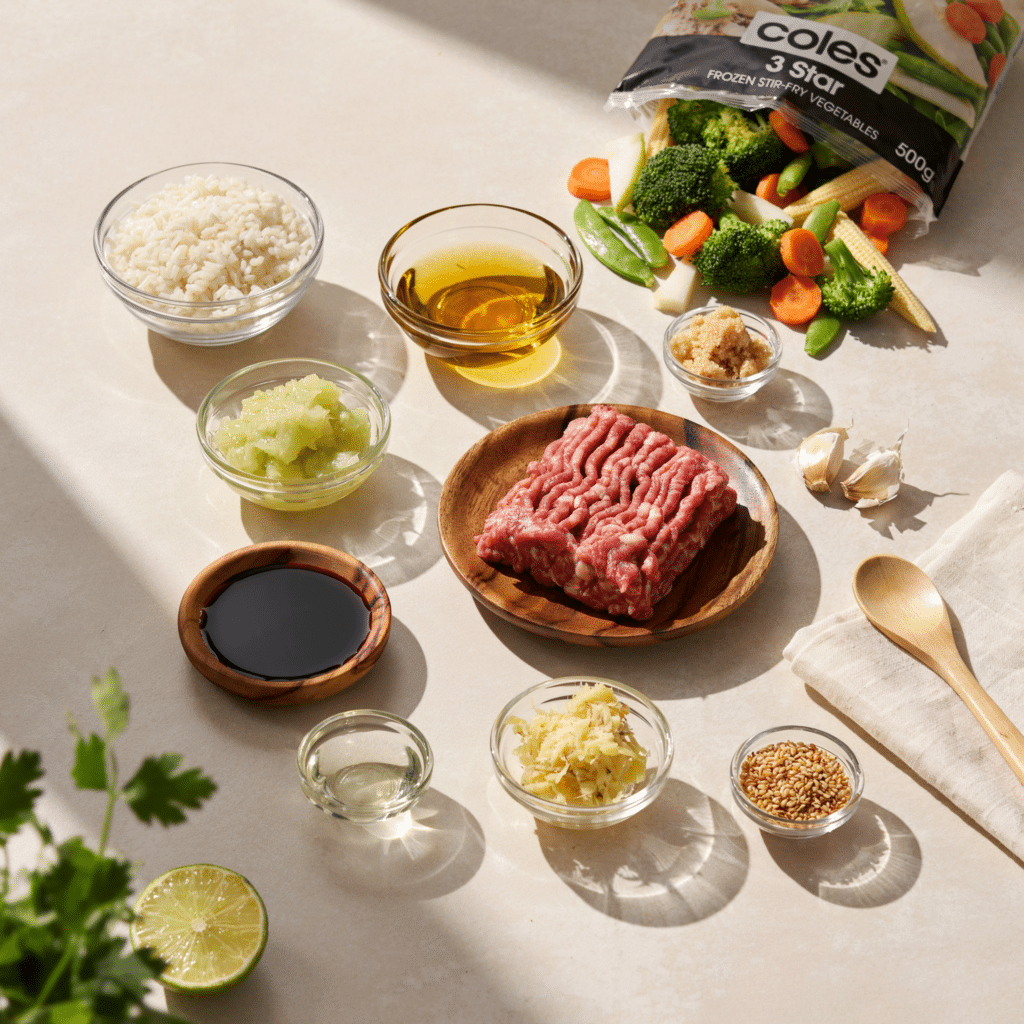
Five hundred grams of ground beef in a wide frying pan over medium-high heat. Wide pan, not a saucepan or a deep pot, because surface area is what lets the beef brown rather than steam. Break it up with a wooden spoon as it cooks but don't stir constantly. Let it sit against the hot surface for thirty seconds at a time and you'll see the edges of the pieces starting to color and crisp. Seven to eight minutes total until the beef is cooked through and has developed some texture on the outside.
If a lot of fat pools in the pan before the beef starts crisping, spoon some off. Excess fat means the beef is swimming rather than frying, and it won't crisp in the same way. A little fat is fine and adds flavor; too much and you lose the texture that makes this worth eating over a plain beef bowl.
The sauce, mixed before it goes in
Combine everything in a jug or bowl before the beef goes into the pan: a quarter cup of dark soy sauce, two tablespoons of water, the grated pear, two tablespoons of brown sugar, two crushed garlic cloves, and about two centimeters of finely grated fresh ginger. Mix and set aside.
Dark soy sauce rather than regular. Dark soy is thicker, less salty, and gives the sauce its deep color and the coating quality that makes this sticky rather than watery. If you only have regular soy sauce, the flavor is still good but the sauce will be lighter in color and won't cling the same way. The ginger doesn't need to be peeled before grating on a microplane; the fine grater catches the fibrous skin and only the juice and pulp go through.
Brown sugar does two jobs: it sweetens the sauce and encourages caramelization. If the finished dish tastes too sweet for your preference, a splash more soy or a small pinch of salt balances it back. Taste at the end before serving, because pears vary in sweetness and so do soy sauce brands.
Vegetables and the sauce going in
Once the beef is cooked and crisping, add the frozen stir-fry vegetables straight from the bag without thawing. Stir and cook for one to two minutes until they start to soften but are still bright. This is the point where texture matters: overcooked frozen vegetables go grey and limp, which is the version of this dish nobody wants. One to two minutes keeps them tender-crisp.
Pour the pear mixture over the beef and vegetables. Stir and cook for two to three minutes until the sauce thickens and coats everything. It goes from liquid to glossy and sticky as the sugar caramelizes slightly and the pear finishes breaking down. Watch the heat; if it's too high the sauce can catch and burn before it thickens evenly. Medium-high at first, then drop to medium if the sauce is reducing too fast.
The rice underneath
Medium-grain rice, cooked by absorption or rice cooker while the beef cooks. Medium-grain rice is the right choice here: it has a slight stickiness that pairs with the glossy sauce better than long-grain rice, which stays more separate. The sauce collects between the rice grains and every spoonful carries both.
Start the rice first. It takes about twenty minutes by absorption, which is longer than the beef takes, so if you start them at the same time the beef will be waiting for the rice. Better to have the beef wait than the opposite.
A weeknight principle
One of the things I've learned from cooking in different countries and different circumstances is that the flavors people reach for when they're tired and hungry are rarely the most complicated ones. They're the ones that hit the sweet-salty-savory combination quickly and directly. Soy and sugar and garlic together do that reliably, which is why they appear in so many weeknight dishes across East Asian cuisines.
This version with pear is specifically Korean in its logic, borrowing from the bulgogi tradition of using fruit to tenderize and sweeten meat. The execution is simpler than traditional bulgogi, which often involves marinating and grilling, but the flavor intention is similar. Serve with toasted sesame seeds scattered over the top and sliced green onions if you have them. Serves 4. Leftovers reheat well in a pan over medium heat with a splash of water to loosen the sauce.
Make it your own
A teaspoon of gochujang or a pinch of chili flakes stirred into the pear mixture adds heat that works well against the sweetness. A fried egg on top of each bowl adds protein and richness. Kimchi on the side is the classic Korean accompaniment and the fermented tang cuts through the sticky sweetness exactly as it should. Sliced green onions, shredded nori, or sesame oil drizzled over at the end are finishing touches worth adding if they're in reach.
Ground beef cooked until crisp with frozen vegetables, finished in a dark soy and grated pear sauce. A 30-minute weeknight dinner with Korean bulgogi-inspired flavors.
- 300g medium-grain rice (1 1/2 cups)
- 60ml dark soy sauce (1/4 cup)
- 2 tablespoons water
- 1 Packham pear or apple peeled, cored and finely grated
- 2 tablespoons brown sugar
- 2 garlic cloves crushed
- 2cm piece fresh ginger finely grated
- 3 teaspoons sesame oil
- 500g ground beef (about 1 lb)
- 325g frozen stir-fry vegetables (about 2 1/2 cups)
- 1 teaspoon sesame seeds toasted (for serving)
- 1 Start the rice: cook by absorption method or rice cooker following packet directions.
- 2
Make the sauce: combine the soy sauce, water, grated pear, brown sugar, garlic, and ginger in a jug or bowl. Set aside.- 3
Heat the sesame oil in a wide frying pan over medium-high heat. Add the beef and cook, breaking up lumps with a wooden spoon, for 7 to 8 minutes until the beef is cooked and beginning to crisp. Spoon off excess fat if it pools.- 4
Add the frozen vegetables and cook, stirring occasionally, for 1 to 2 minutes until just starting to soften and still bright.- 5
Pour the pear mixture over the beef and vegetables. Cook, stirring occasionally, for 2 to 3 minutes until the sauce thickens and becomes glossy and sticky.- 6
Serve over rice, sprinkled with toasted sesame seeds..NoteStart the rice before the beef; rice takes longer. Use a wide pan for maximum browning surface. Spoon off excess fat before the sauce goes in. Taste and adjust with extra soy or a pinch of salt if the sauce is too sweet.
Korean beef mince, sticky Korean beef rice, Korean ground beef, bulgogi beef rice bowl - 2