Spicy California Roll Bowls
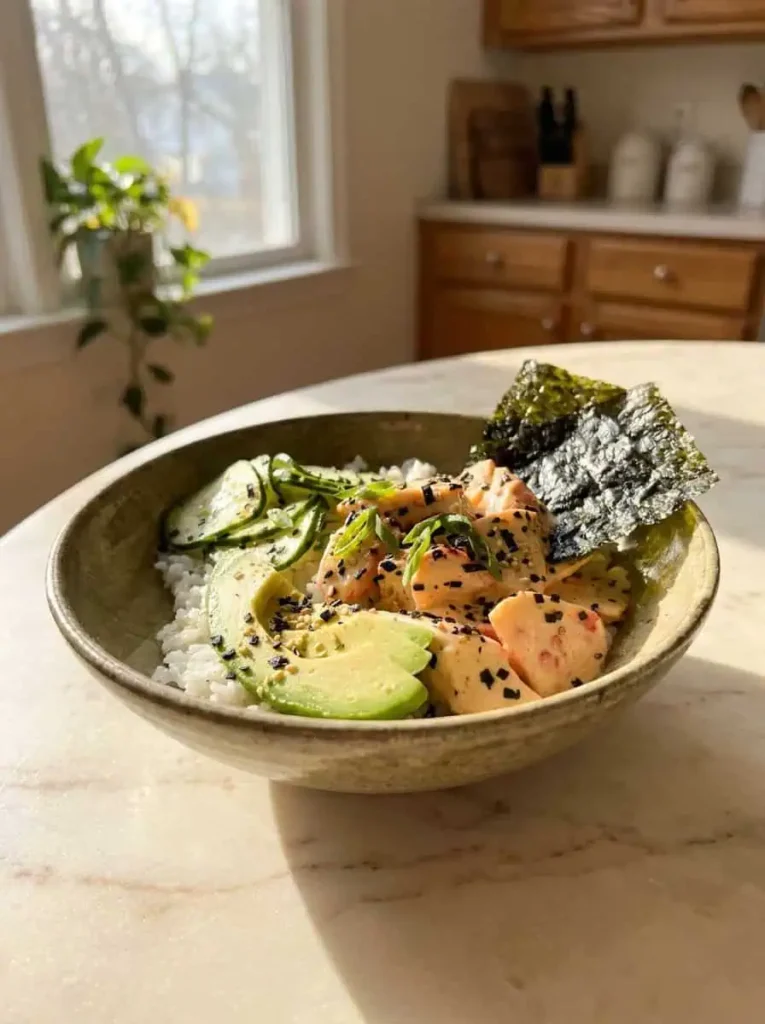
Spicy California roll bowls deliver everything a California roll offers without any of the rolling. Seasoned sushi rice, imitation crab tossed in a Kewpie-sriracha sauce, thinly sliced cucumber, and avocado arranged in a bowl, with extra spicy mayo on the side and roasted nori sheets for scooping. Fifty-five minutes, most of which is rice cooking and resting, serves four, and it's the kind of dinner that feels like a treat without requiring any skill beyond making rice.
The technique here is deconstructed by design, not by shortcut. The rice is properly seasoned with rice vinegar, the crab is dressed in a sauce that has Kewpie's egg-yolk richness, sesame oil, and enough sriracha to matter, and the bowl is garnished with furikake and scallions. Everything that makes a California roll worth eating is here, just not wrapped.
The sushi rice
One and a half cups of short-grain sushi rice, rinsed well until the water runs clear, then cooked in two cups of water with half a teaspoon of salt. Bring to a boil, stir, reduce to low, cover, and cook undisturbed for twenty minutes. Then remove from heat and let it steam covered for another fifteen minutes. The fifteen-minute steam is not optional: it lets the interior of each grain finish cooking in residual heat and pulls the moisture through evenly. Rice opened too early is wet and unevenly cooked.
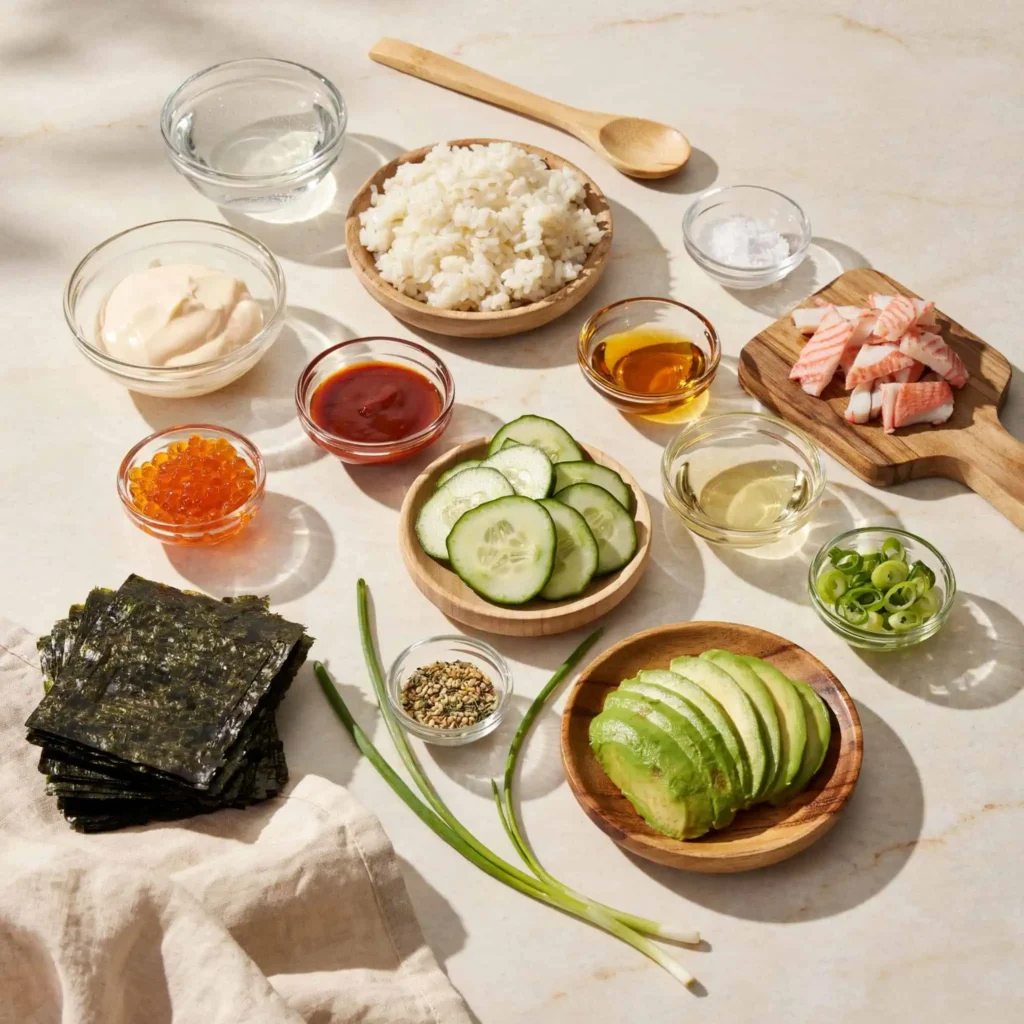
After steaming, fluff with a fork and drizzle a quarter cup of seasoned rice vinegar over the top. Fold gently with a wooden spoon rather than stirring; aggressive stirring breaks the grains and makes the rice gluey. The seasoned vinegar (which already has salt and sugar dissolved in it) is what transforms plain cooked rice into sushi rice. Use seasoned rice vinegar, not plain rice vinegar, which would need sugar and salt added separately.
The spicy mayo and the crab
Kewpie mayonnaise is the specific ingredient worth seeking out rather than substituting. It's a Japanese mayonnaise made with egg yolks rather than whole eggs, and it's richer, creamier, and slightly sweeter than American-style mayo. It's now widely available at most grocery stores and at any Asian supermarket. Regular mayo works as a substitute but the sauce will taste slightly different, less round and less rich.
Whisk together three-quarters of a cup of Kewpie with three tablespoons of sriracha, a tablespoon of toasted sesame oil, a tablespoon of rice vinegar, and a quarter teaspoon of salt. Set aside half a cup of this sauce in a small bowl for serving alongside. The remaining sauce goes over the crab: one pound of flake-style imitation crab cut into one-inch pieces, tossed until evenly coated. If you're using masago (capelin roe), stir it in now. The masago adds tiny pops of brininess and the orange color associated with California rolls; it's optional but worth including if you can find it.
Toss the thinly sliced cucumber with the remaining half tablespoon of rice vinegar in a separate bowl. The quick pickle doesn't transform the cucumber but it seasons it and makes it taste intentional rather than raw.
Assembly
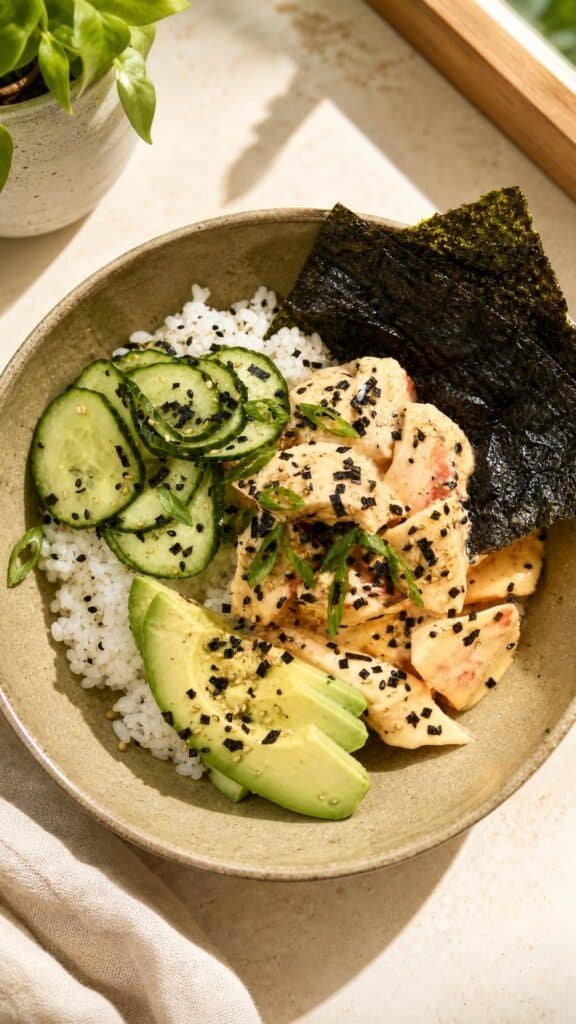
Divide the sushi rice among four bowls. Top each with a portion of the dressed crab mixture, then the cucumber, then sliced avocado. Scatter furikake over the top and add sliced scallions. Serve with the reserved spicy mayo and nori snack sheets on the side.
Furikake is a Japanese seasoning blend typically made from dried fish, sesame seeds, seaweed, and salt. It's sold in small jars at most grocery stores now and keeps for months. A bowl without it still works but the furikake adds a concentrated savory note and a textural finish that elevates the whole dish. Nori snack sheets are the thin, crispy roasted seaweed sold in individual packets; they're used for scooping like a chip and add the seaweed flavor that makes a California roll taste like sushi.
A bowl format that suits the flavors
I've eaten a lot of sushi in different countries and in different forms, from standing up at a Tokyo convenience store counter to formal omakase meals where each piece is a conversation. What the bowl format does is make those flavors more casual and more adaptable, something you can eat at home on a weeknight without ceremony. The ingredients are the same as a proper California roll; the format removes the barrier of rolling technique and makes it accessible any night of the week.
Sushi rice as a bowl base is worth knowing generally. Once you have seasoned rice, you can build almost any bowl you'd find at a Japanese restaurant just by choosing a protein and a sauce. This spicy crab version is the most familiar starting point, and once you've made it a few times the ratio of sauce to rice to protein becomes second nature. Serves 4. The rice, crab mixture, and sliced cucumber keep refrigerated separately for up to a day; slice and add the avocado fresh before serving.
Make it more substantial
A soft-boiled egg halved and placed on top adds protein and richness. Thinly sliced pickled ginger alongside adds the palate-cleansing element you'd get at a sushi restaurant. Edamame scattered through the rice adds texture and protein without changing the flavor profile. Any of these push the bowl toward a more complete meal without changing the core recipe.
California roll components in a bowl: seasoned sushi rice, imitation crab in spicy Kewpie mayo, cucumber, avocado, furikake, and nori. 55 minutes, serves 4.
- 1 1/2 cups short-grain sushi rice (rinsed well and drained)
- 2 cups water
- 3/4 teaspoon kosher salt (divided)
- 3/4 cup Kewpie mayonnaise
- 3 tablespoons sriracha
- 1 tablespoon toasted sesame oil
- 1/4 cup plus 1 1/2 tablespoons seasoned rice vinegar (divided)
- 1 lb flake-style imitation crab kani (cut into 1-inch pieces)
- 2 tablespoons masago (optional)
- 1 small English cucumber (thinly sliced)
- 1 avocado thinly sliced
- Furikake and sliced scallions for garnish
- Roasted nori snack sheets for serving
- 1 Bring 2 cups of water to a boil in a medium saucepan. Add the rice and 1/2 teaspoon salt and return to a boil. Reduce heat to low, cover, and cook undisturbed for 20 minutes. Remove from heat and let steam covered for 15 minutes.
- 2
While the rice cooks, whisk together the Kewpie mayo, sriracha, sesame oil, 1 tablespoon rice vinegar, and remaining 1/4 teaspoon salt. Transfer 1/2 cup to a small bowl and set aside for serving. Add the kani to the remaining mayo mixture and toss to coat. Stir in masago if using.- 3
Toss the sliced cucumber with 1/2 tablespoon rice vinegar in a small bowl.- 4
Fluff the rice with a fork. Drizzle the remaining 1/4 cup rice vinegar over the rice and fold gently with a wooden spoon.- 5
Divide the rice among 4 bowls. Top each bowl with the crab mixture, cucumber, and avocado. Garnish with furikake and scallions. Serve with the reserved spicy mayo and nori sheets on the side..NoteFold the rice vinegar into the cooked rice gently with a wooden spoon; stirring breaks the grains. Use seasoned rice vinegar, not plain. Slice and add the avocado just before serving. No nutrition data was provided for this recipe.
California roll bowl, spicy California roll bowl, sushi rice bowl, imitation crab bowl - 2