Southern Fried Shrimp
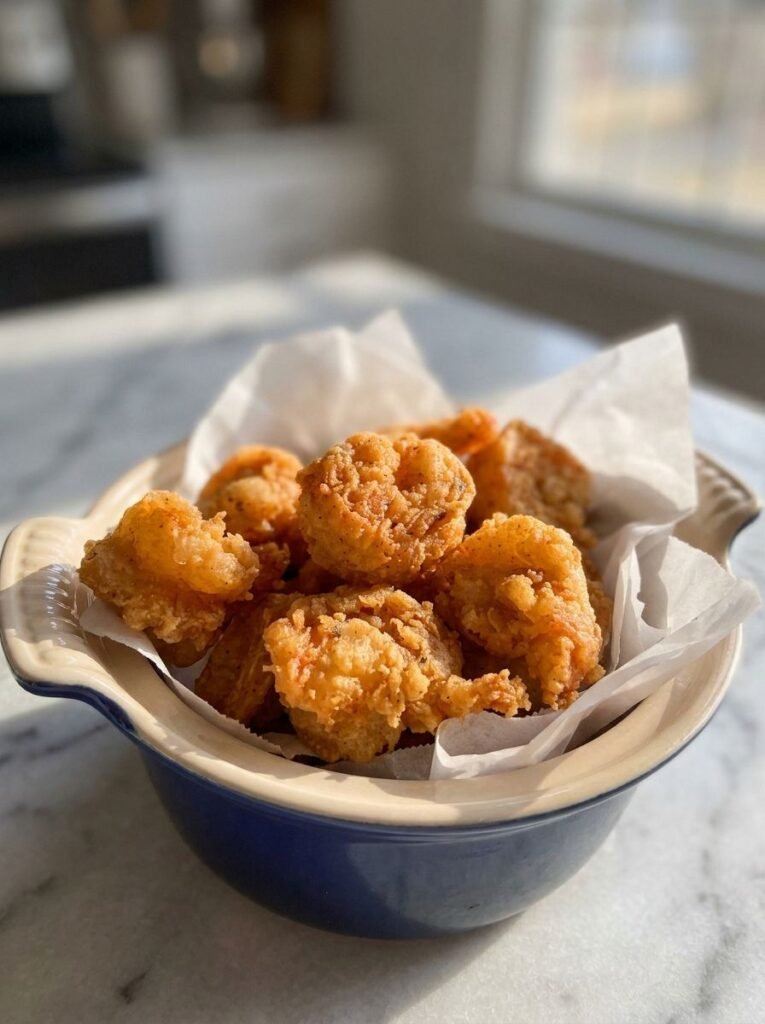
Shrimp soaked in seasoned milk then fried in seasoned flour. Six servings as an appetizer.
Deep frying safely
Oil at 375F, which is hotter than most frying and leaves less margin.
Fill the pot no more than a third full. Use a thermometer rather than guessing, since 375F is close to the smoke point of many oils.
Never move a pot of hot oil. Smother any fire with a lid and turn off the heat, never water.
Shrimp carry moisture and they will spit. Lower them in gently with tongs and keep your face back.
The sodium is high
1,179mg per serving, which is around half a daily allowance from an appetizer portion.
A teaspoon and a half of salt across a pound of shrimp is a lot, and it is split between the milk soak and the flour so it goes on twice. Shrimp are also naturally saline.
Reducing to three quarters of a teaspoon total gives a well seasoned result. The garlic, paprika and oregano are carrying most of the flavour anyway.
The fat figure cannot be right
The source gives 2g of fat per serving for deep-fried shrimp.
Fried food absorbs oil, typically several grams per portion at minimum. The rest of the panel is plausible; this line is not, and it has been left blank rather than reproduced.
Shrimp reach 145F
Three to four minutes in the oil, which the recipe gives.
Fish and shellfish should reach an internal temperature of 145F, which the source does not state. At 375F that happens quickly.
The reliable cue is shape and colour: opaque throughout and curled into a loose C. A tight O means overcooked and rubbery, which is easy to do in hot oil.
Crispy is the visual the recipe gives, and it arrives at roughly the same moment. Check one.
Coat heavily, which the recipe insists on
You should not be able to see the shrimp under the flour.
That is the instruction and it is emphatic for good reason. A thin dusting fries into a patchy coating that falls away; a heavy one forms the craggy crust this style is known for.
Press the flour on rather than shaking it off. The milk soak is what makes it adhere.
Ten minutes in the milk, no longer
With half the salt and a third of the spices.
That soak seasons the shrimp themselves rather than only the coating, and it wets the surface so the flour grips.
Ten minutes is enough. Shrimp are delicate and a long soak in salted liquid starts to cure them, giving a firm, slightly rubbery texture.
Split the seasoning deliberately
Half the salt, and one teaspoon each of oregano, paprika and garlic in the milk. The remainder goes into the flour.
Read the ingredient line before tipping it in. Seasoning both stages is what gives flavour through the whole thing rather than just on the crust.
Fry in batches
Which the recipe does not say and which matters at this temperature.
A pound of shrimp dropped in at once pulls the oil well below 375F. At that point the coating absorbs oil rather than crisping, and you get soggy shrimp.
Six or eight at a time, letting the oil recover between batches. A thermometer makes the recovery obvious.
Whole milk rather than buttermilk
Half a cup.
Many southern fried recipes use buttermilk, whose acidity tenderises. Shrimp are already tender and do not need it, and the acid would begin to cure them during even a short soak.
Plain whole milk seasons and wets the surface without changing the texture.
Serve immediately
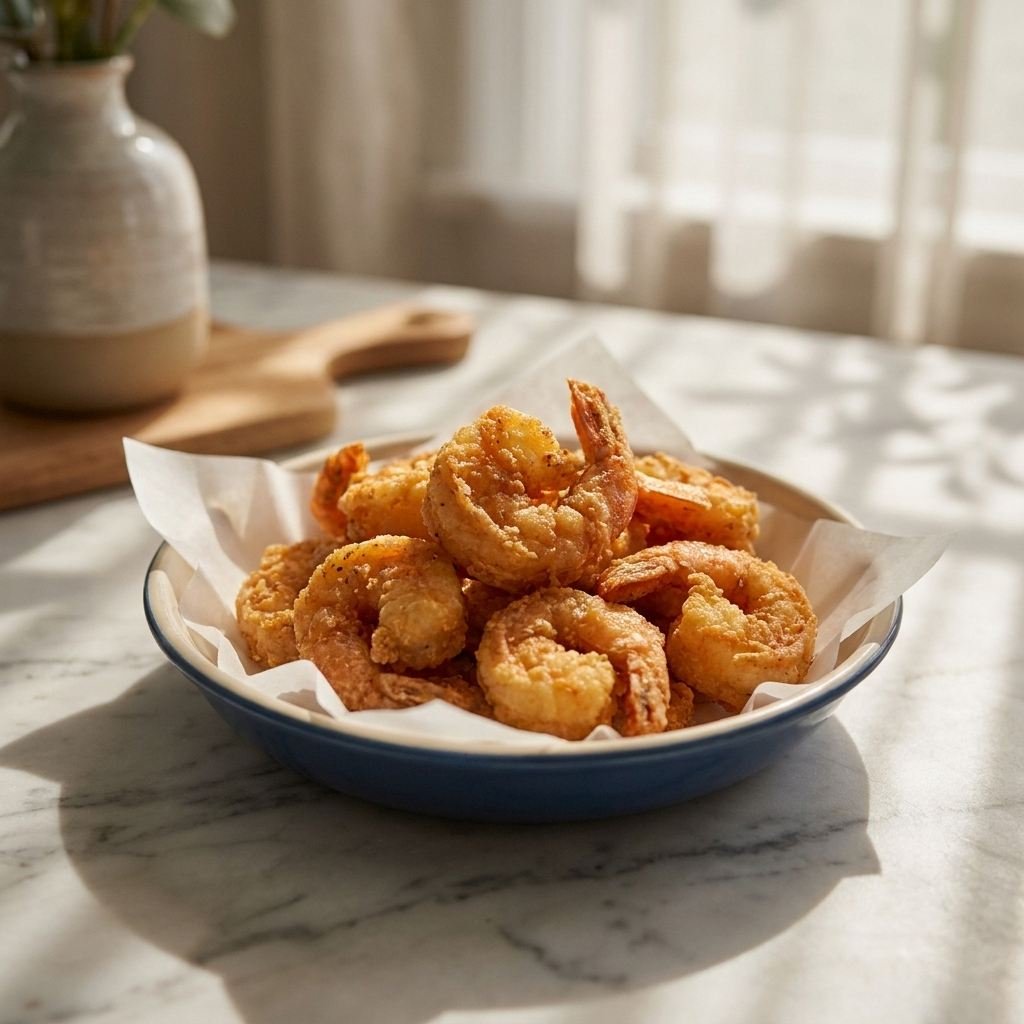
Which the recipe says twice, in effect.
Fried coating starts softening within minutes as steam escapes from the shrimp inside. Drain on paper towel and get them to the table.
Honey mustard is the suggested dip, and its sweetness works against the salt and paprika.
Granulated garlic
Coarser than garlic powder and it does not clump in flour the way powder can. Garlic powder substitutes at about three quarters of the quantity, since it is finer and more concentrated.
Choosing the oil
At 375F you need a high smoke point: peanut, canola, safflower or vegetable oil. Olive oil is not suitable at this temperature.
Crunchy southern-style fried shrimp with garlic, paprika and oregano in both the soak and the coating.
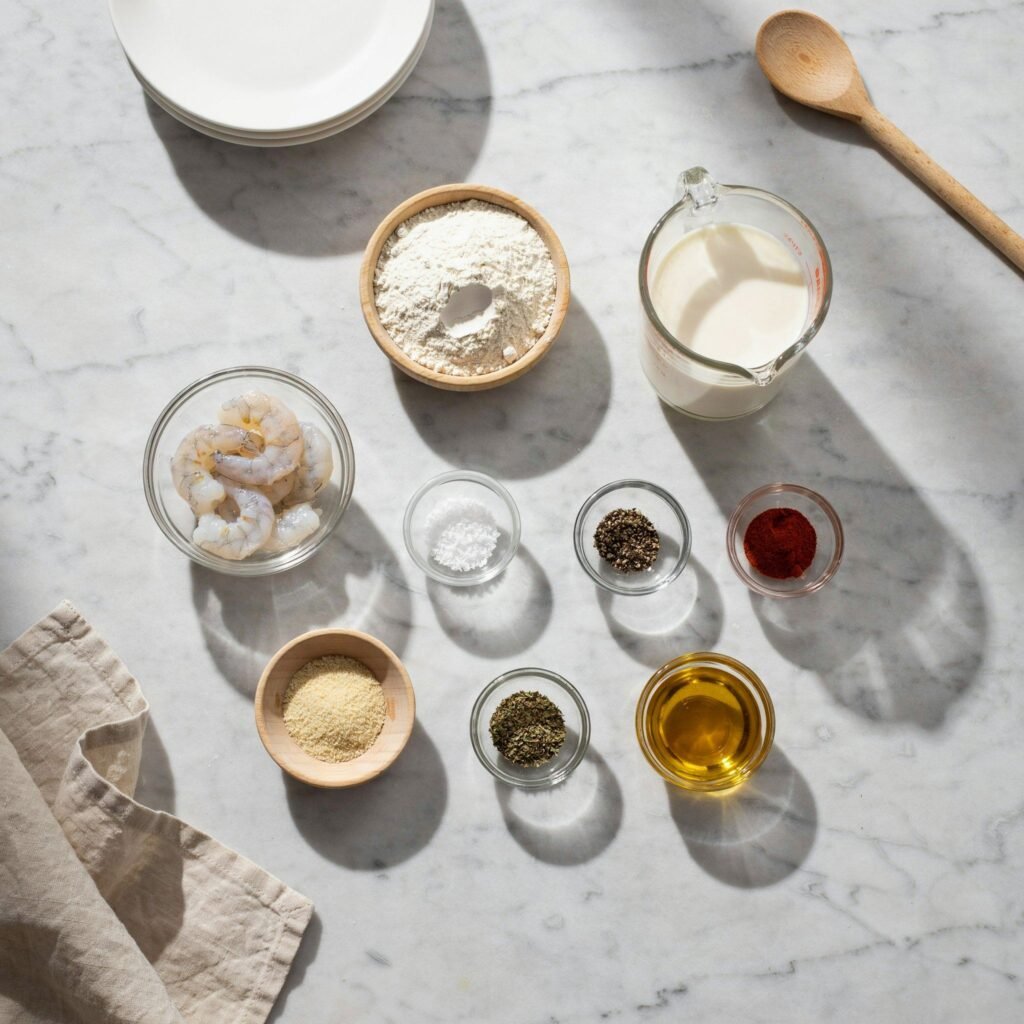
- 1 lb raw shrimp peeled and deveined
- 1 cup all-purpose flour
- 1 1/2 tsp salt divided
- 1/2 tsp black pepper
- 2 tsp granulated garlic divided
- 2 tsp paprika divided
- 2 tsp oregano divided
- 1/2 cup whole milk
- oil for frying.
- 1 Add the milk, half the salt, 1 teaspoon of the oregano, 1 teaspoon of the paprika, 1 teaspoon of the granulated garlic and the shrimp to a large bowl and let it sit for 10 minutes. Do not soak longer, as salted liquid begins to cure shrimp firm.
- 2
Season the flour with the remaining salt, paprika, oregano, granulated garlic and the black pepper.- 3
Remove the shrimp from the milk mixture and coat well with the seasoned flour, pressing it on so you cannot see the shrimp underneath.- 4
Heat oil in a heavy pot filled no more than a third full to 375F, using a thermometer. Fry the shrimp 3 to 4 minutes until crispy and opaque throughout, reaching an internal temperature of 145F. They should curl into a loose C rather than a tight O.- 5
Remove from the oil and drain on a paper towel lined plate.- 6
Serve immediately, with honey mustard for dipping. Let the oil cool completely in the pot before disposing of it..NoteDeep frying safety: fill the pot no more than a third full, use a thermometer at 375F which is close to the smoke point of many oils, never move hot oil, and smother any fire with a lid rather than water. Shrimp spit, so lower them in gently. Sodium is high at 1179mg per serving, since a teaspoon and a half of salt is split across the milk soak and the flour so it goes on twice; three quarters of a teaspoon total is well seasoned. The source fat figure of 2g cannot be right for deep-fried shrimp and has been left blank. Shrimp should reach 145F, which the source does not state; the cue is opaque throughout and curled into a loose C, since a tight O means rubbery. Coat heavily so the shrimp is not visible under the flour, which the source insists on. Soak only 10 minutes, as longer in salted liquid cures the shrimp firm.
Crunchy, Seasoned, Golden - 2