Snow Eggs (Oeufs a la Neige) with Rosewater Custard
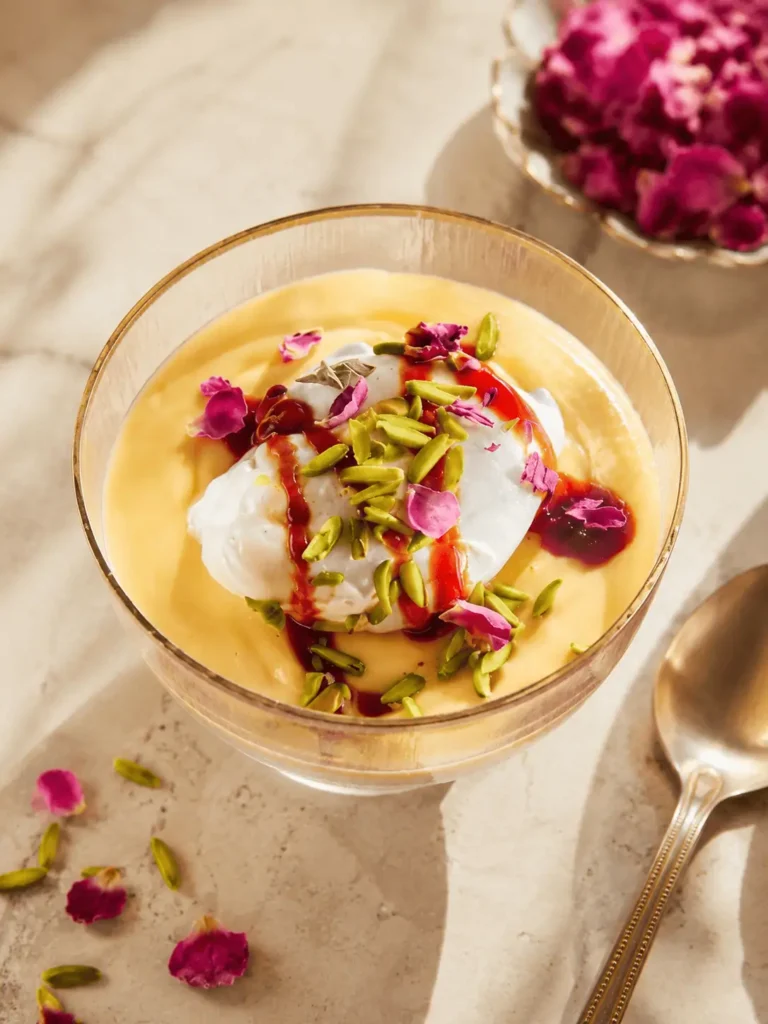
Snow eggs, or oeufs à la neige, is a French classic that looks considerably more difficult than it is. Poached meringue clouds floating in a shallow bowl of vanilla custard, finished with date syrup, pistachios, and dried rose petals. The three components, meringue, poached egg shapes, and creme anglaise, each take about ten minutes, and they come together into something that looks like restaurant dessert and costs very little to make.
This version uses rosewater in the custard and serves with a Middle Eastern-inflected garnish of date syrup and rose petals, which gives it a character that sits between classical French patisserie and something more aromatic and floral. It's the version I'd make for guests who think they know this dessert, because the rosewater changes the expectation in an interesting direction.
The meringue
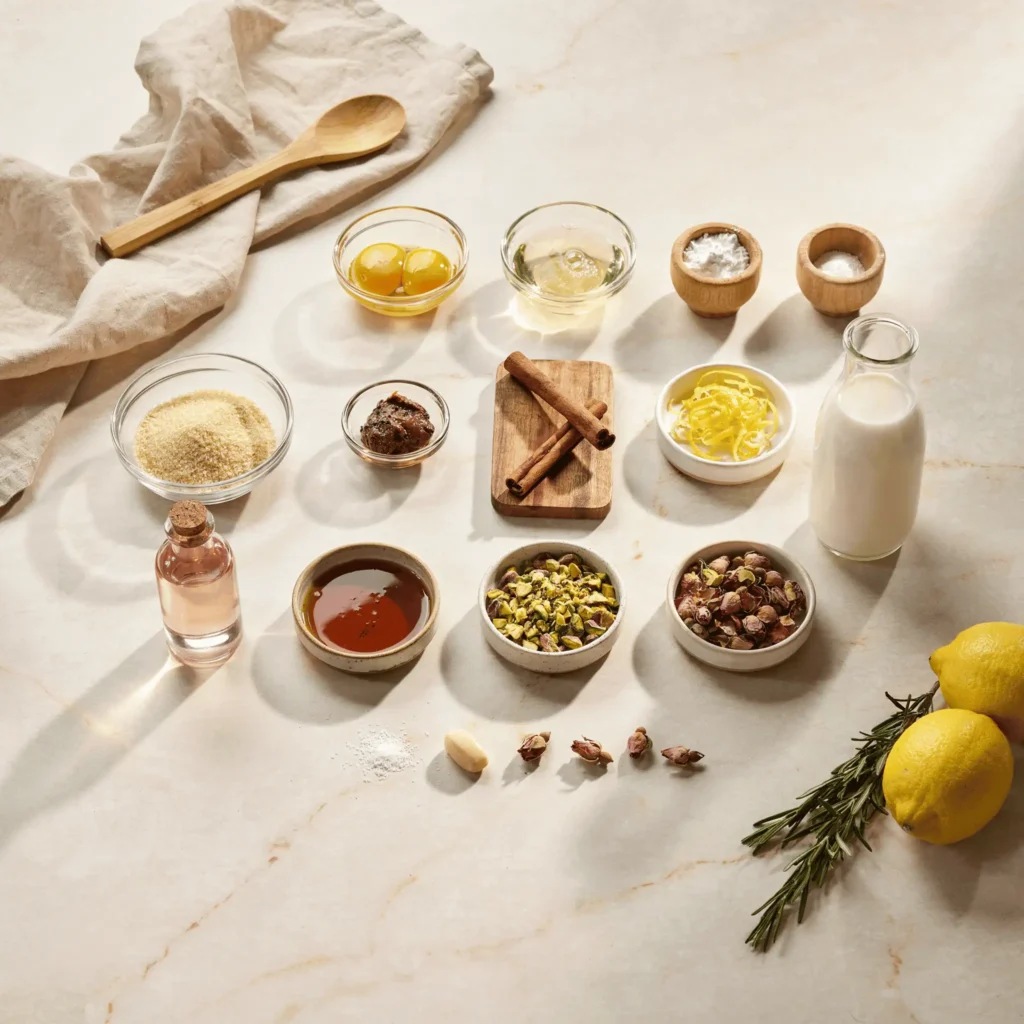
Six egg whites and half a teaspoon of cream of tartar in a stand mixer bowl. Whisk on medium speed until foamy, then increase to high until you reach soft peaks. The cream of tartar stabilizes the whites and helps them hold their shape during poaching, which is important because these are going into liquid rather than baking in an oven.
Add 180 grams of caster sugar a tablespoon at a time, whisking constantly until it's all incorporated and the meringue is thick and glossy. One teaspoon of vanilla bean paste goes in at the end. The final meringue should hold stiff peaks and look smooth and shiny. If it looks grainy, the sugar wasn't incorporated fully enough; beat for another minute.
The poaching liquid and shaping the eggs
Two cinnamon sticks, thick strips of lemon zest from two lemons, 100 grams of caster sugar, and a litre of water in a saucepan. Bring to a boil for two minutes to infuse, then reduce to a low simmer. The poaching liquid isn't just water; the cinnamon and lemon are doing real aromatic work, and some of that transfers subtly to the meringue as it cooks.
Dip a large kitchen spoon in water, scoop a generous egg-shaped amount of meringue, and drop it gently into the simmering liquid. Repeat to make four meringues. Cook for five minutes, turning them once so both sides poach evenly. They puff slightly in the liquid and firm up from soft and billowy to something that holds its shape on a spoon. Lift with a slotted spoon onto a plate and set aside while you make the custard.
The water-dipped spoon is not optional. It prevents the meringue from sticking and lets the oval shape release cleanly. Too dry a spoon and the meringue tears as you drop it in.
The rosewater custard
Combine 500 milliliters of whole milk and two tablespoons of rosewater in a saucepan and bring to a simmer. In a bowl, whisk the six egg yolks, the remaining vanilla, and the remaining caster sugar (170 grams, the 450 grams total minus the 180 in the meringue and 100 in the poaching liquid) until pale and thick. Pour the warm milk slowly into the yolk mixture while whisking constantly. This is the tempering step: adding hot liquid to eggs too quickly scrambles them. Pour slowly, whisk continuously, and the eggs stay smooth.
Return the mixture to the saucepan over medium-low heat. Stir constantly with a wooden spoon, scraping the bottom of the pan, until the custard thickens just enough to coat the back of the spoon. Run your finger across the spoon; if the line holds, it's done. If the line runs together, keep cooking. This takes five to eight minutes and requires attention.
Strain immediately through a fine-mesh sieve into a bowl set over an ice bath to stop the cooking. Rosewater custard that keeps cooking past the right point curdles, so the ice bath is important. Stir as it cools until it's no longer steaming. The finished custard should be pourable and lightly coated, the consistency of heavy cream rather than pudding.
Assembly and the garnish
Spoon the custard into shallow coupes or wide, shallow bowls. Set a poached meringue in the center of each. Drizzle date syrup over and around the meringue. Scatter chopped pistachios and a few dried rose petals over the top.
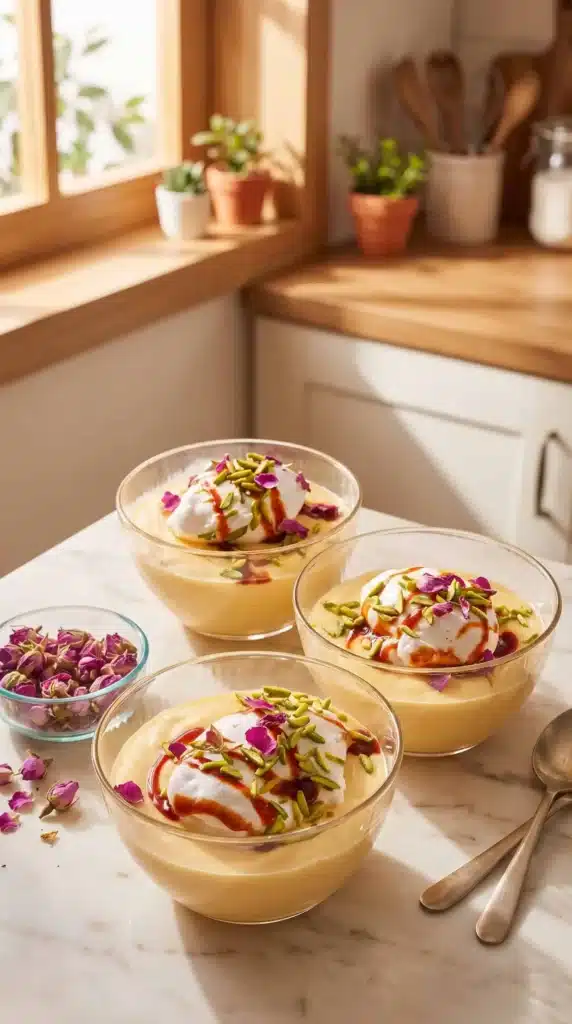
The date syrup is the element that ties the whole garnish together. It's sweet and deep and slightly caramelized, and it pools in the custard in a way that's both visual and functional. If you can't find date syrup, good honey works as a substitute, though the flavor is lighter. Pomegranate molasses is an interesting alternative, slightly tart rather than sweet.
Why snow eggs are worth knowing
This dessert has French classical roots, oeufs à la neige literally translates to eggs in snow, but the poached meringue floating in custard idea travels across many cultures in different forms. In some Middle Eastern traditions, meringue and dairy-based sweets are served together at celebrations. The rosewater in this custard and the rose petal garnish pull the dish closer to that tradition than to the strictly classical French version, which is something I find more interesting.
I make this when I want a dessert that impresses without requiring hours in the kitchen. All three components are done in under forty minutes and can be made a few hours ahead. The meringues hold on a plate covered loosely in the fridge, and the custard holds refrigerated and re-warms slightly at room temperature before serving. Assemble just before you bring the bowls to the table. Serves 4.
Making it ahead
The custard keeps refrigerated for up to two days. The meringues are best made the day of; they can sit for a few hours on a plate covered loosely with plastic wrap, but they soften over time and the texture is best within an hour or two of poaching. Make the custard the day before, poach the meringues an hour before guests arrive, and assemble at the table for the best result.
Classic snow eggs with a rosewater-scented creme anglaise, poached meringue clouds, and a garnish of date syrup, pistachios, and rose petals. Serves 4 in 35 minutes.
- 6 free-range eggs (separated)
- 1/2 teaspoon cream of tartar
- 450g caster sugar (about 2 cups divided)
- 2 teaspoons vanilla bean paste (divided)
- 2 cinnamon sticks
- 2 lemons Thick strips of zest from
- 1 litre water (4 cups)
- 500ml whole milk (2 cups)
- 2 tablespoons rosewater
- Date syrup (chopped pistachios and dried rose petals to serve)
- 1 Make the meringue: whisk the egg whites and cream of tartar in a stand mixer on medium until foamy, then increase to high and whisk to soft peaks. Add 180g of the sugar a tablespoon at a time, whisking until thick and glossy. Whisk in 1 teaspoon vanilla. Set aside.
- 2
Make the poaching liquid: put the cinnamon sticks, lemon zest, 100g of the sugar, and 1 litre of water in a large saucepan. Boil for 2 minutes, then reduce to a low simmer.- 3
Dip a large kitchen spoon in water and scoop a generous egg-shaped amount of meringue. Drop gently into the simmering liquid. Make 4 meringues total. Poach for 5 minutes, turning once, until firm. Lift with a slotted spoon onto a plate.- 4
Make the custard: combine the milk and rosewater in a saucepan and bring to a simmer. In a bowl, whisk the egg yolks, remaining vanilla, and remaining sugar (about 170g) until pale and thick. Slowly pour the warm milk into the yolk mixture while whisking constantly.- 5
Return the custard to the saucepan over medium-low heat. Stir constantly until thick enough to coat the back of a spoon, about 5 to 8 minutes. Strain immediately into a bowl set over an ice bath. Stir until cool.- 6
Spoon the custard into shallow bowls. Set a poached meringue in each bowl. Drizzle with date syrup and scatter chopped pistachios and rose petals over the top..NoteTotal sugar is 450g divided: 180g in meringue, 100g in poaching liquid, approximately 170g in custard. Dip the spoon in water before scooping meringue so it releases cleanly. Strain the custard into an ice bath immediately when done to stop cooking. No nutrition data was provided for this recipe.
snow eggs, oeufs a la neige, poached meringue custard, French egg white dessert - 2