Sloppy Joes
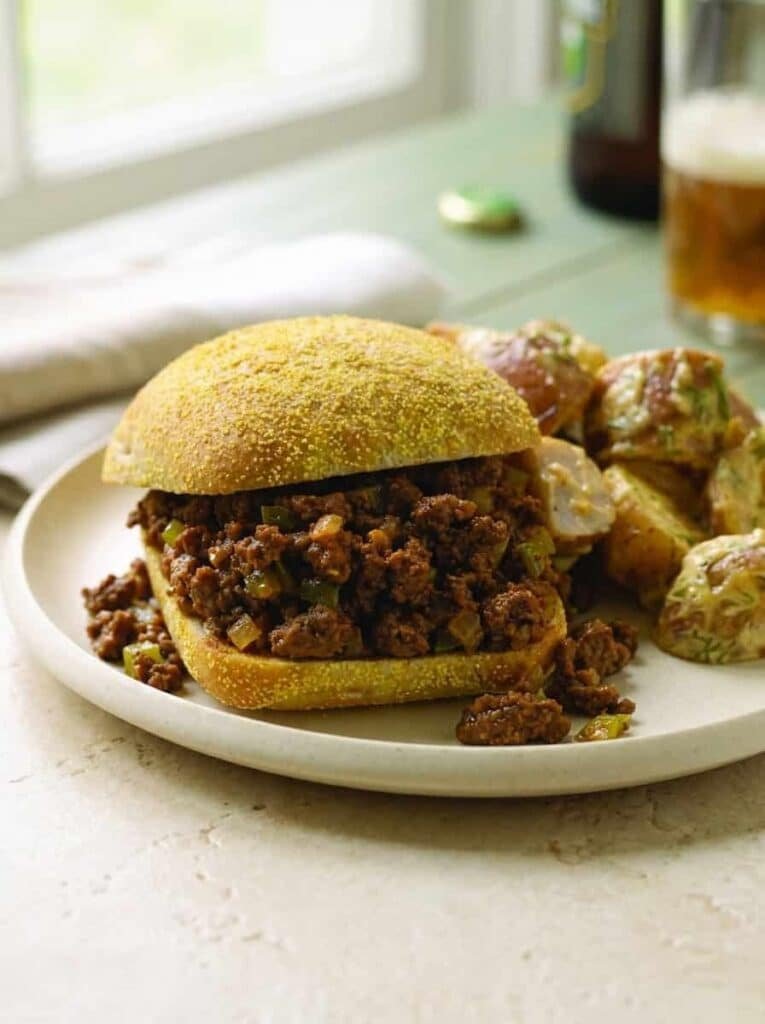
Twenty five minutes from a cold pan to sandwiches on the table. No canned sauce, no packet mix.
Four servings, and the seasoning comes from a steak spice blend rather than a long list of individual spices.
Steak seasoning does the work
A tablespoon of Montreal-style steak seasoning, which is a coarse blend of black pepper, garlic, salt, coriander, dill and paprika.
It replaces five or six separate additions, and the coarse grind is deliberate. Coarse spice stays perceptible in a saucy mixture where fine powder would dissolve and disappear.
If you do not have it, a mix of coarse black pepper, garlic powder, coriander and a little salt gets close.
A quarter cup of Worcestershire
Which is a great deal, and it is what makes this taste of something rather than of tomato and sugar.
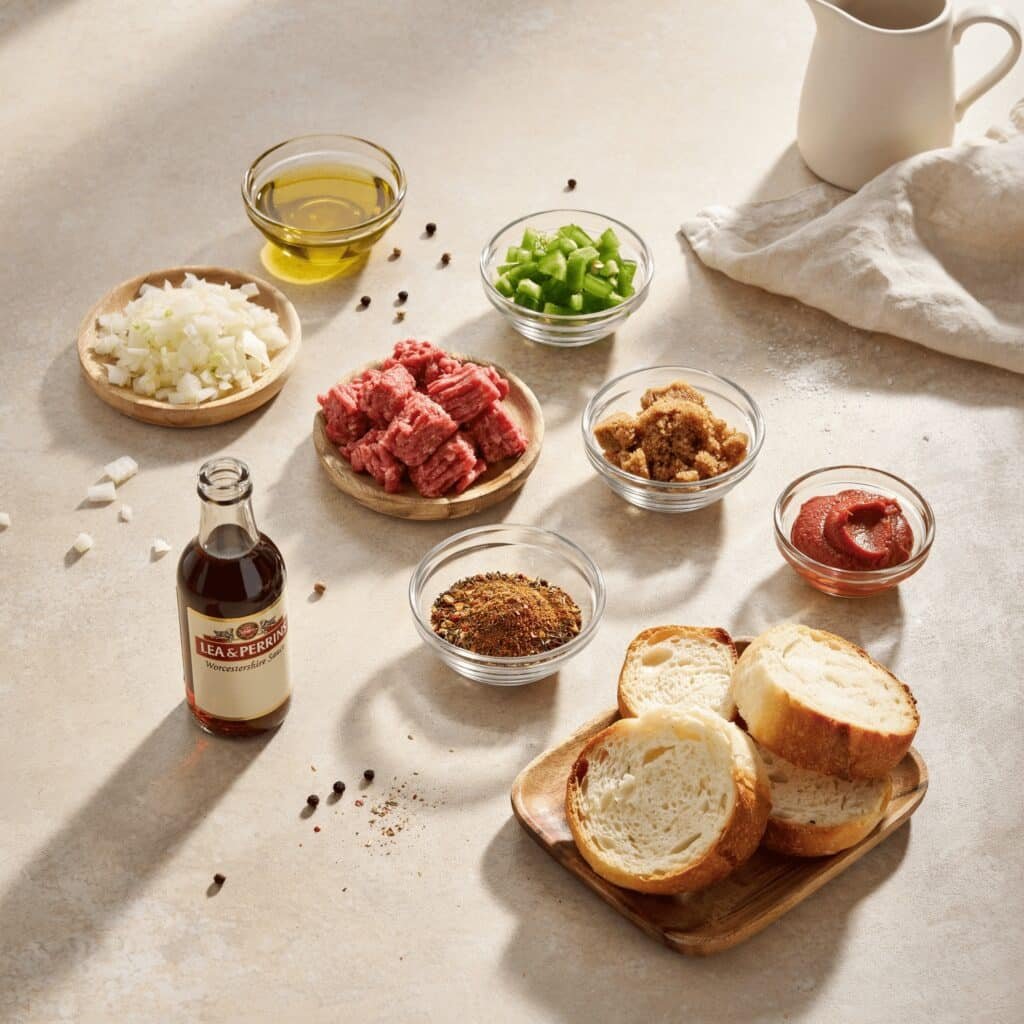
Worcestershire brings anchovy, tamarind, molasses and vinegar at once. Against a pound and a quarter of beef it provides savoury depth, acidity and a little sweetness in a single ingredient.
In a kosher kitchen this needs attention, since Worcestershire contains anchovies. Look for a certification mark not accompanied by a fish notation, which indicates a sauce that may be used in a meat dish.
Tomato paste, not sauce
Two tablespoons, which is a small amount and concentrated.
Sloppy joes made with tomato sauce or ketchup come out wet and need long simmering to thicken. Paste is already reduced, so it brings tomato depth without liquid, and the mixture stays thick from the start.
Combined with the brown sugar it also gives the dark red colour people expect.
Soften the vegetables first
Onion and green pepper, finely chopped, five minutes in olive oil before the beef.
Finely chopped is what the recipe specifies and it matters in a sandwich filling. Large pieces of pepper fall out of the roll when you bite it. Fine dice disappears into the mixture.
Green pepper specifically rather than red. It is sharper and slightly bitter, which cuts through the brown sugar in a way sweet red pepper would not.
Ten minutes on low at the end
After the sugar, seasoning, Worcestershire and paste go in.
This is where the mixture goes from browned beef with things stirred through it to a sauce. The Worcestershire reduces, the sugar dissolves and starts to caramelise slightly, and the paste loosens into the meat.
Low heat and occasional stirring. Higher and the sugar catches on the bottom of the pan.
Ground beef and temperature
A pound and a quarter, browned about five minutes while breaking it up.
Ground beef should reach an internal temperature of 160F. The recipe works on appearance, which is generally reliable for thoroughly browned crumbled beef, and the further ten minutes of simmering afterwards puts it comfortably past.
Dark brown sugar, not light
Two tablespoons, and the recipe specifies dark.
Dark brown sugar has considerably more molasses in it, which brings a deeper, slightly bitter caramel note rather than straightforward sweetness. Against beef and Worcestershire that depth is what you want.
Light brown sugar works and the result is sweeter and less complex. White sugar is the one to avoid, since it adds sweetness with no character at all.
Toast the rolls
Crusty rolls split and toasted, which the recipe specifies rather than leaving optional.
A sloppy joe is wet by design and an untoasted roll turns to paste within a minute. Toasting the cut faces creates a barrier that holds up long enough to eat the sandwich. <p>Crusty rather than soft. A brioche or a plain burger bun collapses under this filling. ## Making it ahead The filling keeps three days refrigerated and reheats well in a pan with a splash of water. It also freezes for three months. Toast the rolls fresh; there is no reheating a soggy bun.
Serving it
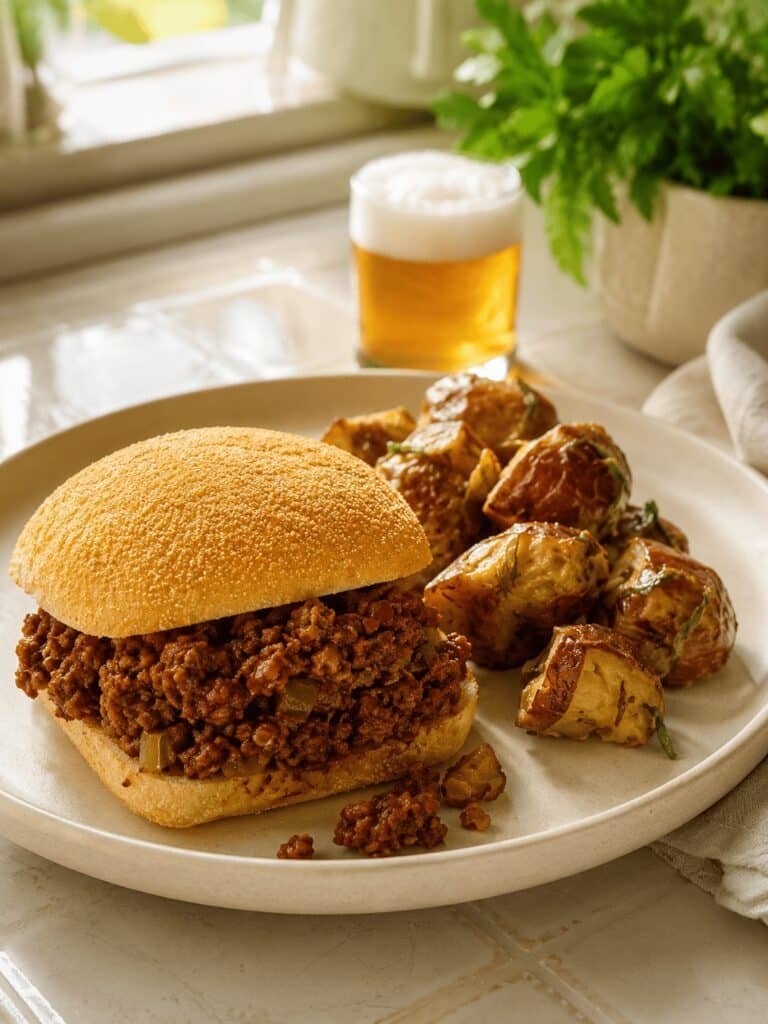
A spoon alongside is not a bad idea. This is called sloppy for a reason and the filling will fall out as you eat.
Pickles, a slice of cheese melted on top, or coleslaw in the roll all work well against the sweetness.
Quick homemade sloppy joes seasoned with steak spice and Worcestershire, ready in twenty five minutes.
- 1 1/2 tablespoons extra virgin olive oil
- 1/2 small onion finely chopped
- 1/2 green pepper with seeds and ribs removed and finely chopped
- 1 1/4 pounds ground beef
- 2 tablespoons packed dark brown sugar
- 1 tablespoon Montreal steak seasoning
- 1/4 cup Worcestershire sauce
- 2 tablespoons tomato paste
- 4 crusty rolls split in half and toasted.
- 1 Heat the olive oil in a 12 inch skillet over medium heat. Add the onions and peppers and saute until soft, about 5 minutes.
- 2
Add the beef to the pan and cook until browned, stirring frequently to break up the meat, about 5 minutes.- 3
Add the brown sugar, steak seasoning, Worcestershire sauce and tomato paste. Reduce the heat to low and cook 10 minutes, stirring occasionally, until the beef reaches 160F and the mixture has thickened into a sauce.- 4
Place the toasted rolls on a serving platter and distribute the mixture evenly among them..NoteGround beef should reach an internal temperature of 160F; the source works on appearance, and the further 10 minutes of simmering puts it comfortably past. Worcestershire sauce contains anchovies, which matters in a kosher kitchen; look for a certification mark not accompanied by a fish notation for use in a meat dish. Chop the onion and pepper finely so they do not fall out of the roll. Use tomato paste rather than sauce, since it brings depth without liquid and keeps the mixture thick. Keep the final 10 minutes on low so the brown sugar does not catch. Toast the rolls; a sloppy joe is wet by design and an untoasted roll turns to paste. Filling keeps 3 days refrigerated or 3 months frozen.
Saucy, Savory, Quick - 2