Salisbury Steak with Mushroom Gravy

Beef patties seared and simmered in a mushroom gravy, served over mashed potato. Four servings.
The stated times do not add up
Prep 20 minutes, cook 40 minutes, total 40 minutes.
Twenty plus forty is sixty, not forty. The total appears to have been copied from the cook time.
An hour is the realistic figure, and that is what appears here.
Ground beef needs 160F
The method says to simmer until the meat is cooked, which is doing a lot of unspecified work.
Ground beef should reach an internal temperature of 160F. Grinding distributes surface bacteria through the meat, so the whole patty needs to get there rather than just the seared outside.
The sear browns the surface only. The simmer is what cooks them through, and a thermometer into the centre of the thickest patty is the reliable check.
Fifteen to twenty minutes of gentle simmering gets patties of this size there.
Sear, then remove, then build the gravy
Which the method sequences correctly and which is worth understanding.
Browning the patties leaves fond on the pan base, and that fond is where the gravy's depth comes from. Building the gravy in the same pan lifts it.
The patties come out because they would fall apart during the mushroom and roux stages, and they go back in to finish cooking in the liquid.
Pour out the excess fat
After searing, before the butter goes in.
A pound of beef renders a good deal, and the gravy already gets two tablespoons of butter. Left in, the gravy is greasy and can split.
Leave the browned bits behind; pour off only the liquid fat.
Cook the flour into the butter
Stirred until combined, which the method gives without a time.
Give it a minute or two. Raw flour tastes pasty, and in a gravy this simple there is nowhere for that to hide.
The mushrooms are already in the pan at this point, so the flour coats them as well as combining with the butter.
Add the broth slowly
Two cups, poured in gradually until well blended.
Liquid added all at once to a roux seizes it into lumps that will not whisk out. Slowly, whisking as you go, keeps it smooth.
The gravy thickens as it simmers with the patties, so it should look slightly thin when you add them.
Chop the onion finely
Half an onion.
Pieces of onion in a patty create weak points where it breaks apart, and twenty minutes of cooking will not soften a rough chop.
Finely chopped, or grated on a box grater, disappears into the mixture and holds it together rather than splitting it.
Knead until well incorporated
Which the method specifies with hands.
This is one case where working the meat is correct. A Salisbury steak wants a firm, cohesive patty that holds through searing and simmering, unlike a burger where overworking gives a dense texture you would not want.
Eight ounces of mushrooms
Sliced, cooked only until they begin to soften.
That is a brief cook by mushroom standards, and it is right here because they carry on cooking in the gravy for another twenty minutes. Browned hard first, they would be leathery by serving.
Beginning to soften is the cue the method gives. They will still look pale, which is fine.
Seasoned breadcrumbs and Worcestershire
A quarter cup and a teaspoon.
The breadcrumbs bind and hold moisture. The Worcestershire is the savoury backbone, and a teaspoon across a pound is a background note rather than a detectable flavour.
Plain breadcrumbs work with a little extra salt and herbs added.
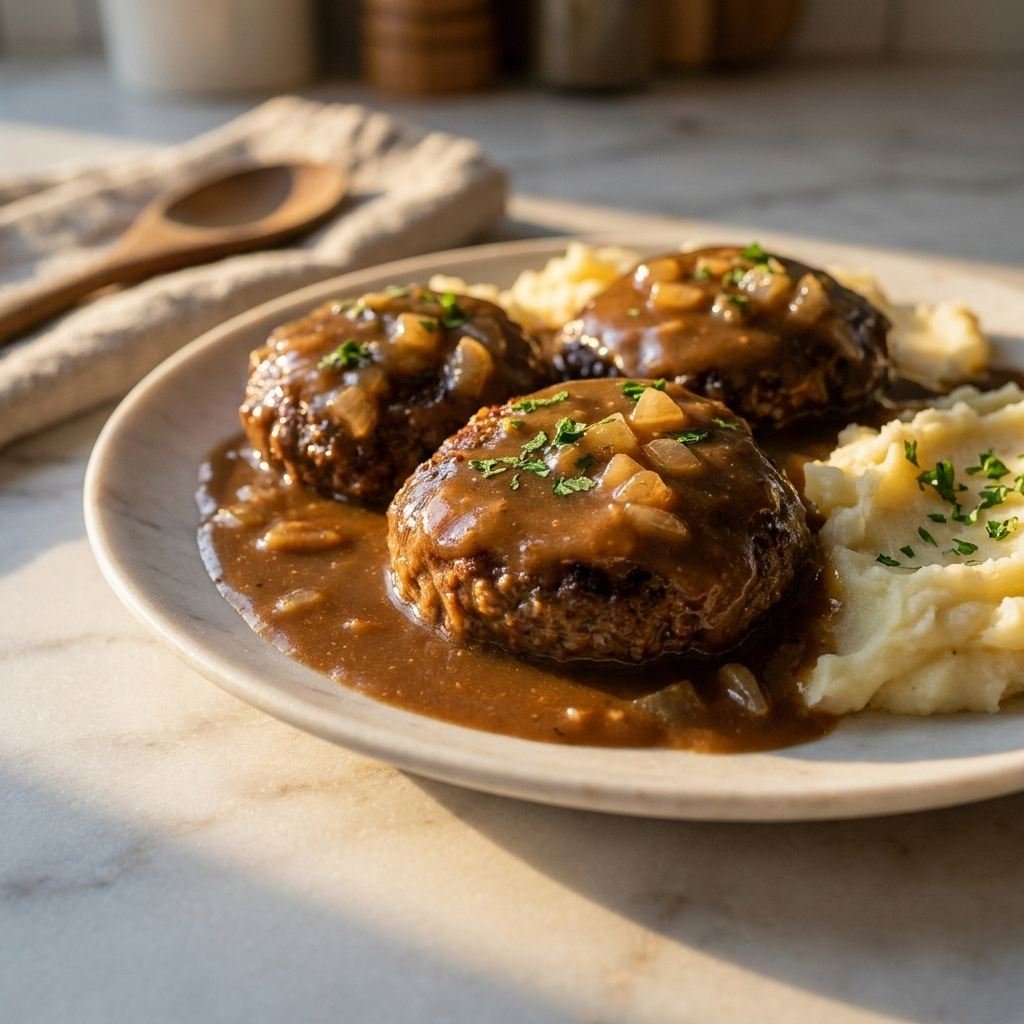
The mashed potatoes
The source uses a refrigerated package, which is a fair shortcut on a weeknight. Homemade works identically and takes about twenty minutes alongside everything else.
Storing
Three days refrigerated in the gravy, which keeps the patties moist through reheating. Reheat gently on the hob rather than in a microwave.
A weeknight Salisbury steak with a flour-thickened mushroom gravy built in the same pan.
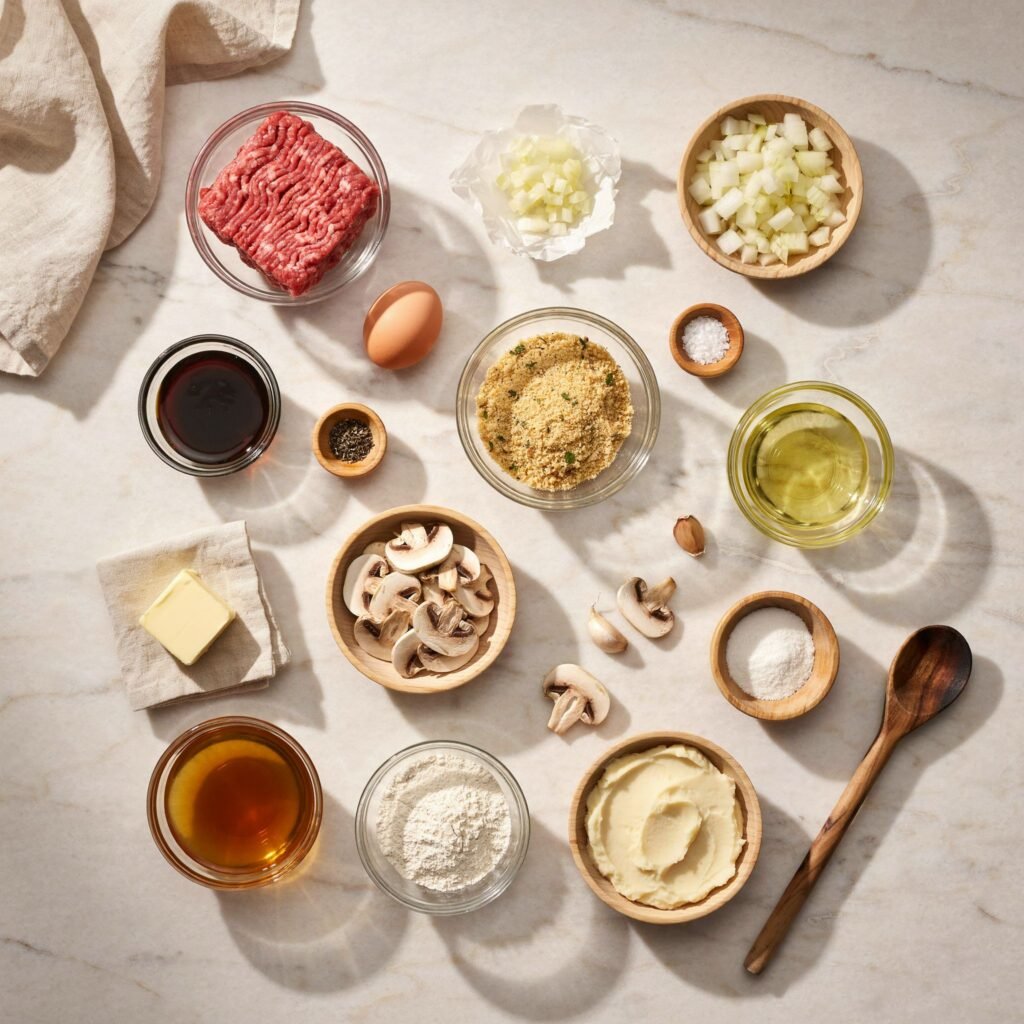
- 1 lb ground beef
- 1 large egg
- 1/2 onion chopped finely
- 1/4 cup seasoned bread crumbs
- 1 tsp Worcestershire sauce
- salt and pepper to taste
- 2 tbsp olive oil
- 8 oz sliced mushrooms
- 2 tbsp butter
- 2 tbsp all purpose flour
- 2 cups beef broth
- 1 package refrigerated mashed potatoes or homemade.
- 1 Combine the ground beef, egg, bread crumbs, Worcestershire sauce, finely chopped onion, salt and pepper in a mixing bowl. Knead with your hands until well incorporated, which is what makes the patties hold together.
- 2
Form into four even patties.- 3
Place the olive oil in a large skillet over medium-high heat. Sear the patties until browned on both sides, then remove and set aside. This browns the surface only; they are not cooked through yet.- 4
Pour out the excess fat from the pan, leaving the browned bits behind.- 5
Add the butter to the skillet and saute the mushrooms until they begin to soften. Mix in the flour and stir 1 to 2 minutes to cook out the raw taste.- 6
Pour in the beef broth slowly, whisking as you go so the roux does not seize into lumps.- 7
Return the patties to the pan and simmer over medium-low until the gravy has thickened and the patties reach an internal temperature of 160F, about 15 to 20 minutes. Serve over mashed potatoes..NoteThe source times do not add up: prep 20 plus cook 40 gives a stated total of 40 rather than 60, and an hour is realistic. Ground beef should reach an internal temperature of 160F, which the source does not state; the sear browns the surface only and the 15 to 20 minute simmer is what cooks them through, so check the thickest patty with a thermometer. Pour out the excess fat after searing, since the gravy already gets butter and would otherwise be greasy, but leave the browned bits. Cook the flour into the butter a minute or two to remove the raw taste. Add the broth slowly while whisking, or the roux seizes into lumps. Chop the onion very finely so it does not create weak points in the patties. Kneading the meat is correct here, unlike a burger, since the patty must hold through searing and simmering.
Savory, Rich, Hearty - 2