Roasted Cherry Tomato Sauce
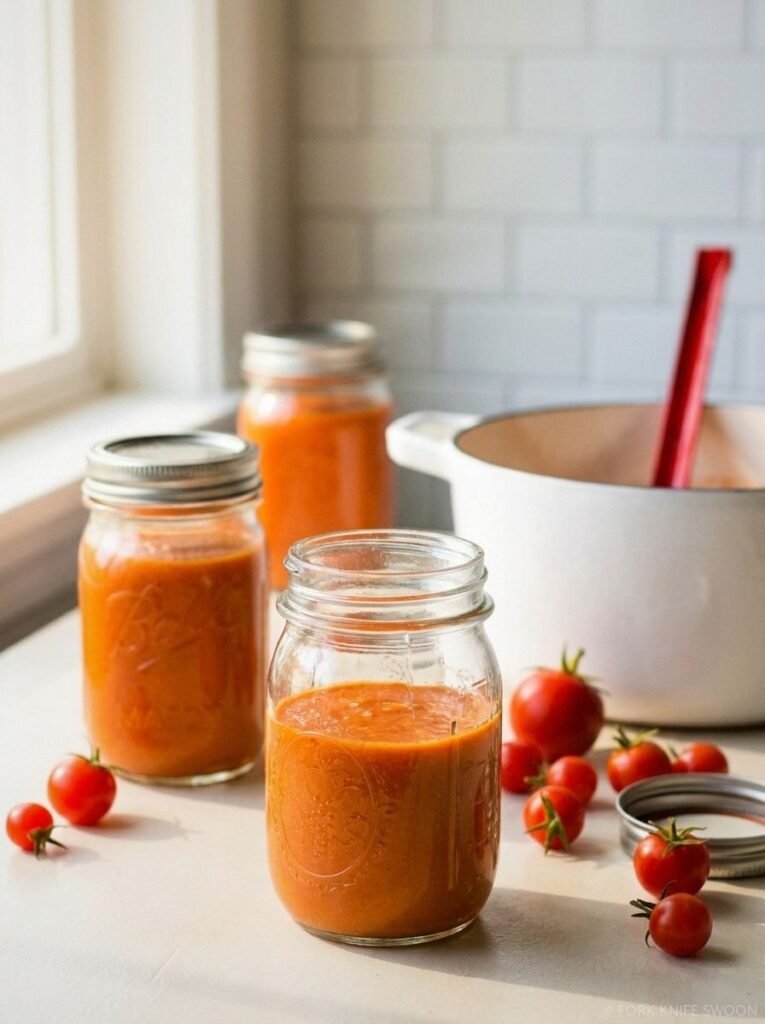
Roasted cherry tomatoes turn jammy and sweet before simmering with onion, garlic, basil, and thyme in this flexible homemade tomato sauce for pasta, pizza, and the freezer.
Roasted cherry tomato sauce is what I make when the tomato bowl is full but I do not want to peel or seed anything. A hot oven bursts the tomatoes and darkens their edges, concentrating sweetness before they ever reach the pot. Onion, garlic, basil, and thyme turn those pan juices into a useful sauce for pasta, pizza, baked eggs, or soup. The full batch makes roughly 2 quarts, so tonight's dinner can happen while several containers cool for the freezer. It takes time, but most of that time asks almost nothing from you.
Roasting first changes both flavor and texture
Cherry tomatoes carry plenty of water. Roasting them in a single layer lets some of that moisture evaporate while their natural sugars brown at the edges. The result tastes fuller than tomatoes simmered from raw, and the sauce needs no added sugar. Keeping every drop of liquid from the sheet pan is important because the caramelized juices hold concentrated tomato flavor. A final stovetop simmer softens the onion completely and brings the herbs into the sauce. You can stop after 25 minutes for a fresher result or continue toward an hour for something darker and thicker.
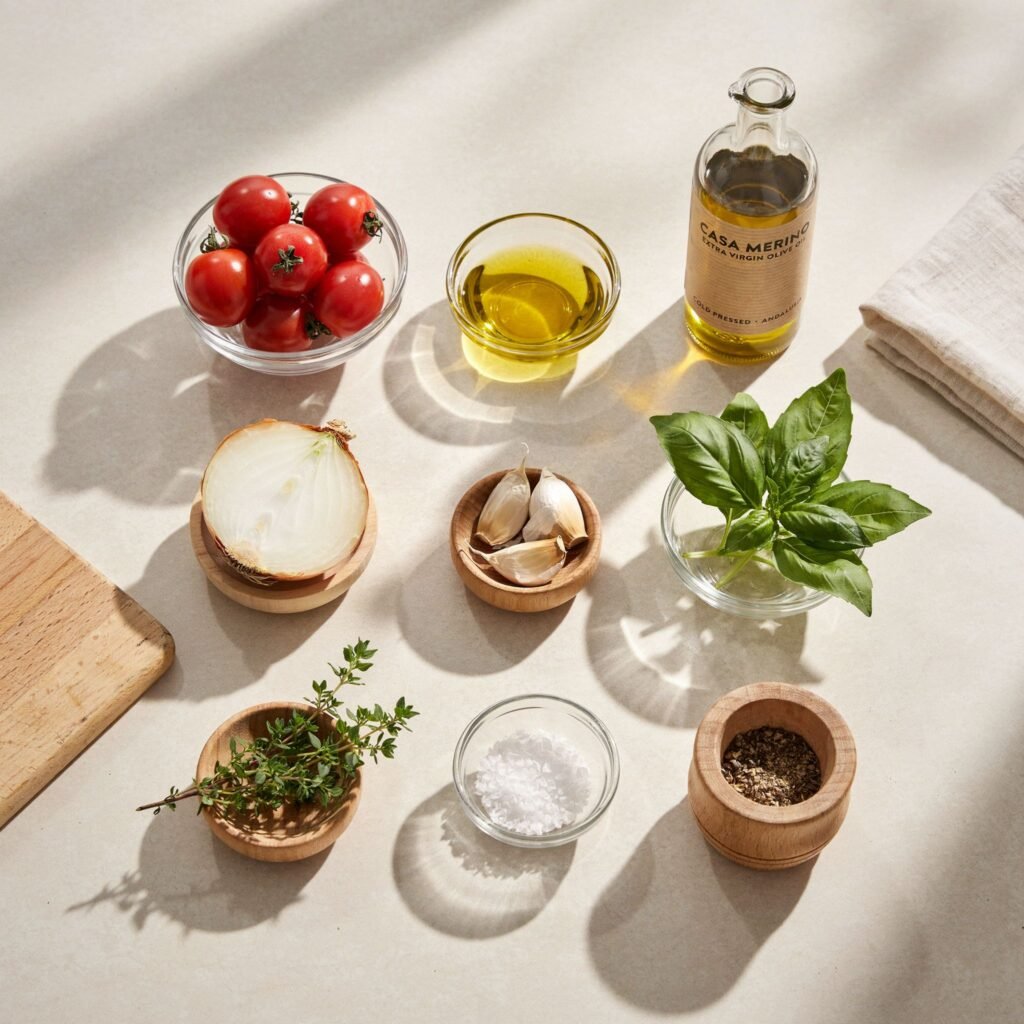
A few ingredient choices make the batch better
Use a mixture of red, gold, and dark cherry tomatoes if that is what the garden gives you. The finished color will vary, but the flavor gains complexity. Extra-virgin olive oil is more than cooking fat here; 1/4 cup carries the garlic and gives the blended sauce a silky finish. Let the garlic turn pale gold, not brown. Burnt garlic will stay bitter even after a long simmer. Fresh basil and thyme are gentle enough for a large batch. If using dried herbs, start very small because an hour in the pot makes them surprisingly assertive.
From sheet pan to freezer container
Give the tomatoes room on a rimmed pan. Crowding traps steam and delays browning. Coat them lightly, roast until most have split, and tent the pan while you soften the onion. That loose foil keeps the tomato juices from drying onto the hot pan. Cook the diced onion in the measured olive oil until translucent, then add garlic for only a minute or two. Scrape in the tomatoes and all their liquid. Add herbs, salt, and pepper, lower the heat, and leave the lid slightly ajar. Stir every so often, especially near the end when the sauce thickens. Cool before blending. With a countertop blender, work in batches and leave the lid vented under a folded towel so steam can escape. Blend completely for pizza sauce or leave a little texture for pasta. Taste after blending because smooth sauce often needs one final pinch of salt.
Refrigerate the cooled sauce for up to 1 week or freeze for up to 3 months. Leave headspace in jars because sauce expands as it freezes. This recipe is not tested for water-bath canning.
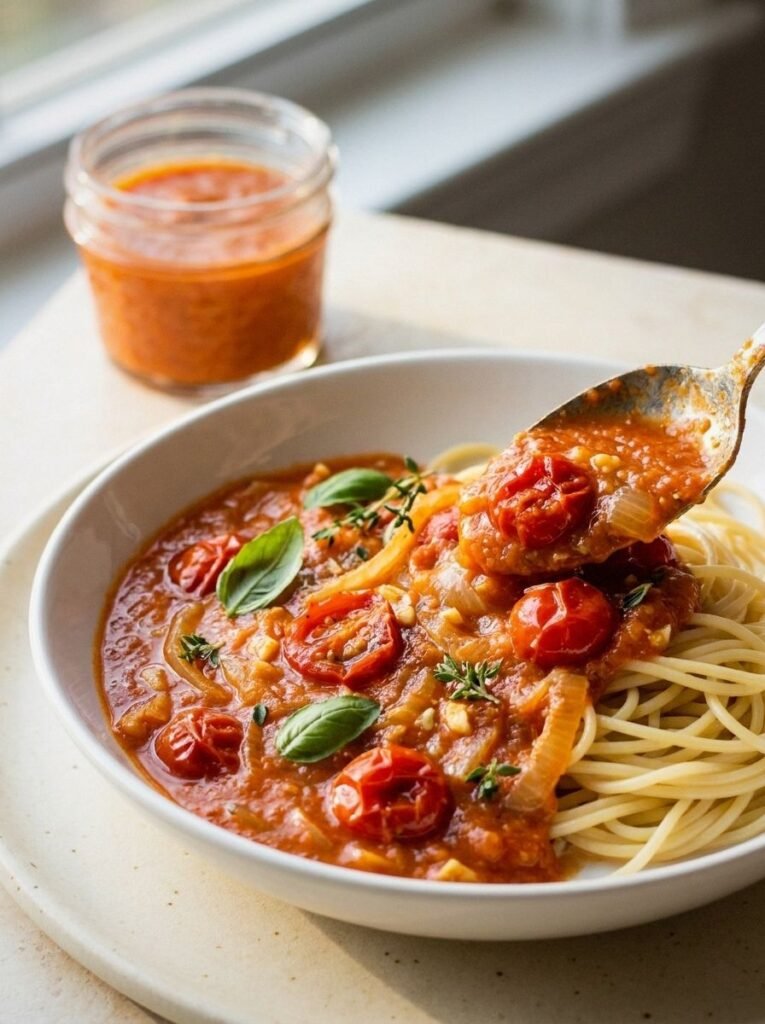
Serving roasted cherry tomato sauce
Toss the fresh sauce with spaghetti on the first night, using pasta water to loosen it. Freeze two-cup portions for later pizza or baked pasta, and keep one small jar for eggs during the week. For soup, thin it with stock and add white beans. For pizza, simmer a portion longer so it does not soak the crust. Label freezer containers with the date and amount; a mystery red block is less useful three months later. I freeze some in one-cup portions too, because not every dinner needs a full jar. Finish pasta portions with basil and Parmesan, or keep the bowl vegan with toasted breadcrumbs and olive oil.
High-heat roasting concentrates cherry tomatoes before they simmer with olive oil, onion, garlic, and fresh herbs.
- 2 to 3 pounds cherry tomatoes stems removed (907 g to 1.36 kg)
- olive oil for lightly coating the tomatoes
- 1/4 cup extra-virgin olive oil (60 ml)
- 1 large yellow onion diced
- 1 tablespoon minced fresh garlic
- 1 small handful fresh basil leaves
- 3 to 4 fresh leaves from thyme sprigs
- kosher salt to taste
- freshly ground black pepper to taste.
- 1 Heat the oven to 400°F (204°C). Toss the tomatoes with enough olive oil to coat lightly. Spread in one layer on a rimmed sheet pan.
- 2
Roast for 25 to 30 minutes until burst and beginning to shrivel. Remove from the oven and tent loosely with foil.- 3
Heat 1/4 cup olive oil in a heavy pot over medium heat. Add the onion and cook 4 to 5 minutes until softened.- 4
Add the garlic and cook for 1 to 2 minutes until lightly golden.- 5
Add the roasted tomatoes with every drop of pan juice plus the basil and thyme. Season with salt and pepper.- 6
Lower the heat. Partially cover with a 1-inch gap and simmer for at least 25 minutes and up to 1 hour. Stir occasionally.- 7
Cool for 10 to 15 minutes. Blend carefully with an immersion blender or in batches in a countertop blender until as smooth as desired.- 8
Transfer to airtight containers. Refrigerate up to 1 week or freeze up to 3 months..NoteThe source yield is about 4 pints or 2 quarts. This batch is listed as 8 cups for serving purposes. Cool before sealing. This is a refrigerator or freezer recipe, not a shelf-stable canning formula. Nutrition information was not supplied by the source.
roasted cherry tomato sauce, homemade tomato sauce, freezer tomato sauce, cherry tomato pasta sauce - 2