Orange Chicken
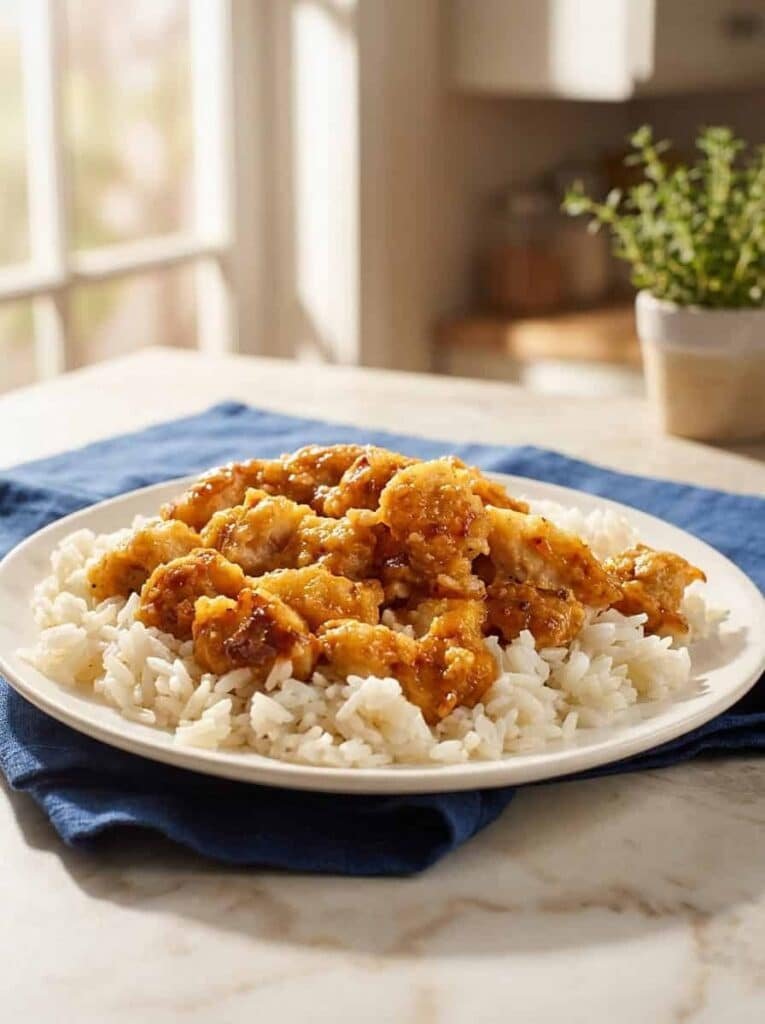
The sauce gets made first, then split. One cup marinates the chicken, the rest becomes the glaze. That split is what makes this work and it is also the part where a food safety mistake is easy to make.
Four servings, and two hours of the total time is the chicken sitting in the fridge.
The marinade cup gets thrown away
This is worth being explicit about, because the recipe implies it without saying it.
You make the full batch of sauce, cool it, and pour one cup over the raw chicken to marinate. The remaining sauce is reserved separately and never touches raw meat.
That reserved portion is what goes into the skillet at the end. The cup the chicken sat in is discarded, because it has been in contact with raw poultry for two hours.
Do not pour it back into the pan to stretch the sauce. Make the full batch, use one cup for marinating, and you will have plenty left.
Cool the sauce before it meets the chicken
Ten to fifteen minutes off the heat.
Hot sauce poured over raw chicken starts cooking the outside while the inside stays raw, which is both a texture problem and a food safety one, since the meat sits in a warm environment rather than a cold one.
Cooled, it goes into the fridge with the chicken and everything stays at a safe temperature for the two hours.
A cup of brown sugar and three acids
Rice vinegar, lemon juice and orange juice, against a full cup of packed brown sugar.
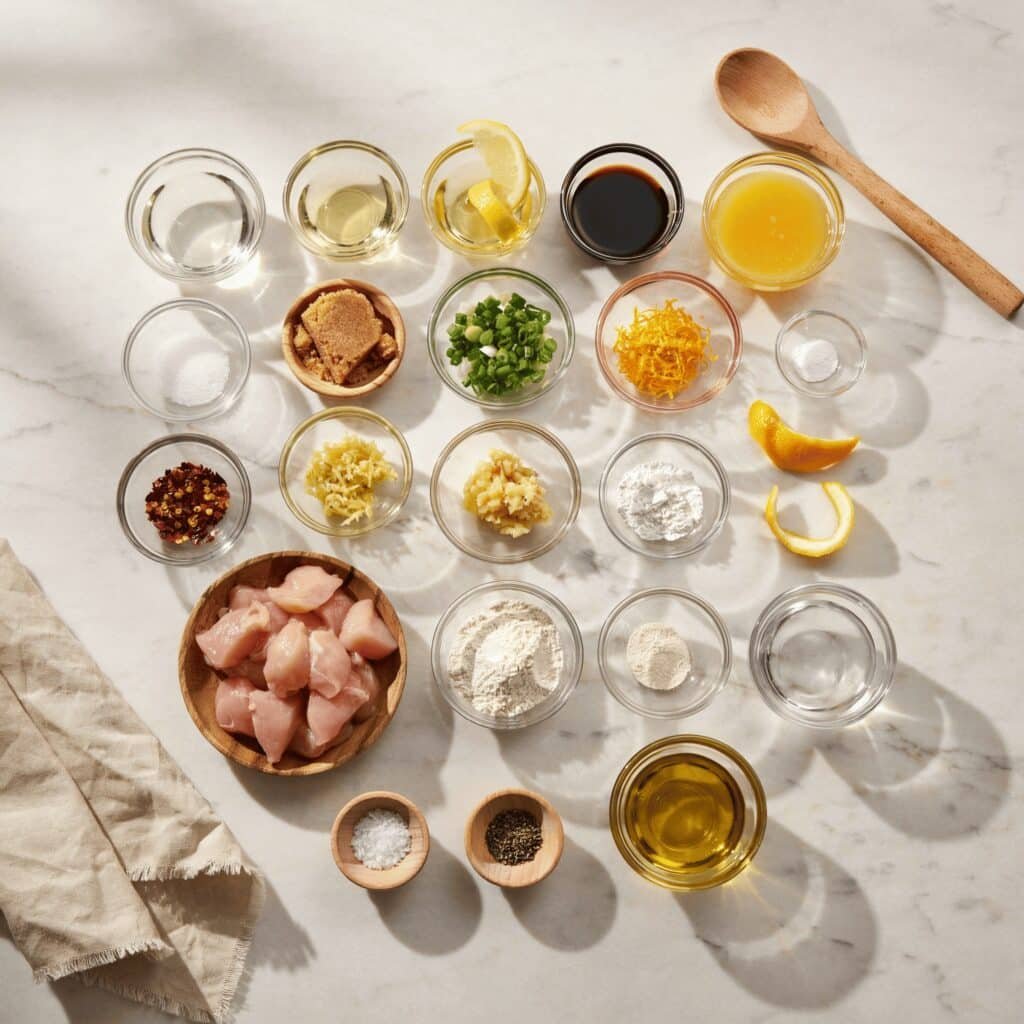
That much sugar sounds extreme and it is what makes the sauce sticky and glossy in the way takeout orange chicken is. Sugar concentrates as the sauce reduces and it is what makes it cling to the chicken rather than running off.
The three acids stop it being simply sweet. Rice vinegar is mild and slightly sweet itself. Lemon is sharp. Orange juice is neither, mostly contributing flavour, with the zest doing the heavier lifting on that front.
A tablespoon of grated orange zest is where most of the orange flavour actually comes from, since the oils in the peel survive cooking where juice largely does not.
Flour in a bag, not a bowl
Flour, salt and pepper in a resealable bag, then the drained chicken added and shaken.
A bag coats small cubes far more evenly than tossing in a bowl does, and it uses less flour. It also keeps your hands out of it.
Shake off the excess as you transfer the chicken to the pan. Loose flour burns in the oil and makes the sauce cloudy later.
Brown, then remove
Cooked in olive oil over medium heat until browned on both sides, then onto a paper towel lined plate and covered with foil.
The chicken is not cooked through at this stage. It goes back into the simmering sauce for five more minutes, and taking it to done now means overcooked chicken at the end.
Then wipe the skillet out. The bits of loose flour left behind would go bitter and cloud the sauce.
Slurry the cornstarch
Three tablespoons mixed with two tablespoons of water until completely smooth, then stirred into the boiling sauce.
Dry cornstarch in hot liquid seizes into lumps immediately. Mixed with cold water first it disperses evenly.
The sauce has to be boiling for cornstarch to reach full thickening power. Add it to a warm sauce and it will not thicken properly.
Five minutes back in the sauce
Heat reduced to medium-low, chicken added, simmered until cooked through.
Chicken should reach an internal temperature of 165F. Half inch cubes get there quickly, and five minutes in a simmering sauce is enough, but a thermometer through the largest piece is the check.
Serving
Over rice, which is what the sauce is designed for.
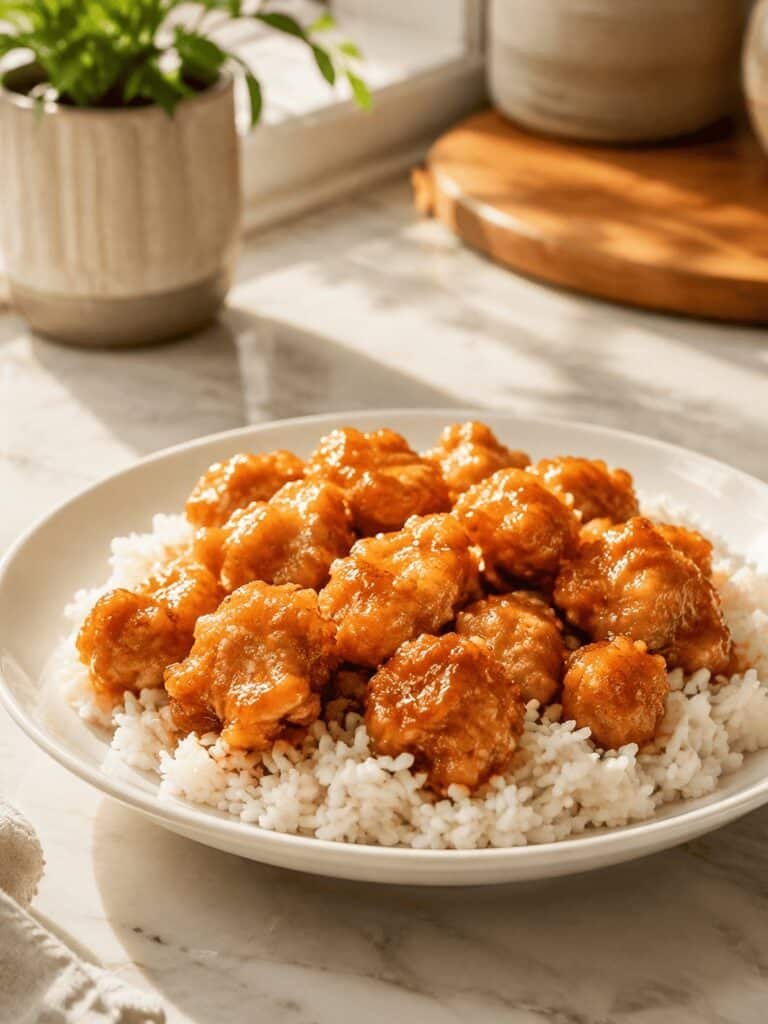
Around 445 calories and 18 grams of protein per serving. Sodium sits at 763mg, mostly from the soy sauce.
Making it ahead
The sauce can be made up to three days ahead and refrigerated, which removes the cooling wait on the day. The chicken can marinate overnight rather than two hours, and the flavour is better for it.
Getting it crisper
This version pan fries in three tablespoons of oil, which browns the coating without making it properly crisp. For something closer to takeout, use more oil and a higher heat, or shallow fry the cubes in about half an inch of oil for two minutes a side before saucing them.
A sticky sweet orange chicken with rice vinegar, orange zest and brown sugar, served over rice.
- 1 1/2 cups water (for the sauce)
- 1/3 cup rice vinegar
- 1/4 cup lemon juice
- 2 1/2 tablespoons soy sauce
- 2 tablespoons orange juice
- 1 cup packed brown sugar
- 2 tablespoons chopped green onion
- 1 tablespoon grated orange zest
- 1/2 teaspoon minced fresh ginger root
- 1/2 teaspoon minced garlic
- 1/4 teaspoon red pepper flakes
- 3 tablespoons cornstarch
- 2 tablespoons water (for the slurry)
- 2 large skinless boneless chicken breasts cut into 1/2 inch cubes
- 1 cup all-purpose flour
- 1/4 teaspoon salt
- 1/4 teaspoon pepper
- 3 tablespoons olive oil.
- 1 Combine the water rice vinegar lemon juice soy sauce and orange juice in a saucepan over medium-high heat. Stir in the brown sugar green onion orange zest ginger garlic and pepper flakes and bring to a boil. Remove from the heat and cool 10 to 15 minutes.
- 2
Place the chicken in a resealable plastic bag and pour in 1 cup of the cooled sauce. Seal and refrigerate at least 2 hours. Reserve the remaining sauce separately.- 3
Mix the flour salt and pepper in another resealable bag.- 4
Remove the chicken from the marinade and place it into the bag of seasoned flour. Seal and shake to coat. Discard the marinade the chicken sat in.- 5
Heat the olive oil in a large skillet over medium heat and cook the chicken until browned on both sides. Remove to a paper towel lined plate and cover with foil. Wipe out the skillet.- 6
Pour the reserved sauce into the skillet and bring to a boil over medium-high heat. Mix the cornstarch and water until completely smooth and stir into the boiling sauce.- 7
Reduce the heat to medium-low, add the chicken and simmer, stirring occasionally, until cooked through and it reaches 165F, about 5 minutes.- 8
Serve over rice..NoteThe cup of sauce used to marinate the raw chicken must be discarded and never returned to the pan. The remaining sauce is reserved separately before the chicken touches it and is what becomes the glaze. Cool the sauce 10 to 15 minutes before pouring it over the chicken. Chicken should reach an internal temperature of 165F. Mix the cornstarch with cold water into a slurry before adding it, and add it to a boiling sauce, since cornstarch needs boiling point to thicken fully. Wipe the skillet after browning the chicken so loose flour does not cloud the sauce. Nutrition per serving from source: 445 calories, 69g carbohydrates, 18g protein, 11g fat, 2g saturated fat, 34mg cholesterol, 763mg sodium, 1g fiber, 37g sugar.
Sticky, Sweet, Citrusy - 2