Oi Muchim (Korean Cucumber Salad)
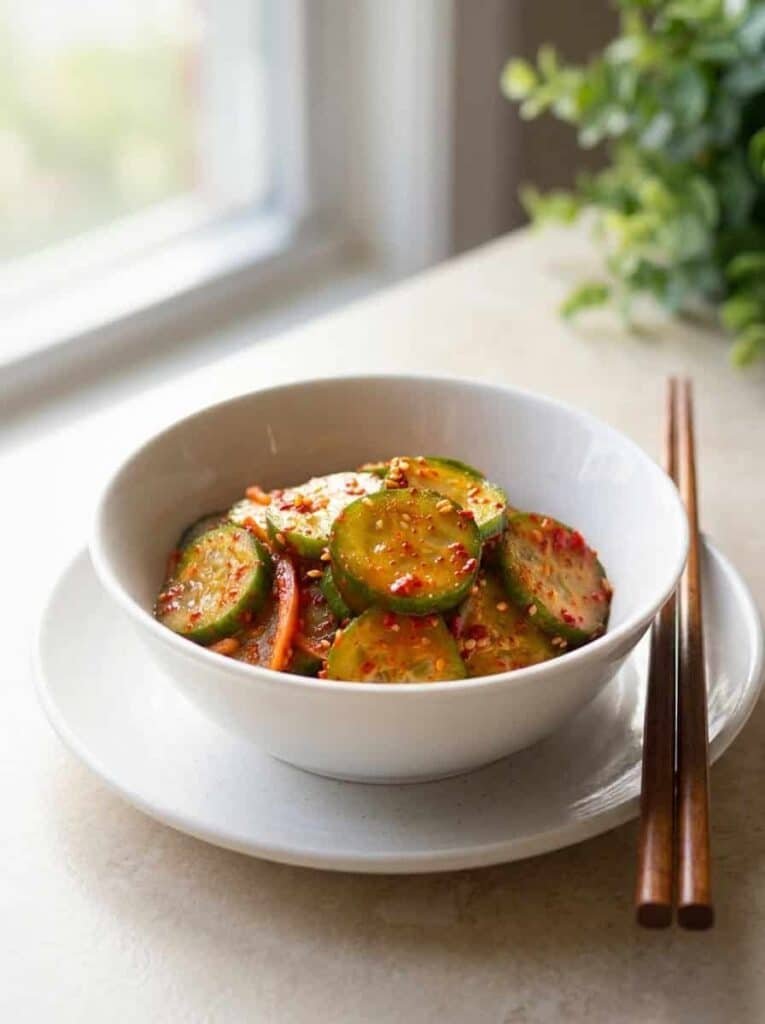
A Korean banchan, which is one of the small side dishes that come out alongside a Korean meal. Twenty minutes of work and half an hour of chilling.
Cucumber salted, rinsed, then dressed in gochugaru, vinegar, garlic and sesame.
Salt the cucumber, then rinse it off
A tablespoon of coarse salt on the sliced cucumber, fifteen minutes, then rinsed under cold running water and patted dry.
The salting draws water out of the cucumber through osmosis. That water would otherwise leach into the dressing and dilute it, leaving a watery salad within an hour.
The rinsing is equally important and it is why the sodium figure on this recipe is misleading. Most of that tablespoon goes down the drain along with the drawn-out water. What stays in the finished dish is a fraction of it.
Rinse the bowl too, since salt collects in the bottom. Then use a clean dry bowl for the dressing stage.
The sodium figure needs context
The published nutrition lists 1,778mg of sodium per serving, which would be extraordinary for a cucumber salad.
That figure counts the entire tablespoon of salting salt as though it were eaten. It is not. It is rinsed off and discarded before the dressing goes anywhere near the cucumber.
The actual sodium in a finished portion is far lower, coming mainly from the optional gochujang. The 25 calorie figure is realistic; the sodium one is an artefact of how the calculation was done.
Coarse salt, evenly spread
Korean coarse salt or rock salt, or a teaspoon of fine sea salt instead.
Coarse salt is preferred because it dissolves slowly and distributes as it does. Fine salt dissolves immediately, and if it lands unevenly you get patches of cucumber that are far saltier than the rest.
If you use fine salt, sprinkle it deliberately across the slices rather than tipping it in one spot.
Slice about half a centimetre
Roughly a fifth of an inch, which is thicker than you might slice cucumber for a green salad.
Thin slices go limp after salting and lose their snap entirely. At half a centimetre they soften at the surface while keeping a crisp centre, which is the texture this dish wants.
Lebanese, Korean or English cucumbers all work. Any variety suited to pickling or salad is fine.
Gochugaru, and it is not chilli powder
A tablespoon of Korean chilli flakes.
Gochugaru is coarsely ground, bright red, and considerably milder and fruitier than Italian chilli flakes or generic chilli powder. A full tablespoon gives colour and a gentle warmth rather than heat.
Substituting standard chilli flakes at the same quantity would make this genuinely spicy and would change the colour. If it is all you have, use a third of the amount and accept it will taste different.
Mix with your hands
Lightly but thoroughly, and the recipe suggests a food prep glove.
Hands are the right tool because you need to smear the sauce around each slice rather than toss it. A spoon pushes the dressing to the bottom of the bowl.
The glove is for the gochugaru, which stains and lingers on skin.
A smidgen of sesame oil
The recipe says about a thirty second of a teaspoon, which is a deliberately absurd measurement making a real point.
Toasted sesame oil is extremely strong. In a dish this small, even a quarter teaspoon would dominate everything else. A drop from the bottle is the right amount.
Thirty minutes in the fridge
In a sealed glass container.
The chilling lets the dressing penetrate the cucumber and the flavours settle together. Served immediately it tastes like cucumber with sauce on it. <p>Best eaten within two days. Past that the cucumber keeps releasing water and softens. ## What banchan means The small dishes served alongside a Korean meal, usually several at once, refilled freely. They are not appetisers or sides in the western sense but part of the meal itself, eaten throughout alongside rice.
Oi muchim is one of the simpler ones and among the most common in summer.
The optional gochujang
Half a teaspoon of Korean chilli paste, which adds a fermented depth and a little sweetness that the flakes alone do not have. It also thickens the dressing slightly so it clings better. Worth including if you have it.
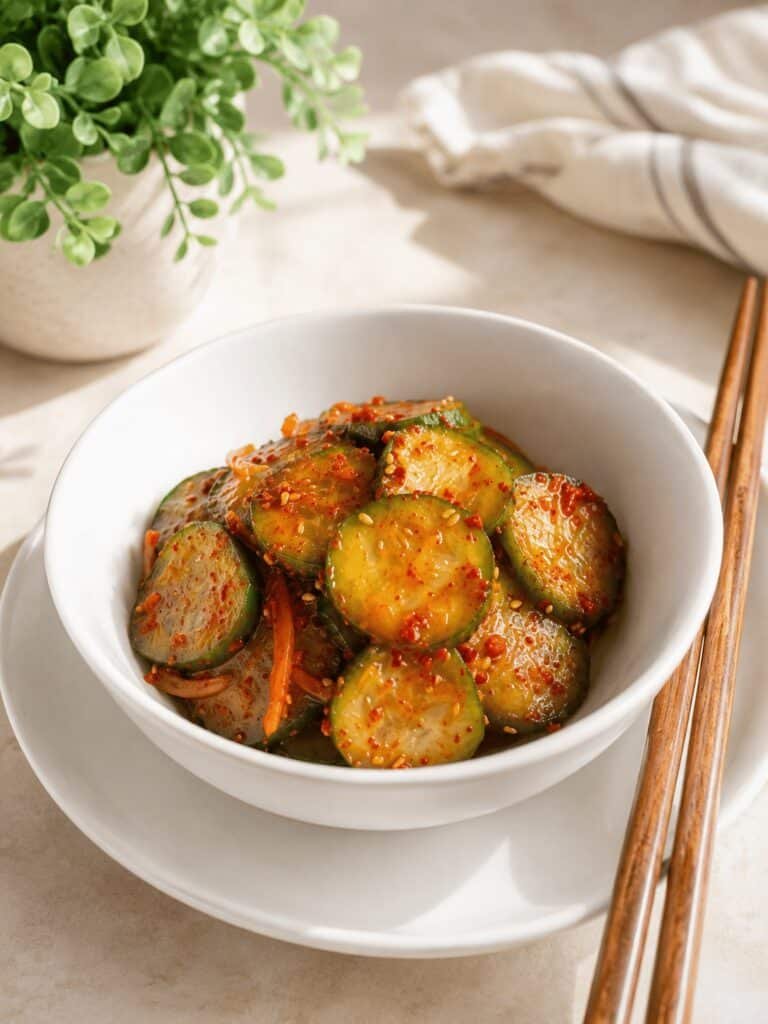
Spicy Korean cucumber salad dressed with gochugaru, garlic and sesame, chilled before serving.
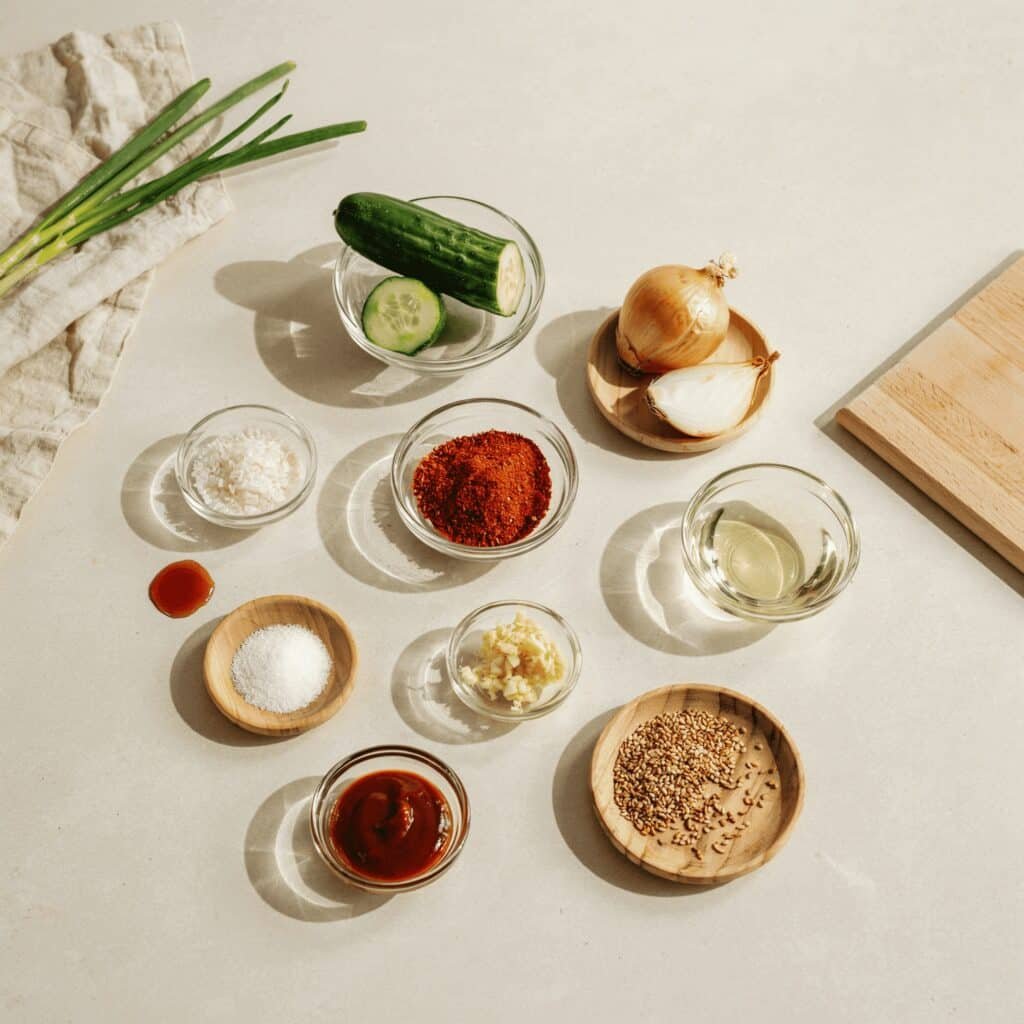
- 1 cucumber (145 g)
- 1/4 onion (25 g)
- 1 tablespoon Korean coarse salt or 1 teaspoon fine sea salt
- 1 tablespoon gochugaru (Korean chili flakes)
- 1 teaspoon white vinegar or rice vinegar
- 1 teaspoon white sugar
- 1 teaspoon minced garlic
- 1 teaspoon toasted sesame seeds
- 1/2 teaspoon gochujang (optional)
- a drop of sesame oil . (optional)
- 1 Rinse the cucumber under cold running water. Trim both ends and slice thinly into approximately 0.5 cm pieces. Place in a large mixing bowl, add the salt and gently mix. Let it sit 15 minutes.
- 2
While waiting, thinly slice the onion and prepare the seasoning sauce by mixing all the remaining ingredients together.- 3
After 15 minutes rinse the cucumber under cold running water, discarding any remaining salt from the cucumber and the bowl. Drain in a strainer and pat lightly dry with kitchen paper. Place in a clean dry mixing bowl.- 4
Add the sliced onion and the seasoning sauce. Mix lightly but thoroughly with your hands, wearing a food prep glove, smearing the sauce around each slice.- 5
Place in a sealed glass container and refrigerate 30 minutes to chill. Serve with rice and other Korean side dishes..NoteThe published sodium figure of 1778mg per serving counts the full tablespoon of salting salt, most of which is rinsed off and discarded before the dressing is added. The actual sodium in a finished portion is far lower. Salt the cucumber, rest 15 minutes, then rinse thoroughly and pat dry, using a clean dry bowl afterwards. Slice about half a centimetre thick; thinner slices go limp. Gochugaru is milder and fruitier than standard chilli flakes; if substituting, use about a third of the amount. Use only a drop of sesame oil, as it is extremely strong. Mix with gloved hands to smear the dressing around each slice. Best eaten within 2 days.
Spicy, Crisp, Refreshing - 2