Ninja Creami Protein Ice Cream Base
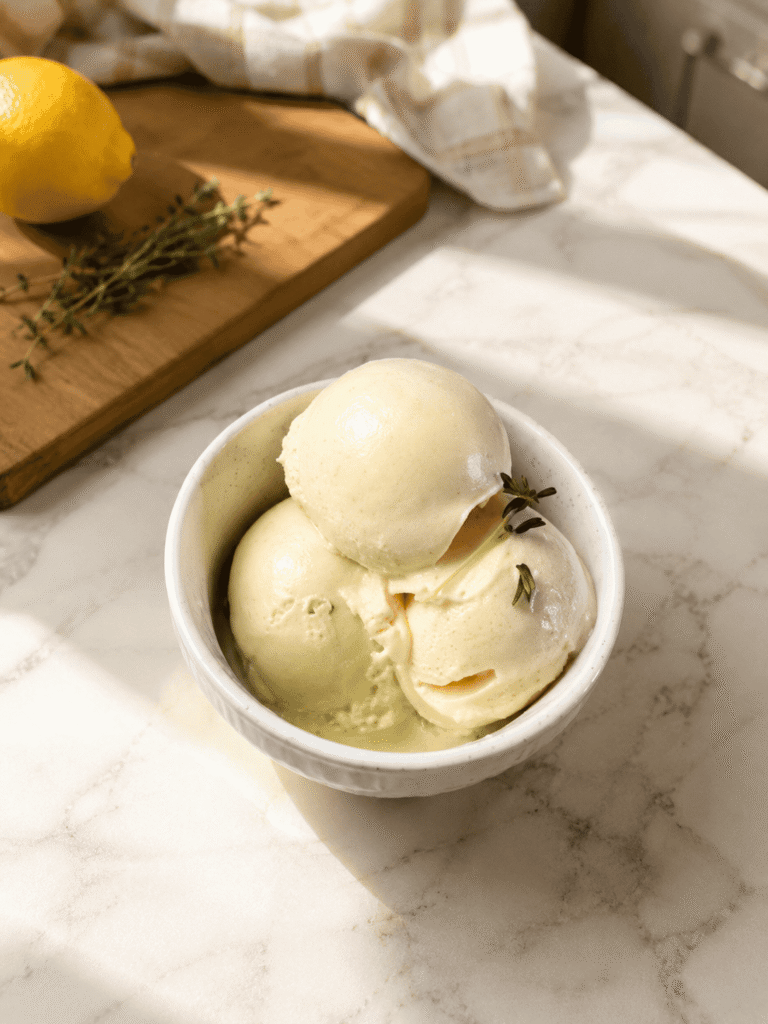
The standard protein ice cream base for the Ninja Creami is a one-pint recipe built around ultra-filtered milk, protein powder, and a small set of stabilizers that control texture. The protein powder is the variable that changes with every batch; everything else stays constant. Roughly 350 calories and 44 grams of protein per pint, depending on the powder you use, frozen overnight and spun on the Lite Ice Cream setting. The result is a dense, scoopable, genuinely ice cream-like frozen treat rather than a hard, icy block.
The Ninja Creami works by processing a fully frozen pint through a blade, breaking down ice crystals into a smooth, creamy texture. The stabilizers in this base, xanthan gum and vegetable glycerin, are what help that processing happen correctly rather than producing an icy or grainy result.
The ingredients and why each one is there
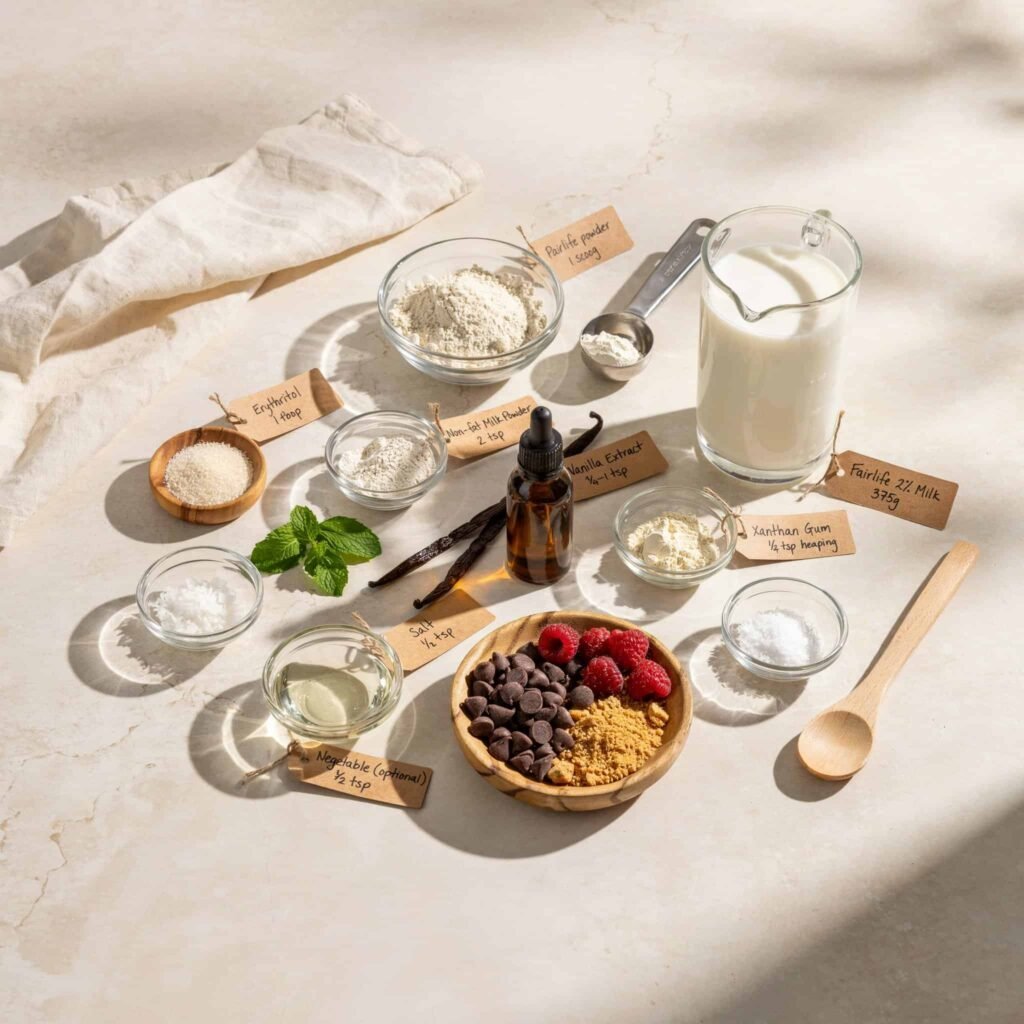
Ultra-filtered 2% milk, 375 grams measured by weight directly into the Ninja Creami pint container. Ultra-filtered milk has more protein and less sugar than regular milk, which fits the macro goals of a protein pint, and the higher protein content also contributes to a creamier texture when frozen and processed. Any ultra-filtered 2% milk works; the recipe was developed with a specific brand but the category is the important thing.
One tablespoon of erythritol, a sugar alcohol with almost no calories that provides sweetness without affecting blood sugar. Two teaspoons of non-fat milk powder, which adds dry milk solids that help the base freeze with a smoother texture and provides a small protein boost. A quarter to one teaspoon of vanilla extract depending on your preference. An eighth teaspoon of xanthan gum, which is a polysaccharide used as a stabilizer in ice cream to prevent large ice crystal formation. Without it, the frozen pint tends to be icier and the processed result is less smooth. Half a teaspoon of vegetable glycerin, which lowers the freezing point of the base slightly and helps with scoopability after processing. An eighth teaspoon of salt for flavor balance.
Protein powder goes in last. This is the single biggest variable in the final result because different proteins absorb liquid differently, have different textures when frozen, and behave differently during the Ninja Creami spin. Whey isolate, casein, and plant-based blends all produce different textures. The notes suggest finding a consistent powder before experimenting with variations, which is practical advice.
Mixing and freezing
Weigh the milk into the pint container, add all ingredients, and blend with an immersion blender for about thirty seconds until completely smooth with no lumps. Lumps of protein powder that survive the freeze will process unevenly in the Creami and produce an inconsistent texture. Blend thoroughly, then freeze with the lid slightly ajar, not sealed, for at least sixteen to twenty-four hours. Overnight is ideal. The slightly ajar lid allows vapor to escape during freezing and prevents a vacuum forming.
The spin cycle sequence
Before spinning, check the top of the frozen pint. If a dome or hump has formed in the center of the surface, chip it flat with a spoon. A raised center causes the blade to process unevenly, leaving icy walls while over-processing the middle. Flat surface, even spin.
Spin on the Lite Ice Cream setting. When it's done, you'll have a processed center that's smooth and a ring of icy material against the container walls. Scrape down the icy walls with a knife, then run the Mix-In cycle. The Mix-In cycle is what transforms the combination of smooth center and scraped walls into a uniformly dense, scoopable pint.
For a softer, looser texture, run a Re-spin instead of the Mix-In cycle. The Re-spin reprocesses the whole pint into something closer to soft serve. Some protein powders need a small splash of milk added to the pint before the Re-spin to come together properly; if the pint looks dry or crumbly after the initial spin, add a teaspoon or two of milk before reprocessing.
Adding mix-ins
If you're adding mix-ins, fold them through the entire pint rather than just pressing them into the top. Use a spoon to carve a channel down the center of the processed pint, push the mix-ins into the channel, and layer them upward through the top. Then run the Mix-In cycle to distribute them evenly. Mix-ins piled on the surface without the channel step stay in the top third of the pint rather than distributing through it.
Why these stabilizers matter for home ice cream
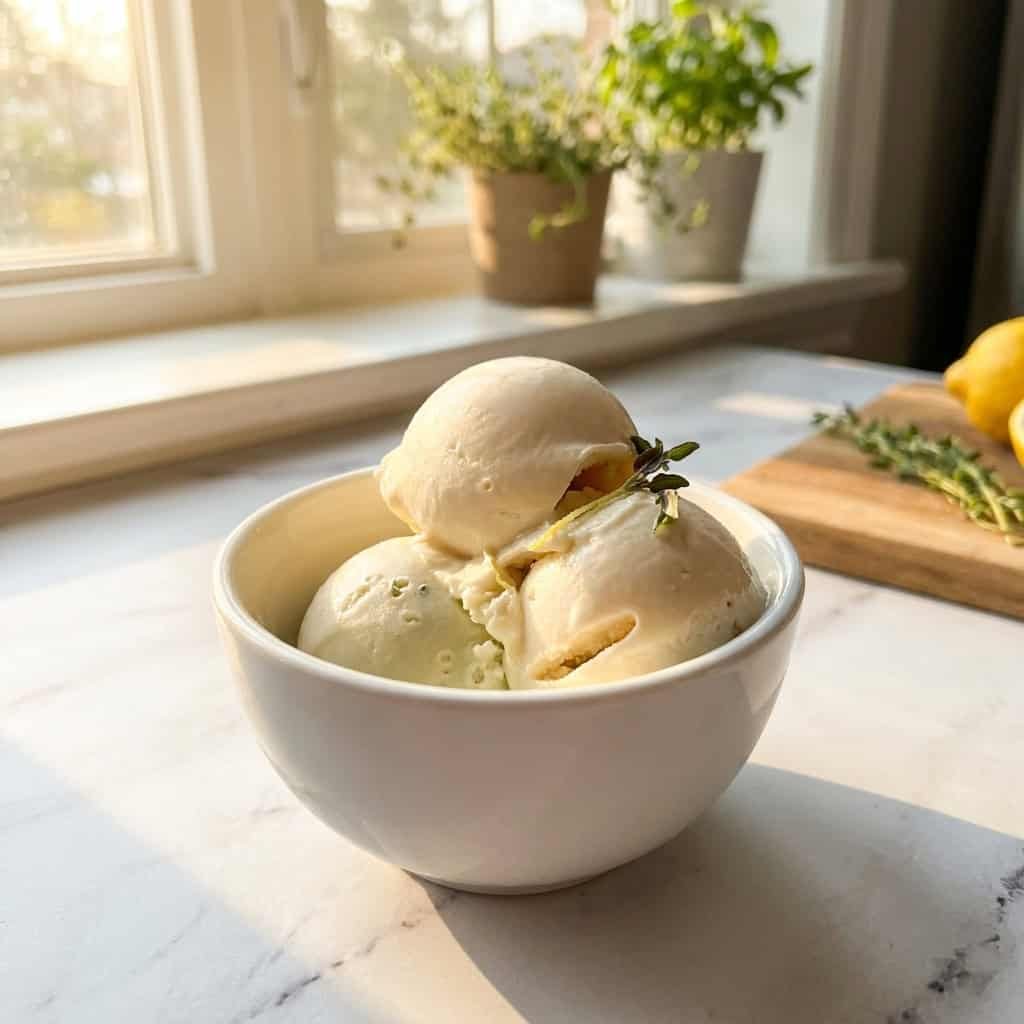
Commercial ice cream achieves its smooth texture through industrial processing, consistent mix ratios, fast freezing equipment, and a carefully balanced combination of stabilizers and emulsifiers. Home freezers freeze slowly and unevenly, which creates larger ice crystals and icier textures. Xanthan gum and vegetable glycerin in small quantities compensate for what home equipment can't do at scale. They're available at specialty grocery stores and online, and a small quantity lasts through many batches. Makes 1 pint. Approximately 350 calories and 44 grams of protein depending on protein powder used.
Protein powder selection
The recipe notes that protein powder is the single biggest variable, and that's not an overstatement. Casein protein, because it gels more in liquid, tends to produce a thicker, denser pint that holds up better after the spin. Whey isolate produces a creamier texture but can be icier in some combinations. Plant-based blends vary the most and sometimes need a splash of extra milk or a slightly longer Re-spin to come together. Vanilla-flavored powders work well with this base as written; unflavored allows more flexibility with the vanilla extract amount and mix-in direction.
The standard Ninja Creami protein ice cream base: ultra-filtered milk, protein powder, xanthan gum, vegetable glycerin, and erythritol. Frozen overnight, spun on Lite Ice Cream. About 350 calories and 44g protein.
- 375g ultra-filtered 2% milk (such as Fairlife)
- 1 scoop protein powder (whey casein or plant-based)
- 1 tablespoon erythritol
- 2 teaspoons non-fat milk powder
- 1/4 to 1 teaspoon vanilla extract (to taste)
- 1/8 teaspoon xanthan gum heaping
- 1/8 teaspoon salt
- 1/2 teaspoon vegetable glycerin
- Optional mix-ins of choice
- 1 Weigh 375g of ultra-filtered 2% milk directly into an empty Ninja Creami pint container.
- 2
Add the erythritol, non-fat milk powder, vanilla extract, xanthan gum, salt, and vegetable glycerin to the pint. Add the protein powder last. Blend with an immersion blender for about 30 seconds until completely smooth with no lumps.- 3
Freeze with the lid slightly ajar for at least 16 to 24 hours until completely frozen solid.- 4
Before spinning, check the frozen surface. If a dome has formed in the center, chip it flat with a spoon. Spin on the Lite Ice Cream setting.- 5
After the spin, scrape down any icy walls with a knife. Run the Mix-In cycle for a dense, scoopable texture. For a softer result, run Re-spin instead. If the pint looks dry or crumbly, add a small splash of milk before Re-spin.- 6
If adding mix-ins, carve a channel down the center of the processed pint, push mix-ins into the channel, and layer upward. Run the Mix-In cycle to distribute..NoteRest Time is 960 minutes (16 hours minimum freeze). Freeze with lid slightly ajar. Chip dome flat before spinning for even processing. Calories and protein are approximate and vary with the protein powder used. Macros based on a 130-calorie, 25g-protein powder scoop plus the base ingredients.
Ninja Creami protein ice cream, protein ice cream base, Ninja Creami recipe, high protein ice cream - 2