Mediterranean 7-Layer Dip
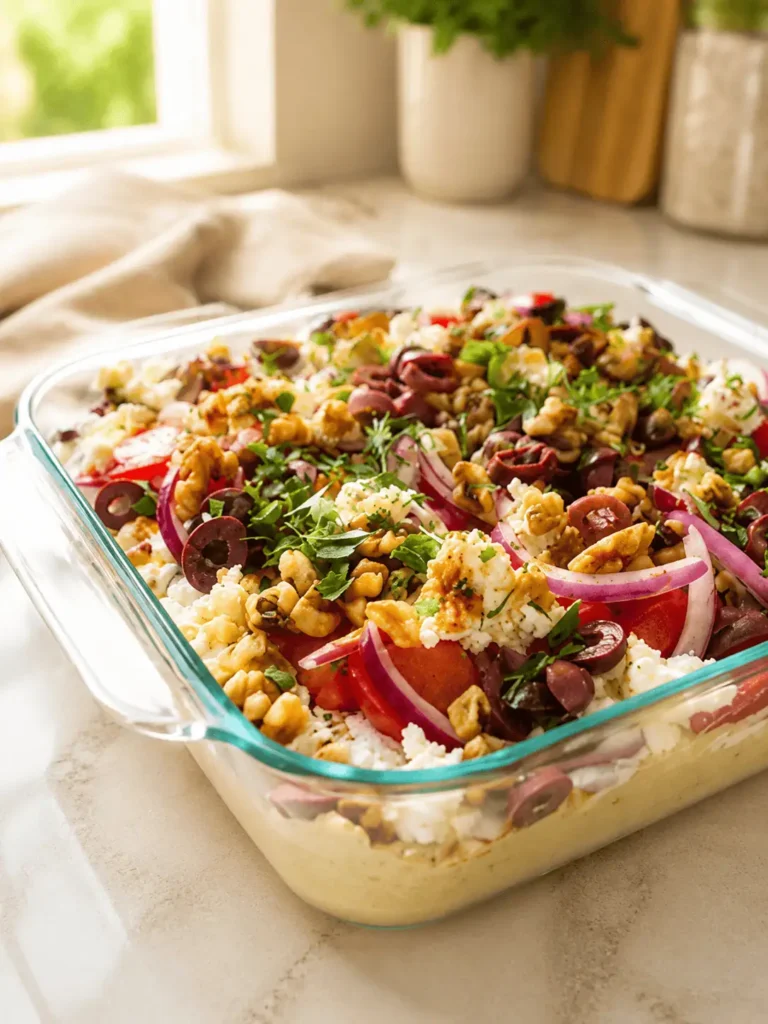
A Mediterranean seven-layer dip does to the classic Tex-Mex version what a good cook does to a formula: keeps the structure, replaces every ingredient. Instead of refried beans and guacamole and sour cream, you get a garlicky white bean base with sun-dried tomato pesto, a labneh layer with cucumber and toasted walnuts and Aleppo pepper, and then a scatter of cherry tomatoes, red onion, feta, and kalamata olives over the top. It's a dip that tastes like a Greek mezze spread condensed onto one platter, served with warm pita.
It takes about forty minutes, almost entirely hands-on but no cooking involved. Everything is either processed, mixed, or arranged. The result looks impressive and serves eight to twelve people as a starter or party dip, and it holds in the fridge for three days if you make it ahead.
The white bean base
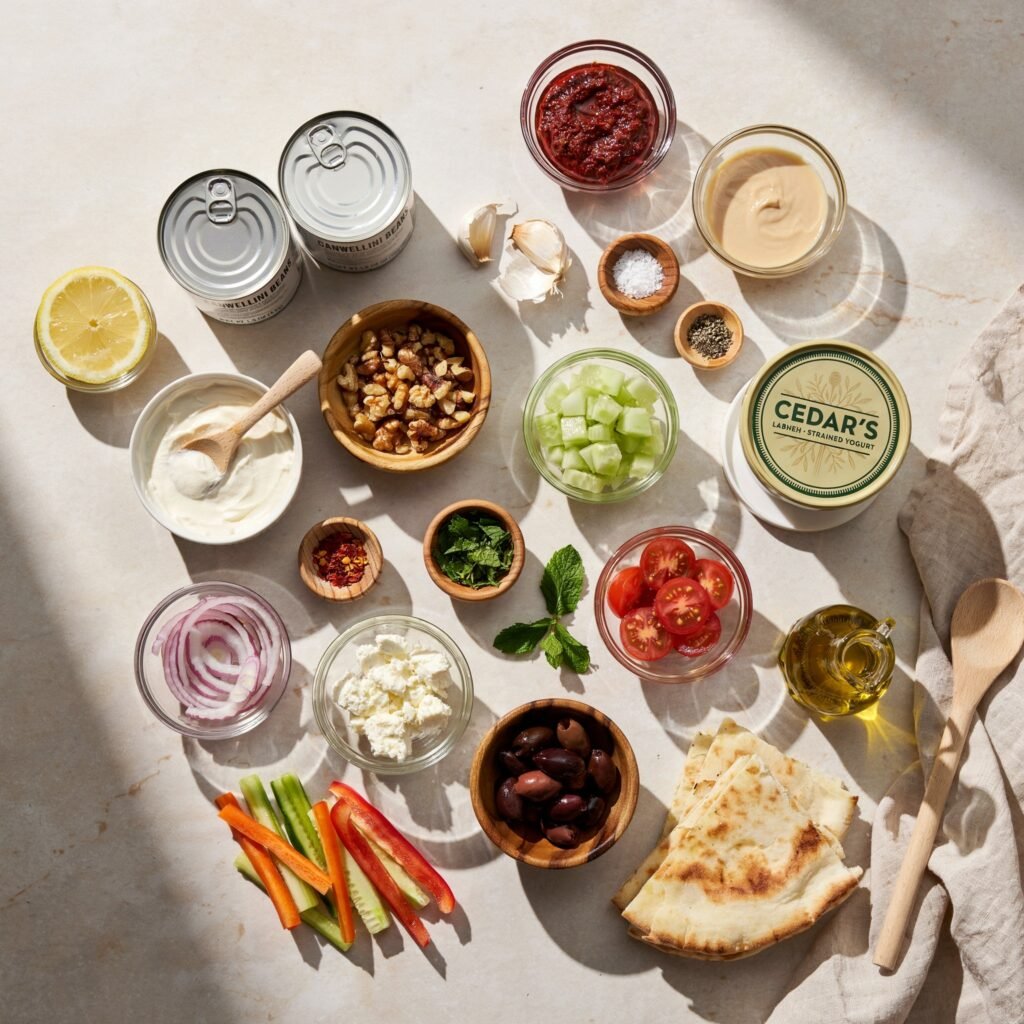
Two cans of cannellini or Great Northern beans, drained with the liquid reserved. The reserved bean liquid, aquafaba, is the liquid the beans have been sitting in and it's full of starch, which is what makes the base smooth and spreadable without adding extra oil or cream. Add a quarter cup of the reserved liquid to the food processor with the beans, sun-dried tomato pesto, tahini, two teaspoons of lemon juice, one garlic clove, a quarter teaspoon of salt, and an eighth teaspoon of pepper. Process on high for about forty-five seconds until just smooth.
The sun-dried tomato pesto is what gives the bean layer its depth. Plain white bean dip is mild and clean; white bean dip with pesto has tomato sweetness and herby richness worked through it. If you can't find sun-dried tomato pesto specifically, a regular basil pesto with a tablespoon of finely chopped sun-dried tomatoes stirred in works the same way. The tahini adds a sesame creaminess and a slight bitterness that keeps the base from being one-dimensional.
Spread the bean mixture as the base layer on a wide platter or shallow serving dish. A platter is better than a deep bowl because more of the layers are visible, which is half the visual appeal of this dip.
The labneh layer
Labneh is strained yogurt cheese, thicker and more tangy than Greek yogurt, with a texture closer to soft cream cheese. It's sold at Middle Eastern grocery stores and increasingly at regular supermarkets. If you can't find it, a mix of two-thirds full-fat Greek yogurt and one-third cream cheese gives a close texture and similar tang.
Stir together the labneh with the toasted chopped walnuts (a third of a cup), finely chopped cucumber, two tablespoons of herbs (mint, dill, or parsley, or a combination), Aleppo pepper or red chile flakes, the remaining salt and pepper, and the second garlic clove grated on a microplane. The microplane is worth using here; grated garlic distributes through the labneh evenly rather than leaving chunks. Aleppo pepper is a fruity, moderately hot dried chili from Syria that adds warmth with a slightly sweet note. Red chile flakes work as a substitute, though they're sharper and less complex.
Spread this mixture gently over the bean base, leaving about half an inch of the white bean layer visible around the perimeter. The exposed edge is what makes each layer readable from the side of the platter.
The top layers, added in order
Halved cherry tomatoes first, then thinly sliced red onion or pickled red onion, then crumbled feta, then kalamata olives, then the remaining two tablespoons of chopped walnuts. The pickled red onion version is better if you have the ten minutes it takes to make: thin-sliced red onion in red wine vinegar with a pinch of salt and sugar, left for ten minutes. The quick-pickle takes the sharp edge off the raw onion and adds a brightness that raw onion doesn't have.
Finish with a drizzle of olive oil over everything and an optional dusting of smoked paprika for color and a slight smokiness. The olive oil is a finishing element, not just garnish: it ties all the surface ingredients together and gives the whole platter a glossiness that looks intentional.
Serving
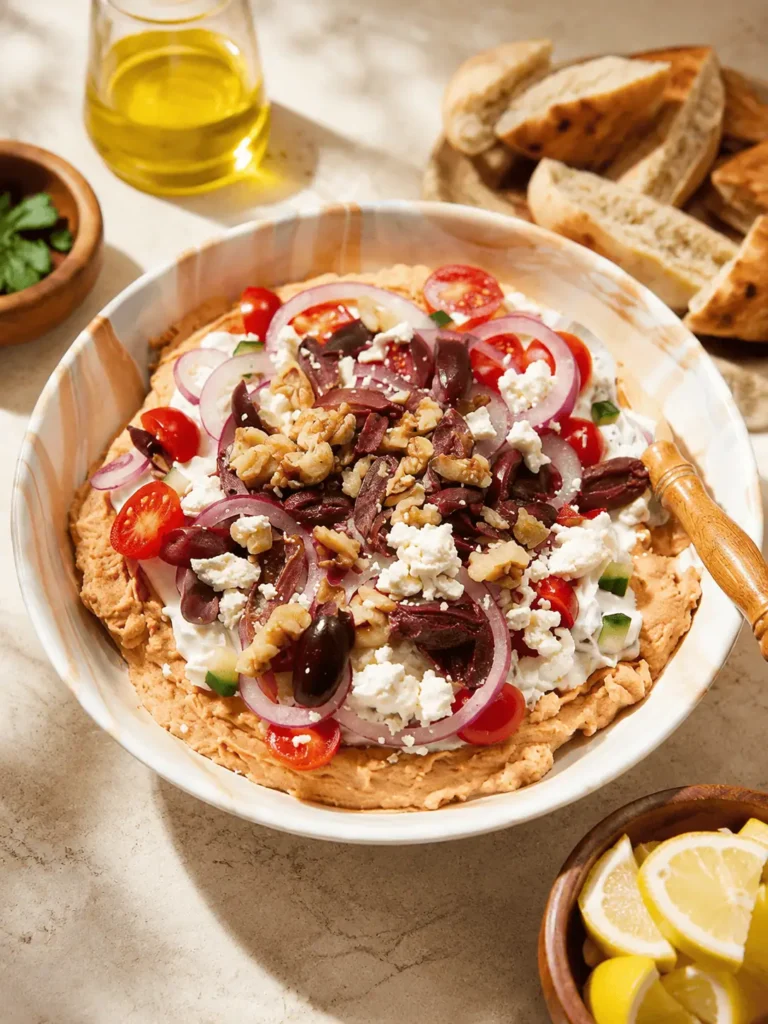
Warm pita is the right vehicle here. Cut it into triangles and keep it in a low oven until people arrive. Vegetables alongside, cucumber spears, celery, bell pepper strips, carrots, add crunch and freshness and work for anyone avoiding bread. A lemon wedge on the side for squeezing is a nice touch; a shot of fresh lemon juice over each scoop brightens everything up.
I've been eating layered dips at gatherings for most of my adult life, and the Tex-Mex version is perfectly fine. This one is better suited to the flavors I grew up around, the combination of chickpeas and tahini and labneh and olives that shows up in one form or another at every table in North Africa and the Middle East. Moving it into a party-dip format makes it more accessible without making it less itself. Serves 8 to 12 as a starter. Keeps refrigerated for three days.
Make it your own
The layer structure is a framework, not a law. Add a thin layer of hummus under the white bean base for extra depth. Swap the feta for goat cheese if you prefer a creamier top. Add a handful of roasted red pepper strips alongside the tomatoes for sweetness and color. Swap the kalamata olives for marinated artichoke hearts. The labneh layer with walnuts and cucumber is the heart of the dish; keep that and adjust everything else freely.
A Mediterranean seven-layer dip with a sun-dried tomato white bean base, a labneh and walnut layer, and a top scatter of cherry tomatoes, feta, olives, and red onion.
- 2 cans cannellini or Great Northern beans (15.5 oz each)
- 1/4 cup drained with liquid reserved
- 2 tablespoons sun-dried tomato pesto
- 2 tablespoons tahini
- 4 teaspoons freshly squeezed lemon juice (divided)
- 2 small garlic cloves (divided)
- 1/2 teaspoon sea salt divided
- 1/4 teaspoon black pepper (divided)
- 1 package labneh (16 oz)
- 1/3 cup plus 2 tablespoons toasted chopped walnuts (divided)
- 1/2 cup finely chopped seedless cucumber
- 3 tablespoons finely chopped fresh herbs (mint dill parsley or a mix) (divided)
- 1/8 teaspoon Aleppo pepper or red chile flakes
- 3/4 cup cherry tomatoes halved
- 1/4 cup thinly sliced red onion or pickled red onion
- 1/3 cup crumbled feta cheese
- 1/3 cup kalamata olives
- 1 tablespoon olive oil
- Warm pita
- cucumber spears
- celery
- carrot
- and bell pepper for serving
- 1 Drain the beans and reserve 1/4 cup of the liquid. Rinse the beans.
- 2
In a food processor, combine the beans, reserved bean liquid, sun-dried tomato pesto, tahini, 2 teaspoons of the lemon juice, 1 garlic clove, 1/4 teaspoon salt, and 1/8 teaspoon pepper. Process on high until just smooth, about 45 seconds. Spread this as the base layer on a wide platter.- 3
Stir together the labneh, 1/3 cup walnuts, cucumber, 2 tablespoons herbs, Aleppo pepper, remaining salt and pepper, remaining lemon juice, and the second garlic clove grated on a microplane. Spread gently over the bean layer, leaving 1/2 inch of the bean base visible around the perimeter.- 4
Scatter the cherry tomatoes over the labneh layer, followed by the red onion, feta, olives, and remaining 2 tablespoons of walnuts.- 5
Drizzle the olive oil over the top and garnish with additional fresh herbs or smoked paprika if desired. Serve with warm pita, vegetables, and lemon wedges..NoteReserve the bean liquid before draining; it makes the base smooth without extra oil. Use a Microplane for the garlic in the labneh so it distributes evenly. Leave the bean layer visible around the edge of each layer for visual definition. No nutrition data was provided for this recipe.
Mediterranean 7 layer dip, Mediterranean party dip, white bean labneh dip, easy Mediterranean appetizer - 2